



🌿 Traces of Creation – Discoveries from Nature
🦋 Series 2: Transformation and Order – What Insects Teach Us
🌼 Episode 8 – Useful, but Not Accidental
🌍 The Role of Insects in the Ecosystem
🔍 Introduction: Overlooked, Yet Irreplaceable
Insects are often only noticed when they are missing –
or when they become a nuisance.
A buzzing sound at the window, an ant on the path, a beetle in the garden.
Small, inconspicuous, easy to overlook.
And yet, an astonishingly large part of life on Earth
depends precisely on these tiny creatures.
Not accidentally.
Not incidentally.
But systematically.
🌸 1. Pollination: More Than a Side Effect
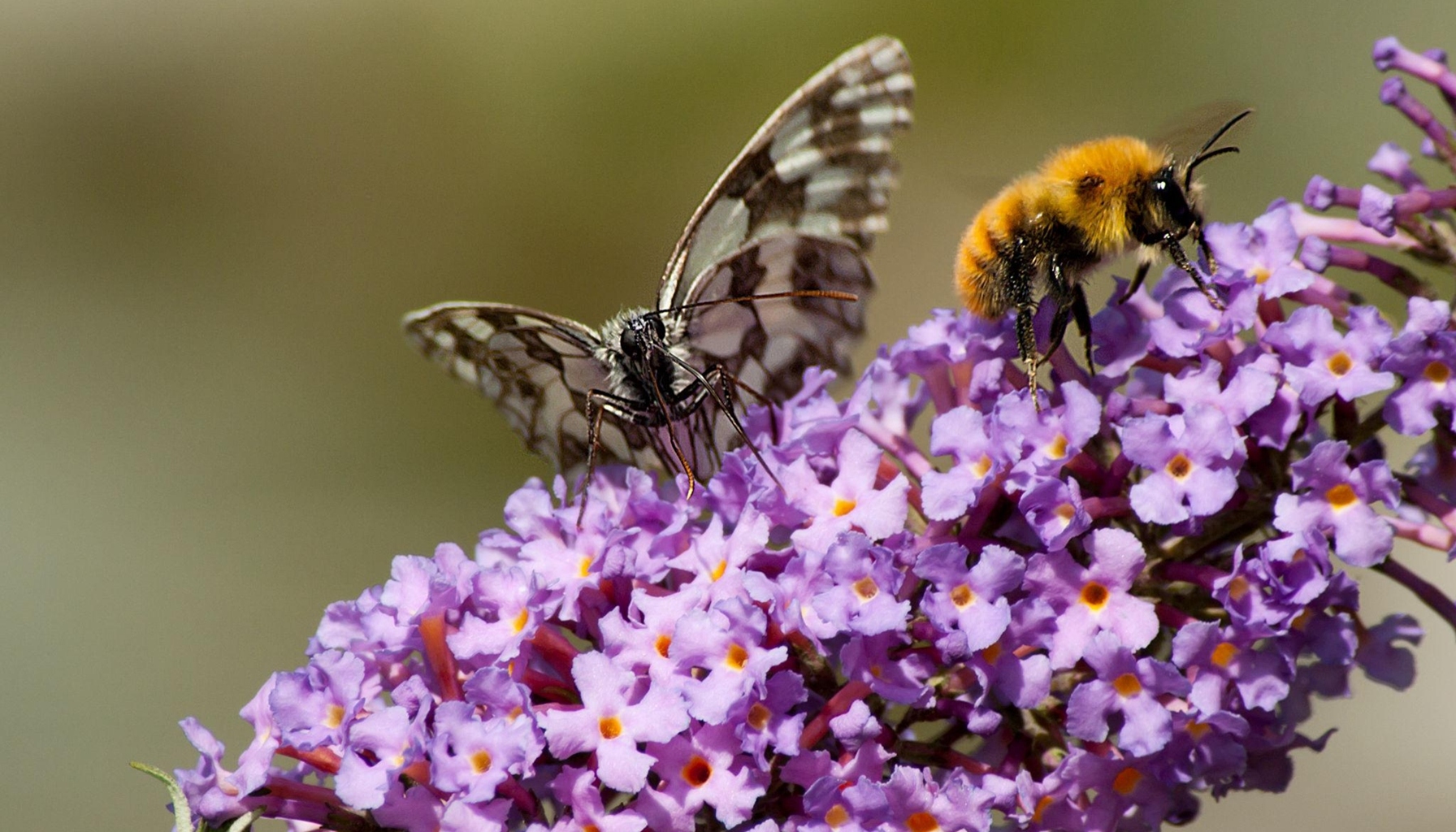
One of the best-known contributions of insects is pollination.
Bees, bumblebees, butterflies, and many other insects
transfer pollen from plant to plant –
often deliberately, often species-specific.
This is not just about honey or flowers.
A large portion of our food supply:
🔹 Fruits
🔹 Vegetables
🔹 Nuts
depends directly or indirectly on insect pollination.
This cooperation is not accidental:
🔹 Flower shapes match insect bodies
🔹 Colors and scents are precisely coordinated
🔹 Blooming times and activity periods interlock
Plants and insects depend on one another.
♻️ 2. Decomposers: Order in the Cycle of Life
What dies must be broken down.
Without decomposition, dead material would accumulate
and nutrients would remain locked away.
This is where insects come into play:
🔹 Beetle larvae
🔹 Flies
🔹 Ants
They decompose:
🔹 Plant remains
🔹 Carrion
🔹 Organic waste
In doing so, they make nutrients available again
for new life.
Decomposition is not chaos,
but an ordered process
that completes the cycle.
⚖️ 3. Regulation: Balance Instead of Overgrowth
Insects regulate populations –
often unnoticed.
Predatory insects keep other species in check.
Parasites limit overpopulation.
Without this regulation:
🔹 Some species would explode in number
🔹 Others would be displaced
🔹 Ecological systems would collapse
Balance does not arise through stillness,
but through dynamic limitation.
🍽️ 4. Food Chain: A Foundation for Other Living Beings
Insects themselves are food:
🔹 For birds
🔹 For amphibians
🔹 For fish
🔹 For mammals
Many animal species depend directly on insects,
especially during sensitive life stages such as raising offspring.
If insects disappear,
more than just one group collapses.
They do not stand at the edge of the system,
but at its center.
🎯 5. Why This Role Must Be Precise
Ecological functions leave little room for error.
Too little pollination means:
🔹 Crop failures
🔹 Loss of plant diversity
Too little decomposition means:
🔹 Nutrient deficiency
🔹 Blocked cycles
Too little regulation means:
🔹 Instability
These tasks function only
when they are carried out reliably.
An insect that is merely “roughly useful”
is not enough.
🌱 6. Diversity with Function
Not every insect fulfills the same task.
The enormous diversity serves the division of labor within the ecosystem.
Different species:
🔹 Work at different times
🔹 At different heights
🔹 Under different temperatures
This creates redundancy without randomness:
If one species disappears,
others can partially compensate –
but not without limits.
Diversity increases stability,
not chaos.
📊 7. A Rational View of Ecological Order
In complex systems, one principle applies:
The more things depend on each other,
the more precise the coordination must be.
Ecosystems are not a loose collection of species.
They are networks
in which small actors can have great effects.
That insects fulfill this role
is functionally meaningful –
not randomly distributed.
✝️ 8. The Christian Perspective: The Importance of the Small
The Christian perspective repeatedly emphasizes
that size is not the measure of significance.
Insects are an impressive example of this:
Invisible to many,
indispensable to all.
Their role within the structure of life
points to an order
in which even the small has its place.
Not as proof,
but as an invitation to look more closely.
💡 9. What the Ecological Role of Insects Teaches Us
It teaches us:
🔹 Importance is not tied to size
🔹 Order emerges through cooperation
🔹 Stability requires reliable roles
Perhaps it also reminds us
that responsibility begins
where we recognize interdependence.
🌌 Final Thought
An insect may seem easily replaceable.
Individuals hardly appear to matter.
But the system thinks differently.
Where insects are missing,
order is missing.
And where order is missing,
life falls out of balance.
Whoever takes these connections seriously
discovers, even in the buzzing of an insect,
traces of creation.
