✉️ FIRST AND SECOND CORINTHIANS
🏛️ Lesson 1: Paul’s Ministry in Corinth
📌 1.6 Summary
🧭 Paul’s Ministry in Corinth: Called, Challenged, and Sustained by God
📖 1. Introduction
Lesson 1 introduces us to Paul’s ministry in Corinth. We see a man who did not act in his own strength or out of human ambition, but as an apostle of Jesus Christ called by God. His journey led him from Athens to Corinth, into a city full of wealth, trade, idolatry, and moral challenges. There Paul encountered opposition, rejection, and spiritual disorder. Yet despite fear and weakness, he was encouraged by Christ to keep speaking and not be silent. This lesson shows us that God’s calling, God’s presence, and the message of the cross are stronger than any difficulty.
📜 2. The Biblical Foundation
Paul begins his letter with these words:
“Paul, called to be an apostle of Jesus Christ through the will of God.” 1 Corinthians 1:1
Concerning his message in Corinth, he says:
“For I determined not to know any thing among you, save Jesus Christ, and him crucified.” 1 Corinthians 2:2
When Paul experienced fear and opposition in Corinth, the Lord spoke to him:
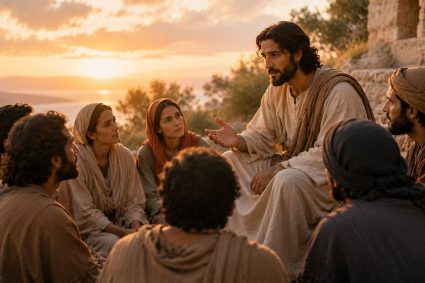
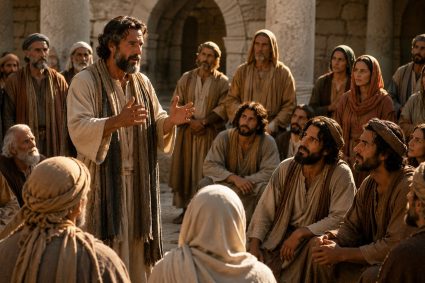
“Do not be afraid, but speak, and do not keep silent; for I am with you.” Acts 18:9–10
These verses summarize well the main thoughts of the lesson: Paul was called by God, Christ stood at the center of his message, and God’s presence sustained him in his ministry.
🌍 3. Connection to Today
We too live in a world that resembles Corinth in many ways. Our cities are marked by diversity, prosperity, moral confusion, religious alternatives, and spiritual indifference. Many people search for meaning, hope, and direction, but do not know that they can find these only in Christ. At the same time, Christians today also experience opposition, misunderstanding, and sometimes discouragement when they speak about their faith. Paul’s experience shows us that difficult places are not hopeless places. God still has people today in our cities, families, and churches whom he wants to reach.
💡 4. Central Message of the Lesson
👉 Paul’s ministry in Corinth shows that God calls people, sends them into difficult environments, strengthens them through his presence, and brings fruit through the message of Jesus Christ.
✝️ 5. Theological Focus
The first major focus of this lesson is divine calling. Paul did not understand himself as a self-appointed teacher or religious speaker, but as an apostle of Jesus Christ through the will of God. His identity, his authority, and his task came from God. This gave his ministry a firm foundation, especially in a church that would later question his authority.
This calling was also an act of grace. Paul had formerly been a persecutor of the church, yet God made him a servant of the gospel. This shows that God does not call people because they are perfect, but because his grace is powerful. Calling does not begin with human worthiness, but with God’s initiative.
The second focus is Christ-centeredness. Paul spoke again and again about Jesus because Christ was the center of his life. For him, Jesus was not just a topic, but the content of his entire ministry. Especially in Corinth, Paul summarized his message with the words: “Jesus Christ, and him crucified.”
The cross stands at the center of the gospel. In a city like Corinth, which admired power, wealth, wisdom, status, and pleasure, Paul proclaimed a crucified Christ. For many people this was incomprehensible or even offensive. Yet precisely there lies the power of God. The cross shows God’s love, God’s grace, and God’s way of salvation.
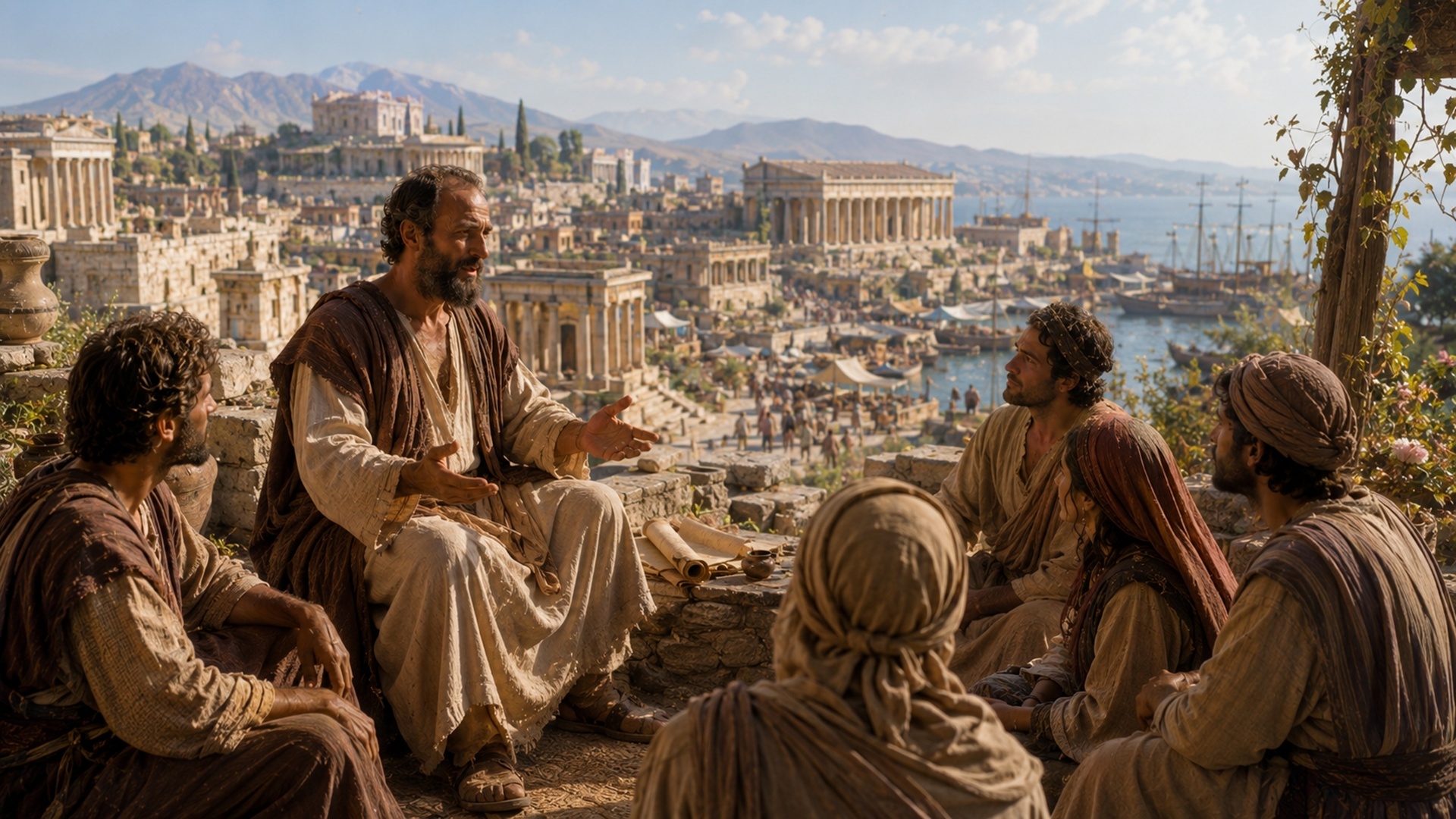
The third focus is God’s mission in difficult cities. Corinth was economically important, but spiritually challenging. The city was marked by idolatry, religious diversity, and moral disorder. Humanly speaking, one might have thought that such a place was too difficult for the gospel. But God saw a great possibility there.
God does not send his message only to easy places. He sends it precisely where people are lost, confused, and bound. Corinth shows that no place is too dark for the light of Christ. Where people live in sin, pride, or idolatry, the gospel is not less needed, but even more necessary.
The fourth focus is the reality of opposition. Paul experienced rejection, contradiction, and slander. The proclamation of the gospel does not always lead immediately to approval. Some people reject the truth, others fight against it. Yet opposition does not mean that God is not at work.
Precisely in Corinth we see that rejection and fruit can exist side by side. Some contradicted Paul, but Crispus and many Corinthians believed and were baptized. This reminds us that we must not judge God’s work only by visible difficulties.
The fifth focus is God’s encouragement. Christ appeared to Paul in a vision and said: “Do not be afraid.” This shows that Paul was not an invulnerable hero. He knew fear, weakness, and trembling. Yet God did not meet him with reproach, but with encouragement.
The promise “I am with you” is the heart of this encouragement. God’s presence makes the difference. Paul could keep speaking because Christ was with him. Today too, the strength of our witness does not lie in our personality, but in the presence and faithfulness of God.
The sixth focus is God’s hidden perspective. Jesus said: “I have many people in this city.” Paul saw a difficult city, but God saw people he wanted to save. Paul saw opposition, but God saw prepared hearts. This divine perspective gives hope to every missionary work.
The seventh focus concerns the letters to the Corinthians. Paul did not write only to point out problems, but to spiritually form the church. His letters were an expression of concern, love, and responsibility. He wanted to lead the church back to Christ and show it how the gospel should shape every area of life.
Thus, Lesson 1 shows that Paul’s ministry in Corinth was not merely a historical episode. It reveals fundamental principles of Christian life and service. Calling, Christ-centeredness, faithfulness in opposition, dependence on God’s presence, and love for the church still belong today to the essence of true discipleship.
🌟 6. Spiritual Deepening
This lesson first invites us to reflect on our own calling. Not everyone is called to be an apostle like Paul, but every Christian is called by God to follow Christ and serve him. Calling does not always mean a great public task. Often it begins where God has already placed us: in the family, in the church, at work, at school, or in everyday life.
Paul knew who he was in Christ. This certainty freed him from the constant search for human recognition. We too need an identity that is not based on success, approval, or comparison. When we know that God knows us and calls us, we can live more faithfully and courageously.
At the same time, Paul shows that calling does not protect us from difficulties. Whoever serves God will not automatically have a comfortable life. Paul experienced opposition, loneliness, criticism, and fear. Yet precisely in this he learned to depend on God’s presence.
This is very important for us. Many people think spiritual strength means never being afraid. But Paul shows something different. Spiritual strength means trusting God’s promise despite fear. Courage is not the absence of weakness, but continuing forward in trust in Christ.
The city of Corinth also reminds us that we should not give up too quickly on our surroundings. Sometimes we see only indifference, rejection, or moral confusion. But God sees more. He knows people whom we do not yet recognize. He prepares hearts even when we do not yet see it.
Therefore, we should pray with hope for our cities, churches, and families. Perhaps there are people who seem hard today but will be open tomorrow. Perhaps there are situations that seem impossible to us, but for God they are already a field of harvest. God’s view is wider than ours.
Paul used every opportunity for proclamation. In Athens he spoke in the synagogue, in the marketplace, and at the Areopagus. In Corinth he worked as a tentmaker and at the same time proclaimed the Word of God. This shows us that our everyday life can be a mission field. God can use conversations, work, encounters, and even unplanned paths.
An important spiritual question is: Is Christ truly the center of my life? Paul could not stop speaking about Jesus because his heart was filled with Jesus. If Christ is only one part of our life, our witness will be weak. But if Christ is the center, he shapes our thinking, speaking, actions, and service.
The letters to the Corinthians also show that churches need correction again and again. Believers too can be influenced by their culture. Conflict, pride, immorality, selfishness, and wrong priorities can spread even in the church. Therefore, we need the gospel not only at the beginning of our life of faith, but every day.
Paul did not face the problems of the Corinthians with indifference. He loved the church too much to remain silent. His letters show us that true spiritual love sometimes admonishes, but always with the goal of restoration. Truth and love must remain together.
For our personal lives, this means that we should be willing to be corrected by God’s Word. The question is not only what went wrong in Corinth at that time. The question is also: Where do I need renewal today? Where am I proud? Where has culture shaped my thinking? Where must Christ once again become more clearly central?
Lesson 1 encourages us because it shows that God works with imperfect people. Paul was dependent on grace. The Corinthians were problematic and immature. The city was difficult and challenging. And yet God worked. This is hope for us, our churches, and our time.
God does not need perfect conditions in order to work. He needs people who allow themselves to be called, sent, and used by him. When Christ is at the center, even a difficult environment can become a place of grace.
🔧 7. Application in Everyday Life
Practical steps:
- Ask God to show you your calling more clearly in everyday life.
- Consciously place Christ at the center of your decisions.
- Use opportunities to speak about Jesus lovingly and clearly.
- Pray for your city, your church, and the people God still wants to reach.
- Do not be discouraged by opposition or rejection.
- Trust that God sees people you cannot yet see.
- Examine where your culture has shaped your thinking more than the gospel.
- Receive spiritual correction humbly.
- Serve faithfully, even if your task seems small or hidden.
❓ 8. Reflection Question
Where is God calling me today to remain faithful despite difficulties and to place Christ more clearly at the center of my life and service?
🌟 9. Final Thought
Lesson 1 presents Paul as a man called by God, filled with Christ, and sustained in his ministry by God’s presence. Corinth was a difficult city, yet precisely there God wanted to reach people through the gospel. Paul experienced opposition and fear, but Christ strengthened him with the promise: “I am with you.” His letters to the Corinthians show that true spiritual responsibility acts out of love and leads the church again and again back to the cross. Today too, God calls us to serve faithfully in our surroundings, to proclaim Christ, and not to give up on people too quickly. When Jesus is at the center, God can bear fruit even through our weakness.
“Do not be afraid, but speak, and do not keep silent; for I am with you.” Acts 18:9–10 ✨📌🧭✝️