Repentance, Christ’s righteousness, and holding fast to God
📖 1. Introduction
This week’s lesson has shown that spiritual growth begins with a prepared heart. Hosea uses the image of a field that must be worked before fruit can grow. God gives growth, yet human beings are invited to respond to His call. Repentance, faith, and holding fast to Christ are therefore not one-time experiences, but a daily path. The following questions help us consider the practical consequences of this truth.
🛡️ 2. Question 1: Do we regularly pray for protection from temptation?
Jesus expressly taught His disciples to pray:
“Lead us not into temptation, but deliver us from evil.” (Matt. 6:13)
This prayer shows that we should recognize our own weakness. Many people pray for help only after they have already fallen. Yet Jesus invites us to pray preventively and to seek God’s protection every day. Whoever recognizes their dependence on God will regularly ask to be kept from temptation.
🌍 3. Why is this prayer especially important today?
We live in a world full of spiritual distractions and temptations:
social media,
materialism,
pride,
sexual temptations,
self-confidence instead of trust in God.
The enemy often knows our weaknesses better than we do. That is why daily prayer for protection is not weakness, but spiritual wisdom. Whoever prays acknowledges that victory over sin ultimately depends on God’s power.
👗 4. Question 2: How can Christ’s robe of righteousness be explained to a non-Christian?
A simple explanation could be:
“Every human being has guilt before God. We cannot make up for this guilt through good works. That is why Jesus came, lived a perfect life, and died for our sins. When we trust Him, God not only forgives us, but also gives us the perfect righteousness of Jesus. It is as if Christ places His spotless robe over us, so that God sees us in His righteousness.”
The robe symbolizes:
forgiveness,
acceptance,
redemption,
and the righteousness of Christ.
✝️ 5. The theological meaning of Christ’s robe
The robe of righteousness is one of the most beautiful images of the gospel. Already in Eden, God covered Adam and Eve with garments of animal skins. In doing so, He showed that human fig leaves were not enough.
The fig leaves stand for:
our own efforts,
human righteousness,
religious achievements.
The robe given by God, on the other hand, points to Christ.
His perfect life is credited to the believer. Therefore, our salvation is never based on our merit. We stand before God not because of our faithfulness, but because of the faithfulness of Jesus.
This truth protects us both from pride and from despair:
Pride disappears because we have nothing to present.
Despair disappears because Christ has accomplished everything.
🏛️ 6. Question 3: What connection exists between the robe of righteousness and the sanctuary?
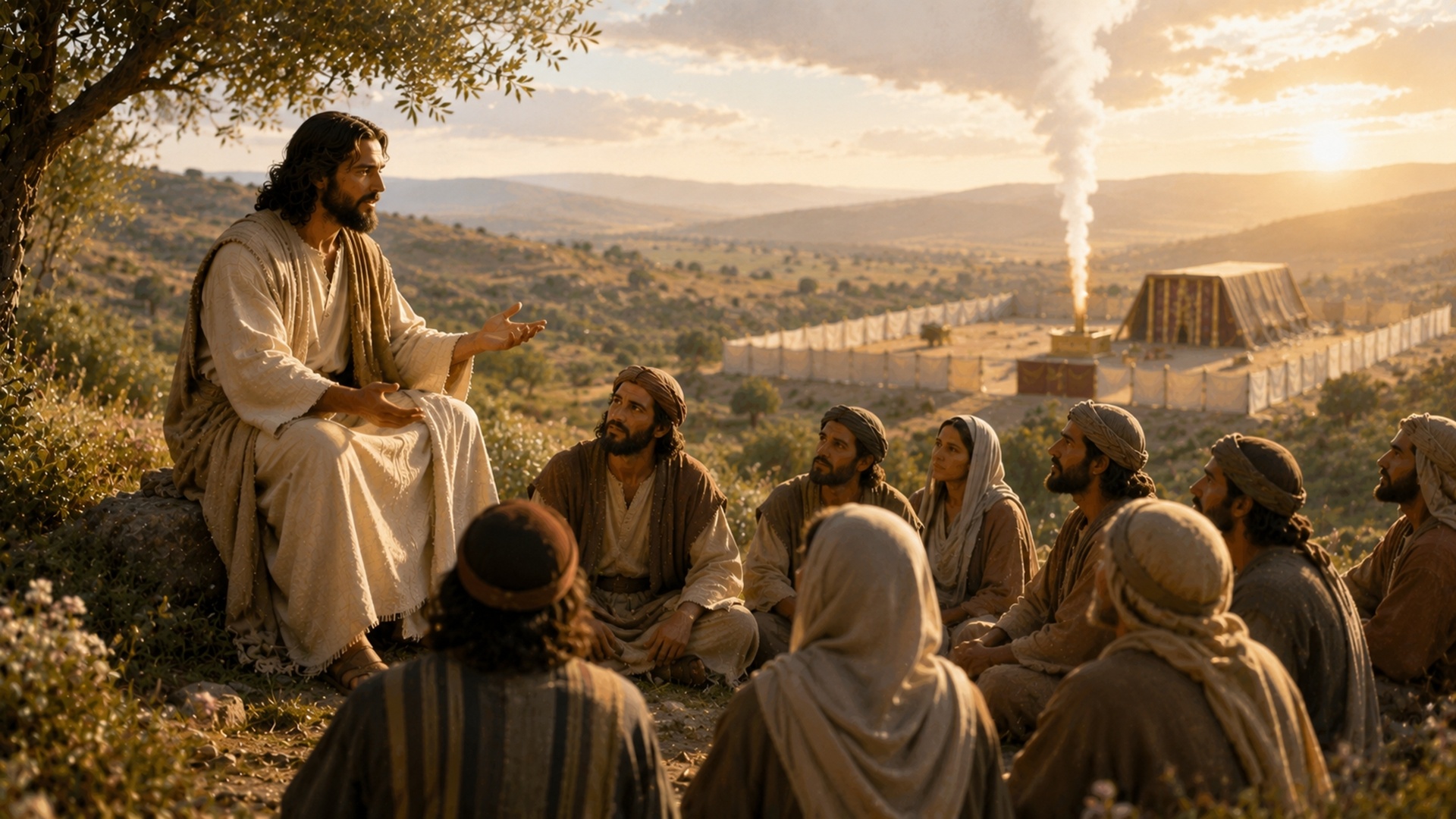
The sanctuary message shows the entire path of redemption.
In the sanctuary, the sinner brought his sacrifice. The sacrifice died in his place. This made it clear that forgiveness is possible only through a sacrifice. This sacrifice pointed to Jesus Christ.
The sanctuary message reveals:
Christ as the sacrificial Lamb.
Christ as High Priest.
Christ as Intercessor.
Christ as Judge and Redeemer.
The robe of righteousness is closely connected with this ministry.
When the sinner confesses his guilt, Christ not only forgives him, but also cleanses him. The sanctuary therefore shows two aspects:
Justification – forgiveness of guilt.
Sanctification – cleansing and transformation of life.
The beauty of this message is that God not only removes guilt, but also wants to restore human beings completely. Christ’s robe not only covers the past, but opens a new future with God.
🔧 7. Application in everyday life
Practical steps:
Pray consciously every day for protection from temptation.
Remember that your acceptance with God is based on Christ.
Study the Gospels to know Jesus’ character better.
Reflect regularly on the sanctuary and the plan of redemption.
Hold fast to Christ in faith, especially in times of spiritual struggle.
❓ 8. Personal Reflection
How regularly do I pray to be kept from temptation?
Do I rely on my own righteousness or on the righteousness of Christ?
Which aspects of the sanctuary message help me most to understand God’s love and forgiveness?
🌟 9. Closing Thought
The Christian’s greatest security does not lie in their own strength, but in their connection with Christ. Whoever clings to Jesus, as Israel was to hold fast to the Lord (Deut. 4:4), will find life. The robe of Christ’s righteousness, His ministry in the heavenly sanctuary, and His daily intercession give us the assurance that God not only forgives, but also preserves and completes.
“But you who held fast to the LORD your God are all alive today.” (Deuteronomy 4:4) 🙏✨