


🤩 Bible Stories to Marvel At
Where God’s miracles become great – for little and big children
🔍 Nehemiah Chapter 13 – A Leader Does Not Give Up
🛠️ When you need to become attentive again
🌅 Introduction
Jerusalem had experienced great changes. The wall had been rebuilt, the city was once again full of people, and the people had promised God to listen to His ways.
After all these events, Nehemiah had to return to Babylon for a time. Tasks were still waiting for him there, because he was still in the service of the Persian king.
Perhaps the people hoped that everything would now remain good. After all, they had heard God’s Word, prayed, and made important decisions.
But when Nehemiah returned to Jerusalem after some time, he made a surprising discovery.
Some people had become careless again.
This chapter shows that a good beginning is important — but that we must also remain faithful.
📖 The Biblical Story
😲 A Shocking Discovery
When Nehemiah returned to Jerusalem, he wanted to see how the city was doing. He was probably looking forward to seeing the people again and hearing how everything had developed.
But soon he noticed something that deeply disturbed him.
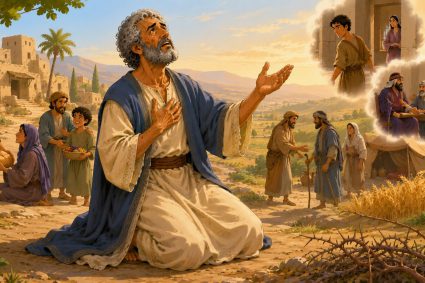
A man named Tobiah had been given a large room in the temple.
That name was familiar to Nehemiah. Tobiah had been one of the men who had opposed the rebuilding of the wall. He had mocked, threatened, and tried to stop the work.
And now, of all people, he was living in a room of the temple.
There, where supplies for the service of God were actually supposed to be stored, stood the belongings of a man who had repeatedly opposed God’s people.
Nehemiah could hardly believe it.
🚪 Nehemiah Acts Immediately
When Nehemiah understood what had happened, he did not hesitate.
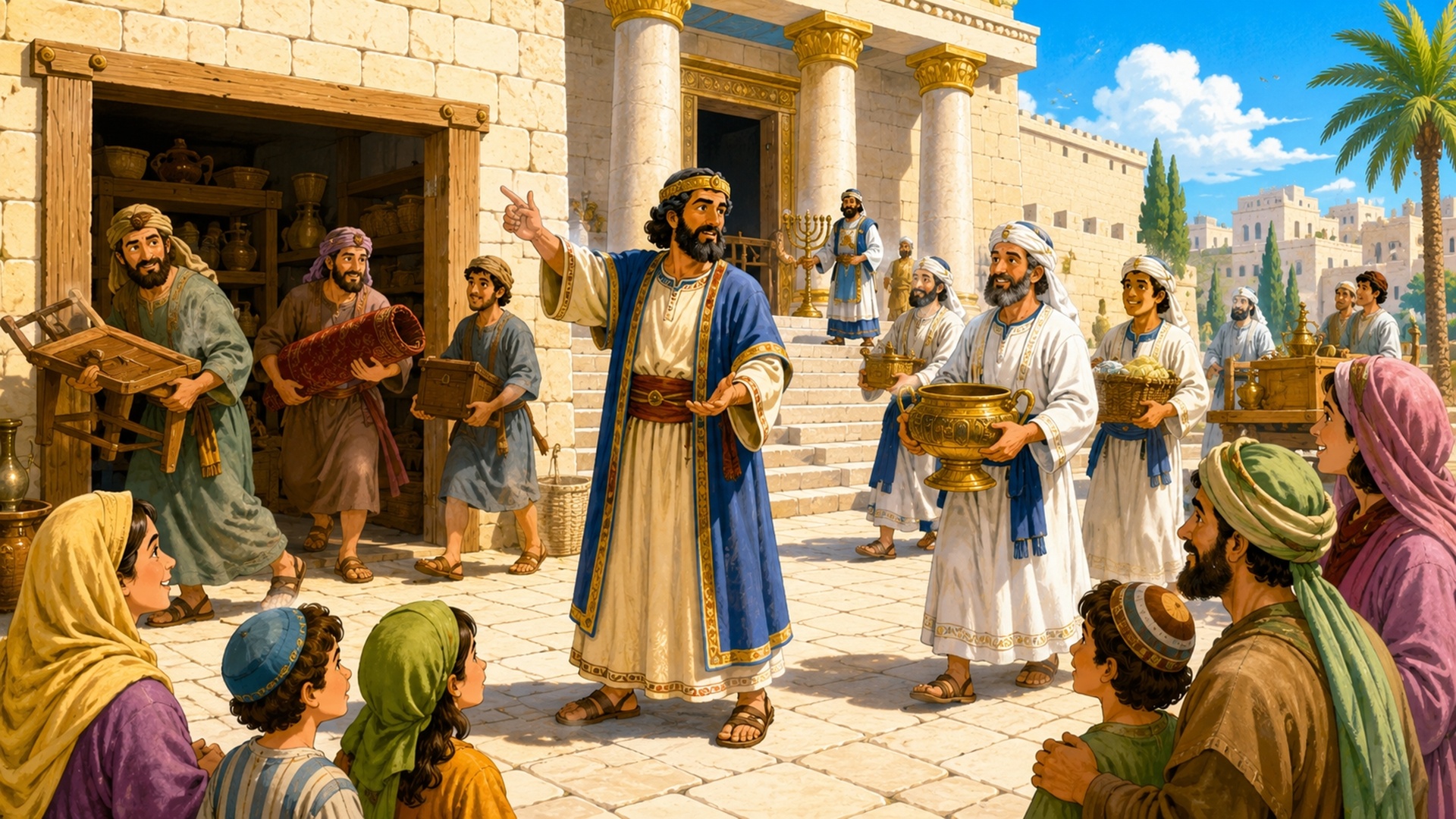
He had all of Tobiah’s belongings removed from the room. Then he ordered the rooms to be thoroughly cleaned.
Afterward, the supplies for the temple service were brought back to their proper place.
For Nehemiah it was clear: God’s house should be used for God’s purposes.
He knew that small acts of carelessness can often become big problems.
That is why he acted decisively.
🥖 The Forgotten Levites
As Nehemiah continued walking through the city, he discovered another problem.
The Levites and singers who were supposed to serve in the temple had partly gone away. Why?
Because many people had stopped bringing the promised gifts.
Without support, the Levites could no longer carry out their service. That is why some had to return to their fields in order to provide for their families.
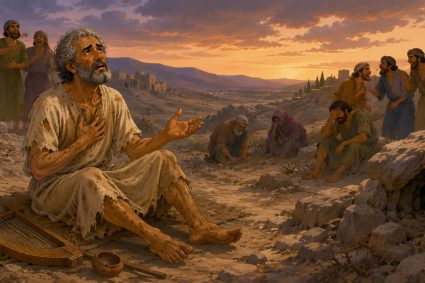
Nehemiah was saddened by this.
Had the people not promised to care for God’s house? Now these promises had been forgotten.
So Nehemiah spoke with those responsible and made sure that the Levites were supported again.
Little by little, they returned to their duties.
📅 A Special Day Is Disregarded
But the difficulties were not over yet.
Nehemiah noticed that many people no longer took the Sabbath seriously.
On this day, the people were supposed to rest and focus especially on God. But instead, some worked as on any other day.
Merchants brought goods to Jerusalem. Traders sold food. People carried loads through the city gates.
It almost seemed as if many had forgotten why God had given the Sabbath.
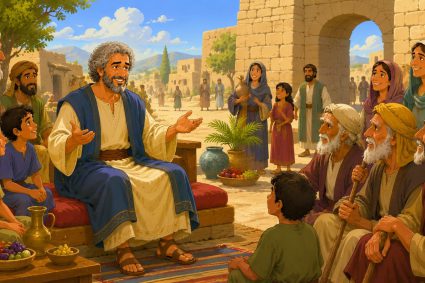
Nehemiah reminded the people how important this day was.
Then he made an unusual decision.
The city gates were to remain closed before the beginning of the Sabbath and only be opened again afterward.
In this way, he wanted to prevent trade from disturbing the day of rest.
🚶 The Merchants Outside the Gates
Some merchants were not happy with this decision.
Several times they waited outside the walls of Jerusalem, hoping they might still be able to sell their goods.
Perhaps they thought the people would change their minds.
But Nehemiah remained firm.
He made it clear that the rules would not be changed.
When the merchants realized that their plans would not succeed, they did not come back anymore.
The people could once again celebrate the Sabbath undisturbed.
👨👩👧👦 Another Challenge
Finally, Nehemiah discovered yet another problem.
Some families had adapted so much to the neighboring peoples that many children could hardly speak the language of their own people anymore.
This made it harder to understand God’s Word and to pass on the stories of the people.
Nehemiah recognized the danger.
If the people lost their connection to God and His Word, they could repeat the same mistakes as earlier generations.
That is why he spoke seriously with those responsible and reminded them of their promises.
He did not want to allow God’s ways to be forgotten again.
💪 A Leader With Endurance
This chapter shows a side of Nehemiah that we have rarely seen before.
He does not build a wall. He does not organize a great celebration. Nor does he give an impressive speech before all the people.
Instead, he takes care of many small things that had gradually slipped out of sight.
Some people might have thought that after the wall was completed, everything was finished.
But Nehemiah knew that faithfulness must be lived anew every day.
That is why he did not give up.
Again and again he reminded the people of God. Again and again he helped them find their way back to the right path.
So he remained a faithful leader until the end.
🌅 What This Chapter Shows
This chapter shows that good decisions must be cared for. It is not enough to do the right thing once. Often we must remain attentive again and again.
We also learn endurance from Nehemiah. He did not give up when problems appeared, but continued helping the people.
🟣 Summary
After his return to Jerusalem, Nehemiah discovers several problems. Tobiah is using a room in the temple, the Levites are no longer being supported, the Sabbath is being disregarded, and some people are moving away from God’s ways. Nehemiah acts decisively and helps the people remember their promises again.
💚 Message for Children Today
It is important not only to start well, but also to keep walking faithfully. Good decisions need attention and endurance.
Nehemiah also shows that we should not ignore problems. With God’s help, we can courageously do what is right.
💭 Thought Prompt
🔸 Why was Nehemiah sad about some developments in Jerusalem?
🔸 Why is faithfulness often harder than a good beginning?
🔸 How can you remind yourself to keep good decisions?
🧒 👧 👦
💌 Conclusion of the Book of Nehemiah
🏰 A Wall That Was More Than Stone
The story of Nehemiah began with sad news about a destroyed city.
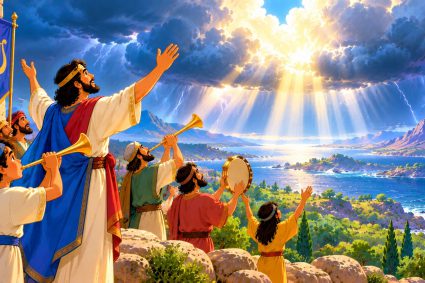
It ends with a rebuilt wall, an inhabited city, and a people who once again hear God’s Word.
Nehemiah was not a king and not a famous warrior. But he trusted God, prayed, acted courageously, and did not give up.
That is why God could use him to change Jerusalem.
His story reminds us that God can still use people today who are willing to trust Him.
🔔 Review of the Book of Nehemiah
✨ From Ruins to Hope
👉 A man hears about a destroyed city.
👉 He prays and trusts God.
👉 A wall is built.
👉 A people hears God’s Word.
👉 Hope returns.
✨ The book of Nehemiah shows how God can bring something new out of ruins.
🧒 👧 👦
💌 Invitation to Esther Chapter 1
👑 A Feast That Changes Everything
Far away from Jerusalem, a powerful king rules over a vast empire. In his magnificent palace, he holds a great feast unlike anything the people have ever seen.
Days full of music, precious food, and impressive treasures follow one after another. Everyone marvels at the king’s wealth.
But in the middle of the celebration, something unexpected happens.
A decision is made. An answer is given. And suddenly the future of the entire kingdom changes.
No one yet suspects that through this, the story of a young Jewish girl will begin.
Come along and discover the first chapter of Esther!
🔔 Teaser for Esther Chapter 1
🏛️ When a King Does Not Get What He Expects
A huge feast begins.
The king rejoices in his power.
But then something goes very differently than planned.
👉 Why does the king invite so many people?
👉 Who surprises him with a courageous decision?
👉 And how can a single moment change the story of an entire people?
✨ In the next chapter, we will experience the surprising beginning of the story of Esther.