🟦 Introduction
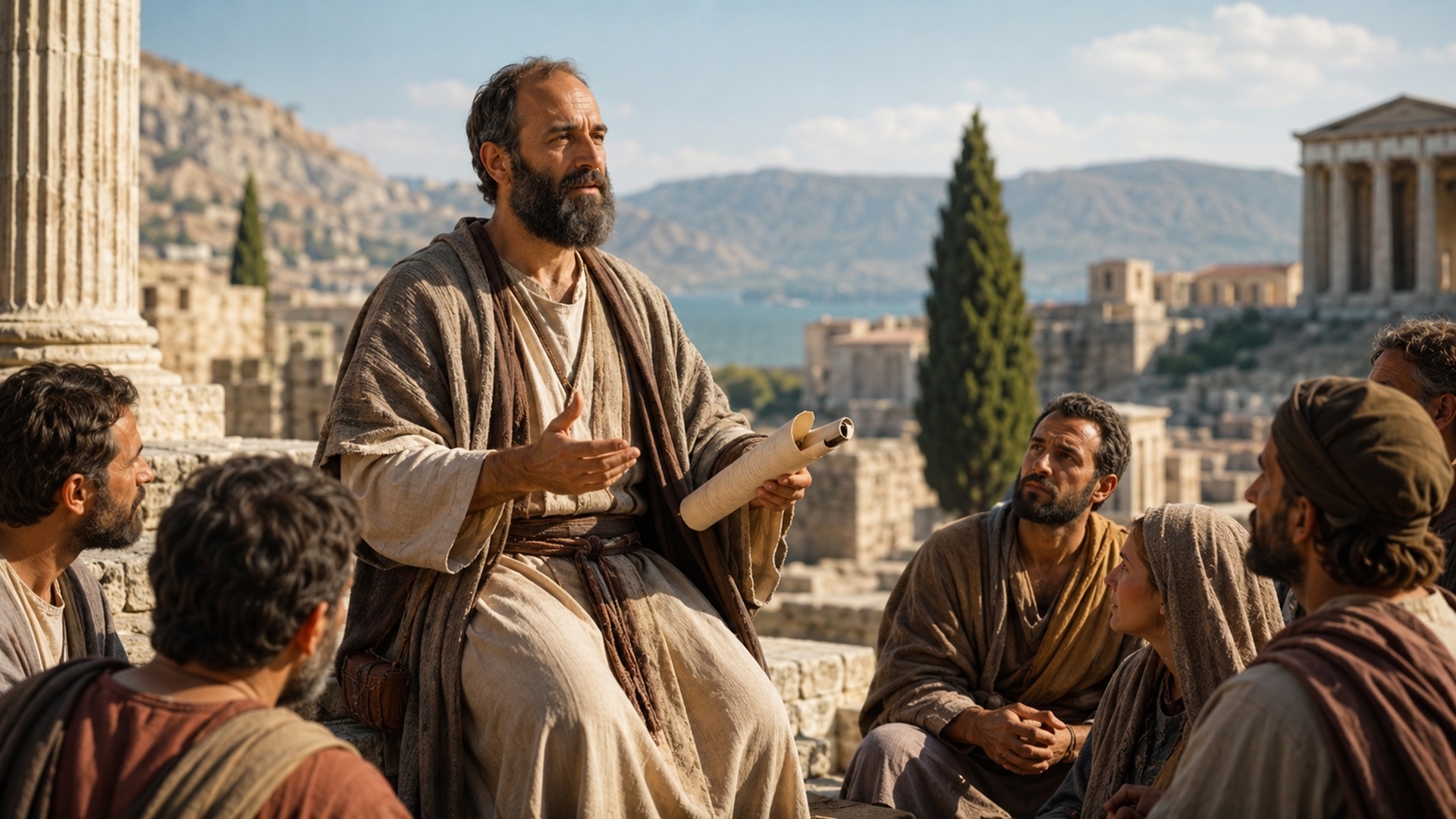
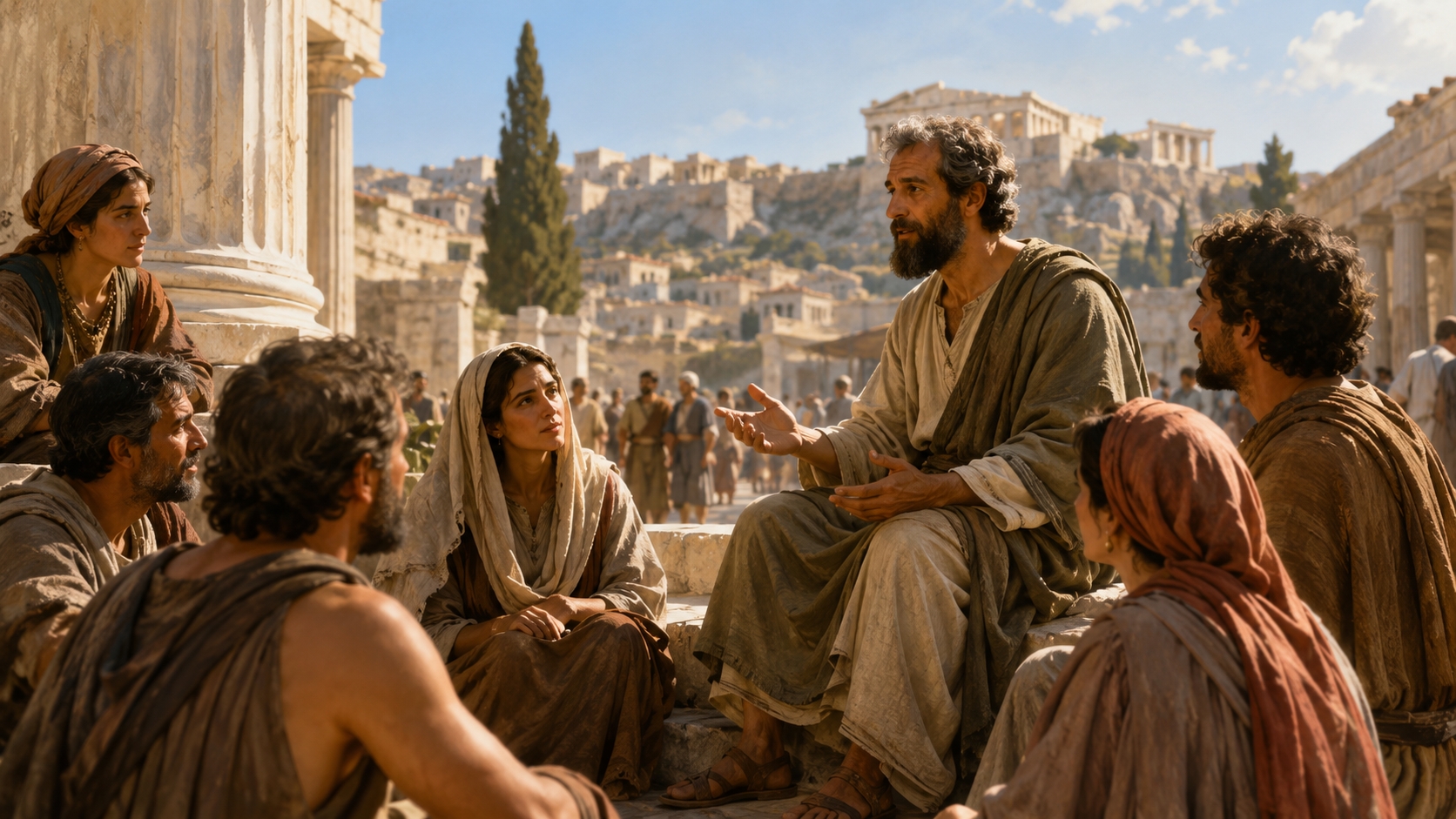
In Lesson 1, we become acquainted with Paul’s ministry in Corinth, an important but spiritually challenging city. Paul did not come in his own strength or with his own message, but as an apostle of Jesus Christ called by God. His journey from Athens to Corinth shows that he used every opportunity to share the gospel. In Corinth he encountered opposition, moral problems, and religious confusion, yet God encouraged him to keep speaking and not be silent. This lesson invites us to reflect on our own calling and to place Christ at the center of our life and service. It also shows that God has people even in difficult places whom he wants to reach.
✉️
✉️ FIRST AND SECOND CORINTHIANS
🏛️ Lesson 1: Paul’s Ministry in Corinth
📣 1.1 Paul, a God-called Apostle of Jesus
🙏 Called by God and Fully Focused on Christ
📖 1. Introduction
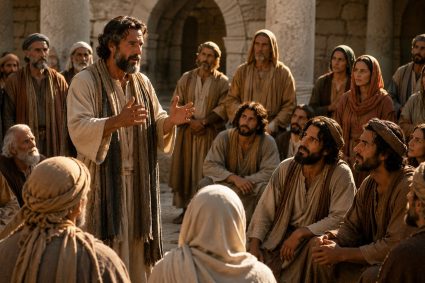
Paul does not begin 1 Corinthians by first addressing the problems of the church, but with his own calling. He presents himself as an “apostle of Jesus Christ by the will of God.” In doing so, he makes it clear that his ministry is not based on human recognition, personal ambition, or his own decision. Paul knows who he is in Christ, and this certainty gives his ministry authority and direction. Especially in a church like Corinth, marked by conflict, pride, and spiritual immaturity, this clear foundation was important. Before Paul corrects, he reminds them: his commission comes from God.
📜 2. The Biblical Foundation
Paul writes:
“Paul, called to be an apostle of Jesus Christ through the will of God.” 1 Corinthians 1:1
He also says in Romans:
“Paul, a servant of Jesus Christ, called to be an apostle, separated unto the gospel of God.” Romans 1:1
And in Galatians he emphasizes:
“Paul, an apostle, not of men, neither by man, but by Jesus Christ, and God the Father.” Galatians 1:1
These verses show two important elements in Paul’s ministry: his calling and his apostleship. Paul was not appointed by people, but called and sent by God himself.
🌍 3. Connection to Today
Many people today also ask themselves: Who am I? Why am I here? What task does God have for my life? Our society often measures a person’s worth by success, achievement, recognition, or influence. Paul, however, shows that true identity does not come from human approval, but from God’s calling. Whoever knows that God knows them, calls them, and wants to use them becomes inwardly strengthened. We also need this certainty, especially when we experience rejection, doubt, or difficulties. God’s calling gives our lives direction, meaning, and responsibility.
💡 4. Central Message of the Lesson
👉 Paul was not called to be an apostle by people, but by the will of God, and his entire life was focused on Jesus Christ.
✝️ 5. Theological Focus
Paul’s ministry begins with God’s initiative. Paul did not make himself an apostle; he was called by God. This is an important theological thought: true spiritual ministry does not begin first with human desire, but with God’s will.
In 1 Corinthians 1:1, Paul calls himself an apostle of Jesus Christ. An apostle is someone who is sent. Paul therefore does not understand himself as an independent religious teacher, but as one sent by Christ. His message does not belong to him. He speaks on behalf of Jesus.
This calling was especially important because Paul repeatedly faced opposition and criticism. Some questioned his authority. Others perhaps did not see him as a true apostle because he had not belonged to the Twelve during Jesus’ earthly ministry. But Paul points out that his calling comes directly from God.
In Galatians 1:1, he makes clear that his apostleship is “not from men.” In this way, Paul shows that the source of his ministry is divine. His authority does not lie in his personality, his education, or his eloquence, but in God’s call.
At the same time, Paul also calls himself a servant of Christ. This is remarkable. On the one hand, he is an apostle with spiritual authority; on the other hand, he sees himself as a servant. Christian calling, therefore, does not mean self-glorification, but surrender. Whoever is called by God does not live for himself, but for Christ.
Paul’s calling reminds us of Jeremiah, who was known and appointed by God even before his birth. Paul also speaks of God setting him apart from his mother’s womb and calling him by his grace. From this we recognize that calling is always an expression of God’s grace, not of human worthiness.
The center of this calling is Jesus Christ. Paul is not simply a religious messenger, but an apostle of Jesus. Christ is the content of his message, the source of his authority, and the goal of his ministry. Everything Paul does is meant to point to Jesus.
That is why Paul often begins his letters with Christ. In the first verses of 1 Corinthians, he mentions Jesus again and again. This shows how deeply Christ filled his thinking, his heart, and his language. For Paul, Jesus is not merely one topic among many, but the center of his life.
🌟 6. Spiritual Deepening
Paul’s calling invites us to reflect on our own calling. Not everyone is called to be an apostle like Paul, but every person is created and loved by God and invited to a life with him. God has a place, a task, and a responsibility for every believer.
Some people think calling is only for preachers, missionaries, or church leaders. But the Bible shows that calling goes much further. God calls people to serve him in the family, in the church, at work, at school, and in everyday life. Every gift, every opportunity, and every encounter can be part of our service for Christ.
Paul had a firm conviction about who he was in Christ. This certainty helped him remain faithful, even when people rejected or misunderstood him. We too need an identity that goes deeper than other people’s opinions. When our identity is founded in Christ, criticism, comparisons, and insecurity lose their destructive power.
At the same time, Paul shows that calling does not mean self-confidence in a human sense. He was not proud of himself, but dependent on God’s grace. He knew that he had formerly persecuted Christ and yet was accepted and used by God. This makes his calling all the more amazing.
This is also encouraging for us. Our past does not have to prevent God’s calling. Our weaknesses do not have to stop God’s plan. God does not call perfect people, but people who are willing to be changed and used by his grace.
Paul’s life also shows that true calling always makes Christ visible. When people encountered Paul, they were not meant to admire Paul, but to recognize Christ. His preaching, his ministry, and his life were directed toward making Jesus great.
This is an important question for us: Is Christ made visible through my life? Do my words, decisions, and relationships help bring people closer to Jesus? Or am I myself too much at the center?
Whoever receives their calling from God will not first ask for fame, comfort, or recognition. They ask: Lord, what do you want to do through my life? Where do you want to use me? Whom should I serve?
Perhaps someone does not feel called or does not know what task God has for them. Then the first step is not pressure, but prayer. We may honestly ask God to show us his will. He knows our gifts, our limits, and our opportunities better than we do.
Paul reminds us: a life with Christ is not a random life. God calls, sends, strengthens, and uses people. The most important question is whether we are willing to respond to his call.
🔧 7. Application in Everyday Life
Practical steps:
- Begin the day with the question: Lord, how do you want to use me today?
- Ask God to show you your calling and your tasks more clearly.
- Do not compare your service with the service of other people.
- Use your gifts to make Christ visible.
- Serve faithfully, even if your task seems small or hidden.
- Remember that your identity is in Christ, not in human recognition.
- Speak about Jesus wherever God gives you the opportunity.
❓ 8. Reflection Question
Where has God already placed me, and how can I live out my calling there so that Christ becomes visible through my life?
🌟 9. Final Thought
Paul knew that his calling did not come from himself, but from the will of God. This certainty gave him strength, courage, and clarity for his ministry. His life was completely focused on Christ, and this is where the secret of his work lies. We too are invited to receive our identity and our task not from human recognition, but from God’s call. Whoever is called by God may know this: he not only sends, but also accompanies, equips, and sustains. Therefore, we can place our lives confidently in his hands and say: Lord, use me for your glory.
“Paul, called to be an apostle of Jesus Christ through the will of God.” 1 Corinthians 1:1 ✨🙏📣✝️