
🟦 Introduction
Every person experiences the struggle between right and wrong, between God’s will and their own desires. The Bible shows that sin is not merely wrong behavior, but a power that seeks to destroy our relationship with God. That is why God gave His law: to reveal His character, His love, and His path to life. At the same time, the law makes it clear that we need redemption and forgiveness, which are possible only through Jesus Christ. The gospel shows us that God loves us despite our guilt and wants to save us through His grace. This lesson invites us to understand how the law and the gospel belong together and how genuine faith transforms our thinking, our heart, and our daily life.
🌱
🌱 GROWING IN A RELATIONSHIP WITH GOD
⚖️ Lesson 9: Sin, the Gospel, and the Law
📘 9.1 Distractions and Temptations
The enemy often does not first try to lead us openly away from God, but to slowly distract us
📖 1. Introduction – The danger of creeping distraction
Not every danger to our spiritual life immediately appears obviously evil.
Often, spiritual decline begins much more quietly:
- too little time with God
- spiritual indifference
- constant distraction
- excessive involvement with other things
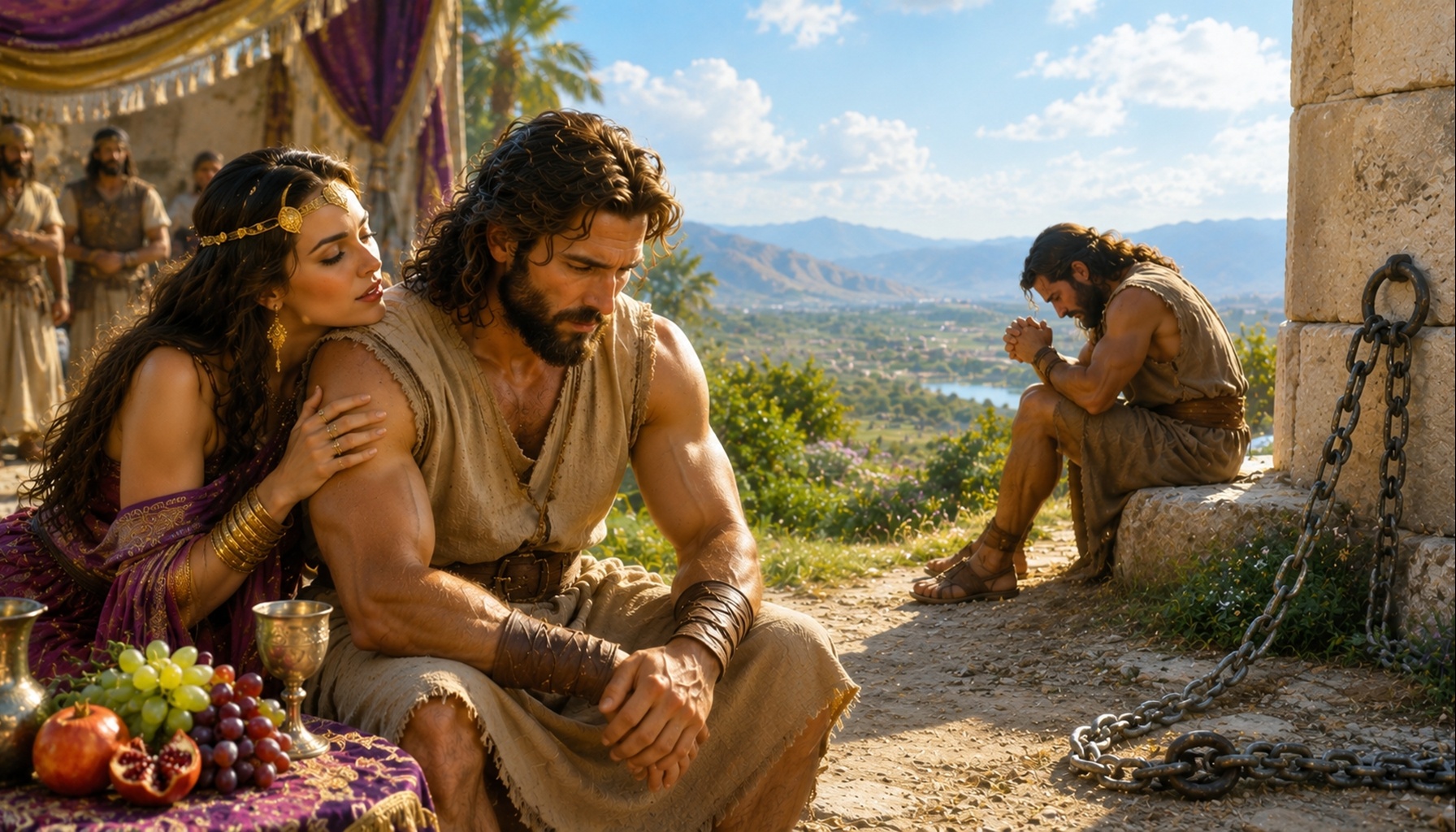
The story of Samson shows exactly this development.
Although God had called him, Samson allowed more and more compromises into his life.
He played with temptations until they finally gained power over him.
👉 Spiritual failure rarely happens suddenly. Most often, it begins with small decisions.
📜 2. The biblical foundation – Samson’s fall
Judges 14 and 16 show how Samson, despite his special calling, repeatedly gave in to temptations.
He was:
- outwardly strong
- but weak in inner character
The problem was not only Delilah or external temptation.
The real problem was that Samson began to trust himself more than God.
He thought: 👉 “I have everything under control.”
But precisely this self-confidence led to his fall.
🌍 3. Connection to today’s world
Even today, Satan often does not work first through open rebellion against God.
Much more often, he uses:
- stress
- entertainment
- social media
- materialism
- work
- worries
- excessive busyness
Many of these things are not wrong in themselves.
But they can take up so much space that hardly any time remains for God.
👉 The enemy does not always need to make people directly evil. Often it is enough for him to keep them spiritually busy and distracted.
💡 4. Central message of the lesson
👉 Spiritual strength does not come from self-confidence, but from daily fellowship with God.
✝️ 5. Theological focus
At the center of this lesson is the reality of the great controversy between Christ and Satan.
The Bible shows that the battle for humanity does not take place only externally, but especially in the mind, in the heart, and in daily decisions.
Satan knows human weaknesses very well. That is why he often specifically attacks the areas that can weaken our relationship with God.
Especially dangerous are:
- pride
- self-assurance
- spiritual indifference
- constant distraction
Samson is a powerful example of this. He was called by God and equipped with extraordinary strength. Yet he fell because his inner life did not have the same strength as his outward abilities.
The lesson shows: 👉 Spiritual gifts never replace daily dependence on God.
Another important theological thought is this: sin often begins long before the visible act.
The battle begins:
- in the mind
- in habits
- in priorities
- in the hidden decisions of the heart
That is why Jesus repeatedly emphasizes the need to spend time with the Father.
Jesus Himself:
- withdrew
- prayed alone
- consciously sought fellowship with God
Although He was sinless, He lived in complete dependence on the Father.
This makes clear: 👉 If even Jesus needed daily fellowship with God, how much more do we need it.
The lesson also points to Revelation 3. There Jesus rebukes spiritual lukewarmness and self-satisfaction.
The greatest problem for many people is not open rebellion, but spiritual sluggishness.
They believe everything is fine while their relationship with God slowly becomes weaker.
👉 Theologically decisive: victory over temptation does not come from human strength, but from a living connection with Christ.
📖 6. The spiritual strategy against temptation
The Bible shows that temptation itself is not yet sin.
Jesus was tempted without sinning.
What matters is how we respond to temptation.
Samson underestimated the danger. Again and again, he approached areas that weakened him spiritually.
Many people do the same today:
- they play with temptations
- they justify compromises
- they postpone spiritual priorities
But sin works destructively. It weakens:
- the conscience
- spiritual watchfulness
- the relationship with God
That is why the lesson calls us to watchfulness.
Jesus said: 👉 “Seek first the kingdom of God.”
Spiritual strength grows where people:
- listen to God’s Word
- pray
- consciously spend time with God
- take temptations seriously
- do not rely on their own strength
Especially important is this: guilt and failure should not drive us away from God.
The enemy wants people to feel worthless and distance themselves from God.
But the gospel invites us precisely in our weakness to return to Christ.
👉 The battle against temptation is not won by willpower alone, but through daily fellowship with Jesus.
🔧 7. Application in daily life
This lesson becomes practical through concrete steps:
- prioritize daily time with God
- honestly recognize spiritual distractions
- consciously limit social media and consumption
- read God’s Word regularly
- do not underestimate temptations
- do not rely on your own strength
❓ 8. Reflection question
What things are currently stealing the most time, attention, or spiritual strength from me — and how are they affecting my relationship with God?
🌟 9. Final thought
Samson did not fall because God had abandoned him.
He fell because, step by step, he weakened his connection with God.
Because:
👉 Whoever wants to remain spiritually strong does not first need more self-control, but more closeness to Jesus Christ.