
🟦 Introduction
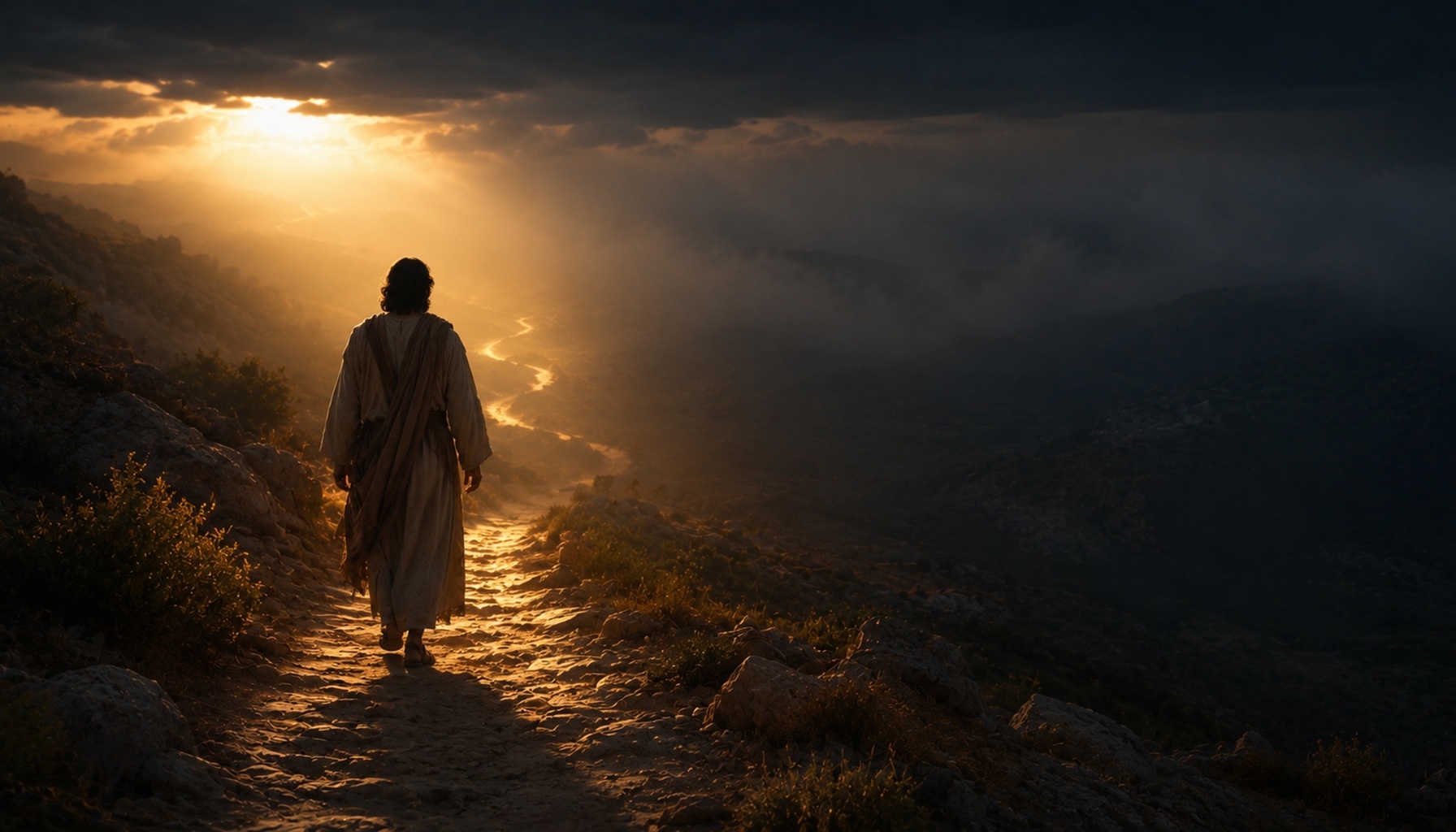
Faith belongs at the center of Christian life, yet many people connect it only with feelings or visible miracles. However, the Bible shows that true faith goes much deeper. It grows where people learn to trust God despite questions, uncertainty, and difficult circumstances. In this lesson, we meet people whose faith was weak, struggling, or challenged — and yet God still worked in their lives. Above all, Jesus Himself is presented as the perfect example of faith, fully trusting the Father even in suffering. This lesson invites us to discover that faith is not perfect strength, but a daily decision to draw closer to God and trust Him.
🌱
🌱 GROWING IN A RELATIONSHIP WITH GOD
🌟 Lesson 8: Having Faith
📘 8.1 Just Give Me a Sign!
Faith does not grow through endless proof, but through an open heart
📖 1. Introduction – The Desire for Visible Proof
Many people think:
👉 “If I saw a miracle, I could truly believe.”
Perhaps we think our faith would be stronger if we had:
- seen the Red Sea parted
- experienced manna from heaven
- watched Jesus’ miracles with our own eyes
But the Bible shows:
Even people who saw great signs still doubted.
The real problem is often not the lack of evidence, but the condition of the heart.
📜 2. The Biblical Foundation – The Pharisees Ask for a Sign
In Mark 8:11–12 the Pharisees again demanded a sign from heaven from Jesus.
What is remarkable is this:
They had already seen many miracles.
Jesus healed:
- the sick
- the blind
- the paralyzed
- the possessed
And still they wanted more proof.
Jesus “sighed deeply in His spirit.”
This sigh reveals pain and sorrow over the unbelief of the people.
👉 Not because there were too few signs,
but because the heart was not willing to believe.
🌍 3. Connection to Today
Even today many people constantly search for:
- visible proof
- special experiences
- spectacular signs
Some say:
“If God really exists, He should show me something supernatural.”
Yet at the same time we live in an age full of evidence of God’s work:
- the Bible
- fulfilled prophecy
- creation
- personal prayer experiences
- the story of Jesus
And yet doubt remains possible.
Why?
Because faith is not only a matter of information, but of inner willingness.
💡 4. Central Message of the Lesson
👉 Signs alone do not create lasting faith.
True faith grows where people learn to trust God and open their hearts to Him.
✝️ 5. Theological Focus
At the center of this lesson is the relationship between faith, signs, and spiritual renewal.
The Bible shows:
God gives humanity many reasons to believe.
The history of Israel, the miracles of Jesus, and the prophetic statements of Scripture form a strong foundation for faith. Yet human beings remain free either to believe or to reject.
The Pharisees are an important example of this. Their problem was not a lack of information, but spiritual resistance. Although they saw signs, they did not want to be changed inwardly.
Ellen White therefore describes:
👉 People did not need additional outward evidence, but spiritual renewal.
This is a decisive theological thought:
Unbelief often does not arise from a lack of evidence, but from a heart unwilling to accept God’s guidance.
The Bible also does not describe faith as “blind faith.” God does not ask people to trust without foundation. John 20:30–31 explains that the signs of Jesus were written down so that people may believe.
At the same time, there is always room for trust beyond what is visible.
Hebrews 11:1 describes faith as:
👉 “the assurance of things hoped for.”
This means:
Faith goes beyond the limits of what can be completely proven or controlled.
Human beings can never answer every question or fully understand every detail. At some point, trust begins.
Especially important are Jesus’ words to Thomas:
👉 “Blessed are those who have not seen and yet have believed.”
By this Jesus does not condemn questions, but He shows:
The highest faith is not based only on visible miracles, but on trust in God’s character.
👉 Theologically decisive:
The greatest miracle is often not an outward sign, but a heart transformed by God.
📖 6. The Spiritual Dynamic of Signs and Faith
The Bible repeatedly shows:
Signs can support faith — but they cannot replace it.
The Israelites saw:
- the Red Sea
- the pillar of cloud
- manna from heaven
And yet they repeatedly fell back into doubt.
The same happened in Jesus’ time.
This makes clear:
👉 Human beings can experience even the greatest miracles and still remain inwardly closed.
On the other hand, there are people who trust God even though they do not see or understand everything.
That is what faith is about:
not only outward experiences,
but a conscious decision of the heart.
Therefore, this lesson challenges us to honestly ask:
- Am I truly seeking God?
- Or am I only seeking proof?
- Would I trust God even if not every question were answered?
God gives enough light for faith,
but not so much that people no longer need faith.
👉 Precisely there lies the tension of the life of faith.
🔧 7. Practical Application
This lesson becomes practical through concrete steps:
- consciously looking back on God’s guidance in the past
- bringing doubts honestly before God
- reading the Bible regularly
- studying fulfilled prophecies
- recognizing God’s work in everyday life
- not constantly seeking spectacular experiences
❓ 8. Reflection Question
Am I truly seeking God — or am I only seeking a sign that will remove my doubt?
🌟 9. Final Thought
Faith often does not begin where all questions disappear.
It begins where a person trusts God despite unanswered questions.
Because:
👉 Ultimately, God’s greatest sign is Jesus Himself — and the invitation to follow Him with an open heart.