

✉️ FIRST AND SECOND CORINTHIANS
🏛️ Lesson 1: Paul’s Ministry in Corinth
🙌 1.4 “Many in This City!”
👀 God Sees People We Do Not Yet See
📖 1. Introduction
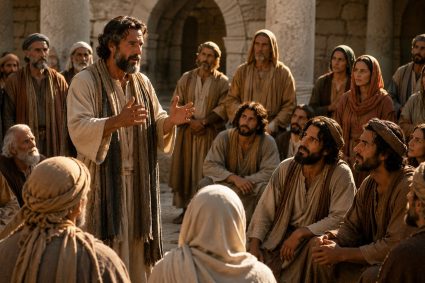
Paul experienced not only open doors in Corinth, but also strong opposition. Especially in the synagogue, he encountered rejection, contradiction, and even slander. For Paul, this was surely discouraging, because he wanted to show his own people that Jesus is the promised Messiah. But although some rejected his message, the Word of God did not remain without fruit. Crispus, the ruler of the synagogue, came to faith in the Lord with his whole household. This experience shows that even when people resist, God often works more deeply than we recognize at first.
📜 2. The Biblical Foundation
In Acts 18 we read:
“And he reasoned in the synagogue every sabbath, and persuaded the Jews and the Greeks.” Acts 18:4
But soon opposition came:
“But when they opposed him and blasphemed, he shook his garments and said to them: Your blood be upon your own heads; I am clean; from now on I will go to the Gentiles.” Acts 18:6
Nevertheless, God continued to work:
“Then Crispus, the ruler of the synagogue, believed on the Lord with all his household; and many of the Corinthians, hearing, believed and were baptized.” Acts 18:8
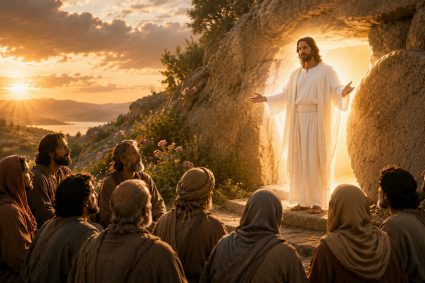
Then the Lord encouraged Paul in a vision:
“Do not be afraid, but speak, and do not keep silent; for I am with you, and no one will attack you to hurt you; for I have many people in this city.” Acts 18:9–10
🌍 3. Connection to Today
Today, Christians also sometimes experience rejection, indifference, or even mockery when they speak about Jesus. Some people want to know nothing about the gospel; others misunderstand the faith or deliberately attack it. This can be discouraging and may lead us to prefer silence. But God’s promise to Paul reminds us that we do not know which hearts God has already prepared. In every city, every church, every family, and every environment, there may be people whom we do not yet see, but whom God has long known. Therefore, we should not give up, but continue to bear witness in trust in God’s presence.
💡 4. Central Message of the Lesson
👉 Even when we experience opposition, we should not remain silent, because God sees people who are open to his Word long before we recognize them.
✝️ 5. Theological Focus
This passage clearly shows that God’s mission does not depend on human approval. Paul preached faithfully in the synagogue, yet many opposed him. Nevertheless, this opposition did not mean that God’s work had failed. God’s Word remains effective, even when people reject it.
Acts 18 shows an important spiritual reality: rejection and fruit can appear at the same time. While some Jews contradicted Paul and slandered him, others came to faith. Especially remarkable is Crispus, the ruler of the synagogue. Precisely someone from the center of Jewish community life recognized Jesus as Lord.
This reminds us that God can reach people from whom we perhaps least expect it. Crispus was not just anyone, but an influential figure in the synagogue. His faith probably had an impact on other people. The conversion of one person can become a testimony for many.
However, Paul also had to draw a boundary. When the opposition increased, he said: “From now on I will go to the Gentiles.” This does not mean that Paul despised his people. Rather, it shows that he had fulfilled his responsibility and now had to follow the next open mission field. Spiritual service requires faithfulness, but also discernment.
Especially important is the vision Paul received during the night. Jesus said: “Do not be afraid.” These words show that Paul must indeed have been afraid. He was not an unshakable hero without feelings. He knew weakness, fear, and trembling. But precisely in this weakness, Christ met him.
The promise “I am with you” is the heart of the encouragement. God’s servants do not stand alone. The success of the mission does not depend only on human strength, rhetoric, or strategy, but on the presence of God. When Christ is with his servant, that servant can continue despite fear.
Jesus also said: “Speak, and do not keep silent.” This is a clear command. Fear can make people silent. Rejection can paralyze the voice of the witness. But Christ calls Paul to keep speaking despite opposition. The message of the gospel must not fall silent, because people need it.
The sentence “I have many people in this city” is especially profound. At that time, many of these people were probably not yet converted. Nevertheless, Christ already called them his people because he knew who would respond to his Word. God sees the future harvest while Paul still sees the present difficulty.
This shows God’s sovereign perspective. People see resistance; God sees possibilities. People see rejection; God sees prepared hearts. People see a difficult city; God sees a people he wants to gather.
This truth gives mission deep hope. We do not proclaim into emptiness. God goes before his Word. He works through his Spirit in hearts before we speak. Our task is to speak faithfully; God’s task is to open hearts.
🌟 6. Spiritual Deepening
The words of Jesus to Paul also speak into our personal fears. Many Christians wish to speak more boldly about their faith, but they fear rejection, mockery, or uncomfortable reactions. This fear is not new. Paul knew it too.
It is comforting to see that God did not condemn Paul because of his fear. Jesus did not appear to him in order to shame him, but to strengthen him. He did not say, “Why are you afraid?” but rather, “Do not be afraid.” God’s encouragement often begins not with criticism, but with his presence.
This is also important for us. Courage does not mean having no fear. Courage means acting in trust in God despite fear. Paul had to keep speaking not because he felt strong, but because Christ was with him.
The statement “I am with you” reminds us of many great promises in the Bible. God told Moses, Joshua, Jeremiah, and other servants that he would be with them. Whenever God sends a person, he gives not only a task, but also his presence.
Isaiah 41:10 also fits this context:
“Do not fear, for I am with you; do not be dismayed, for I am your God.”
This promise shows that God’s presence is stronger than our insecurity. Whoever knows that God is with them does not have to be ruled by outward circumstances. Opposition remains real, but it is not greater than God’s promise.
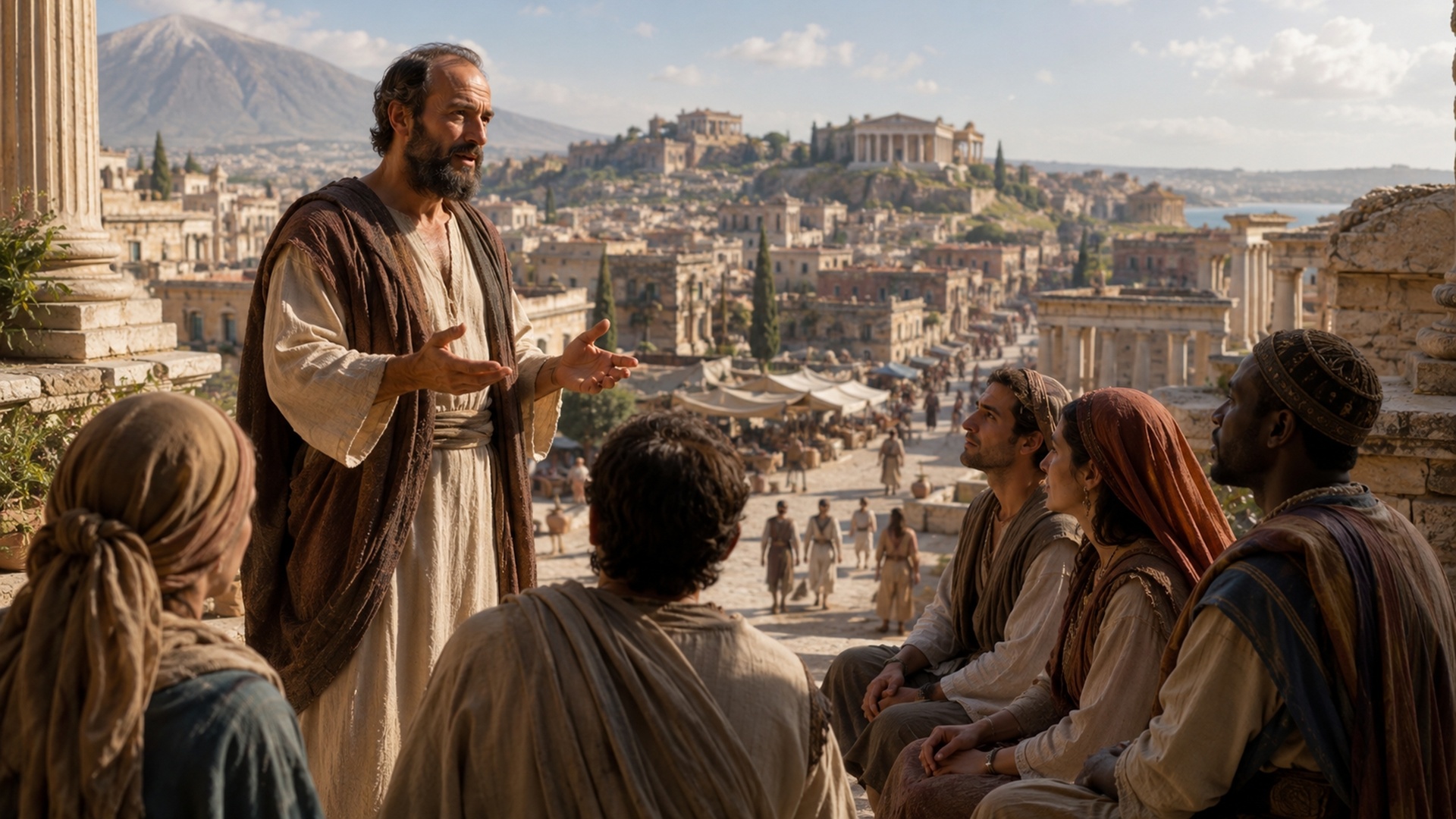
Paul had to learn to see the city of Corinth not only with his own eyes. With human eyes he saw conflict, blasphemy, immorality, idolatry, and rejection. But with God’s eyes there was “many people” there. This is a spiritual change of perspective.
We also need this view of God. Perhaps we see people around us who seem uninterested, critical, or far from God. But we do not know what God is preparing in their hearts. Sometimes the person who rejects the gospel today may be open to it tomorrow.
This lesson protects us from hasty judgments. We should not give up on anyone simply because they do not seem interested at the moment. God knows ways to hearts that seem closed to us. He can work through conversations, crises, kindness, prayer, and the Word of God.
At the same time, this passage teaches us perseverance. Paul remained in Corinth and taught the Word of God there for a year and a half. He did not run away when things became difficult. God’s promise gave him the strength to stay and continue working.
This is an important lesson for churches today. Often we wish for quick results. We want to see people respond immediately, be converted, and grow spiritually. But God’s work sometimes takes time. Faithful proclamation, patient accompaniment, and persistent prayer are indispensable.
The conversion of Crispus also shows that God can open surprising doors in the midst of opposition. Perhaps we pray for a person for a long time and seemingly see nothing. But then God suddenly opens a door. Therefore, we should not give up.
For our own spiritual life, this lesson means: When God gives us a task, he will also give us the strength for it. He knows our limits, our fears, and our weakness. But he does not call us to serve in our own strength. He calls us to trust him.
“Many in this city” is therefore not only a statement about Corinth. It is a window into God’s heart. God loves cities, families, churches, and individual people. He does not see the lost as a hopeless mass, but as people he wants to reach.
This truth should change our prayer. Instead of saying, “No one here is open,” we can pray: “Lord, show me the people you want to reach.” Instead of allowing rejection to paralyze us, we may ask: “Give me courage to keep speaking and not be silent.”
🔧 7. Application in Everyday Life
Practical steps:
- Pray for people around you, even if they have shown no interest so far.
- Ask God for courage to speak about Jesus lovingly and clearly.
- Do not be immediately discouraged by rejection.
- Remember that God sees hearts you cannot yet see.
- Look for open doors instead of focusing only on closed doors.
- Remain faithful, even when results are not immediately visible.
- Ask God to give you his view of your city, church, and family.
- Trust that Christ is with you when he sends you.
❓ 8. Reflection Question
Which people or situations have I perhaps already given up on, although God may still want to work there?
🌟 9. Final Thought
Paul experienced strong opposition in Corinth, but Christ reminded him that God’s work does not fail because of human resistance. While Paul saw fear and rejection, God already saw many people who were to be won for the gospel. This promise gave Paul courage to keep speaking and to remain in Corinth. We too may trust that God knows people around us whom we do not yet recognize. Our task is to bear witness faithfully, lovingly, and courageously. God’s presence is stronger than our fear, and his vision is greater than our limited perception.
“Do not be afraid, but speak, and do not keep silent; for I am with you.” Acts 18:9–10 ✨🙌👀✝️