
✉️ FIRST AND SECOND CORINTHIANS
🤝 Lesson 3: Unity in Christ
🌱 3.3 Wisdom and Maturity
🪨 Spiritual maturity recognizes Christ as the foundation
📖 1. Introduction
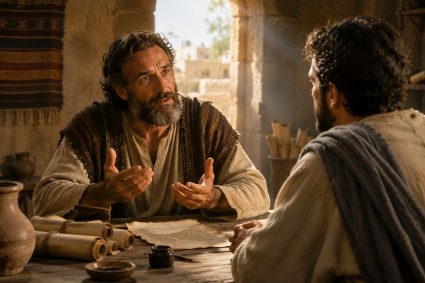
Paul shows the Corinthians that their divisions are a sign of spiritual immaturity. Although they had many spiritual gifts, they still behaved like spiritual children when it came to quarrels and factions. They were impressed by human leaders, eloquence, and outward wisdom, but they had not yet learned to evaluate everything from the perspective of the cross of Christ. Spiritual maturity does not simply mean knowing a great deal, but recognizing Christ as the center and foundation of life. Those who are mature in faith do not place people above Christ. True wisdom begins when we accept God’s perspective and let go of human pride.
📜 2. The Biblical Foundation
Paul writes:
“And I, brothers and sisters, could not speak to you as to spiritual people, but as to carnal people, as to infants in Christ.” 1 Corinthians 3:1
Then he explains:
“I gave you milk to drink, not solid food, for you were not yet able to receive it.” 1 Corinthians 3:2
And he describes their behavior:
“For when there are jealousy and strife among you, are you not carnal and living according to human ways?” 1 Corinthians 3:3
Finally, Paul makes it clear:
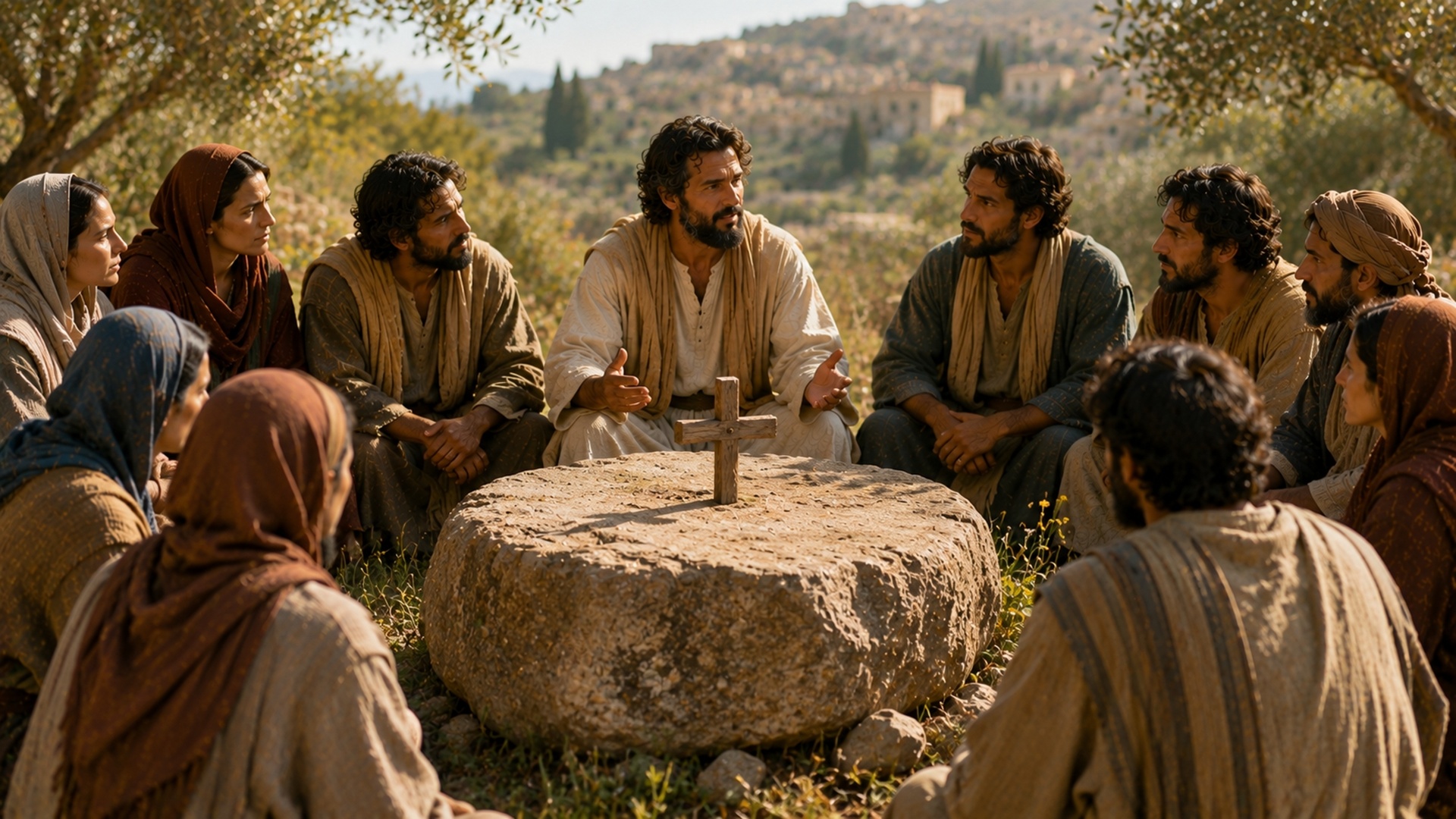
“For no one can lay any other foundation than the one already laid, which is Jesus Christ.” 1 Corinthians 3:11
These verses show that spiritual maturity recognizes Christ as the foundation and does not allow itself to be controlled by strife, jealousy, or admiration for human beings.
🌍 3. Connection to the Present Day
Even today, a church can appear active and gifted outwardly while still behaving in a spiritually immature way. When quarrels, comparisons, jealousy, and factions shape the way people treat one another, it shows that Christ is not truly at the center. Many Christians admire certain leaders, preachers, or personalities so strongly that they begin to look down on others. This creates an atmosphere of competition instead of mutual support and cooperation. Spiritual maturity, however, is not shown by whom we prefer, but by whether we place Christ above everyone else. A mature church learns to respect its leaders without making them the foundation of its faith.
💡 4. Central Message of the Lesson
👉 Spiritual maturity is shown when we do not exalt people or live in strife and jealousy, but recognize Christ as the only foundation of the church and of our faith.
✝️ 5. Theological Focus
The central idea of this passage is the difference between spiritual maturity and spiritual immaturity. Paul calls the Corinthians “infants in Christ.” This means that although they belonged to Christ, they had not yet grown accordingly in their thinking and behavior.
Spiritual immaturity is not shown only by a lack of knowledge, but especially through character. The Corinthians had knowledge and spiritual gifts, yet they lived in jealousy, strife, and division. In this way, Paul shows that gifts are not reliable proof of maturity. A person can be gifted and still behave immaturely.
Paul distinguishes between “milk” and “solid food.” Milk represents the simple, foundational teachings of faith, while solid food represents deeper spiritual understanding and well-developed discernment. The Corinthians should have progressed further spiritually, but their behavior showed that they were not yet ready for deeper teaching.
The problem was not that Paul wanted to withhold the truth from them. The problem was that their attitude made them unable to receive greater spiritual depth. Strife, pride, and jealousy narrow the heart. Those who are ruled by the ego cannot properly understand God’s wisdom.
Paul describes their behavior as “carnal.” By this, he does not simply mean physical, but a way of thinking shaped by the old human nature. Carnal thinking follows human standards: Who is more important? Who has greater influence? Who belongs to whom? Who is right?
Spiritual thinking, by contrast, asks: What does Christ say? What benefits the church? What honors God? What builds others up? Spiritual maturity means that the Holy Spirit shapes our thinking, our judgments, and our relationships.
Paul says that declaring, “I belong to Paul,” or “I belong to Apollos,” is a sign of immature thinking. Paul and Apollos are not competitors, but servants. They have different tasks, yet they serve the same God. One plants, another waters, but God gives the growth.
This is a decisive theological truth. People can serve, teach, encourage, and sow. But spiritual growth comes from God. Therefore, no servant of God should be exalted as though that person were the source of life. God alone produces the fruit.
Finally, Paul leads the church back to its foundation: Jesus Christ. No one can lay another foundation. The church does not stand on human wisdom, giftedness, tradition, or personality, but on Christ alone. When Christ is not the foundation, everything becomes unstable.
Spiritual maturity therefore recognizes two things at the same time: people are instruments of God, but Christ alone is the foundation. Leaders may be appreciated, but they must never occupy the place that belongs only to Christ. Mature Christians can learn from people without becoming dependent on them.
🌟 6. Spiritual Deepening
This lesson invites us to examine our own spiritual growth honestly. Maturity is not primarily shown by how long we have been believers or how much we know. It is shown by how we treat others, how we respond to conflict, and whether Christ is truly our foundation.
Sometimes we confuse knowledge with maturity. A person can know many Bible passages and still be proud, argumentative, or overly sensitive. Someone may understand theological concepts and yet look down on others. Paul shows that true maturity combines knowledge with humility, love, and spiritual discernment.
Jealousy and strife are warning signs. They show that the heart is still strongly shaped by comparison and self-assertion. When I constantly compare myself with others, I lose sight of Christ. When I place myself above others, I forget the grace by which I myself live.
The Corinthians had favorite leaders. The same thing can happen today. We may have favorite preachers, teachers, or styles. Appreciation is not wrong in itself. It becomes dangerous when we idealize people so strongly that we begin to devalue others or become disappointed as soon as our role model shows weakness.
Many Christians have experienced disappointment through people they once admired. This can be painful. Yet such experiences can make us spiritually more mature when they teach us to place our trust more deeply in Christ. People can be instruments of God, but they remain human.
Spiritual maturity also means dealing with disappointment in the right way. When a leader fails, it should not lead us away from Christ. It should remind us that Jesus alone is perfect. Our faith must not rest on people, but on the Lord Himself.
Paul did not want to teach the Corinthians to despise leaders. On the contrary, he shows that Paul and Apollos are God’s fellow workers. But precisely because they are fellow workers, they do not belong on the throne. A mature Christian can honor God’s servants without idolizing them.
The image of God’s field and God’s temple is also important. The church is God’s work. It does not belong to us. It does not belong to a pastor, a group, or a strong personality. When we understand this, we treat the church with greater care, humility, and love.
If the church is God’s temple, then strife is not harmless. Division damages something sacred. Our words, attitudes, and conflicts do not affect only us personally, but also the body of Christ. That is why Paul calls believers to maturity.
Christ as the foundation means that everything must be tested by Him. Our opinions, plans, relationships, ministries, and priorities must be centered on Christ. Whatever is not founded on Him will not endure in the long run.
For everyday life, this means that I must ask myself whether my behavior truly comes from the Spirit of Christ. Do I respond to conflict spiritually or carnally? Do I seek reconciliation, or do I simply want to win? Do I build up or tear down? Do I promote unity or feed conflict?
Spiritual maturity does not grow automatically. It develops through fellowship with Christ, through the Word of God, through prayer, obedience, and a willingness to be corrected by the Holy Spirit. Those who allow themselves to be shaped will mature.
This lesson is encouraging because Paul does not give up on the Corinthians despite their immaturity. He still calls them brothers and sisters. God works with immature people in order to lead them toward maturity. We too are allowed to grow, learn, and let Him transform us.
🔧 7. Application in Everyday Life
Practical steps:
- Examine whether jealousy, strife, or comparison influence your thinking.
- Respect spiritual leaders, but do not place your trust in people.
- Ask God for spiritual maturity, humility, and discernment.
- When conflicts arise, ask yourself whether your response is spiritual or carnal.
- Remember that God gives the growth.
- Consciously build your life of faith on Christ as the foundation.
- Learn from disappointments without becoming bitter.
- Do not seek factions, but reconciliation and the building up of the church.
❓ 8. Reflection Question
Where is spiritual immaturity still visible in my thinking or behavior, and how can Christ become my foundation again in that area?
🌟 9. Closing Thought
Paul shows the Corinthians that strife, jealousy, and the formation of factions are signs of spiritual immaturity. True wisdom does not consist in exalting human leaders, but in recognizing Christ as the foundation. Paul and Apollos were only servants through whom God worked; growth, however, comes from God alone. Today as well, we must learn to appreciate people without placing them in the position that belongs to Jesus. Spiritual maturity is shown through humility, love, unity, and a way of thinking shaped by the Spirit of God. Whoever builds on Christ stands upon the only foundation that truly supports and endures.
“For no one can lay any other foundation than the one already laid, which is Jesus Christ.” 1 Corinthians 3:11 ✨🌱🪨✝️