





🤩 Bible Stories to Marvel At
Where God’s miracles become great – for little and big children
🙏 Job Chapter 13 – Job Wants to Speak with God
⚖️ When a person stands honestly before God
🌅 Introduction
Job had listened carefully to his friends. Again and again, they had tried to explain his suffering. They spoke about God’s wisdom, about guilt and punishment, and about what a person supposedly had to do so that everything would become good again. But the longer they spoke, the heavier Job’s heart became.
Because Job realized that his friends saw his wounds, but they did not understand his pain. They heard his words, but they did not truly listen to his heart. They wanted to give him answers, but those answers felt hard and cold to Job.
Job knew that God is great. He knew that God is wise. He also knew that no human being can press God’s ways into a small explanation. That is why Job became bold. Not because his pain had disappeared, but because he no longer wanted to pretend that his friends’ words were enough.
In this chapter, Job speaks very honestly. He opposes the simple explanations of his friends and clearly says that he would rather bring his case before God. Job is afraid, he is sick, and he feels weak. But deep inside him, a great desire grows: he wants to speak with God Himself.
This chapter tells of a person who, in the middle of suffering, does not stop asking about God. Job does not hide his questions. He does not pretend that everything is easy. He stands honestly before God and shows that true faith sometimes also wrestles, asks, and weeps.
📖 The Biblical Story
🗣️ Job Calls His Friends’ Words Empty
Job began to speak again. His friends had talked for a long time, but to him their words did not sound like comfort. They had acted as if they knew exactly what was in God’s heart. But Job realized that they said many things without truly understanding.
So he made it clear to them that their speeches did not heal him. They were like doctors who come to a sick person but bring no good medicine. They talked a lot, yet their words did not make his soul lighter.
Job felt as if his friends were covering him with beautiful sentences that were empty inside. They wanted to defend God, but in doing so they said things that Job could not recognize as true. For Job, this was painful, because he loved God and did not want people to speak about God as if everything could be explained very simply.
He wished his friends would be silent for a while. Not because he hated them, but because their words hurt him even more. Sometimes silence is more loving than quick answers. Job would have needed comfort, closeness, patience, and a heart willing to endure with him.
⚖️ Job Wants to Bring His Case Before God
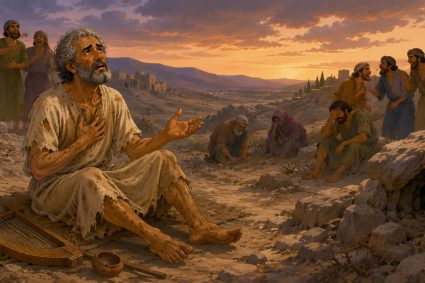
Then Job said something very courageous. He did not want to keep speaking only with his friends. He wanted to speak with God Himself. He wanted to bring his case before God, like a person standing before a judge and honestly telling what had happened.
Job knew that God is holy and powerful. He knew that no human being can simply step before God as if God were an ordinary person. Even so, he longed to open his heart to God.
For Job, this was not a game. He did not speak carelessly. He knew that he was small and God was great. But precisely for that reason, he did not want to stop with his friends’ explanations. If God truly sees everything, then God also sees Job’s heart. If God truly is just, then Job can bring his questions before Him.
A deep determination grew in Job. He did not want to remain silent just because others had misunderstood him. He did not want to give up just because his body hurt. He wanted to stand before God and say what was inside him.
🤲 Job Holds On to God Although He Suffers
Job’s words sound strong, but they come from a heart full of pain. He does not feel safe or at ease. He does not know how God will answer. He does not know whether his friends will finally understand him. Yet in the middle of this uncertainty, he holds on to God.
This is especially important. Job does not run away from God. He does not say that God no longer matters to him. On the contrary: because God matters to him, Job wants to speak with Him. Because he believes in God’s justice, he wants to place his case before Him.
For children, we can imagine it like this: when a child loves his father or mother very much but does not understand something, the child wants to ask. The child does not simply want to run away. The child wants to know why something happened. In a similar way, Job stands before God. He is hurt, but he still seeks God.
Job’s trust does not look like cheerful laughter. It looks like a person with tears in his eyes who still says: I want to speak with God. I do not want to let go of Him. I do not want to hide my questions before people, but bring them before God.
🌫️ Job Asks God for Space to Speak
Then Job’s prayer becomes even more personal. He asks God not to come too near to him with terror. He wishes that God would give him space so he can speak. Job feels small, as if he were standing before an overwhelming power that could crush him.
He asks God to see not only his fear, but also his longing. Job does not want to flee from God. But he needs courage to speak before Him. So he asks: Let me speak. Show me where I am wrong. Answer me.
These words show how serious Job is. He does not want a superficial answer. He does not simply want to hear that somehow everything will be all right. He wants to understand why God allows him to suffer so deeply.
Yet precisely in this there is also a quiet spark of hope. Job speaks to God because he believes that God can hear. He asks because he believes that God can answer. He laments because, deep in his heart, he still knows: God is there.
🕯️ Job Remembers His Weakness
As Job speaks, he also thinks about his own life. He knows that a human being is fragile. Life is not endless. A person may seem strong, but in truth he is dependent on God.
Job feels this fragility especially deeply. His body is sick. His strength has become small. He used to be respected and happy, but now he sits in suffering. He feels as if his life is something that can easily break.
That is why Job asks God why He deals so strictly with a weak person. Why does God pay such close attention to a fragile human being? Why does God seem to pursue him as if Job were an enemy? These questions are difficult, but Job speaks them honestly.
He does not hide behind beautiful words. He tells God what it looks like inside him. And that is exactly what makes this chapter so deep: Job shows that we do not have to pretend before God that we have no fear. We may also tell God the hard questions.
📜 Job Feels Pursued by Old Guilt
Job also speaks about God writing down his mistakes and holding him responsible for guilt. He feels as if even things from earlier days are standing against him again. Perhaps he thinks of mistakes from his youth, of things he can hardly grasp anymore.
Job does not understand why his suffering is so great. He feels as if he were locked in and closely watched. Every step seems to be counted. Every path seems to be limited.
This does not mean that Job claims to be completely without fault. He knows that no human being can simply stand proudly before God. But he does not understand why he is being treated as if he were a terrible enemy of God.
His heart wrestles with a great question: If God is just, why does this suffering feel so heavy and incomprehensible? This question remains in the room like a door that has not yet been opened.
🌟 Job Remains Honest Before God
At the end of this chapter, Job’s suffering has not disappeared. His friends are still there. His illness is still there. His questions are still there. But something important has happened: Job did not swallow his words.
He contradicted his friends and made it clear that quick answers do not help when a person is suffering deeply. He showed that he had not forgotten God. And he expressed his great desire: he wants to speak with God Himself.
Job does not stand there as a hero who never trembles. He stands there as a person who is afraid and still remains honest. He laments, asks, pleads, and hopes. His faith is not loud and easy, but deep and wrestling.
This chapter shows that God hears not only joyful songs, but also honest tears. Job brings his wounded heart before God, and precisely in this we see: he has not yet let go of God.
🌅 What This Chapter Shows
This chapter shows that true friends should not talk over another person’s pain with quick answers. Job did not need harsh explanations, but people who took him seriously and stayed with him.
We also learn that we may come to God with difficult questions. Job speaks honestly because God remains important to him. His wrestling is not running away from God, but a courageous search for God’s nearness and truth.
🟣 Summary
Job answers his friends and tells them that their words do not help him. He calls them poor comforters and makes it clear that their simple explanations are not enough. Job would rather bring his case directly before God. He knows that God is great and powerful, yet precisely for that reason he wants to speak honestly with Him. He asks God for space to speak, laments his suffering, and asks why God deals so strictly with him. Despite his fear and weakness, Job holds on to God and brings his questions before Him.
💚 Message for Children Today
When someone is sad or suffering, we should not quickly act as if we immediately know the answer. Sometimes it is more important to listen, remain kind, and not leave the other person alone.
We may also know this: we can speak honestly with God. Even when we are sad, afraid, or do not understand something, we may show God our heart. God is big enough for our questions.
💭 Reflection
🔸 Why did Job not feel comforted by his friends?
🔸 Why did Job want to speak with God Himself instead?
🔸 How can we help a person who is sad and does not need quick answers?
🧒 👧 👦
💌 Invitation to Job Chapter 14
🍂 Job Thinks About Life
Job has spoken honestly before God. He has rejected his friends’ words and shown that he does not want to hide his questions.
But now Job looks even more deeply at human life. He sees how short and fragile life is, and he wonders whether there is hope when everything passes away.
What does Job discover when he thinks about the days of human beings?
Come along and discover the next chapter!
🔔 Teaser for Job Chapter 14
🌱 When a Person Searches for Hope
Job thinks about life. He sees that people bloom like flowers and then fade away.
👉 Why does Job compare human beings to a flower?
👉 What difficult questions does he ask about life and death?
👉 And where does a small spark of hope shine in the middle of his words?
✨ In the next chapter, we will hear how Job speaks about the fragility of life and still searches for hope.