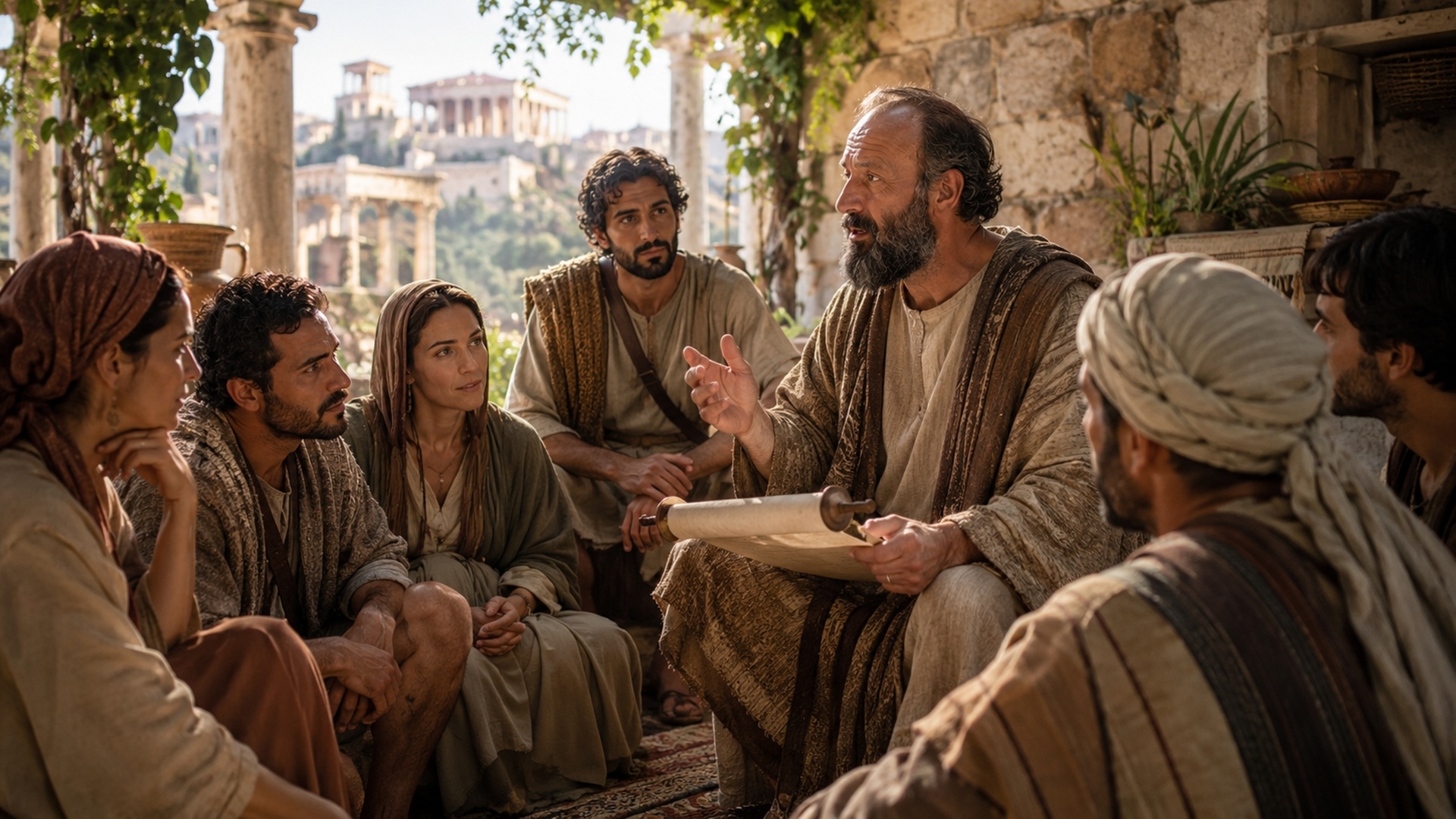
✉️ FIRST AND SECOND CORINTHIANS
✝️ Lesson 2: The Message of the Cross
🕊️ 2.5 Christ, the Power and Wisdom of God
💎 Christ alone is God’s power and wisdom for salvation
📖 1. Introduction
Paul shows in 1 Corinthians 1 that God’s wisdom and human wisdom are not on the same level. People often seek strength, influence, reputation, and clever solutions, but these things cannot save human beings from sin. Christ alone is the power of God, because only He has the power to forgive guilt and give new life. At the same time, Christ is the wisdom of God, because through Him God solved the problem of sin. What the world regards as weak or foolish is, in truth, God’s perfect plan of salvation. Therefore, no one should boast in their own wisdom or strength, but only in the Lord.
📜 2. The Biblical Foundation
Paul writes:
“But to those who are called, both Jews and Greeks, Christ the power of God and the wisdom of God.” 1 Corinthians 1:24
He further says:
“For the foolishness of God is wiser than men, and the weakness of God is stronger than men.” 1 Corinthians 1:25
And he reminds the church:
“For consider your calling, brothers: not many of you were wise according to the flesh, not many were powerful, not many were of noble birth.” 1 Corinthians 1:26
At the end, Paul summarizes:
“Let the one who boasts, boast in the Lord.” 1 Corinthians 1:31
These verses show that Christ is the true power and wisdom of God, and that all human honor must step back before Him.
🌍 3. Connection to Today
Even today, many people trust in human wisdom, education, status, power, or success. These things can be useful, but they must never take the place of Christ. Our time admires strong personalities, great achievements, influence, and self-presentation. But Paul reminds us that God often uses precisely what is weak, unimpressive, and lowly to make His glory visible. Even in the church, there is the danger of judging people according to talent, education, position, or outward success. Yet the gospel teaches us: what matters most is not what a person can show, but what Christ has done for them.
💡 4. Central Message of the Lesson
👉 Christ alone is God’s power and wisdom for salvation; therefore, we should not trust in human strength, but boast only in the Lord.
✝️ 5. Theological Focus
The most important thought in this section is that Christ Himself is God’s power and God’s wisdom. Paul does not merely say that Christ gives power or teaches wisdom. He says: Christ is the power of God and the wisdom of God. In Him, God reveals who He is and how He saves.
Human wisdom can accomplish many things. It can research, explain, plan, and create. But it cannot solve humanity’s fundamental problem: sin. No philosophical system, no political power, no education, and no human achievement can reconcile human beings with God. For that, Christ is needed.
Christ is God’s power because through Him salvation becomes possible. At the cross, He defeated sin, guilt, and death. His power is not first shown in outward force, but in redemption, forgiveness, and new life. The greatest power of God becomes visible when He saves sinners.
Christ is also God’s wisdom because in Him God’s plan of salvation is perfectly revealed. No human being would have imagined such a way: the Son of God becomes man, humbles Himself, dies on the cross, and through His death gives life. To human thinking this seems contradictory, but precisely in this lies God’s wisdom.
Paul says that the “foolishness” of God is wiser than human beings. Of course, he does not mean that God is truly foolish. He is speaking from the perspective of the world. What people consider foolishness is, in reality, higher than all human wisdom. God’s plan surpasses human understanding.
Likewise, Paul says that the “weakness” of God is stronger than human beings. Here too, he does not mean that God is weak. The cross looked like weakness, defeat, and shame. Yet precisely there God accomplished the greatest victory. The apparent weakness of Christ is stronger than all human power.
Then Paul turns his attention to the calling of the Corinthians. Not many wise, powerful, or noble people were called. This does not mean that God excludes educated, influential, or wealthy people. But it shows that God’s kingdom is not built on human status.
God often chooses the weak, the lowly, and the despised so that no one may boast before Him. The church must understand: it does not exist because of human greatness, but because of divine grace. Everything it is, it owes to Christ.
This is a profound truth. God does not build His work on human pride, but on dependence on Him. Those who consider themselves strong often fail to recognize their need. But those who know they are weak can experience God’s grace all the more deeply.
The theological focus ends in 1 Corinthians 1:31: “Let the one who boasts, boast in the Lord.” This is the right response to the gospel. Human beings should not celebrate themselves, but honor God. All boasting belongs to Christ, because He alone saves.
🌟 6. Spiritual Deepening
This lesson invites us to honestly examine our trust. What do I rely on inwardly? On my knowledge? On my experience? On my position in the church? On my gifts? On my piety? Or on Christ alone?
It is easy to say with our lips that Christ is our strength, while in daily life we still build on our own abilities. Sometimes we plan, work, and serve as if everything depended on us. Of course, we should use our gifts, but we must never forget: spiritual fruit comes from God.
The Corinthians were tempted to admire human wisdom and outward strength. We too can fall into this trap. We compare preachers, leaders, churches, methods, and programs. We ask who is more impressive, more successful, or more influential. But Paul turns our eyes away from human beings and toward Christ.
The cross turns our value system upside down. Before God, it is not the one who shines the most who matters, but the one who belongs to Christ. Human reputation does not save; divine grace does. Our strength does not make us useful, but God’s power in our weakness.
This is especially comforting for people who feel weak, insignificant, or unqualified. Perhaps you think: I do not have enough knowledge, enough influence, enough courage, or enough ability. But God does not use only the strong. Often He uses precisely those people who know they depend on Him.
Paul does not want us to call laziness or lack of preparation spiritual. But he does want us to recognize our limits and seek God’s power. A gifted person without humility can become dangerous. A weak person in God’s hands can become a blessing.
Christ as God’s wisdom also means that we allow our decisions to be shaped by Him. The world says: Seek your own advantage first. Christ says: Follow Me. The world says: Strengthen yourself. Christ says: Trust My grace. The world says: Boast in your achievements. Christ says: Boast in the Lord.
This truth also transforms the church. A church that recognizes Christ as power and wisdom will pay less attention to status. It will not evaluate people according to background, education, money, influence, or talent. It will gratefully see that every believer lives by grace and that God can use different people for His service.
At the same time, this lesson protects us from spiritual pride. Even spiritual knowledge can become a reason for pride. One can be proud of knowing much, being right, or being faithful. But Paul reminds us: everything we have, we have received.
When we boast in the Lord, it means that we give Christ the glory for our salvation, our gifts, our strength, and every fruit in our lives. We acknowledge that without Him we are nothing. This does not make us small in a destructive sense, but free. We do not have to prove ourselves, because Christ is enough.
Christ is our strength when we are weak. He is our wisdom when we do not know how to go on. He is our righteousness when we recognize our guilt. He is our sanctification when we need transformation. He is our redemption when we seek hope.
Therefore, this lesson does not lead to inferiority, but to worship. We look to Christ and say: Everything I need I find in Him. My salvation does not rest on me, but on Him. My worth is not found in my performance, but in His grace.
🔧 7. Application in Daily Life
Practical steps:
- Examine what you truly trust in your daily life.
- Ask Christ to be your strength and wisdom.
- Do not constantly compare yourself with other people.
- Do not evaluate people according to status, education, money, or outward success.
- Use your gifts humbly for the glory of God.
- Confess to God where spiritual pride or self-reliance shapes your heart.
- Remember that salvation happens by grace alone.
- Do not boast in your achievements, but in the Lord.
❓ 8. Reflection Question
Where do I rely more on human strength, knowledge, or recognition than on Christ, the power and wisdom of God?
🌟 9. Closing Thought
Christ is God’s power and God’s wisdom for salvation. What the world sees as weak or foolish is, in truth, God’s perfect way of freeing human beings from sin and death. Paul reminds the Corinthians that God does not choose and act according to human standards. No one should boast before God in their own wisdom, power, or position. Everything we are and have we owe to Christ. Therefore, this also applies to us: Let the one who boasts, boast in the Lord.
“Christ, the power of God and the wisdom of God.” 1 Corinthians 1:24 ✨🕊️💎✝️