
🌱 GROWING IN A RELATIONSHIP WITH GOD
💧 Lesson 10: Repentance and Forgiveness
📘 10.6 Summary
From Sin to Forgiveness – God’s Way of Restoration
📖 1. Introduction
Lesson 10 shows God’s wonderful answer to the problem of sin. After considering the destructive nature of sin in the previous lesson, our focus now turns to God’s plan of salvation. The Bible reveals a God who does not abandon sinful humanity, but actively seeks it. From Eden to the cross, the same thread of grace runs through the history of salvation. God’s goal is not condemnation, but restoration. That is why repentance, forgiveness, and the righteousness of Christ are at the center of this lesson.
📜 2. God’s First Step Toward Salvation
After the fall into sin, Adam and Eve hid from God. Yet it was God who took the first step and wanted to restore fellowship. This pattern runs throughout the entire Bible: God seeks humanity before humanity seeks Him. Christ came into this world to bridge the separation between heaven and earth. The gospel does not begin with human achievement, but with divine initiative.
🔄 3. God’s Call to Return
In the book of Hosea, the word “return” (shub) is central. Repentance does not mean only regret, but a conscious return to God. Just as Hosea’s wife was to return to her husband, God also calls His people back into fellowship with Him. True repentance includes the decision to leave one’s own way and choose God’s way. God’s call to return is always a call back to life.
💡 4. Walking in God’s Light
John describes God as light and invites us to live in that light (1 John 1:5–7). Whoever lives in the light honestly recognizes their sin and does not hide it. At the same time, they experience cleansing and forgiveness through Christ. The greatest danger is denying one’s own sinfulness. But whoever confesses their guilt experiences the liberating power of God’s forgiveness.
✝️ 5. God’s Character as the Foundation of Our Hope
Perhaps the most beautiful passage in this lesson is found in Exodus 34:6–7. There God reveals His character:
“Merciful and gracious, slow to anger, and abounding in goodness and truth.”
This self-description of God forms the foundation of our trust. Our hope does not rest on our faithfulness, but on God’s faithfulness. His mercy flows from His heart like a mother’s love for her child. His grace is freely given. His patience surpasses our imagination.
It is especially remarkable that God speaks these words immediately after Israel’s serious fall with the golden calf. Precisely where sin had become great, God revealed the greatness of His grace. This shows that God’s forgiveness is not an exception to His nature, but a central expression of His character.
This truth gives hope to every Christian. Even when we fail, God’s invitation remains. His grace does not mean that sin is insignificant, but that God’s love is greater than our failure. Therefore, we may come again and again to the cross and trust that God is willing to forgive.
👗 6. The Garment of Christ’s Righteousness
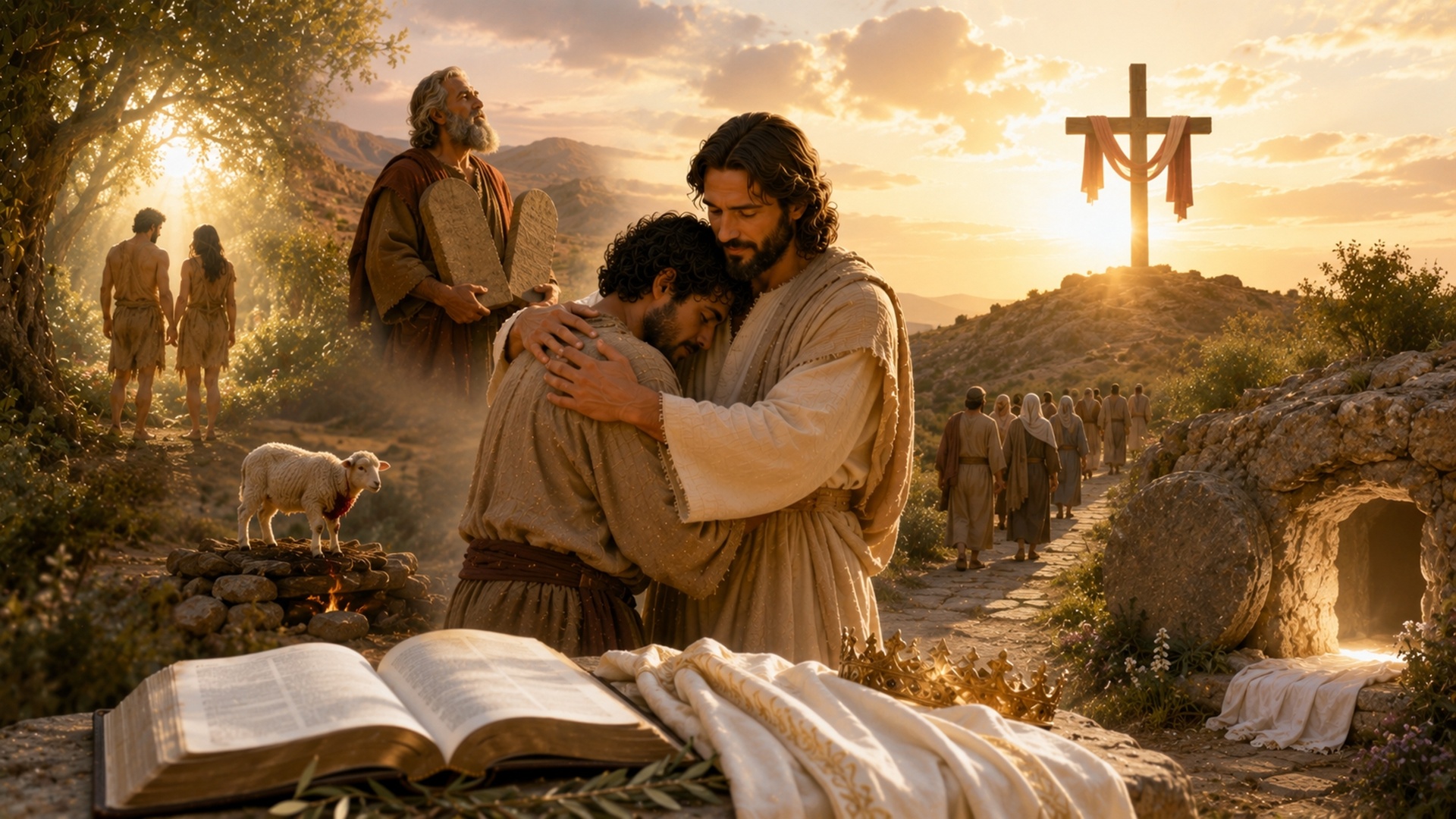
One of the strongest images in this lesson is the new garment that God gave Adam and Eve. After they tried to cover their nakedness with fig leaves, God replaced their own solution with a garment provided by Him.
This event is far more than a historical incident. It points directly to Christ.
The fig leaves symbolize human attempts to save oneself:
- good works,
- religious achievements,
- one’s own righteousness.
But none of these efforts can remove human guilt.
That is why God Himself provided the garment. For this, a sacrifice had to be made—a reference to the future sacrifice of Jesus Christ. The animal died in their place so that Adam and Eve could be covered. In the same way, Christ died in our place so that we may receive His righteousness.
The Bible describes this garment as:
- the robe of salvation (Isaiah 61:10),
- the white robes of the redeemed (Revelation 7:14),
- the wedding garment of the Lamb (Matthew 22:11–14).
Whoever accepts this garment does not appear before God in their own righteousness, but in the perfect righteousness of Christ. This is the foundation of our redemption. We are not saved because we are good enough, but because Jesus was perfect and gives us His righteousness.
🔧 7. Application in Daily Life
This lesson invites us to:
- listen daily to God’s voice,
- honestly confess sin,
- not postpone repentance,
- accept God’s forgiveness,
- and consciously rely on the righteousness of Christ.
Spiritual growth always begins where honesty and grace come together.
❓ 8. Reflection Question
Do I truly trust in daily life that Christ’s righteousness is sufficient, or am I still trying to make myself acceptable before God through my own achievements?
🌟 9. Final Thought
Lesson 10 reveals a God who does not reject sinners, but seeks, calls, forgives, and clothes them anew. His grace leads to repentance, His forgiveness gives peace, and His righteousness completely covers our guilt. Whoever answers God’s call leaves the darkness and steps into His wonderful light. The greatest gift of the gospel is not only forgiveness, but the certainty that we are fully accepted in Christ.
“If we confess our sins, He is faithful and just to forgive us our sins and to cleanse us from all unrighteousness.” (1 John 1:9) ✨