


✉️ FIRST AND SECOND CORINTHIANS
🤝 Lesson 3: Unity in Christ
🙇 3.4 Christlike Servanthood
👐 True leadership is revealed through humble service
📖 1. Introduction
Paul shows the Corinthians that Christian leadership must be understood very differently from worldly leadership. In Corinth, leaders were apparently evaluated according to reputation, eloquence, influence, or personal preference. But Paul makes it clear that leaders in the church are not masters over others, but servants of Christ. They do not manage their own work, but what God has entrusted to them. The highest example of this service is Jesus Himself, who humbled Himself and took the form of a servant. True spiritual leadership is therefore not shown through pride and power, but through humility, faithfulness, and selfless love.
📜 2. The Biblical Foundation
Paul writes:
“Let a man so consider us, as servants of Christ and stewards of the mysteries of God.” 1 Corinthians 4:1
Then he adds:
“Moreover it is required in stewards that one be found faithful.” 1 Corinthians 4:2
Philippians 2 also shows us the example of Christ:
“Let this mind be in you which was also in Christ Jesus.” Philippians 2:5
And concerning Jesus it says:
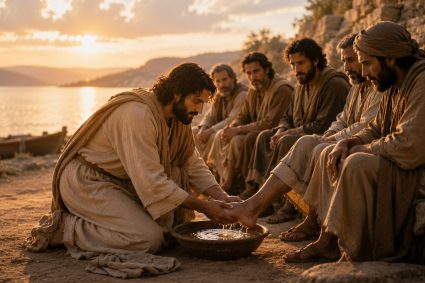
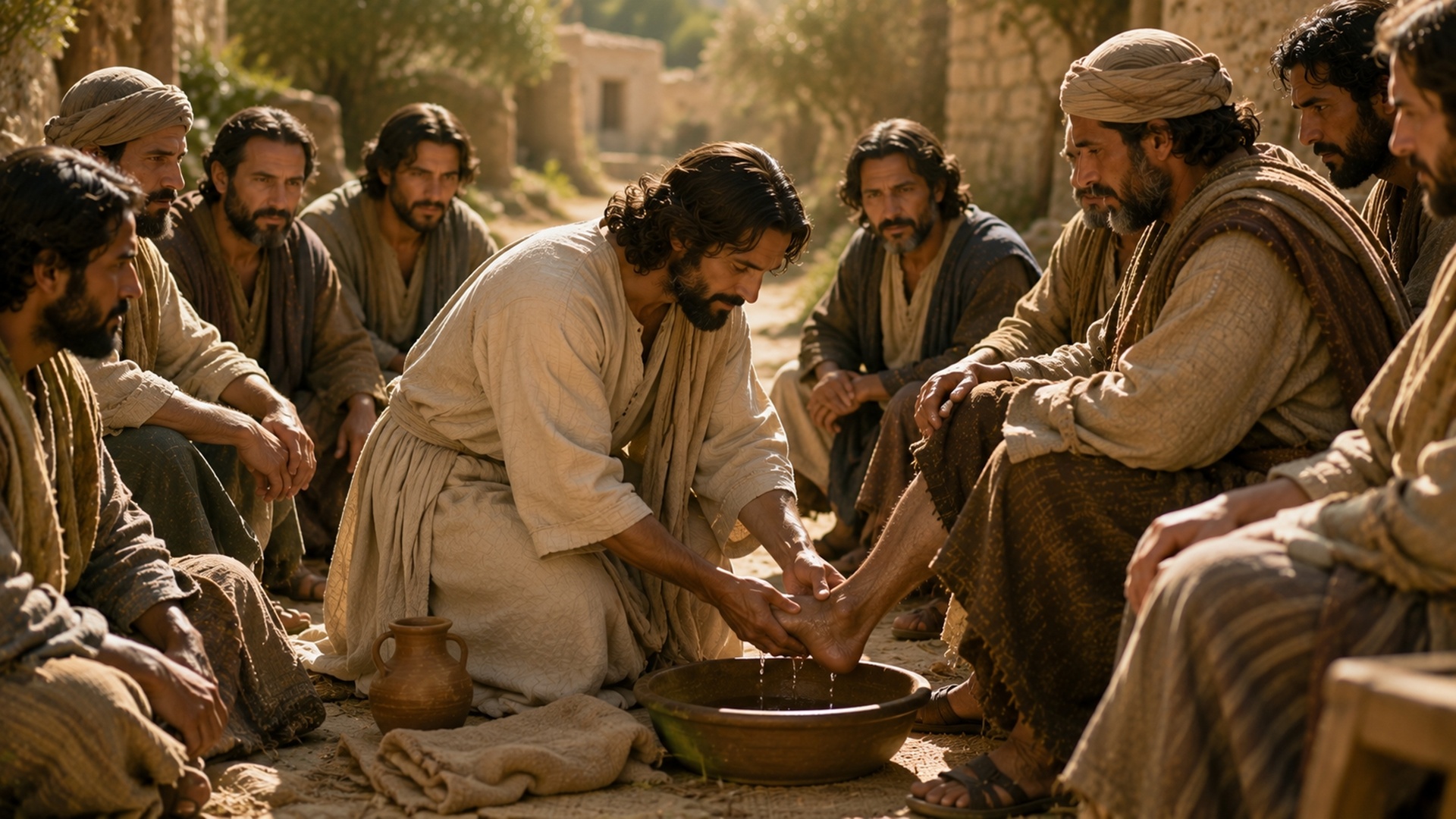
“He made Himself of no reputation, taking the form of a bondservant, and coming in the likeness of men.” Philippians 2:7
These verses show that Christian service is not guided by human greatness, but by the humble attitude of Jesus.
🌍 3. Connection to Today
Even today, leadership is often associated with influence, visibility, success, and recognition. Many people want to be seen, admired, or affirmed. This attitude can also enter the church when leaders or workers compete for importance, position, or control. Paul reminds us that spiritual leadership is not primarily a matter of talent, personality, or status, but of faithfulness. Those who serve Christ should not make themselves great, but faithfully manage God’s mission. The church needs leaders and workers who ask more often how they can serve than how they are perceived.
💡 4. Central Message of the Lesson
👉 True Christian leadership means serving like Christ: humbly, faithfully, selflessly, and not for personal honor, but for God’s mission and the well-being of others.
✝️ 5. Theological Focus
The central idea of this lesson is that Christian leaders should be understood as “servants of Christ” and “stewards.” Paul wants to correct the Corinthians’ false view. They judged leaders by human standards, but Paul leads them back to God’s standard.
A servant of Christ does not belong to himself. He does not act in his own name or pursue his own goals. His service is subject to Christ. This means that Christ determines the message, the attitude, and the purpose of the service.
Paul also uses the image of a steward or manager. A steward does not own what he manages. Something has been entrusted to him, and he must handle it responsibly. In the same way, spiritual leaders are stewards of God’s mysteries, meaning the message of the gospel.
The most important quality of a steward is faithfulness. Paul does not say that a steward must first be successful, popular, impressive, or especially gifted. He says that he must be found faithful. This is a decisive difference from human standards.
Faithfulness means carrying out God’s mission reliably, even when it is not visibly rewarded. Faithfulness means remaining with the truth, even when it is unpopular. Faithfulness means serving Christ, even when people do not properly recognize or appreciate the service.
Philippians 2 shows us that this attitude comes from the very nature of Jesus. Christ, who existed in divine form, did not cling to His glory, but humbled Himself. He became human, took the form of a servant, and was obedient even to death on the cross.
This is the deepest foundation of Christian leadership. Jesus did not lead through self-exaltation, but through surrender. He did not rule through oppression, but served in love. He did not seek His own advantage, but the salvation of others.
When Paul speaks of the “mind of Christ,” he means precisely this attitude. Christlike thinking is revealed in humility, self-denial, and willingness to serve. A Christian does not think in a Christian way only when he knows correct doctrines, but when his heart is shaped by the attitude of Jesus.
This also means that spiritual leadership must always be tested at the cross. Does my service reflect the attitude of Jesus? Am I seeking my own honor or God’s honor? Am I serving people, or using people for my own goals? Am I willing to step back?
Theologically, Christian service is not a stage for the ego, but an expression of discipleship. Whoever follows Christ follows a Lord who humbled Himself. Therefore, leadership in the church can never be built on pride, manipulation, or the pursuit of power.
🌟 6. Spiritual Deepening
This lesson speaks not only to leaders, but to every Christian. Every believer is called in some way to serve. We serve in the family, in the church, at work, in relationships, and in everyday life. The question is: Do we serve like Christ?
Serving like Christ begins with an inner attitude. It is not enough merely to complete tasks outwardly. A person can do a great deal and still seek recognition, control, or personal importance. Christlike service first asks: How can I honor God and become a blessing to others?
This is challenging because our hearts often want to be seen. We enjoy praise, and that is human. But when recognition becomes the main motivation, service loses its purity. Paul reminds us that what matters is not whether people admire us, but whether God finds us faithful.
Looking to Jesus heals our relationship with service and leadership. Jesus had every right to glory, yet He chose the path of humility. He served people who often did not understand Him. He loved people who rejected Him. He gave Himself for people who needed Him.
When we look at this love, we are freed from the pressure to prove ourselves. We do not need to appear greater than we are. We may simply be faithful servants. God also sees hidden service.
This is especially important in a time when so much is made visible. People share achievements, successes, and impressions. Even spiritual service can become self-promotion. Yet the kingdom of God is often built through people who serve quietly, faithfully, and humbly.
Paul says that leaders are stewards. This reminds us that everything we have has been entrusted to us: time, gifts, influence, knowledge, opportunities, and spiritual responsibility. None of it belongs to us absolutely. One day we will give an account to God for how we used it.
This truth produces humility. It protects leaders from treating the church as their own property. The church belongs to Christ. People belong to Christ. Gifts belong to Christ. Service belongs to Christ.
Serving like Christ also means considering others above ourselves. This does not mean making ourselves worthless. It means not constantly seeking our own advantage. It means paying attention to the needs of others and being willing to share their burdens.
In the church, this attitude can change many things. Many conflicts arise because people struggle for recognition, influence, or their rights. But when we have the mind of Christ, we do not ask first: What am I entitled to? Instead, we ask: How can I contribute to unity, healing, and encouragement?
Christlike service is not weak in a negative sense. Humility does not mean having no convictions. Jesus was humble and at the same time faithful to the truth. Paul was also a servant and yet courageous in correction. True humility is not fear of people, but obedience to God.
This lesson invites us to examine our motivation. Why do I serve? Why do I take responsibility? Why do I speak, teach, help, or lead? Is it about Christ or about me?
God is not looking for perfect servants, but faithful servants. People who are willing to be shaped by Christ. People who do not use their gifts for their own glory, but for building up the body of Christ.
When we serve like Christ, our service becomes a testimony. People then see not first our ability, but something of the character of Jesus: patience, love, humility, faithfulness, and devotion. That is true spiritual leadership.
🔧 7. Application in Daily Life
Practical steps:
- Ask God to give you the mind of Christ in service.
- Examine your motivation: Are you seeking God’s glory or human recognition?
- Serve faithfully, even when your service is hidden or receives little attention.
- Do not treat people as means to achieve your goals, but as people whom Christ loves.
- Use your gifts as something entrusted to you by God.
- Learn to encourage others instead of competing with them.
- Ask God for humility when you carry responsibility.
- Remember that faithfulness is more important than outward success.
❓ 8. Reflection Question
Where is God calling me to set aside my ego and serve more like Christ in a specific situation?
🌟 9. Closing Thought
Paul shows that leaders in the church should not be regarded as stars or party leaders, but as servants of Christ and stewards of God. The standard for their service is not human admiration, but faithfulness before God. Jesus Himself is the highest example: He humbled Himself, took the form of a servant, and served all the way to the cross. Therefore, whoever follows Christ is called to a life of humility, surrender, and selfless love. True leadership is not shown by standing above others, but by serving them in the spirit of Jesus. A church becomes healthy when its leaders and members together reflect the mind of Christ.
“Let a man so consider us, as servants of Christ and stewards of the mysteries of God.” 1 Corinthians 4:1 ✨🙇👐✝️