



🌿 Traces of Creation – Discoveries from Nature
🦋 Series 2: Transformation and Order – What Insects Teach Us
🧭 Episode 2 – Navigation Without Overview
🐝 How Insects Find Their Way
🌍 Introduction: Orientation Without a Map
When humans orient themselves, they use tools.
Maps, signposts, GPS, stored routes. Without such support, we quickly lose the overview.
Insects have none of these.
And yet they move safely through a world
that for them is विशाल, complex, and constantly changing.
Ants find the shortest path to the nest.
Bees return from kilometers away.
Butterflies cross continents.
How is orientation possible,
when there is no overview?
🐜 1. Ants: Precision at Ground Level
Ants are among the best navigators in the insect world.
They move:
- through complex terrain
- without an elevated perspective
- often over long distances relative to their body size
They use multiple sources of information simultaneously:
- scent trails
- step counting
- light and sun position
Particularly remarkable is the so-called path integration.
Ants count their steps and remember changes in direction.
Even when they must take detours,
they find the direct way back.
An error in counting
would lead them away from the nest—
and often mean death.
👃 2. Scent as a Guide – But Not Alone
Scent trails play an important role,
but they do not explain everything.
Rain can wash them away.
Wind can distort them.
Foreign trails can confuse.
And yet ants still find their destination.
This shows:
Scent is one part,
but not the whole solution.
Navigation arises through combination,
not through a single signal.
🐝 3. Bees: Orientation in Three Dimensions
Bees do not only move along the ground,
but through space.
They orient themselves using:
- landscape features
- the position of the sun
- the polarization of light
Even on cloudy days
they can determine the sun’s position,
because they perceive patterns in the sky
that are invisible to us.
This ability allows them,
to return to the hive
even from great distances.
💃 4. The Dance Language: Passing on Navigation
Bees not only navigate themselves—
they also communicate routes.
The so-called waggle dance
conveys information about:
- direction
- distance
- quality of a food source
The dance is precisely encoded.
Small deviations change the message.
This means:
Navigation here is not only perception,
but information transfer.
🦋 5. Butterflies: Orientation Across Generations
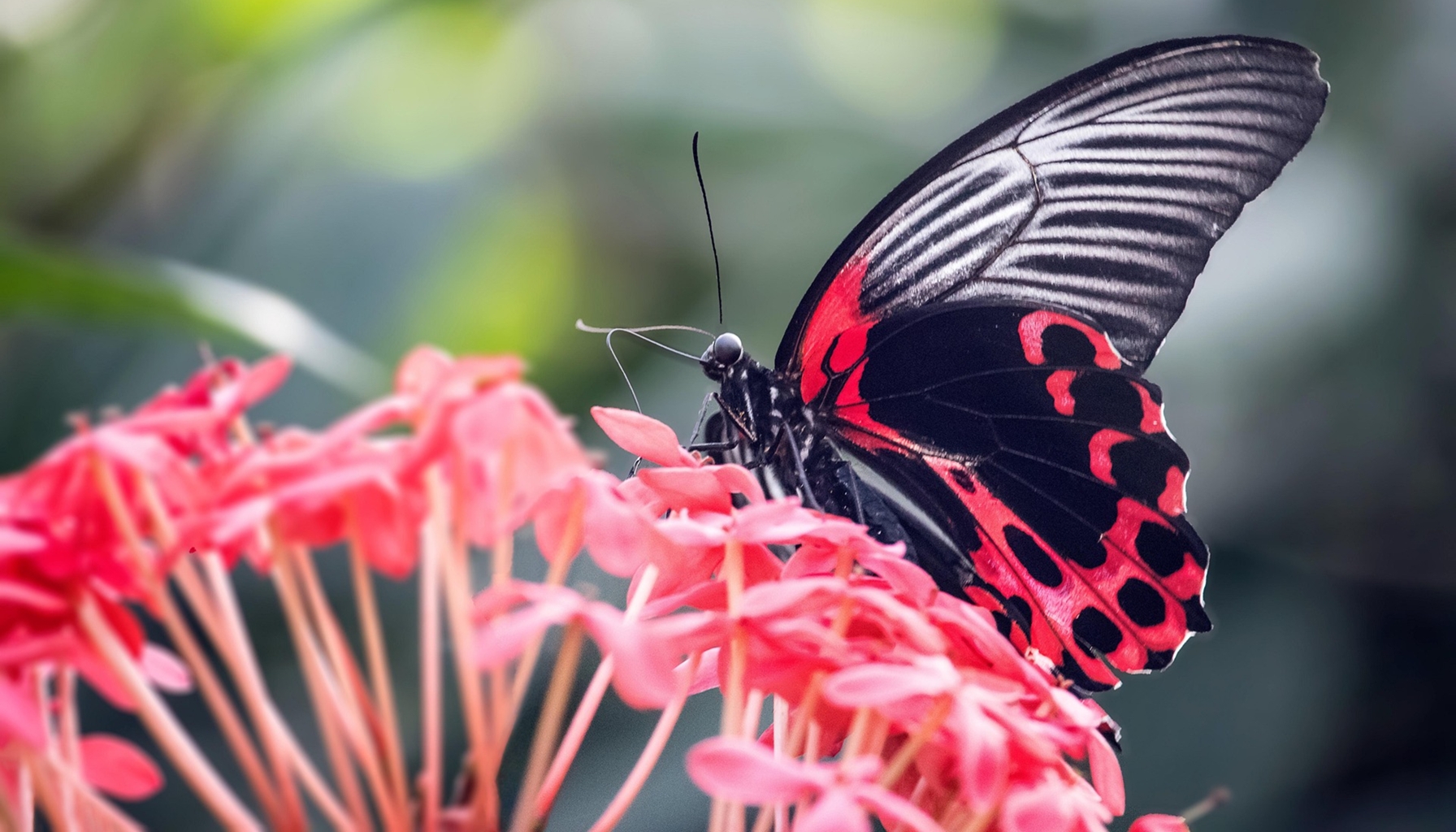
Particularly impressive is the navigation of migratory butterflies,
such as the monarch butterfly.
No individual insect:
- knows the entire route
- flies both directions
- personally learns the destination
And yet successive generations
reach the same overwintering site.
This requires:
- an internal directional system
- a sense of time
- adaptation to environmental conditions
Orientation here occurs without experience.
⚙️ 6. Orientation as a System, Not a Trick
Insect navigation is not a single mechanism.
It is a system.
Sensors, processing, and response
work together.
An isolated sense
would not be sufficient.
Here, too, a familiar pattern appears:
👉 Function arises through interaction.
🎯 7. Reliability from the First Use
As with metamorphosis, the same applies here:
Navigation must work the first time.
An insect cannot afford to get lost,
in order to learn from it.
The world is too dangerous.
Resources are too scarce.
Reliability is not an optimization,
but a prerequisite.
🧠 8. A Rational View of Orientation
In technical systems:
Navigation requires:
- reference
- storage
- evaluation
That tiny nervous systems
can achieve such performance
challenges our understanding.
Not through magic,
but through highly condensed order.
✝️ 9. The Christian Perspective: Orientation Without Overview
The Christian view of creation
emphasizes that orientation does not always
arise from complete overview.
Insects act with certainty,
without comprehending the whole world.
This points to an order,
that does not depend on conscious control,
but on reliable endowment.
Not as proof,
but as an interpretation of an observable reality.
📘 10. What Insect Navigation Teaches Us
Insect navigation teaches us:
- Overview is not a prerequisite for orientation
- Information can be small yet reliable
- Order operates even where we do not expect it
Perhaps it also reminds us,
that safe paths do not always
arise from complete knowledge.
✨ Final Thought
An ant returning to its nest,
has no map in its mind.
And yet it follows a path,
that reliably leads it to its destination.
Whoever is willing to take this quiet precision seriously,
will also discover here
traces of creation.
