🌱 GROWING IN A RELATIONSHIP WITH GOD
🌧️ Lesson 11: Setbacks
🚶♂️ 11.4 The Road to Emmaus
✨ When God has a greater plan than we can see
📖 1. Introduction
Every person experiences moments when hopes are shattered. We pray, plan, and trust in God’s guidance, yet sometimes things develop completely differently than expected. In such situations, disappointment, confusion, and doubt arise. That is exactly what the two disciples experienced on the road to Emmaus. For them, the death of Jesus was the end of all their hopes. But what they considered a defeat was, in reality, God’s greatest victory.
📜 2. The Biblical Foundation
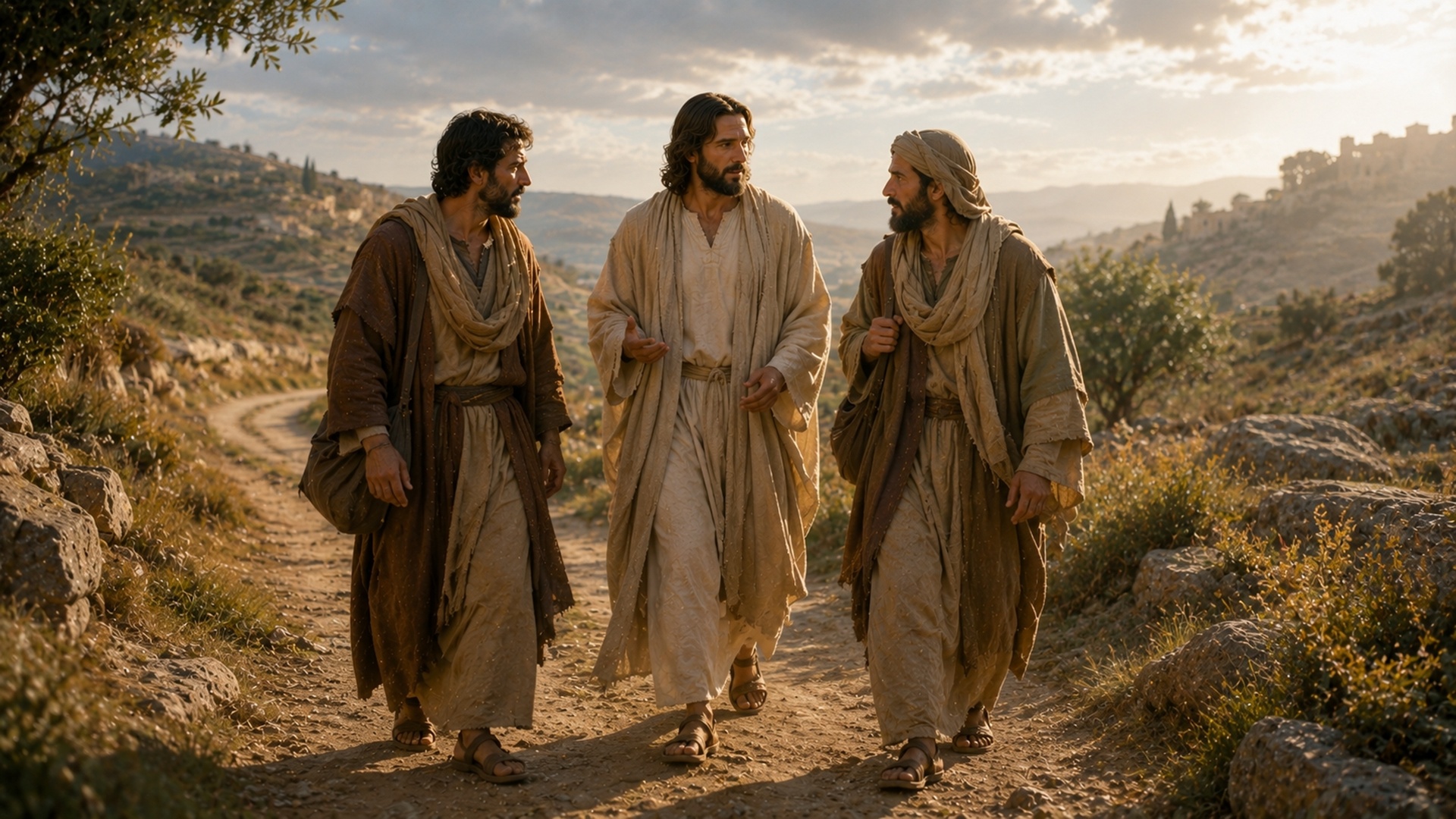
Luke 24:13–35 tells of two disciples who were on their way to Emmaus after the crucifixion of Jesus. While they were speaking sadly about the events of the past days, Jesus Himself drew near and walked with them. But their eyes were kept from recognizing Him.
Jesus listened to their disappointment and then explained God’s plan of salvation to them from the Holy Scriptures. Only when He broke the bread with them were their eyes opened and they recognized Him.
Then they said:
“Did not our heart burn within us while He talked with us on the road, and while He opened the Scriptures to us?” (Luke 24:32)
🌍 3. Connection to Today
Christians today also experience situations they do not understand. Sometimes plans fall apart, doors close, or prayers seem to remain unanswered. Often we believe that God has abandoned us or that His guidance is no longer visible.
Like the disciples on the road to Emmaus, we often see only the present pain. God, however, sees the whole path. What looks like a setback to us may be part of a greater plan that we will understand only later.
💡 4. Central Message of the Lesson
👉 God is by our side even when we do not recognize Him, and His plans reach far beyond our present vision.
✝️ 5. Theological Focus
The story of Emmaus is one of the most profound resurrection accounts in the New Testament. It shows not only the reality of Jesus’ resurrection, but also reveals how God deals with people who doubt and are disappointed.
The two disciples were not enemies of Jesus. They were not unbelievers. They loved Him and had trusted Him. Yet they were deeply disappointed.
The reason for their disappointment was not that God had failed, but that their expectations were wrong.
They had hoped:
- That Jesus would politically liberate Israel.
- That He would establish a visible kingdom.
- That He would defeat the Romans.
But God’s plan was much greater. Jesus had come to redeem humanity from sin and death.
Here lies an important spiritual truth:
Many crises of faith do not arise because God breaks His promises, but because we understand His promises differently from the way He wants to fulfill them.
Jesus’ approach is also remarkable. He does not reveal Himself immediately. Instead, He first explains the Scriptures.
This shows that true faith is not based mainly on extraordinary experiences, but on understanding God’s Word.
Jesus begins with Moses and the prophets and shows that the cross was not an accident, but part of the divine plan of redemption.
The Emmaus story makes clear:
The cross was not Christ’s defeat.
It was His greatest triumph.
The disciples had to learn to judge their situation not by their feelings, but by God’s revelation.
🔥 6. Spiritual Deepening
Especially moving is the fact that Jesus walked beside the two disciples the entire time without them recognizing Him.
Many Christians experience exactly the same thing today.
Sometimes we think:
- God has forgotten me.
- God does not hear my prayer.
- God is far away.
But reality often looks different.
While we think we are walking alone, Christ is already walking by our side.
The disciples on the road to Emmaus were completely focused on their disappointment. Their eyes were fixed on the events:
- the betrayal,
- the crucifixion,
- the death of Jesus,
- their shattered hopes.
That is why they could not recognize the presence of Jesus.
We too can be so focused on problems that we overlook God’s work.
Another important thought lies in Jesus’ question:
“What kind of conversation is this that you have with one another?”
Of course, Jesus already knew everything. But He wanted the disciples to express their concerns.
God does the same today.
Prayer is not meant to give God information. He already knows our situation. Prayer opens our heart to His presence and His work.
The transformation of the disciples is also impressive.
At the beginning of the road:
- sad,
- confused,
- hopeless.
At the end of the road:
- full of joy,
- full of faith,
- full of hope.
The outward events had not changed.
What had changed was their perspective.
They now saw their situation through God’s plan.
That is often the greatest difference between despair and hope.
God does not always change the circumstances immediately.
Often He first changes our view of the circumstances.
Romans 8:28 describes exactly this truth:
“And we know that all things work together for good to those who love God.”
The disciples on the road to Emmaus could not recognize this at first.
Only in hindsight did they understand that God had been working the entire time.
Many Christians have the same experience. Often we understand God’s guidance only when we look back.
That is why this story calls us to trust even when we do not yet understand the road.
🔧 7. Application in Everyday Life
Practical steps:
- Read God’s Word regularly, especially in times of disappointment.
- Speak openly with God about your questions and concerns.
- Remember situations in which God has already guided you.
- Trust that God’s plan is greater than your current perspective.
- Consciously look for signs of His presence in everyday life.
❓ 8. Reflection Question
In what area of my life do I currently see only disappointment, while God may already be working on a greater solution?
🌟 9. Closing Thought
The disciples on the road to Emmaus thought their story was over. In reality, the greatest chapter of their life of faith was just beginning. Even when we do not always understand God’s ways, we may know this: Christ walks beside us. He explains the way to us through His Word, strengthens our faith, and leads us safely to the goal.
“Did not our heart burn within us while He talked with us on the road?” (Luke 24:32) 🚶♂️🔥✨