

🤩 Bible Stories to Marvel At
Where God’s miracles become great – for little and big children
🌌 Job Chapter 25—Bildad Speaks Briefly About God’s Greatness
✨ When God’s Greatness Outshines Everything
🌅 Introduction
In the previous chapter, Job had turned his attention to the injustice in the world. He had spoken about the poor who are exploited, widows and orphans who suffer, and workers who are exhausted yet still remain hungry. Job saw a world in which many things did not appear to be judged fairly right away.
His question was difficult: Why is God’s judgment not always seen immediately? Why are people who do evil to others sometimes allowed to continue? Why must the weak wait while the powerful seem to remain secure?
These questions were not cold or disrespectful. They came from a heart that believed in God’s justice. Precisely because Job knew that God is just, he could not understand why injustice was sometimes allowed to remain visible for so long.
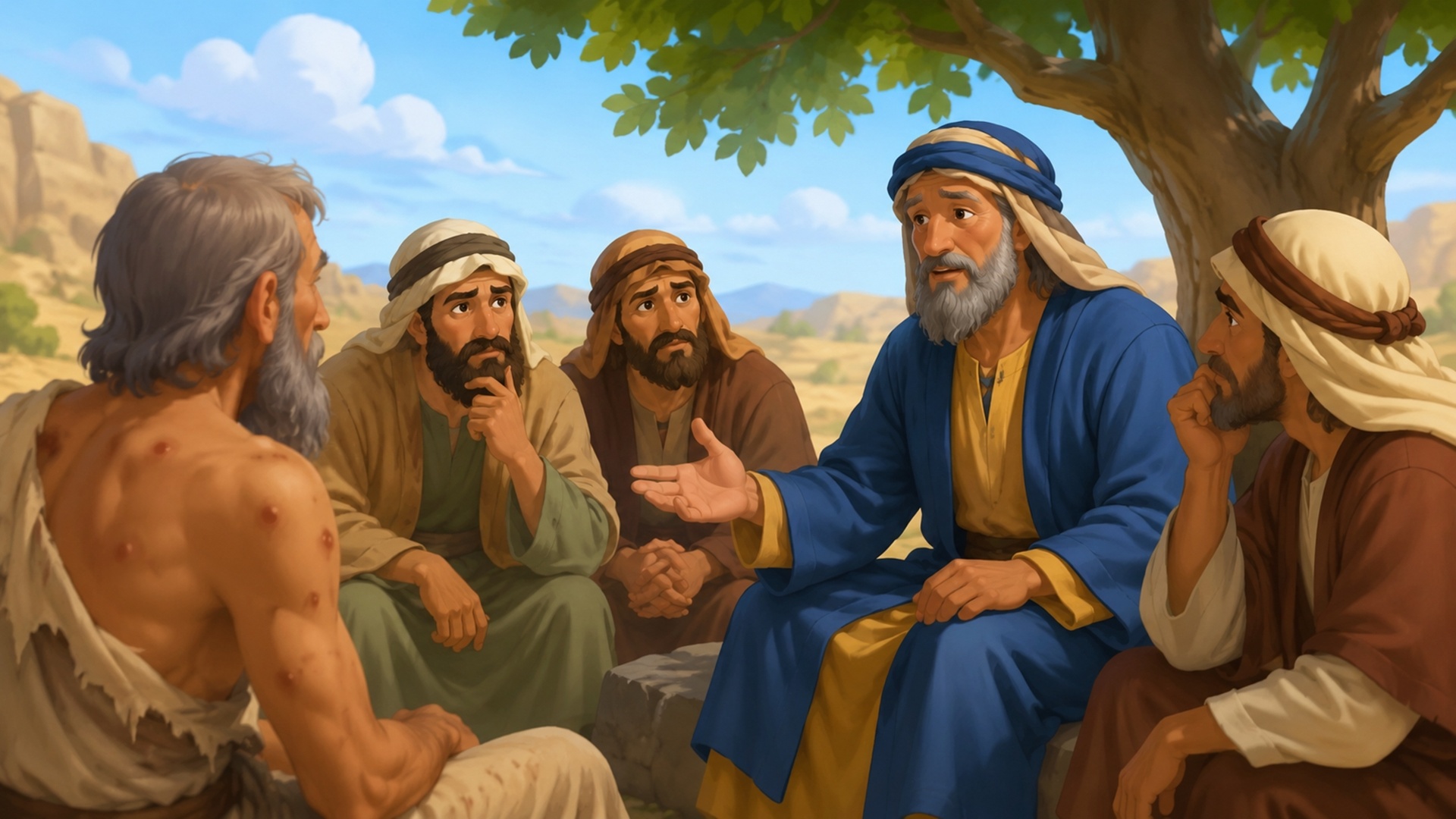
Now Bildad answers once again. But this time his speech is very short. He does not speak in detail about Job’s questions. He looks upward and speaks about God’s rule, God’s power, and God’s purity. Before such a great God, human beings appear very small.
What Bildad says is reverent and serious. God truly is great. God truly is pure. No human being can stand proudly before Him. But Bildad’s words do not really answer Job’s pain. They show God’s greatness, yet they do not explain why Job is suffering or why there is so much injustice in the world.
📖 The Biblical Story
🌠 Bildad Looks at God’s Rule
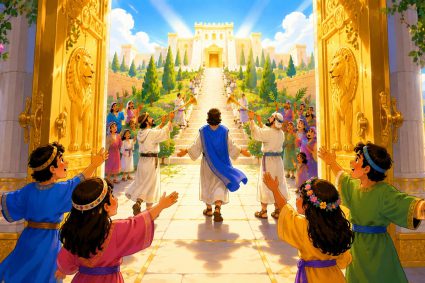
Bildad begins his short speech by saying that dominion and awe belong to God. By this he means that God is not small, weak, or dependent on human beings. He rules over everything that exists.
When people see kings, great palaces, strong soldiers, or powerful rulers, they may be impressed. But Bildad reminds us that God’s rule is greater than every human power. No king, no army, and no wealthy person stands above God.
For children, we might imagine it like this: A child can climb a high mountain and think that he is now very far above the ground. But above the mountain there is still the sky, and beyond it are stars that are much farther away. In the same way, God’s greatness is infinitely greater than everything people call great.
Bildad wants to say: When we think about God, we should not think of Him as small. God is holy, powerful, and glorious. His greatness surpasses everything human beings can understand.
🕊️ God Establishes Peace in His Heights
Then Bildad says that God establishes peace in His heights. This is a beautiful and mysterious picture. High above the earth, where human beings cannot reach, God rules in order and power.
The sky sometimes appears distant and quiet to us. The stars remain in their places, the moon follows its path, and the sun rises and sets. Bildad sees in this a sign: God holds His creation together. He is the Lord of the heights.
But this peace in God’s heights stands in strong contrast to Job’s life. Job is not experiencing peace. He is experiencing pain, conflict, misunderstanding, and questions. For that very reason, Job may have needed an answer that brought God’s peace into the middle of his suffering.
Bildad speaks truthfully about God’s greatness, but he remains far above. His words float like stars in the sky, while Job sits below on the earth in the dust and suffers.
⭐ No One Can Count God’s Armies
Bildad says that God’s armies are countless. This may make us think of the hosts of heaven, of angels, and of everything that serves God. No one can measure God’s power or count His servants.
People like to count things in order to understand them. They count coins, animals, steps, days, or stars on a chart. But God’s greatness cannot be counted so easily. It is greater than every list and wider than every calculation.
When we look into the night sky and see many stars, we quickly realize: I cannot count them all. And even what we can see is only a small part. Bildad reminds us that God’s glory is far greater still.
These words can awaken wonder. God is not like a human being who can be in only one place at a time. His power reaches over everything. His light reaches all creation.
☀️ God’s Light Reaches Everyone
Bildad asks over whom God’s light does not rise. In this way, he reminds us that no one lives outside God’s sight. God’s light reaches far. No human being can truly hide from Him.
That can be comforting. If God sees everything, then He also sees the tears of people whom others overlook. He sees the poor about whom Job has spoken. He also sees Job himself, even though Job feels so deeply misunderstood.
But Bildad does not express this truth as comfort. He uses it more to show how small human beings are before God. For that reason, the light in his speech remains severe and distant.
Actually, this very thought could have helped Job: God’s light reaches you too, Job. You have not been forgotten. But Bildad does not say it in that way. He speaks about God’s light without truly touching Job’s dark path.
⚖️ Bildad Asks About Human Righteousness
Then Bildad asks an important question: How can a human being be righteous before God? How can anyone born of woman be pure? Bildad looks at humanity before God’s holiness and recognizes that no one can make himself completely pure.
This is a serious truth. People make mistakes. People think, say, and do things that are not always good. No one can proudly say before God: I do not need grace.
But once again Bildad does not use this truth to lead Job gently toward God. He does not answer Job’s question about unjust suffering. In essence, he says: God is so pure that no human being can stand before Him.
Job might not even have disagreed with that. Job does not claim to be equal with God. He does not claim to be perfect like God. He is only defending himself against the false accusation that his suffering proves some special guilt.
🌙 Even the Moon and Stars Are Not Perfectly Bright Before God
Bildad continues to look toward the sky. He says that even the moon is not bright enough and that the stars do not appear pure before God. This is a picture filled with reverence.
When children see the moon at night, it looks beautiful. The stars sparkle as though they were small lights on a dark cloth. To human eyes they appear pure, bright, and wonderful.
But Bildad says: Before God’s holiness, even this light is not perfect. God is brighter than the moon. God is purer than the stars. His glory outshines everything we consider beautiful and shining.
This picture helps us to marvel. God is not simply a little greater than we are. He is incomparably great. Everything created, even the most beautiful things in the sky, remains smaller than the Creator.
🪱 Human Beings Are Small Before God’s Greatness
At the end, Bildad speaks very harshly about humanity. He compares a human being to a worm. By this he means that before God’s greatness, people are very small, weak, and lowly.
This comparison may sound frightening to children. A worm is tiny, vulnerable, and easy to overlook. Bildad wants to show that no one can appear proudly before God as though he himself were the greatest.
But here we also feel why Bildad’s speech does not truly comfort Job. Job already feels small, sick, and broken. He does not need more words that push him farther into the dust. He needs hope, compassion, and someone who takes his questions seriously.
It is true that human beings are small before God. But the Bible also shows us that God sees the small person. He does not forget him. He cares for the weak, the poor, children, and those who suffer. This side is missing from Bildad’s short speech.
🕯️ True Words Without an Answer to Job’s Pain
Bildad’s speech is short, but it carries great weight. He speaks of God’s rule, God’s purity, and the smallness of human beings. Much of what he says is true and reverent.
Yet Job’s real questions remain unanswered. Why does a person who has sought God suffer? Why is he falsely accused by his friends? Why does injustice sometimes remain visible in the world for so long? Bildad does not truly deal with these questions.
Sometimes a person can say something correct and still fail to help. When a child cries because he has fallen, it does little good merely to say, “The world is large, and you are small.” True comfort would bend down, look at the wound, and gently say, “I am here with you.”
Bildad speaks great words about God, but he does not bend down toward Job’s wounds. That is why his speech remains like a bright star in the distance: beautiful and true, but not near enough to Job’s pain.
🌟 God’s Greatness Is More Than Awe
When we hear Bildad’s words, we may marvel: God truly is great. He rules over heaven and earth. His purity is greater than the moon and the stars. No human being can stand proudly before Him.
But we may also look further. God’s greatness does not mean only awe. God’s greatness also means that He is great enough to care for small people. He is great enough to see tears. He is great enough to bear our questions. He is great enough to be just and merciful at the same time.
Job has not yet clearly seen this mercy. His friends show him very little of it. But the story is not over. God Himself will speak later, and then it will become clear that the friends explained many things in ways that were too narrow and too harsh.
This chapter reminds us that reverence for God is important. But true reverence does not make us hard toward suffering people. Those who recognize God’s greatness should also become humble and speak more carefully.
🌅 What This Chapter Shows
This chapter shows that Bildad emphasizes God’s power, rule, and purity. Before God, even the moon and stars are not perfectly bright, and no human being can proudly present himself as pure.
This chapter also shows that true words about God’s greatness do not automatically answer Job’s pain. Bildad says reverent things about God, but he does not truly address Job’s questions, loneliness, and suffering.
🟣 Summary
In chapter 25, Bildad speaks for the last time, and his speech is very short. He emphasizes that dominion and awe belong to God and that God establishes peace in His heights. God’s armies are countless, and His light reaches everyone. Bildad asks how a human being can be righteous and pure before God. Even the moon and stars do not appear perfectly bright before God’s holiness. At the end, Bildad presents humanity as very small before God. His words about God’s greatness are serious, but they do not truly answer Job’s difficult questions or bring him real comfort.
💚 Message for Children Today
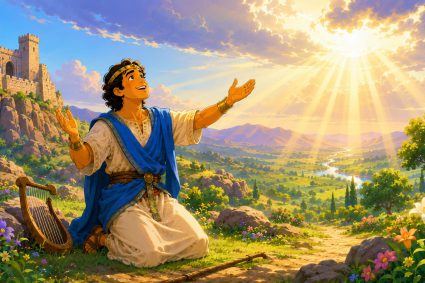
God is greater than everything we can see. He is greater than kings, mountains, the moon, and the stars. Therefore, we may look to Him with reverence and wonder.
But God’s greatness does not mean that He overlooks small people. Precisely because God is so great, He can also see every sad heart. Therefore, when we speak about God, we should not become harsh, but humble, kind, and merciful.
💭 Thought for Reflection
🔸 Why does Bildad speak about the moon and the stars?
🔸 What does it mean that God is greater and purer than everything He created?
🔸 Why does a suffering person need more than great words?
🧒 👧 👦
💌 Invitation to Job Chapter 26
🌊 Job Marvels at God’s Power
Bildad has spoken briefly about God’s greatness. He has shown how small human beings are before God’s purity. But Job’s questions have not truly been answered.
Now Job will reply. He will show that he too knows God’s power. He speaks of heaven, earth, the sea, and the mysterious depths of creation.
How great is God, if even the edges of His ways fill us with wonder?
Come along and discover the next chapter!
🔔 Teaser for Job Chapter 26
🌀 When God’s Creation Fills Us with Wonder
Job hears Bildad’s short speech and responds with his own words about God’s greatness. He shows that God’s power reaches far beyond what human beings can understand.
👉 Why does Job say that Bildad has not truly helped him?
👉 What pictures does Job use to describe God’s power in creation?
👉 And why are even these great pictures only a faint whisper of God’s ways?
✨ In the next chapter, we will hear Job’s amazed words about God’s mighty creation—and discover that God’s greatness is far deeper than all quick answers.