
🟦 Introduction
Every person experiences times of disappointment, loss, illness, or unexpected challenges. Such setbacks can test our faith and raise questions about God’s guidance and love. In this lesson we encounter people such as Job, the disciples in the storm, and the disciples on the road to Emmaus, all of whom went through difficult experiences. Their stories show that God is present even when we do not recognize Him or understand His ways. Setbacks do not have to be the end of our faith; instead, they can become opportunities to know God more deeply and to trust Him more. The Christian’s hope lies in the fact that Christ accompanies us through every storm and never leaves us alone.
🌱
🌱 GROWING IN A RELATIONSHIP WITH GOD
🌧️ Lesson 11: Setbacks
📘 11.1 Life’s Storms
Learning to trust when Jesus seems silent
📖 1. Opening
Every person sooner or later experiences storms in life. Sometimes they come suddenly through illness, loss, disappointment, or unexpected crises. In such moments we often feel helpless and ask ourselves why God does not intervene or seems to remain silent. This is exactly the experience the disciples had on the Sea of Galilee. Although Jesus Himself had instructed them to cross over to the other side, they found themselves in a life-threatening storm. This story shows that even people who faithfully follow God can experience difficult trials.
📜 2. The Biblical Foundation
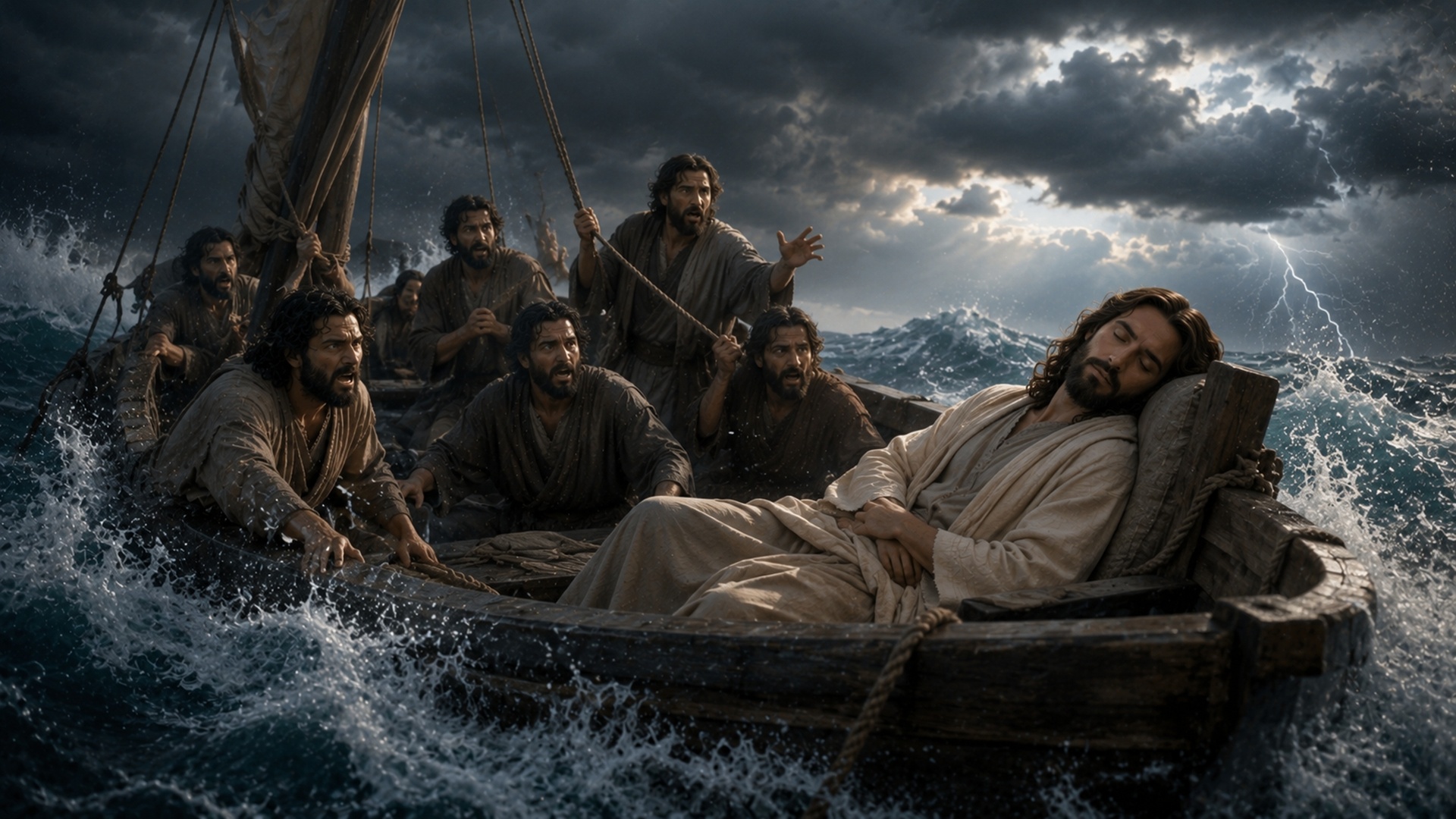
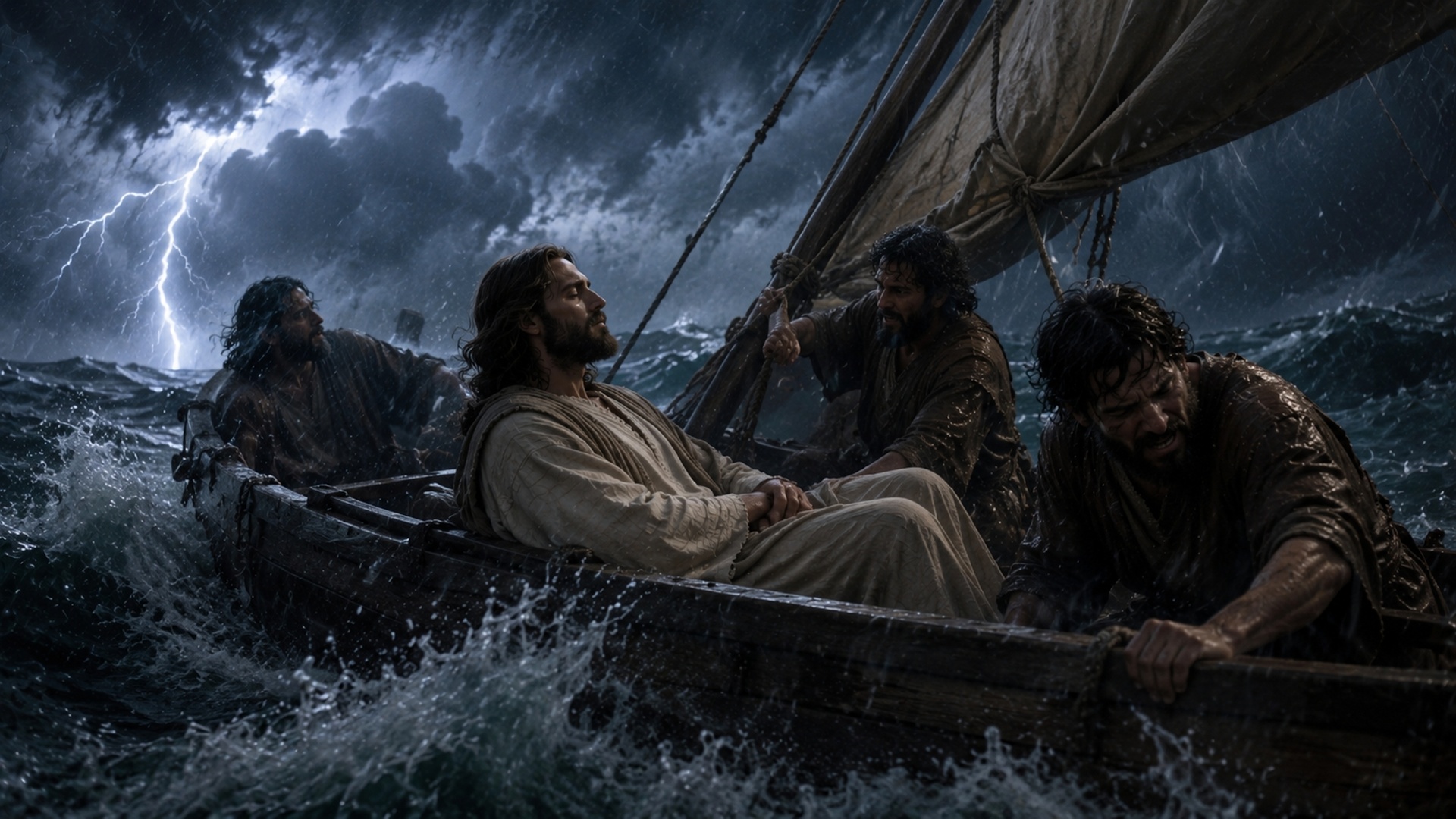
Mark 4:35–41 tells of a violent storm on the Sea of Galilee. While the waves fill the boat and the disciples fear for their lives, Jesus is asleep in the stern of the boat on a cushion. The disciples wake Him in desperation with the words:
“Teacher, do You not care that we are perishing?”
Jesus gets up, rebukes the wind and the waves, and says:
“Peace! Be still!”
Immediately there is a great calm. Then Jesus asks the decisive question:
“Why are you so afraid? Have you still no faith?”
🌍 3. Connection to Today
We too experience situations in which our lives are shaken by storms. Sometimes relationships fall into crisis, health problems arise, or plans for the future collapse. Often we pray for help and still feel that God is not responding. Just like the disciples, we then begin to question God’s love or care. Yet the story shows that God’s silence does not mean He is absent. Often He is at work precisely when we perceive Him the least.
💡 4. Central Message of the Lesson
👉 The true test of faith is not whether we can avoid storms, but whether we trust Christ in the middle of the storm.
✝️ 5. Theological Focus
This event is one of the most impressive revelations of Jesus’ divine nature in the Gospels. At first glance, the story seems merely to be about a miracle of nature. But in reality it is about far more than wind and waves. At the center stands the question of who Jesus truly is.
First, it is striking that the disciples were not in this storm by accident. Jesus Himself had said:
“Let us go across to the other side.”
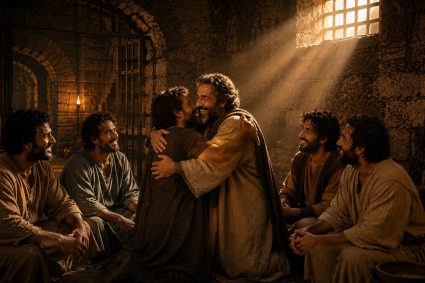
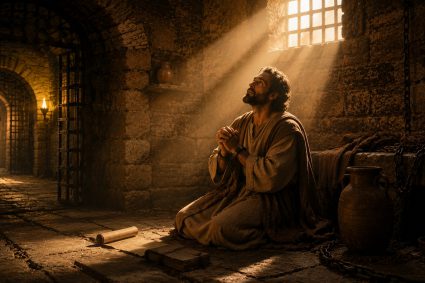
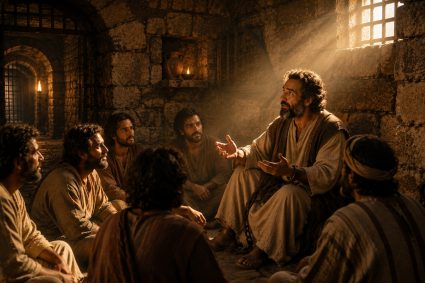
So they were exactly where God’s will wanted them to be. This is an important lesson for Christians. Many people believe that difficulties are always a sign that something is going wrong or that God has abandoned them. But the Bible shows the opposite again and again. Joseph was in the will of God and ended up in prison. Daniel was in the will of God and was thrown into the lions’ den. Paul was in the will of God and suffered shipwreck. The disciples were in the will of God and found themselves in a storm.
Obedience does not protect us from trials, but it guarantees God’s presence in the trials.
Another remarkable point is Jesus’ position in the boat. He is in the stern, where the helmsman would normally sit. Although He is sleeping, He remains the One who guides the ship. For Mark, this is more than a minor detail. It communicates a spiritual truth: even when God seems silent, He has never given up control.
In the Old Testament, power over the sea is attributed exclusively to God. For the Israelites, the sea symbolized chaos, danger, and uncontrollable forces. When Jesus calms the storm with a single command, He does something that, according to Jewish understanding, only God Himself can do.
The reaction of the disciples confirms this:
“Who then is this, that even the wind and the sea obey Him?”
Therefore, the real lesson of the storm is not only learning to trust. The storm reveals the identity of Jesus. The disciples are meant to recognize that the One sitting with them in the boat is not merely a teacher or prophet. He is the Lord of creation.
Thus the storm becomes a school of faith. The waves are not the disciples’ greatest problem, but rather their limited understanding of who Jesus truly is.
🌪️ 6. Spiritual Deepening
The deepest and most personal part of this story lies in the disciples’ question:
“Teacher, do You not care that we are perishing?”
These words reveal the real struggle taking place in the disciples’ hearts. The problem is not only the storm. The problem is the temptation to doubt God’s love.
It is precisely here that the most difficult test of a Christian’s faith often begins.
When we experience suffering, we rarely question God’s power first. Most Christians believe that God could help. The real question is rather:
- Does He want to help?
- Does He see me?
- Does He understand my pain?
- Does He really care?
The disciples had seen Jesus perform miracles. They knew He had power. But in that moment they lost trust in His character.
Many believers today experience exactly this same struggle.
When an illness remains.
When a prayer seems unanswered.
When a relationship breaks apart.
When financial worries grow.
When a loved one dies.
Then the same question often arises:
“Lord, do You even care?”
The enemy tries to attack precisely at this point. His goal is not only to make people doubt. His real goal is to distort the image of God in our hearts. Already in the Garden of Eden, Satan questioned God’s character:
“Did God really say…?”
Since then, he has tried to make people believe that God is indifferent, harsh, or unreliable.
The storm on the sea therefore becomes a symbol of the greater storms of our lives. Often we see only the waves directly in front of us. God, however, sees the entire sea.
The disciples looked at:
- the wind,
- the water,
- the danger.
Jesus looked at:
- the Father,
- His promises,
- divine control.
Here the difference between fear and faith becomes clear.
Fear focuses on the size of the problem.
Faith focuses on the greatness of God.
This does not mean that believers never feel fear. Even the disciples were afraid. The difference lies in where we take our fear.
The disciples eventually ran to Jesus.
And that is exactly what we should do as well.
- Corinthians 5:7 says:
“For we walk by faith, not by sight.”
This does not mean ignoring reality. The waves were real. The danger was real. The fear was real.
But God’s presence was also real.
And it was greater than everything else.
Sometimes God calms the storm immediately.
Sometimes He allows the storm to remain for a while.
Sometimes He first changes our heart before He changes the circumstances.
Yet in every case, one truth remains unchanged:
Jesus is in the boat.
Even when He is silent, He is there.
Even when we do not understand Him, He leads.
Even when we do not recognize His ways, He never loses control.
Therefore, the Christian’s greatest security does not consist in the absence of storms, but in the fact that Christ goes with them through every storm.
🔧 7. Application in Daily Life
Practical steps:
- Remember God’s past guidance in your life.
- Pray honestly about your fears and worries.
- Read Bible passages about God’s faithfulness in difficult times.
- Avoid hasty conclusions about God’s intentions.
- Fix your eyes more on Christ than on the size of the problem.
❓ 8. Reflection Question
What storm in my life is currently causing me to question God’s love or guidance?
🌟 9. Closing Thought
The disciples learned a life-changing lesson that day: the storm was great, but Jesus was greater. The same truth applies to every Christian today. Even when the waves rise high and God seems silent, Christ remains Lord over every situation.
“Why are you so afraid? Have you still no faith?” (Mark 4:40)