Paul’s life shows how a person—fully devoted to Christ—can accept suffering, persecution, and even death if Christ is glorified through it. In this lesson, we explore what it means to live and die for Jesus, and how we can bear a credible witness in our daily lives—even toward people who treat us unfairly.
………………..✉️………………..
📖 Bible Study
📘 Philippians 1:19–20
“For I know that this will turn out for my deliverance through your prayers and the help of the Spirit of Jesus Christ,
as it is my eager expectation and hope that I will not be put to shame in anything,
but that with full courage now as always Christ will be honored in my body, whether by life or by death.”
-
Background: Paul is imprisoned and awaiting a verdict.
-
Content: Despite his imprisonment, he is full of hope. He sees two forces that strengthen him:
-
The intercession of the church
-
The help of the Holy Spirit
-
Goal: Not his personal release, but that Christ may be glorified in him, regardless of the outcome—whether he lives or dies.
📘 1 Corinthians 4:14–16
“I do not write these things to make you ashamed, but to admonish you as my beloved children. […] For in Christ Jesus I became your father through the gospel.”
-
Paul speaks as a spiritual father: The relationship is not distant, but full of love.
-
“Follow my example” shows that he feels responsible for their spiritual growth.
📘 1 Thessalonians 2:10–11
“You are witnesses, and God also, how holy and righteous and blameless was our conduct toward you believers. […] like a father with his children.”
-
Paul acts with integrity: His life aligns with his message.
-
Fatherly care: He exhorts, comforts, and challenges.
📘 Galatians 4:19
“My little children, for whom I am again in the anguish of childbirth until Christ is formed in you!”
📘 Philemon 10
“I appeal to you for my child, Onesimus, whose father I became in my imprisonment.”
-
Onesimus was a runaway slave—Paul calls him “my child.”
-
Importance of spiritual relationships: Even in prison, Paul remains an active witness.
………………..✉️………………..
🗣️ Answers to the Questions
❓ Question 1: What outcome of his trial did Paul expect? What did he consider even more important than being acquitted?
Answer:
Paul hopes for a positive outcome, but his focus is not on personal deliverance. What matters most to him is that he is not put to shame—that he remains faithful—and that Christ is glorified through his life or his death.
This shows deep spiritual maturity: even if his path leads to death, it is acceptable to him as long as his conduct honors Christ. The glorification of Christ stands above personal comfort, freedom, or security.
❓ Question 2: What kind of relationship does Paul have with the churches he founded and with the people he led to Christ?
Answer:
Paul sees himself as a spiritual father, not merely a teacher. His relationship with believers is marked by:
-
Love: He calls them “beloved children” (1 Cor 4).
-
Responsibility: Like a father, he cares deeply for their growth (1 Thess 2).
-
Passion: He “suffers labor pains” for them (Gal 4).
-
Personal bond: Even individuals like Onesimus he calls his children (Philemon).
He is willing to give himself completely for them (2 Cor 12:15). This deep relationship makes him a model for all who accompany others in faith.
❓ Question 3: What kind of witness do you give about Jesus—especially toward people who treat you badly?
Answer (personal reflection):
How we deal with difficult people reveals more about our faith than many sermons. When we:
-
remain kind in confrontation,
-
forgive instead of holding grudges,
-
pray for others even when they hurt us,
we bear a genuine witness to Jesus.
Such behavior is not humanly explainable, but a sign of God’s work in a life. Paul was willing to pray for his enemies, to suffer for the church—and in doing so, to reveal Christ.
………………..✉️………………..
💎 Spiritual Principles
-
The glorification of Christ is the highest goal—not personal comfort.
-
Spiritual parenthood requires love, patience, and sacrifice.
-
Suffering in faith is not meaningless, but a powerful testimony.
-
Our relationships reflect our view of God, especially in difficult times.
………………..✉️………………..
🛠️ Practical Application
-
At work: Stand by your convictions even if it costs you—like Paul.
-
In the family: Practice patient, fatherly love that does not seek recognition.
-
In the church: Care for others as a spiritual brother or sister.
-
In suffering: Don’t ask only “Why me?” but “How can Christ be glorified through this?”
………………..✉️………………..
✅ Conclusion
Through word and deed, Paul showed what it means to live completely for Christ. He was willing to give everything—his freedom, his honor, even his life—so that Jesus might be made visible. This challenges us to examine our own faith: What truly stands at the center for us—Christ or our own well-being?
………………..✉️………………..
💭 Thought for the Day
“The greatest testimony is not our success, but our faithfulness in trials.”
………………..✉️………………..
✍️ Illustration
“The Rain Falls Even on Thorns”
An African journey of faith in the shadow of persecution
Part I – The Seed
Moshi, Tanzania, 2023.
The sun was low over Mount Kilimanjaro as Pastor Daniel Mkombo, a seasoned Adventist, entered the small village of Njiwa with his worn Bible in hand. It was a predominantly Muslim village—remote, conservative, and difficult to access. Yet Daniel had heard the call of the Holy Spirit:
“Go where my name is not known.”
He came not with money or gifts—only with a heart full of prayer, a Bible, and a firm resolve:
“Lord, whether I live or die here—may Your name be glorified.”
The first weeks were hard. The villagers distrusted him. Children hid when he appeared. The imam warned publicly:
“This man brings the spirit of the West—a foreign religion.”
But Daniel stayed. He helped dig wells. He carried sacks at the market. He assisted at births. He remained silent—and prayed.
Part II – The Thorns Bloom
One day a girl fell seriously ill—Halima, 12 years old, the imam’s daughter. No medicine helped. When all hope faded, Daniel’s moment came.
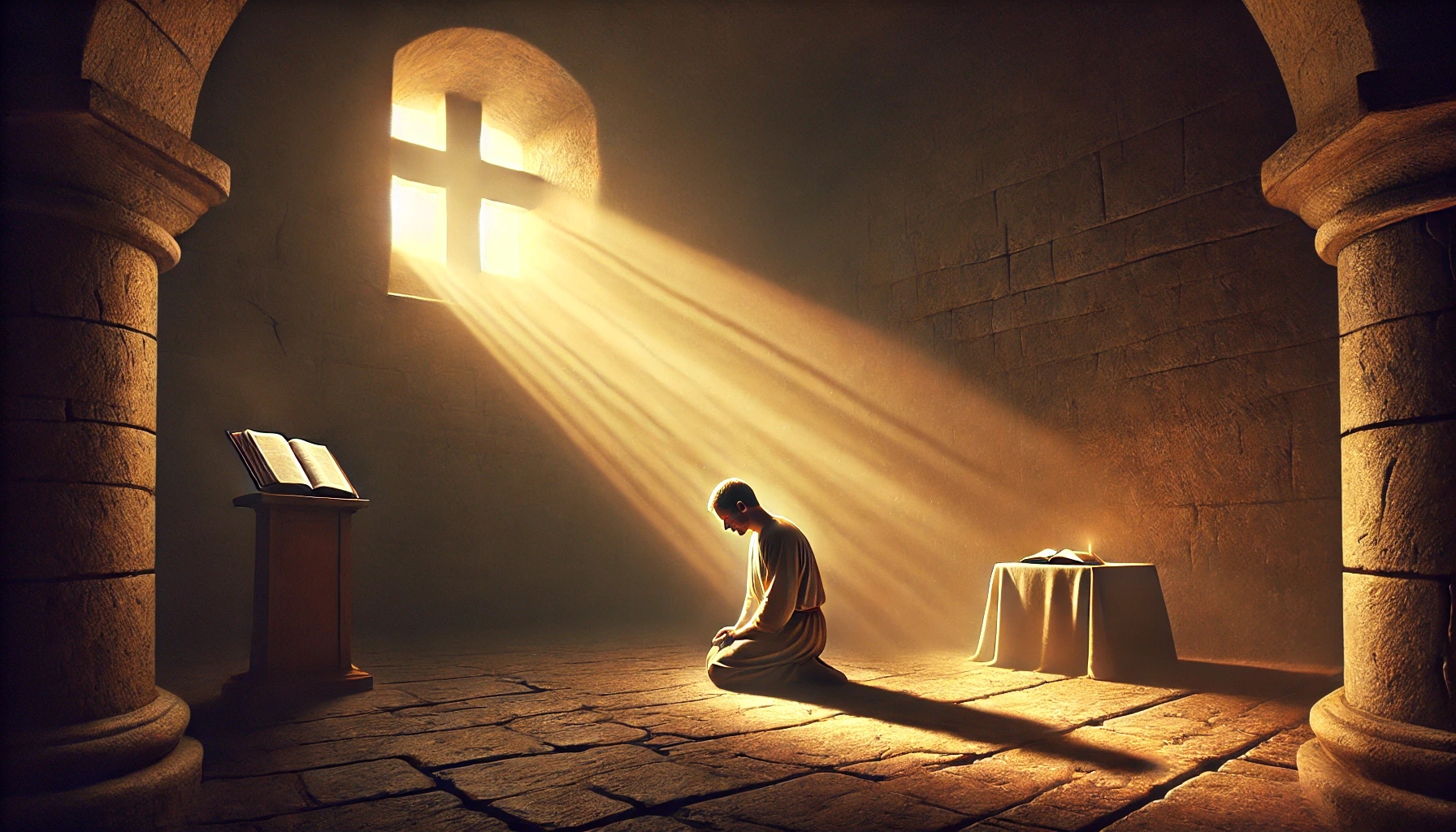
He knelt by her bed. The father hesitated, then allowed it. Daniel prayed softly:
“Jesus, You are Lord over life and death. Not that I may be glorified—but You. Show Your grace.”
In the days that followed, Halima began to recover. The villagers were amazed. The imam said nothing—but his eyes spoke volumes.
That was the turning point.
Halima secretly began reading the Bible. Other children joined her. Soon a small house group formed under the large mango tree. Daniel read stories of Jesus, sang songs in Swahili, and spoke of hope, forgiveness, and true peace.
Part III – Persecution Begins
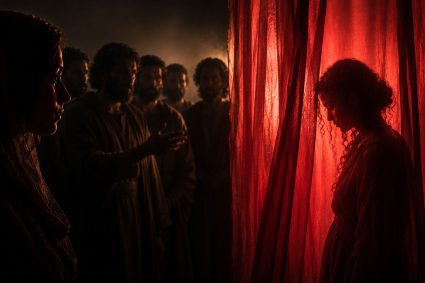
But light draws shadows. One morning Daniel was seized. Four men came with sticks and dragged him from his hut.
“You are misleading our children. You are disturbing our community.”
“You insult Allah!”
He was beaten, mocked, and locked in an old chicken coop. For days, only prayers could be heard from inside. Halima smuggled him water.
The village elders met. Some wanted to banish him. Others wanted worse. The mood darkened.
Yet Daniel remained unshaken. When asked if he would renounce his “lies about Jesus,” he replied:
“If my silence extinguishes the light, then I would rather suffer—as long as Christ is glorified.”
Part IV – The Verdict
An improvised village court was held. The verdict: Daniel must leave the village—forever. If he stayed, he would be “responsible for the consequences.”
Daniel stood still. His face bore the marks of beatings, but his eyes shone.
“I will go. But the gospel remains. You have planted it in your children—and in your hearts.”
Halima wept. Other children too. Some adults hesitated. An old man stepped forward:
“He has helped us more than many of us ever dared. Why should evil win?”
But it was too late. Daniel left the village barefoot, with a torn Bible in his hand.
Part V – The Fruit of Patience
Five years later.
A young man named Samuel—Halima’s older brother—stands beneath the same mango tree preaching. He found his father’s Bible hidden under a blanket. He read it—and wept.
“Daniel showed us the true face of God. Not through arguments, but through love. Not through power, but through patience.”
Today there is a small Adventist congregation in Njiwa. Some of Daniel’s former opponents now belong to it. They say:
“The man we drove away brought us Jesus. And the rain fell—even on our thorns.”
Daniel?
He now lives quietly in a small house near Arusha. When he received the news of the congregation’s founding, he fell to his knees and said:
“Lord, I thank You for humbling me so that Your name might be exalted. Not my life—Your name matters.”
………………..✉️………………..
📌 Final Reflections on the Story
This story powerfully shows what it means not to live for oneself, but for the glorification of Christ—even when that means suffering, mockery, or loss.
As Paul said:
“Whether by life or by death—Christ shall be glorified.” (Philippians 1:20)
Daniel Mkombo did not argue or defend himself. He loved, served, prayed, and endured. And in doing so, he planted a seed that no one can uproot—because it grew from the Spirit of God Himself.