





📅 30 January 2026
📚 BELIEVE HIS PROPHETS
📖 Daily Bible Reading
👑 2 Samuel 22 – The Lord Is My Rock – David’s Song of Deliverance
✨ A song of praise from the depths: when victory over enemies turns into worship
🌐 Read online here
📍 Introduction
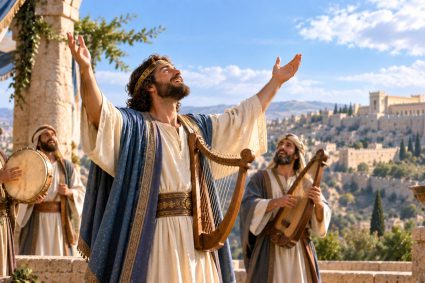
In 2 Samuel 22, King David allows us to look deep into his heart. This chapter is not a battle report and not a strategic analysis—it is a song, a hymn of praise born out of experience, fear, distress, grace, and victory. David sings—not about himself, but about the God who carried him. The chapter is almost identical to Psalm 18 and represents one of the most personal and powerful testimonies of faith in Scripture.
David writes this song at the end of a long and hard-fought journey. From shepherd boy to anointed king, through many years of exile, intrigue, personal guilt, bitter hostility, and life-threatening situations. Now he looks back—and realizes: everything was grace. Everything was God.
⋯⋯⋯⋯⋯⋯⋯⋯⋯⋯◆⋯⋯⋯⋯⋯⋯⋯⋯⋯⋯
🧵 Commentary
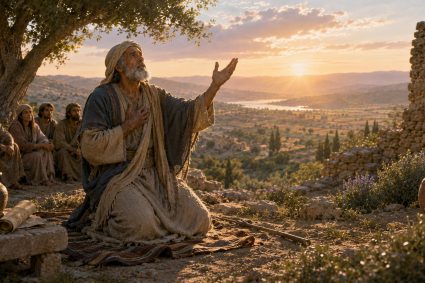
Imagine an old king—his hair gray, his body marked by years of battle, yet his eyes filled with deep clarity. He is not sitting on a throne, but on a simple seat, a harp in his hands. Around him: silence. And then he begins to sing.
Not about his bravery, not about his wisdom. But:
“The LORD is my rock, my fortress, and my deliverer.”
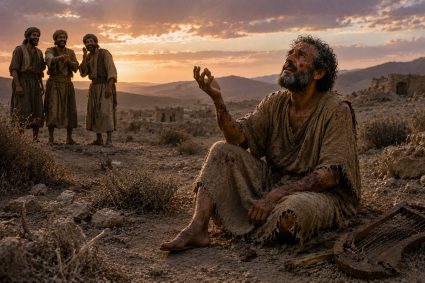
The song does not begin in triumph, but in remembrance. He recalls the hours when death tightened its grip on his throat—when the “cords of death” entangled him and the “torrents of destruction” terrified him. He remembers the darkness of the cave, the whispers of betrayal, the flight from Saul, the trembling of his soul.
But in the midst of this darkness:
“In my distress I called upon the LORD…”
And God answered—with power. Nature itself seems to move when God intervenes: the earth shakes, the heavens bow, smoke, fire, storm, thunder. A language that shows: God is not a distant observer. He acts.
David experiences deliverance not as an abstract idea, but as a physically tangible reality:
“He reached down from on high and took hold of me…”
Then suddenly the tone shifts. David realizes that God does not intervene only because he suffers—but because God delights in him:
“He delighted in me.”
What a powerful statement! The almighty God, Lord over storm and thunder, delights in a mortal human heart.
The song continues. David speaks of God’s faithfulness, righteousness, guidance, and strength. Of feet like those of a deer, of leaping over walls, of strength in battle. Yet throughout it all, one thing is clear: David is not the hero—God is the shield, the arm, the teacher, the deliverer.
Even the violent imagery in this song—the crushing of enemies—must be understood in context. It is the echo of a life in which faith often struggled physically for survival. The language is rough—but honest. And through it all, praise remains.
At the end of the song, David himself is not at the center, but a confession:
“The LORD lives! Blessed be my rock, and exalted be God, the rock of my salvation!”
⋯⋯⋯⋯⋯⋯⋯⋯⋯⋯◆⋯⋯⋯⋯⋯⋯⋯⋯⋯⋯
🧺 Summary
After many years of struggle and survival, David sings a song of worship. He recognizes that God was his deliverance—in body, soul, and spirit. The Lord was his strength, his hope, his refuge, his shield, and his light in dark times.
⋯⋯⋯⋯⋯⋯⋯⋯⋯⋯◆⋯⋯⋯⋯⋯⋯⋯⋯⋯⋯
🔦 Message for us today
Even if we do not stand on literal battlefields like David, we know our own times of distress: fear, guilt, loneliness, rejection by others, inner struggles.
David teaches us where to turn in such moments: to the Lord.
He shows us:
-
God hears the cry of the heart.
-
God is not a distant God, but a rescuing, intervening God.
-
God can turn darkness into light.
-
God sees not only the outward situation, but the heart.
If today you feel weak, surrounded, disappointed, or discouraged—read this chapter out loud. Make David’s words your own. And then watch how the Lord becomes a “rock” for you as well.
⋯⋯⋯⋯⋯⋯⋯⋯⋯⋯◆⋯⋯⋯⋯⋯⋯⋯⋯⋯⋯
📝 Reflection
“For You are my lamp, O LORD, and the LORD lightens my darkness.” (v. 29)
What if today you took only this verse with you? What if you held on to it in every darkness—external and internal alike?
════════ ✶ ✶ ════════
📆 January 25 – 31, 2026
📚 BELIEVE HIS PROPHETS
📖 Weekly Reading from the Spirit of Prophecy
📘 Ellen G. White | Patriarchs and Prophets
🔥 Chapter 59 : The First King of Israel
✨ When God’s guidance no longer seems enough
🌐 Read online here
📘 Blog 6 : 📜 Samuel Says Farewell – With Clear Words
A Life of Faithfulness
📍 Introduction
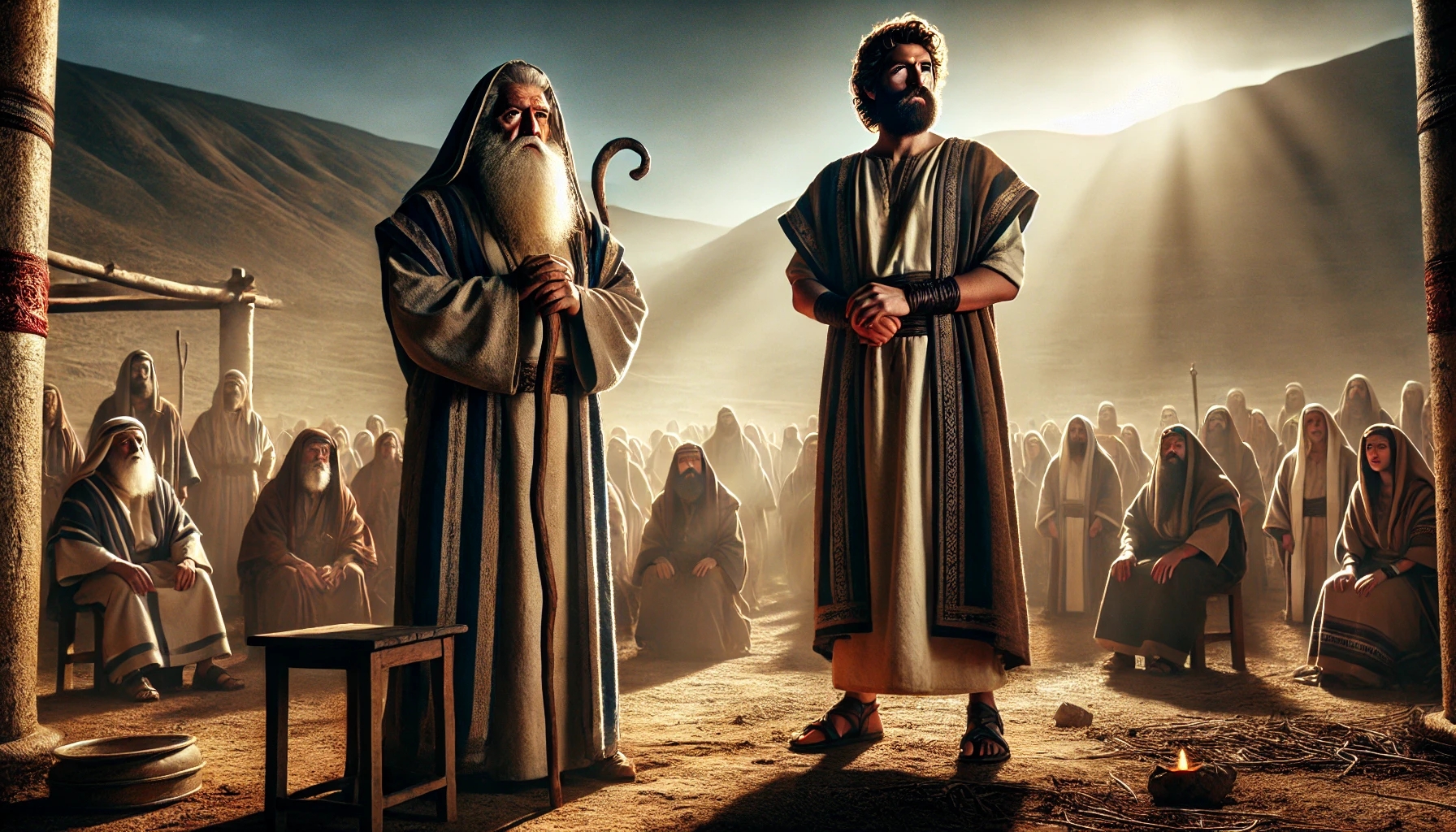
At Gilgal, Samuel handed over leadership to Saul—not without a moving and solemn address to the people.
⋯⋯⋯⋯⋯⋯⋯⋯⋯⋯◆⋯⋯⋯⋯⋯⋯⋯⋯⋯⋯
🧵 Commentary
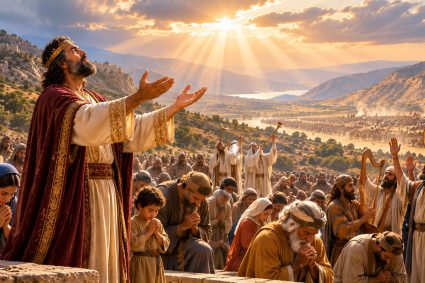
Samuel recalled his integrity, his lifelong dedication, and God’s work throughout history. He led the people to recognize their sin in asking for a king. As confirmation, God sent thunder and rain during the wheat harvest—an unmistakable supernatural sign of disapproval. Yet Samuel concluded with hope: God would not abandon His people if they turned back to Him. Despite rejection, Samuel remained faithful in intercession and instruction.
⋯⋯⋯⋯⋯⋯⋯⋯⋯⋯◆⋯⋯⋯⋯⋯⋯⋯⋯⋯⋯
🧺 Summary
Samuel did not leave bitterly, but as a faithful servant—and he remained a spiritual mentor.
⋯⋯⋯⋯⋯⋯⋯⋯⋯⋯◆⋯⋯⋯⋯⋯⋯⋯⋯⋯⋯
🔦 Message for us today
Passionate service for God does not remain without effect, even when people do not always recognize it.
⋯⋯⋯⋯⋯⋯⋯⋯⋯⋯◆⋯⋯⋯⋯⋯⋯⋯⋯⋯⋯
📝 Reflection
Do I serve faithfully—even when others reject or forget me?