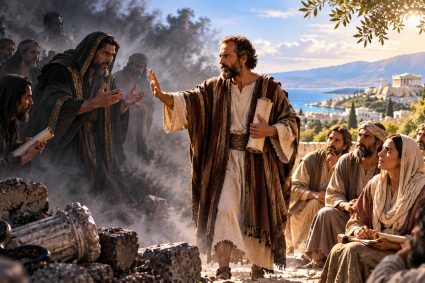
🌱LIVING FAITH | Quarterly Overview – The Book of Joshua | 🗺️ LESSONS OF FAITH FROM JOSHUA
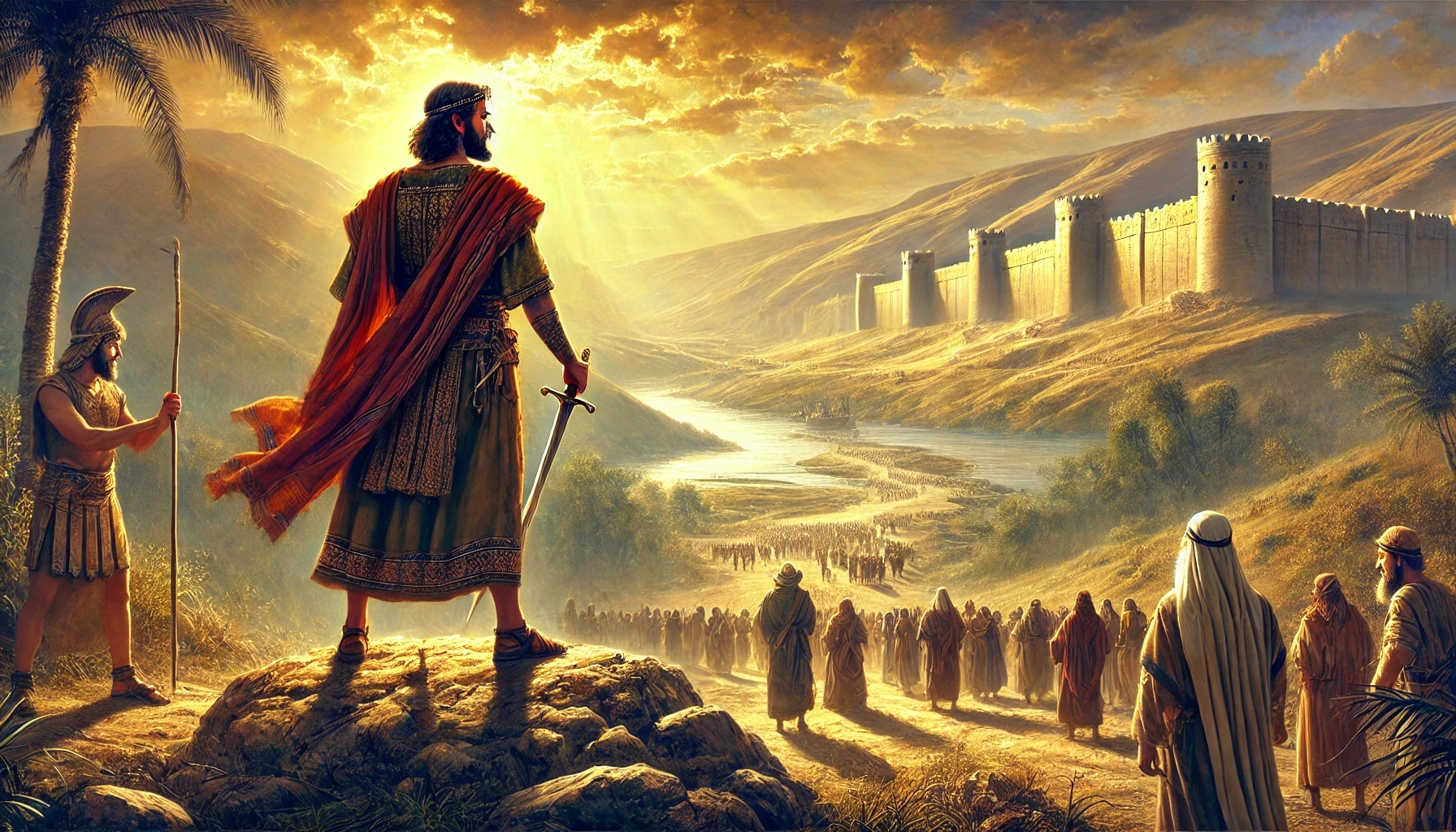
📖 Quarterly Overview – The Book of Joshua
4th Quarter 2025
A people on the way to the promise – led by God’s faithfulness, challenged to decide
…………………………🗺️…………………………
🧭 Introduction: What is the Book of Joshua about?
The Book of Joshua is not merely a historical report about the conquest of Canaan. It is a spiritual testimony of how God fulfills His promises—despite human weakness. It tells the story of a people who finally seem to reach their goal, yet precisely in arriving must learn anew what it means to trust God, remain faithful, and grow spiritually.
The red thread running through this book is God’s faithfulness—but also the responsibility of His people to respond to that faithfulness with their whole heart. Joshua as a leader is not at the center—rather, God Himself as the true conqueror, shepherd, and king. Every lesson this quarter shows that faith is not a sprint, but a long-distance walk marked by perseverance and decisive commitment.
…………………………🗺️…………………………
📚 Overview of the 13 Lessons
🔹 1. The Recipe for Success
God calls Joshua—but success is not defined militarily or strategically. The key lies in obedience, meditation on God’s Word, and the courage to trust God, even when the task seems overwhelming. The command is:
“Be strong and courageous”—not in self-will, but in trusting God’s promises.
🔹 2. Surprised by Grace
With Rahab begins a story of grace: a Canaanite woman becomes part of the covenant people. God’s salvation is not exclusive—it seeks open hearts, not flawless backgrounds. Rahab becomes an ancestor of Jesus—a powerful testimony of grace that breaks boundaries and turns strangers into family.
🔹 3. Memorials of Grace
God Himself commands the building of a visible reminder: twelve stones from the Jordan. Faith needs anchors—for the next generation. The message to Israel (and to us):
Do not forget what God has done. Tell it to your children. Keep it visible.
🔹 4. The Conflict Behind All Conflicts
Joshua meets the commander of the Lord’s army—and realizes: God does not belong to our sides. The real battle is spiritual. Not military strength, but holiness and worship are decisive. The lesson reminds us: We do not wrestle against flesh and blood (Eph 6:12).
🔹 5. The Lord Fights for You
The fall of Jericho is a miracle—not through weapons, but through trust and obedience. God leads; we follow. When we walk God’s way—even when it seems illogical—He leads us to victory. It requires patience, discipline, and faith.
🔹 6. The Enemy Within
With Achan comes the rupture: hidden disobedience affects the entire community. This lesson shows: holiness is not a private matter. It is about shared responsibility. Sin harms the community—but repentance heals it.
🔹 7. Supreme Loyalty – Worship in a War Zone
Despite the battles, Israel takes time for covenant renewal, worship, and reading the Law. The spiritual center remains crucial. We too live in a “war zone”—but worship anchors us in God’s victory, not in the noise of the world.
🔹 8. Heroes of Faith: Joshua and Caleb
Caleb, now 85 years old, asks for the mountainous region of Hebron—full of determination and faith. A model of lifelong faithfulness. Joshua and Caleb show: faith does not weaken with age—it can grow stronger.
🔹 9. Heirs of the Promise – Held by Hope
The distribution of the land is not just geography—it is grace. Even marginalized groups like the daughters of Zelophehad receive their inheritance. It is about God’s justice and the awareness that our inheritance rests in His hands. Yet many areas remain unconquered—a reminder that the struggle continues.
🔹 10. The True Joshua
Joshua was a faithful leader—but not the Savior. He points to another: Jesus, the true Joshua, who leads not only into an earthly land, but into the eternal kingdom of God. This lesson calls for a Christ-centered reading of the Old Testament.
🔹 11. Living in the Land
Once arrived, the work continues: cities, places of refuge, and Levitical towns are assigned. This lesson shows: possessing the promise is not the end—but the beginning of lived faith. God’s gifts are also a calling.
🔹 12. God Is Faithful!
Joshua looks back and testifies: God has kept every single word. Israel’s history proves God’s faithfulness. The appeal: Remain faithful! Both encouraging and warning. Blessing depends not on emotion, but on trust and obedience.
🔹 13. Choose Today!
The final chapter presents the most important decision:
“As for me and my house, we will serve the Lord.”
Joshua calls for a clear commitment—personal, conscious, life-changing, renewed daily. Faith is not inherited; it is a path each generation must walk anew.
…………………………🗺️…………………………
💎 Spiritual Principles of the Quarter
-
God always keeps His promises.
-
Faith is not theory—it shows itself in daily life, obedience, and decisions.
-
Spiritual leadership means serving, not dominating.
-
God’s plan includes outsiders.
-
Holiness is not private—it affects the whole people of God.
-
Worship is the heart of every spiritual movement.
-
Every generation faces a choice—and carries responsibility.
…………………………🗺️…………………………
🛠️ Application for Today
-
Make clear faith decisions—not out of tradition, but conviction.
-
Build spiritual memorials—tell your children what God has done.
-
Face spiritual battles with worship, not activism alone.
-
Do not be blinded by success—examine your heart for faithfulness.
-
Faith is personal—but never private.
-
Live in such a way that your faith still speaks after you are gone.
…………………………🗺️…………………………
✅ Conclusion
The Book of Joshua shows that God’s promises are reliable and His ways are secure. But it also makes clear: faith does not run on autopilot. Every generation—and every individual—must choose whether to walk in God’s ways or follow their own paths.
In the end, the question remains:
“What do I choose—today?”
…………………………🗺️…………………………
💭 Thought of the Quarter
“A fulfilled life of faith is not recognized at the beginning—but at the end.”
…………………………🗺️…………………………
✍️ Illustration
“The Land Beyond the Bridge”
A story about paths, wounds, and wonders
Prologue – The Call
It was a Tuesday morning when Elias received the letter.
Not by mail. Not digitally.
A man in simple blue, weathered face and steady eyes, handed it to him personally. Few words. Just:
“It’s time.”
The envelope was sealed. No sender. Only one word on the front:
“Departure.”
Part I – The Bridge
Elias was 33, an IT consultant, father of two, a churchgoer by habit.
He believed in God. Somehow. Somewhere.
But this letter was… different.
That evening he went out to the water. And there it was:
The bridge.
Old. No sign. No lights. Just fog. And the feeling:
“If you go, something will change. Forever.”
He went.
With every step the fog grew thicker. And then… light.
Part II – The Other Shore
He stood in a valley. No cars, no signal, no sounds but the wind.
A voice said:
“You have arrived. Not at the destination—but at the beginning.”
A man approached him. Gray-haired, weathered, eyes shining.
“My name is Jaron. I was like you. But I decided.”
“Decided? For what?”
“To trust God—not just believe.”
“And where does this path lead?”
“To the promised land. But first… through Jericho, deserts, and shadows. You are not alone. But you must choose.”
Part III – The Path of Grace
Elias met many along the way. Some loud, some quiet. One was named Samira—once an atheist, now a courageous voice of faith.
“I was like Rahab,” she said. “An outsider. But grace found me.”
Elias learned: God does not save the perfect—but the open.
Along the way they set up stones—memorials. Places where God had helped.
Once when Elias nearly gave up. Another time when his child was sick and healed.
“Never forget what He has done,” Jaron said.
“Tomorrow’s faith lives from yesterday’s gratitude.”
Part IV – The Battle
Not everything was light.
There were shadows. Doubts. Pride. Conflicts.
A dark city blocked the way—Jericho. Not of stone, but of fear:
“You’re not good enough.”
“You will fail.”
“You were never truly faithful.”
But then—
Worship.
A prayer.
A song.
A quiet “Amen” in the middle of the night.
The walls fell—silently. In his heart.
“You are not fighting,” Jaron whispered.
“God is fighting for you.”
Part V – The Enemy Within
It wasn’t the doubt outside that nearly defeated Elias.
It was his ego.
His hidden desire for control.
His wish to keep God on the sidelines—not at the center.
One night he confessed to Jaron:
“I said I follow. But I hold back. I still have idols—work, pride, fear of opinion.”
Jaron simply nodded.
“Then it’s time to bury them.”
They made a fire. And Elias laid down what he had hidden.
It smelled like smoke. But also like freedom.
Part VI – Caleb’s Mountain
One day they reached an old, rocky mountain.
“I’ve been here before,” Jaron said.
“Forty years ago. I wanted to take it—but no one believed we could. Only Caleb.”
Now it was Elias who took the first step.
“I want this mountain. I want my inheritance. Not wealth—but a heart that burns to the end.”
Part VII – The Question
They stood before the final river.
Beyond it lay “the Land of Promise”—not of gold, but of deep rest.
But Jaron turned around:
“Elias. You have seen. Fought. Lived. Now comes the real question.”
“Which one?”
“Will you—despite everything—serve the Lord? Not just today. But daily.
When I am gone, what remains in you?
And what will you pass on?”
Elias was silent for a long time. Then:
“As for me and my house—we will serve the Lord.”
Epilogue – The Bridge Back
One morning Elias was home again.
The bridge? Gone.
But something was different.
He read the Bible again—not to read, but to live.
He prayed with his children—not out of duty, but joy.
He served in the church—not from guilt, but love.
He was not perfect.
But faithful.
…………………………🗺️…………………………
🧠 Final Reflections
Elias died 43 years later. Peacefully. Without titles—but with traces.
On his gravestone it read:
“I did not conquer the land. But I followed the One who promised it to me.”
“As for me and my house—we served the Lord.”

More Stories