
⛪ Lesson 3: Rough Start
📘 3.7 Questions
✨ When the beginning is hard – God’s plan still stands
………………………………………………………………….
🟦 Introduction
Following God’s call often sounds like clarity, purpose, and peace. But those who set out to follow His will are frequently met with challenges. Sometimes, things get worse before they get better. Why is that?
In this lesson, we ask tough questions:
Why do some journeys with God begin so roughly?
How can we recognize His guidance in the chaos?
And how do we relate to people who don’t know God?
………………………………………………………………….
📖 Answers to the Questions
📌 Question 1: Think of situations where you followed God’s call, but it didn’t go well—or at least not at the beginning. What did you learn over time?
Answer:
A few years ago, I sensed that God was calling me to leave my job and join a nonprofit project. Everything seemed to speak against it: lower pay, no security, unfamiliar tasks. After starting, I faced team conflicts and financial stress. I doubted whether I had really heard God correctly.
Looking back, I’ve learned: Obedience doesn’t mean instant success—it means deeper trust. God shaped my skills, refined my character, and placed people in my life who enriched me. The rough start wasn’t meant to break me—but to build me.
📌 Question 2: Share a time when God intervened in your life after you prayed for help—or even when you didn’t expect it. How can we believe in God’s goodness when even those who trust Him experience suffering?
Answer:
When my brother fell seriously ill, I prayed for days for healing. It seemed like God was silent. He only grew weaker—until suddenly, new medication worked, and a specialist was recommended. After months, he began to recover.
Sometimes God intervenes visibly; other times, not in the way we hoped. God’s goodness is not always shown in the absence of suffering but in His presence within it. Believers are not spared from pain—but they’re never alone in it. God remains faithful, even when life doesn’t show it right away.
📌 Question 3: What would you say to someone who says, “I don’t know the Lord”—not defiantly, just honestly? What can you do to help them “know the Lord”?
Answer:
I’d listen with genuine interest. No one comes to faith through arguments alone. But I’d say: “I get that. I had to learn who God really is too. Can I tell you why I believe in Him—and how that’s changed my life?”
I wouldn’t start with theology, but with relationship and experience. People don’t first need doctrine—they need living faith that comforts and transforms. Friendship, time, prayer, and kindness open doors to the heart. To “know the Lord” means to encounter Him—in people, moments, and silent miracles.
………………………………………………………………….
✨ Spiritual Principles
-
Obedience isn’t conditional. Even when the path is hard, God’s way is still the best.
-
God’s goodness doesn’t guarantee ease—but it does promise faithfulness.
-
Giving testimony isn’t about convincing—it’s about inviting others to discover for themselves.
-
Faith grows through the process—not through perfection.
………………………………………………………………….
🧩 Application in Daily Life
-
If you feel God is calling you—follow, even if you don’t fully understand His plan.
-
Don’t just pray for your situation to change—pray for endurance in the storm.
-
Listen well—especially to those who don’t believe (yet)—and share your experiences, not just opinions.
-
Persevere when the start is rough—God’s blessing often comes after the valley.
………………………………………………………………….
✅ Conclusion
God calls—not always into safe harbors, but often into storms. Yet it’s in those challenges that our faith is shaped. God isn’t looking for perfect people, just willing hearts. The question isn’t how hard the way is—but whether we recognize HIM in it and stay faithful.
………………………………………………………………….
💬 Thought of the Day
“God’s ways may be hidden—but never abandoned. The beginning may be shaky, but the goal is certain.”
………………………………………………………………….
✍️ Illustration – “Called Anyway”
Chapter 1 – The Call
Jana, 28, a nurse—ambitious, organized, grounded. Her life was structured—until one evening. After a long shift, scrolling through social media, she saw a post from a Christian organization in Romania, urgently seeking medical volunteers for a remote mountain clinic.
It was absurd. She didn’t speak Romanian, had never worked abroad, and barely knew the region. Yet something wouldn’t let go. In the following days, the same message echoed in sermons, Bible readings, and even a talk with a friend: “Trust—and go.”
Two weeks later, Jana quit her job. She felt brave—and crazy.
Chapter 2 – The Crash
She expected an adventure for God. What she got was chaos.
Her luggage got lost at the airport. The accommodation was cold, electricity failed regularly. The “clinic” was a container with two rusty tables. Locals were skeptical. Her colleague barely spoke English. On day two, a village elder told her, “We don’t need you here.”
Jana cried every night that first week. Her prayers felt hollow.
“Lord, did You really call me here—or did I just imagine it?”
Chapter 3 – The Quiet Encounter
One Friday, an old woman came, barely able to walk. Jana treated her with basic care—bandages, warm water. Nothing spectacular. But the woman cried as she left. The next day, she returned—with her granddaughter.
Then more came. Without words. Just looks.
They barely understood each other verbally—but the people sensed that Jana hadn’t come to run away, but to stay.
Chapter 4 – Alex
Then came Alex—19, quiet, hardened, heavy-eyed. He brought his little sister. Jana treated her and offered Alex tea. He said nothing. But came again. And again.
Eventually, he asked, “Why are you here?”
Jana didn’t preach. Just said she believed in a God who had sent her—even without all the answers. Alex said nothing. But he kept coming back.
Chapter 5 – The Crisis
Three months in: The clinic was known. The container was full daily. Jana had picked up simple Romanian phrases. Kids brought her drawings. A local church invited her.
Then came tragedy. A baby died. Jana had done all she could—it wasn’t enough. The mother screamed. The village went silent. Someone asked, “If your God is so good, why did the baby die?”
Jana had no answer. That night, she cried to the sky:
“Lord, if You called me—why this?”
Chapter 6 – The Answer
The next morning, Alex came. No sister. No tea. Just a worn-out notebook.
“I don’t know if I believe in your God. But I see that you do. And I want to understand.”
Jana wept—not in weakness, but in awe.
God hadn’t answered all her questions—but He had used her faithfulness to plant questions in others.
Chapter 7 – Looking Back
Two years later, Jana sat back in Germany. She was back in a hospital—but no longer the same person. Her wall held pictures from Romania. Letters. Drawings. And a note from Alex:
“Thank you for coming. Not because you were perfect—but because you stayed.”
💬 Final Thoughts
Jana’s story isn’t dramatic—but it’s real.
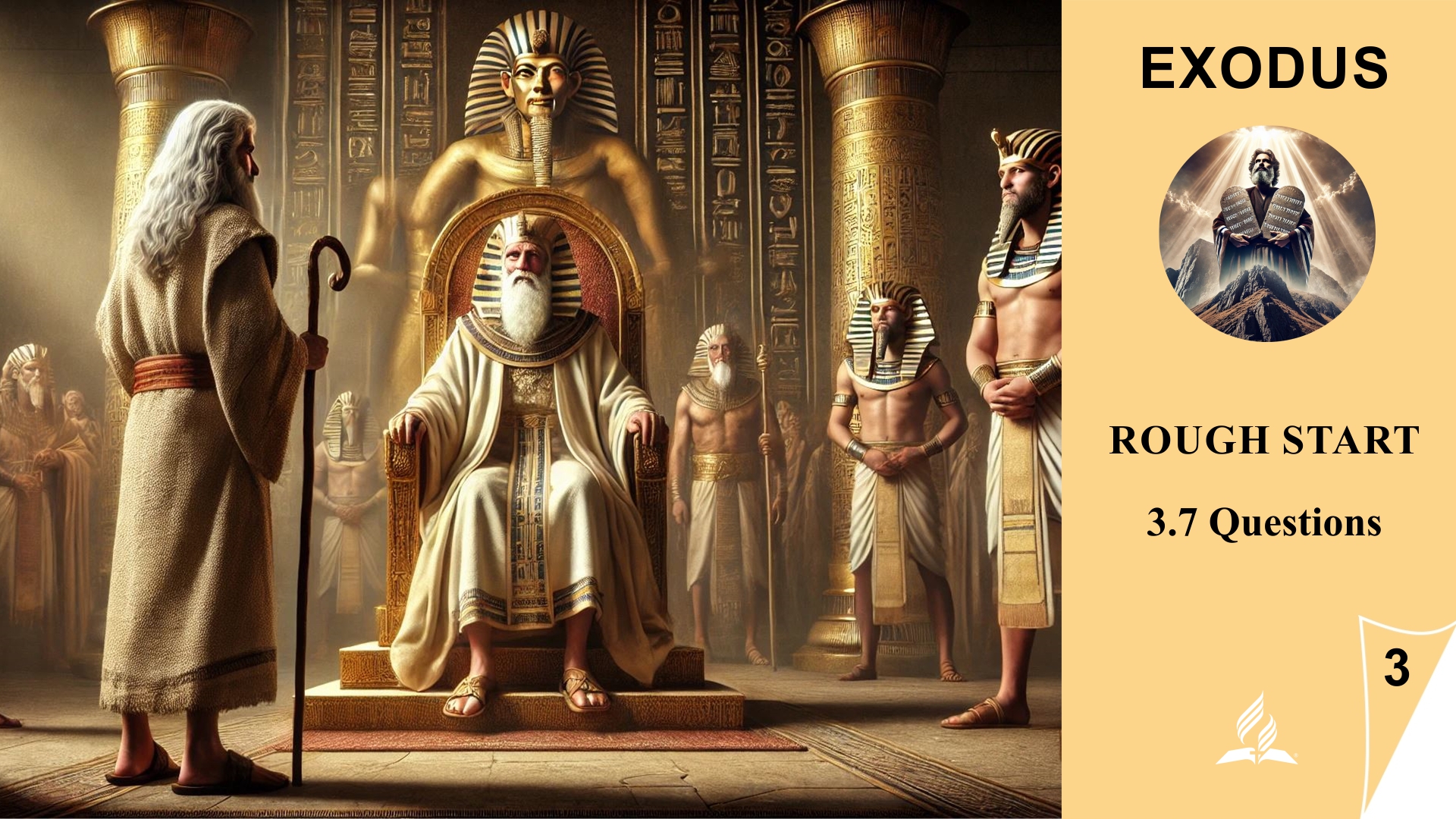
Just like Moses didn’t understand why things got worse before better, we often wrestle with God’s ways. But His plan doesn’t end at the start.
God uses the rough beginning to plant deep roots of faith.
He doesn’t ask us to understand everything—only to walk faithfully. Step by step.