
✉️ FIRST AND SECOND CORINTHIANS
🌅 Lesson 8. The Power of Christ’s Resurrection
✨ 8.4 The Resurrected Body
👑 Transformed into glory: our hope for the new body
📖 1. Introduction
After Paul has shown that Christ is the firstfruits of the resurrection, he addresses an important question: How will the dead be raised, and with what kind of body will they come? This question is understandable, because our present body is marked by decay, weakness, sickness, and death. Paul does not answer with speculation, but with images from God’s creation. He shows that the resurrection is a miracle of divine transformation. Just as new life emerges from a seed, so God will transform the perishable body into an imperishable one. The hope of the resurrection therefore concerns not merely one part of the human being, but our entire humanity.
📜 2. The Biblical Foundation
Paul asks:
“How are the dead raised? And with what kind of body will they come?”
1 Corinthians 15:35
Then he explains it with the image of a seed:
“What you sow does not come to life unless it dies.”
1 Corinthians 15:36
He continues:
“But God gives it a body as He wills.”
1 Corinthians 15:38
And finally Paul describes the difference between the present and the future body:
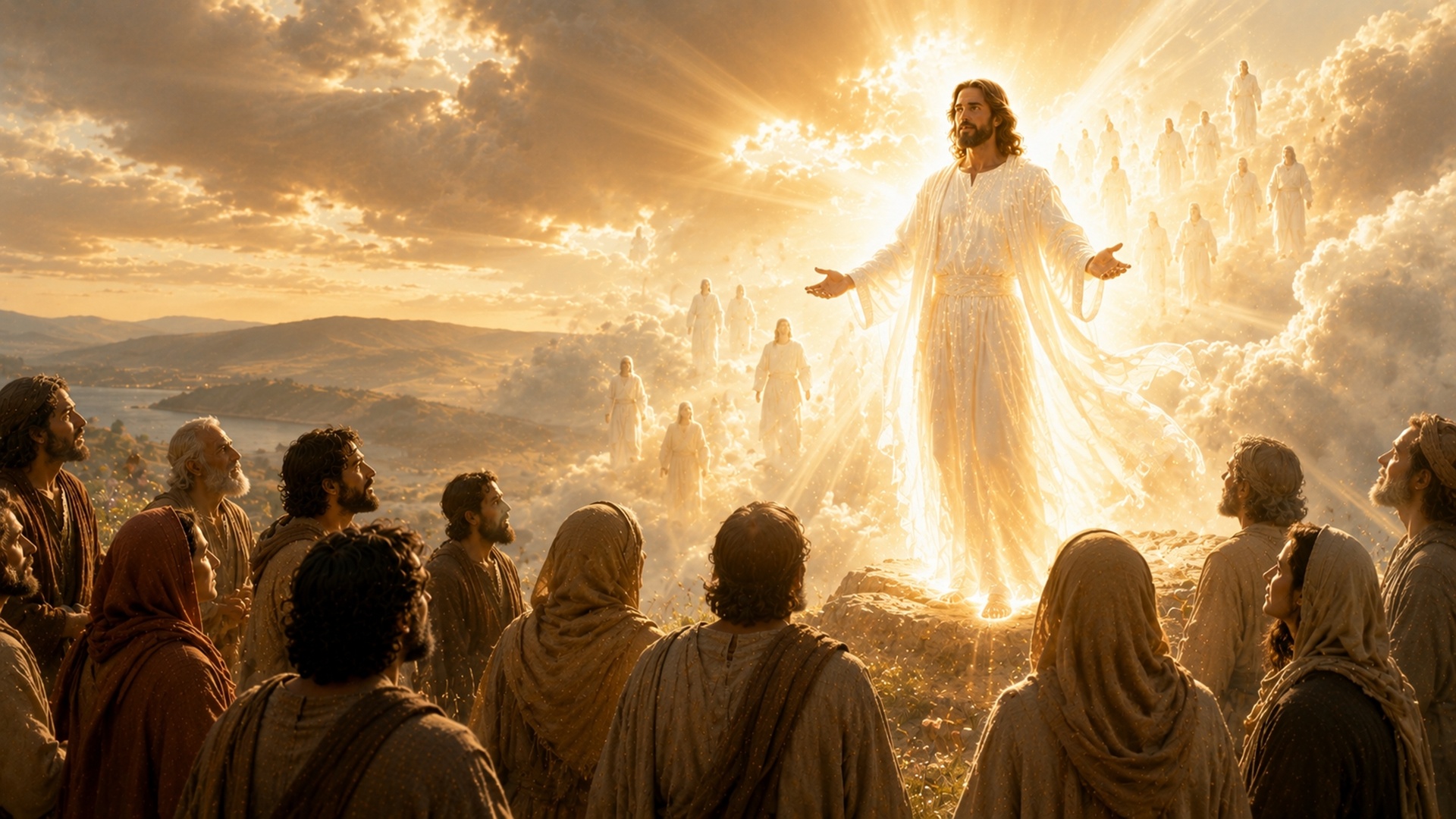
“It is sown perishable and is raised imperishable. It is sown in dishonor and is raised in glory. It is sown in weakness and is raised in power.”
1 Corinthians 15:42–43
Philippians 3:21 also says:
“He will transform our lowly body so that it may be conformed to His glorious body.”
Philippians 3:21
These texts show: The resurrection is not an escape from the body, but the transformation of the body through God’s power.
🌍 3. Connection to Our Time
Every day we experience that our bodies are limited and perishable. Sickness, fatigue, pain, aging, weakness, and death remind us that we live in a fallen world. Many people try to suppress this reality or artificially keep the body young and strong. But Paul offers a deeper hope: God will not discard our body, but transform it. The resurrection means that God redeems the whole person. Therefore, we may take our present physical limitations seriously, but we do not need to regard them as the final word about our future.
💡 4. Central Message of the Lesson
👉 At the resurrection, God will transform the perishable, weak, and mortal bodies of His children into imperishable, glorious, and powerful bodies.
✝️ 5. Theological Focus
The theological focus of this lesson lies in the physical reality of the resurrection. Paul does not defend the idea of a bodiless existence, but the hope of a transformed body. The resurrected person will not be less real than now, but more perfect, glorious, and free from decay.
The image of the seed helps us understand this truth more clearly. A seed is placed in the ground and seems to disappear. Yet from this apparent end, new life emerges through God’s power. There is continuity between the seed and the plant, but also a wonderful transformation.
So it is with the resurrected body. Paul does not say that the future body has no connection at all with the person we are now. It is the same person whom God redeems. But that person will be transformed. The old is marked by decay; the new by glory.
Paul emphasizes several contrasts. The present body is perishable; the future body will be imperishable. The present body is in dishonor; the future body will be in glory. The present body is weak; the future body will be full of power. The present body is natural; the future body will be spiritual.
By “spiritual,” Paul does not mean that the body will be invisible or immaterial. He means a body that is completely renewed, enlivened, and governed by the Spirit of God. The resurrected body is real, but it is no longer ruled by sin, weakness, sickness, and death.
This hope contradicts the idea that salvation concerns only the soul. The Bible views the human being as a whole. God created humanity as a unity. Therefore, He also redeems the whole person. The resurrection shows that God does not abandon His creation.
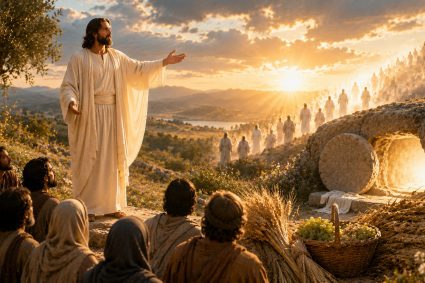
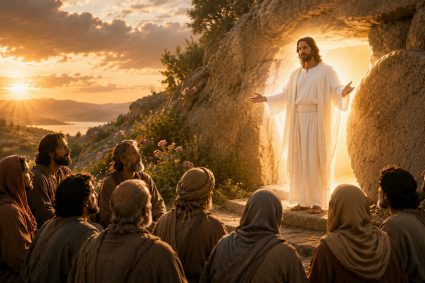
Christ Himself is the model of this hope. He rose bodily from the dead. His disciples could see Him, hear Him, and touch Him. At the same time, His resurrected body was glorified and was no longer subject to the limitations of fallen life. This is also what our future in Christ will be like.
Philippians 3:21 confirms this truth: Christ will transform our lowly body so that it becomes like His glorious body. Our hope, therefore, is not to get rid of the body, but to receive a transformed body in Christ.
The theological core is this: The resurrection is God’s complete answer to sin, decay, and death. He does not save us only inwardly, but will renew the whole person and bring us into glory.
🌟 6. Spiritual Reflection
This lesson is especially comforting for all who experience physical weakness. Many people suffer from sickness, disability, aging, pain, fatigue, or inner frailty. Paul does not say that these experiences are unimportant. But he shows that they are not final.
Our present body is perishable. This means that it is subject to decay. Even if we live healthfully, we cannot completely escape aging and death. This reality can be sad and humbling. Yet faith looks further: God has promised transformation.
The resurrected body will be imperishable. This means: no more sickness, no more aging, no more pain, no more weakness, no more dying. What is now difficult, broken, and limited will be made new through God’s power. This hope is not an escape from reality, but God’s final answer to the reality of death.
Paul also says: It is sown in dishonor and raised in glory. Our life in this world is often marked by humiliation. The body reminds us of our limitations. We are not as strong as we would like to be. We need help, rest, healing, and patience. But God will transform dishonor into glory.
This helps us view our bodies correctly today. On the one hand, we should not despise them. The body is God’s creation and should serve Him. On the other hand, we should not idolize it. Beauty, strength, health, and youth are temporary. Our true hope does not lie in physical perfection now, but in God’s future transformation.
This hope also gives dignity. People whose bodies are weak, sick, or limited are not less valuable. Their future in Christ is glory. God sees not only what is broken now, but what He will make of it. In the resurrection, no child of God will remain damaged.
Grief also receives a new perspective through this truth. When a believer dies, the body is committed to the earth. From the outside, it appears final. But in the light of the resurrection, it is like a seed waiting for God’s day. Death can destroy, but it cannot cancel God’s promise.
The image of the seed teaches us patience. There is time between sowing and harvest. There is also a period of waiting between death and resurrection. But God does not forget the seed. He knows those who belong to Him. He will raise them when Christ returns.
This hope also strengthens faith in suffering. Those who are sick may pray for healing. God can help, heal, and sustain even today. But even if complete healing does not come in this life, the greater promise remains: the final transformation at the resurrection.
The resurrected body shows us how comprehensive salvation is. God does not only remove guilt from the heart, but also the consequences of sin from creation. He will overcome decay itself. What now groans will be set free.
Therefore, Christian hope is very concrete. It is not merely a comforting feeling, but the expectation of a real future. We will not live as shadowy beings, but as renewed people in God’s new world. We will serve, see, love, and worship God with a life glorified by Him.
This truth inspires gratitude. Even now, we may place our bodies at God’s disposal. Our hands, voice, strength, time, and abilities can serve Him. Even though they are limited, God can use them. And one day He will transform everything limited into glory.
🔧 7. Application in Daily Life
Practical Steps:
- Thank God for your body, even when it is limited or weak.
- Treat your body as a gift from God and not as something worthless or unimportant.
- Do not idolize health, beauty, or youth, because they are temporary.
- Find comfort in sickness and weakness through the hope of the resurrection.
- Encourage those who suffer with the promise of the coming transformation.
- View the death of a believer through the image of a seed waiting for God’s harvest.
- Live today in such a way that your body serves God.
- Fix your hope on Christ, who will transform our bodies into glory.
❓ 8. Reflection Question
How does the hope of a transformed, imperishable body change the way I deal with sickness, aging, weakness, and physical limitations?
🌟 9. Closing Thought
Paul shows that the resurrection concerns the whole person. Our present body is perishable, weak, and marked by death, but God will transform it. What is sown in weakness will be raised in power. What is sown in dishonor will be raised in glory. The resurrected body will be real, renewed, and free from decay. Because Christ has risen, we may know: Our bodies, too, are part of God’s plan of redemption.
“It is sown in weakness and is raised in power.”
1 Corinthians 15:43 ✨👑🙏🌅
