




👤 The Biblical Person of the Day
🔥 Korah – the man who rebelled against God’s order
📌 Profile
- Name: Korah
- Time of birth: approx. 16th–15th century BC
- Place of birth: probably Egypt
- Time of death: during the wilderness journey
- Age: unknown
- Occupation: Levite, leader of a rebellion against Moses and Aaron
📖 Short Story
Korah was a Levite from the family of Kohath. This meant that he belonged to a tribe that had a special task in the service of the sanctuary. The Kohathites carried the sacred furnishings of the tabernacle and stood close to the service of God.
But Korah was not satisfied with his task. He wanted more influence, more honor, and a position that God had not given him.
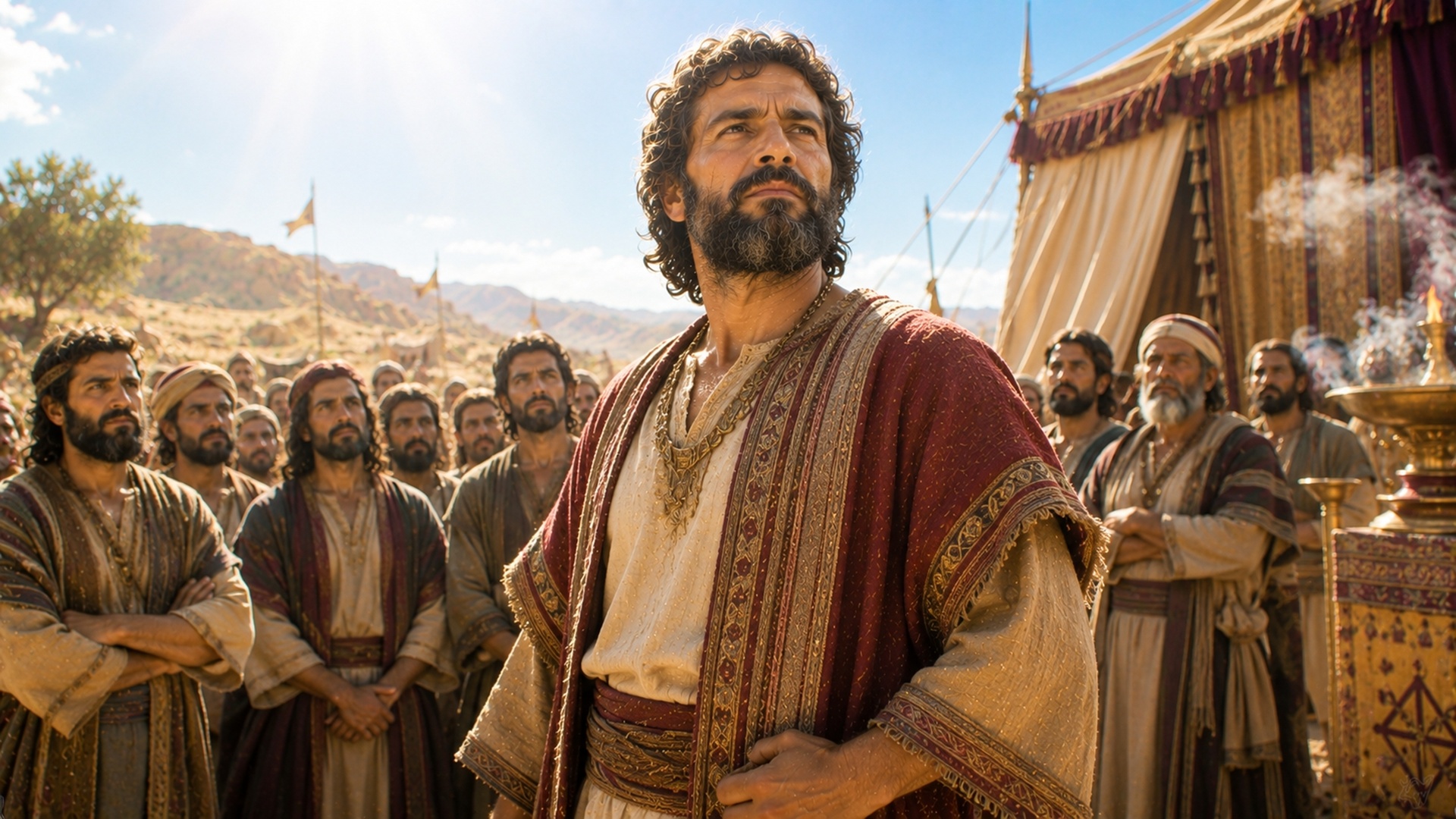
Together with Dathan, Abiram, and On, Korah gathered a group of men against Moses and Aaron. Among them were also 250 respected leaders from the congregation.
They claimed that the entire congregation was holy and asked Moses and Aaron why they exalted themselves above the people. Outwardly, this question sounded like a call for equality and justice, but behind it stood envy, dissatisfaction, and rebellion against God’s order.
Moses recognized the seriousness of the situation. He fell on his face and placed the decision in God’s hands. The next day, Korah and his followers were to appear before the Lord with censers.
God made it clear that this rebellion was not directed merely against Moses and Aaron, but against Him. The earth opened and swallowed Korah, Dathan, and Abiram with their households. Fire came out from the Lord and consumed the 250 men who had offered incense.
Korah’s story is a serious warning. It shows that spiritual service must not be driven by ambition, envy, and rebellion, but by humility, obedience, and respect for God’s calling.
🔥 The Decisive Moment
Korah stands with his followers against Moses and Aaron and thereby rebels against the order that God Himself had established.
✨ 7 Special Things About Korah
- He came from the tribe of Levi
- He belonged to the family of Kohath
- He already had a special task in the service of the sanctuary
- He was dissatisfied with his position
- He led a rebellion against Moses and Aaron
- He won 250 respected men over to his uprising
- His end became a warning example
⚖️ Strengths & Weaknesses
✔ belonged to a privileged Levitical service
✔ had influence over other people
✔ apparently possessed leadership ability
✔ recognized the holiness of the congregation, but twisted it for his own purposes
❌ envious and ambitious
❌ opposed God’s order and led others into rebellion
❗ The Mistake That Defined Him
Korah was not satisfied with the place God had given him and desired a position that did not belong to him.
➡️ His story shows that spiritual ambition becomes dangerous when a person despises God’s order and draws others into his dissatisfaction.
📜 Key Verse
“Is it a small thing to you that the God of Israel has separated you from the congregation of Israel, to bring you near to Himself?” (Numbers 16:9)
🧠 The Life Lesson
Whoever despises his own calling and reaches for another person’s position out of envy loses sight of the honor God has already given.
🎯 Application for Today
Do not constantly compare yourself with others. Recognize the value of the task God has given you and serve with humility instead of reaching for greater recognition out of envy.
❓ Question for You
Where do you need to learn today to accept your place with gratitude instead of being guided by comparison, envy, or dissatisfaction?
📌 Context
Korah lived during Israel’s wilderness journey and rebelled at a time when the people repeatedly struggled with dissatisfaction, doubt, and rebellion.
🔗 Connection
Korah is connected with Moses, Aaron, Dathan, Abiram, and the 250 men who participated in the rebellion.
Conclusion:
Korah shows that closeness to the sanctuary is no protection when the heart is filled with envy and rebellion. His story calls us to respect God’s order and faithfully carry out our own service in humility.
See you tomorrow with the next biblical person! 📖
✨ The Life Story ✨
✨ The Life Story of Korah – When Spiritual Ambition Becomes Rebellion ✨
🌄 A Levite with Special Nearness
Korah came from the tribe of Levi and belonged to the family of Kohath. This background was far from insignificant, because the Kohathites had a special responsibility in the service of the tabernacle.
They were responsible for carrying the sacred furnishings whenever Israel moved on. In this way, they came closer to the sanctuary than many others among the people.
Korah was not excluded, overlooked, or without a task. He already had a place in the service of God. But precisely here his inner problem began: what God had given him was not enough for him.
🔥 Dissatisfaction in the Heart
Korah saw Moses and Aaron in special positions of leadership. Moses led the people, and Aaron had been appointed high priest.
Instead of being grateful for his own service, Korah began to desire the position of others. His attention was no longer focused on God’s assignment, but on what he himself did not have.
Dissatisfaction in his heart became envy. And envy eventually became open rebellion.
👥 A Movement Against Moses and Aaron
Korah did not remain alone in his dissatisfaction. He joined forces with Dathan, Abiram, and On and also won 250 respected men from Israel over to his cause.
This made his rebellion especially dangerous. It was no longer merely a personal conflict, but a public uprising that influenced the whole congregation.
Korah apparently knew how to gather people around him. But influence becomes dangerous when it is not guided by humility and truth.
⚖️ Words That Sounded Pious
Korah and his followers told Moses and Aaron that the entire congregation was holy and that the Lord was among them. Then they asked why Moses and Aaron exalted themselves above the congregation.
At first, these words sounded pious and just. Israel truly was God’s people, and God had set the congregation apart as holy.
But Korah used a true statement to conceal a false attitude. He was not truly fighting for the holiness of the people, but against the calling God had given to Moses and Aaron.
🙏 Moses Falls on His Face
When Moses heard the accusation, he did not respond with personal self-defense. He fell on his face.
In doing so, he brought the matter before God. Moses knew that this conflict could not be resolved by human debate alone.
Then he declared that the Lord Himself would show who belonged to Him and who was permitted to draw near to Him. The decision would not be made by loud voices, group strength, or human ambition, but by God’s judgment.
🕯️ The Censers
Korah and his followers were to take censers and offer incense before the Lord. In this way, their claim would be tested.
Offering incense was not an ordinary act that anyone could perform according to personal desire. It belonged to sacred service.
That was the serious question: had Korah and his men truly received a calling from God, or were they reaching for a ministry God had not given them?
💔 “Is It Too Small a Thing for You?”
Moses spoke to Korah and asked him a deeply penetrating question: Was it too small a thing that God had separated him from the congregation in order to serve at the sanctuary?
This question exposed Korah’s heart. He had already received honor, but he despised it because he wanted more.
Whoever despises God’s gifts because he desires the gifts of another loses joy in his own calling.
🌍 God’s Judgment
In the end, God Himself intervened. Moses announced that an extraordinary judgment would reveal whether these men had despised God.
The earth opened and swallowed Korah, Dathan, and Abiram with their households. Fire came out from the Lord and consumed the 250 men who had come forward with censers.
This moment was terrifying. It showed the entire nation that rebellion against God’s order must not be taken lightly.
⚠️ A Lasting Warning Sign
The censers of the men were later hammered into a covering for the altar. They were to serve as a sign for Israel.
Everyone who saw the altar was to be reminded that no one may claim sacred service on his own authority.
In this way, Korah’s story became not only a tragic event, but also a lasting warning for future generations.
🕊️ Hope Despite Judgment
Remarkably, Korah’s sons did not die. Later, descendants of Korah even appear in the service of the sanctuary and in the Psalms.
This shows that God’s judgment is serious, but guilt does not automatically have to destroy every future generation when they choose a different path.
From a family burdened by rebellion, songs of worship could later arise.
✨ The Lasting Message of His Life
Korah shows how dangerous spiritual ambition can become. His story makes clear that closeness to sacred things does not automatically make the heart humble.
It reminds us that calling is not understood through comparison. Whoever despises his own assignment because he reaches for another person’s position opens his heart to envy and rebellion.
🌌 Final Thought
Korah already had a place in the service of God, but he wanted more. He did not merely want to serve; he wanted to elevate himself.
His path shows how quickly pious words can conceal a proud attitude and how destructive it is to draw others into one’s own dissatisfaction.
👉 His life story shows: Whoever despises God’s gift and reaches for another person’s honor out of envy loses the humility that true service before God requires.
