
🟦 Introduction
Lesson 8 focuses on the resurrection of Christ as the heart of the gospel. Paul shows that Jesus’ death, burial, and resurrection are not secondary points of faith, but the foundation of our salvation. Without the resurrection, preaching would be empty, faith useless, and the hope of eternal life destroyed. But because Christ has risen, believers can also look forward to their future resurrection. The resurrection shows that death does not have the final word and that Christ is the Victor over sin, death, and corruption. This lesson invites us to live courageously, faithfully, and hopefully in the light of the risen Lord.
✉️ FIRST AND SECOND CORINTHIANS
🌅 Lesson 8. The Power of Christ’s Resurrection
📣 8.1 Proclaiming the Resurrection of Christ
💎 The Resurrection as the Heart of the Gospel
📖 1. Introduction
Paul begins 1 Corinthians 15 with a clear reminder of the gospel. He reminds the Corinthians that they had heard this message, received it, and taken their stand upon it. At the center of this gospel are the death, burial, and resurrection of Jesus Christ. For Paul, the resurrection is not a later addition to the faith, but an indispensable part of salvation. Without it, the gospel would be incomplete. Therefore, Paul proclaims Christ not only as the Crucified One, but also as the Risen One.
📜 2. The Biblical Foundation
Paul writes:
“Now, brothers and sisters, I want to remind you of the gospel I preached to you, which you received and on which you have taken your stand.”
1 Corinthians 15:1
He continues:
“By this gospel you are saved, if you hold firmly to the word I preached to you.”
1 Corinthians 15:2
Then Paul summarizes the gospel:
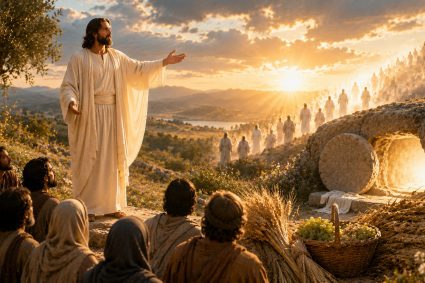
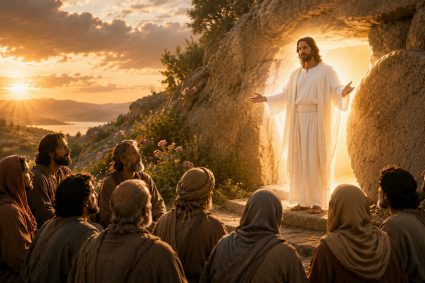
“That Christ died for our sins according to the Scriptures, that He was buried, and that He was raised on the third day according to the Scriptures.”
1 Corinthians 15:3–4
Jesus Himself also explained after His resurrection:
“This is what is written: The Messiah will suffer and rise from the dead on the third day.”
Luke 24:46
These texts show: The resurrection of Christ belongs to the very heart of the biblical message.
🌍 3. Connection to Our Time
Even today, the resurrection of Christ is decisive for our faith. Many people see Jesus only as a moral teacher, a religious example, or an important historical figure. Paul shows, however, that Jesus is more: He is the crucified and risen Lord. Christian faith does not rest merely on beautiful ideas, but on God’s action in history. The resurrection shows that sin, death, and guilt do not have the final word. Whoever proclaims Christ therefore proclaims not only comfort, but a living hope founded on Jesus’ victory.
💡 4. Central Message of the Lesson
👉 The resurrection of Christ is the heart of the gospel because it confirms that Jesus is Lord, that His sacrifice was accepted, and that our hope of salvation and eternal life stands secure.
✝️ 5. Theological Emphasis
The theological emphasis of this lesson is that the gospel is incomplete without the resurrection of Christ. Paul first reminds the Corinthians of what he had proclaimed to them. This gospel was not a human invention, but a message that had been received and passed on.
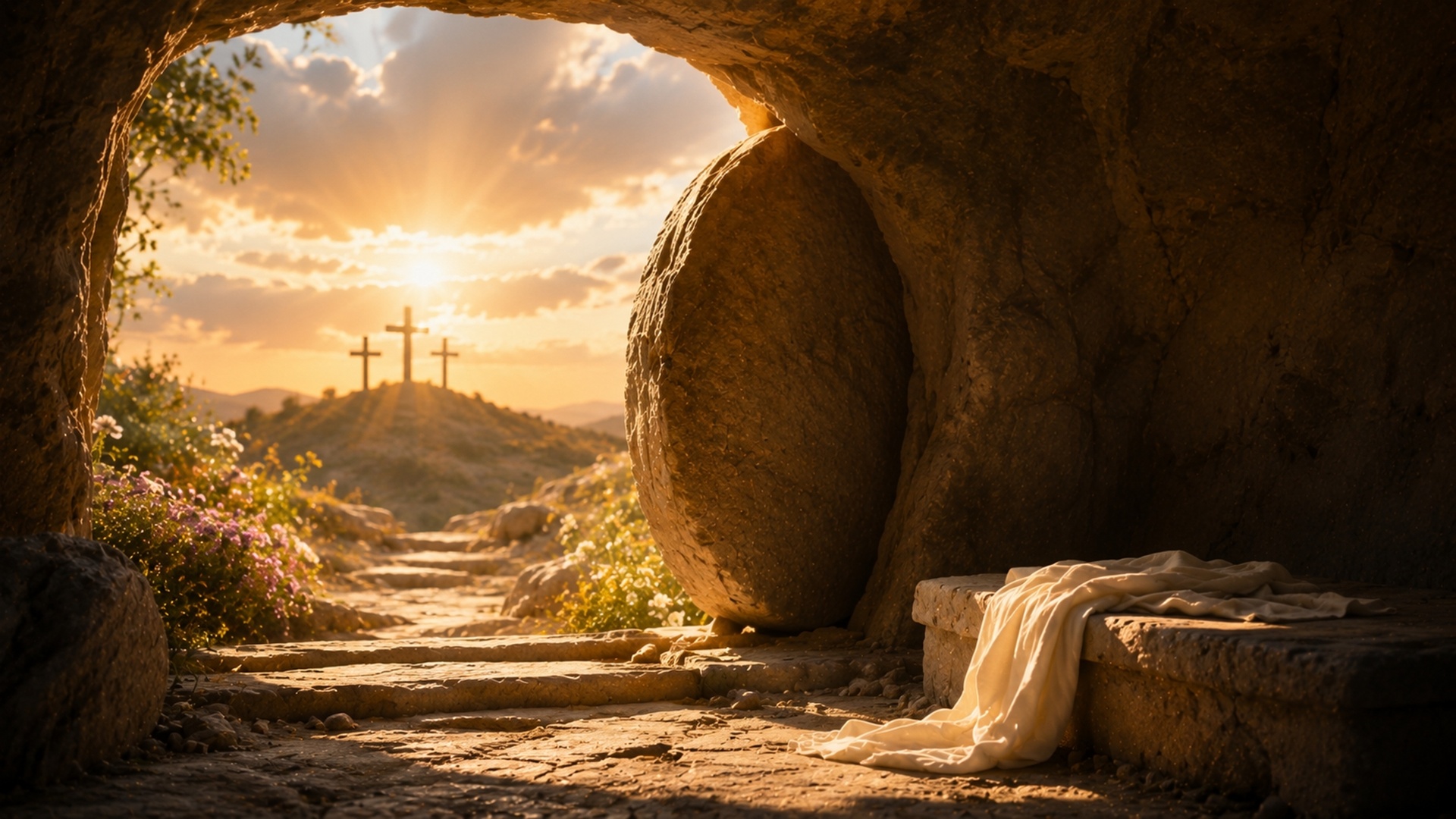
Paul names three central facts: Christ died for our sins, He was buried, and He rose on the third day. This sequence is important. Jesus’ death shows that Christ truly died for our guilt. His burial confirms that His death was real. His resurrection shows that God conquered death and accepted Jesus’ sacrifice.
The phrase “according to the Scriptures” is especially significant. Paul makes clear that Jesus’ death and resurrection did not happen by chance. They fulfill God’s plan of salvation, which had already been announced in the Old Testament. The gospel therefore stands within the great line of biblical promises.
Luke 24 also shows that Jesus Himself taught His disciples to understand His suffering and resurrection from the Scriptures. The resurrection is therefore not merely a miraculous event, but the fulfillment of God’s Word. It shows that God is faithful and fulfills His promises.
Paul closely connects preaching and faith. The gospel is proclaimed so that people may believe. Faith, in turn, holds firmly to this proclaimed truth. If the message of Christ is distorted or denied, faith also loses its firm foundation.
The resurrection is also a historical event. Paul later refers to eyewitnesses who saw the risen Christ. In doing so, he shows that the Christian faith is not based on an inner religious feeling. It is founded on something God did in space and time.
This is important because the Christian faith is not merely a philosophy or a form of life guidance. It is the response to God’s action. Jesus did not merely continue to live in the thoughts of His disciples; He truly rose from the dead. Death could not hold Him.
The resurrection also confirms the identity of Jesus. Romans 1:4 says that Jesus was powerfully declared to be the Son of God by His resurrection from the dead. This means that the resurrection is God’s confirmation of who Jesus is. He did not fail, but was exalted. He was not defeated, but is the Victor.
The theological core is this: The resurrection of Christ is God’s seal upon the gospel. It confirms the cross, fulfills the Scriptures, establishes the apostolic proclamation, and gives faith its secure hope.
🌟 6. Spiritual Deepening
This lesson invites us to think anew about the foundation of our faith. Paul does not say, “I want to remind you of a beautiful idea.” He says, “I want to remind you of the gospel.” Faith needs remembrance because our hearts easily forget what they truly stand upon.
The Corinthians had many questions and problems. But Paul leads them back to the foundation. Before he speaks about the resurrection of the dead, he reminds them of the resurrection of Christ. For only if Christ has risen can there be hope for all who belong to Him.
We too need this return to the foundation. In difficult times, doubts, suffering, grief, or spiritual weariness can weaken our hope. Then we do not first need new speculations, but the old, firm truth: Christ died, was buried, and rose again.
The resurrection shows that God’s power is greater than everything that threatens us. From a human perspective, death appears final. But in Christ, God has shown that He has power even where human beings can do nothing more. The grave is no boundary for God.
This truth gives courage. If Christ has risen, then our faith is not in vain. Then forgiveness is possible. Then new life is possible. Then hope beyond death is possible. Then no darkness is final.
The resurrection also protects us from a reduced form of Christianity. Jesus is not only an ethical example. He is the living Lord. Therefore, faith is not merely about admiring His teachings, but about trusting and following Him as the Risen One.
Whoever proclaims the resurrection also proclaims responsibility. If Jesus lives, then our lives belong to Him. He is not a religious memory, but the present Lord. His Word has authority, His promise has power, and His return is certain.
The resurrection also gives power to our proclamation. We do not speak of a dead founder of religion, but of a living Savior. The gospel is not only a message about the past, but a living invitation today: Christ lives, saves, forgives, and transforms.
Paul also shows that faith and preaching belong together. No one can believe a gospel that is not proclaimed. Therefore, the mission of the church remains important: Christ must be made known. His death for our sins and His resurrection must be clearly testified to.
At the same time, the one who proclaims must personally believe what he proclaims. The resurrection must not remain merely a doctrine in the mind, but become a truth that carries the heart. Whoever truly believes that Christ lives will pray differently, hope differently, suffer differently, and serve differently.
This truth is especially comforting in the face of death. When we stand at graves, we need more than human words. We need the certainty that Christ has risen. His resurrection is the foundation for the truth that death will not remain the final chapter.
That is why 1 Corinthians 15 is so important. Paul does not build the hope of believers on feelings or wishes, but on the risen Christ. Our hope is not: “Perhaps everything will turn out well.” Our hope is: “Christ has risen.”
This hope should shape our lives. It makes us steadfast when faith is attacked. It gives joy when circumstances are difficult. It gives faithfulness when service becomes burdensome. It directs our eyes toward the day when the Risen One will return.
🔧 7. Application in Everyday Life
Practical Steps:
- Hold firmly each day to this truth: Christ died, was buried, and rose again.
- Read the Bible with an eye to how God’s plan of salvation is fulfilled in Christ.
- Anchor your faith not in feelings, but in God’s actions and promises.
- Proclaim Jesus not only as an example, but as the crucified and risen Lord.
- In times of grief and doubt, seek comfort in the reality of the resurrection.
- Ask yourself whether your life truly shows that Jesus lives and is Lord.
- Speak with others about the hope that comes from the resurrection.
- Remember: The grave was not the end—and it will not be the end for believers either.
❓ 8. Reflection Question
Do I believe in the resurrection of Christ only as a doctrine—or does it truly shape my hope, my decisions, and my witness in everyday life?
🌟 9. Closing Thought
Paul shows that the resurrection of Christ is the heart of the gospel. Christ truly died, was truly buried, and truly rose again. This message was proclaimed, received, and held firmly by believers. The resurrection confirms Jesus’ sacrifice, fulfills the Scriptures, and gives faith an unshakable foundation. Therefore, the church does not proclaim an idea, but the living Lord. Because Christ has risen, our hope stands firm—today, in death, and until the return of Jesus.
“That Christ died for our sins according to the Scriptures, that He was buried, and that He was raised on the third day according to the Scriptures.”
1 Corinthians 15:3–4 📣💎🙏✨
