
✉️ FIRST AND SECOND CORINTHIANS
💞 Lesson 7. A Portrait of Love
⚓ 7.5 Faith, Hope, and Love
🌅 The Enduring Greatness of Love in the Light of Eternity
📖 1. Introduction
Paul concludes his description of love by looking toward eternity. Spiritual gifts are important, but they have a temporary purpose. Prophecy, speaking in tongues, and limited knowledge will one day no longer be necessary when God’s kingdom is fully established. Then we will no longer know only in part, but we will see God face to face. Yet love will never cease because it reflects the very nature of God. Therefore faith, hope, and love remain—but the greatest of these is love.
📜 2. The Biblical Foundation
Paul writes:
“Love never fails.”
1 Corinthians 13:8
He continues:
“For we know in part and we prophesy in part.”
1 Corinthians 13:9
And then:
“For now we see only a reflection as in a mirror; then we shall see face to face.”
1 Corinthians 13:12
Finally, Paul summarizes:
“And now these three remain: faith, hope and love. But the greatest of these is love.”
1 Corinthians 13:13
John writes:
“God is love.”
1 John 4:8
These texts show: Everything temporary will pass away, but God’s love remains forever.
🌍 3. Connection to Our Time
Even today, we live in a world where many things are temporary. Knowledge changes, human abilities decline, achievements fade, and even spiritual ministries have their particular purpose for a particular time. Many people seek security in things that cannot last. Paul therefore directs our attention to what endures eternally. Faith holds on to God, hope looks toward His promises, and love makes God’s character visible. Whoever lives by faith, hope, and love builds life not on what is temporary but on what is eternal.
💡 4. Central Message of the Lesson
👉 Spiritual gifts are important for the church today, but faith, hope, and love remain—and love is the greatest because it reflects God’s character and will endure throughout eternity.
✝️ 5. Theological Emphasis
The theological emphasis of this lesson lies in the difference between what is temporary and what endures. Paul does not say that spiritual gifts are unimportant. They are necessary as long as the church lives on this earth. They serve proclamation, edification, exhortation, comfort, and guidance.
But these gifts belong to the time of the “not yet.” We do not yet live in the visible fulfillment of God’s kingdom. We still know only in part, still believe by faith, still hope for what we do not see, and still need spiritual gifts to strengthen us along the way.
Paul says: Our knowledge is partial. This means that our understanding is limited. Even spiritually enlightened knowledge remains incomplete on this earth. We do not see everything clearly. We do not always understand God’s ways. We need humility because our perspective is limited.
Prophetic speech is also partial. Prophecy is a precious gift from God, but it too belongs to the time of pilgrimage. It guides, warns, comforts, and strengthens. But when Christ returns and we see Him face to face, this form of communication will no longer be necessary.
Paul uses the image of a mirror. In ancient times, mirrors were not as clear as they are today. A person could see an image, but not with perfect sharpness. That is what our present knowledge is like. We have genuine light from God, but not yet the full clarity of eternity.
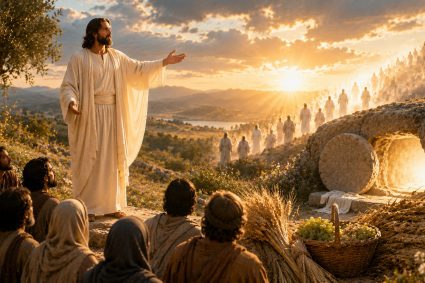
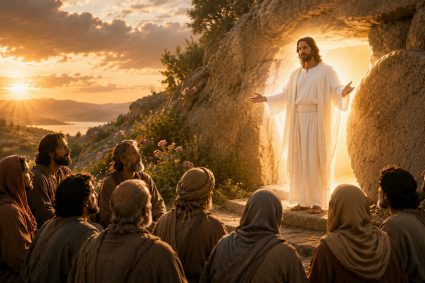
Then we will see face to face. This hope points to the return of Christ and the completion of salvation. Faith will become sight. Hope will become fulfillment. Limited knowledge will be surpassed by direct fellowship with God.
But love never fails. Why? Because love is not merely a tool for this present age; it reflects the very nature of God. God is love. Therefore, love belongs not only to the present church but also to eternity. In God’s kingdom, love will reign perfectly, purely, and without interruption.
Faith, hope, and love form the great threefold harmony of the Christian life. Faith trusts God despite visible limitations. Hope holds firmly to God’s future. Love already lives according to God’s character. These three virtues carry the Christian through trials, service, and waiting.
Yet love is the greatest. Not because faith and hope are unimportant, but because love is most deeply connected with God’s nature. God is not described as “faith” or “hope,” but Scripture says: “God is love.” Therefore, love is the enduring mark of life with God.
The theological core is this: Everything spiritual on this earth is directed toward God’s final fulfillment. Gifts serve for a time, but love belongs to eternity. Whoever lives in love is already living in the spirit of God’s coming kingdom.
🌟 6. Spiritual Deepening
This lesson helps us see our lives in the light of eternity. Much of what appears great today will one day seem small. Much of what people admire will pass away. But what is born from the love of God remains.
This is an important correction to our thinking. We often ask: What is visible? What appears powerful? What brings recognition? What is successful? Paul asks differently: What remains before God? What has eternal value? What is carried by love?
Spiritual gifts can impress, but love reveals Christ. A gift may be given for a particular task, but love is the atmosphere of heaven. Therefore, a small act of service done in genuine love is more precious before God than a great achievement without love.
Faith is necessary because we do not yet see God. We live by trusting His promises. We believe that Christ has redeemed us, that He intercedes for us, and that He will return. This faith carries us when feelings fluctuate and circumstances become difficult.
Hope is necessary because we are still on the journey. We see suffering, death, injustice, sickness, disappointment, and spiritual battles. Hope says: This is not the final word. Christ is coming again. God will make all things new. His promises will be fulfilled.
Love is necessary because it already makes God’s character visible now. While we wait, we are not to become cold, harsh, or indifferent. We do not wait passively but love actively. We serve, forgive, comfort, encourage, and bear with one another because God’s love is at work within us.
The statement “God is love” is one of the deepest truths of the Bible. It does not mean that God approves of everything or that His holiness is abolished. God’s love is holy, truthful, and saving. It does not minimize sin but overcomes it through the cross.
Precisely for this reason, this truth is such good news. If God is love, then His deepest actions are not arbitrary, cold, or cruel. He seeks the salvation of humanity. He gives His Son. He forgives, heals, carries, and calls us back. His love is stronger than our guilt.
The cross shows what “God is love” means. There we do not see cheap love, but love that pays the highest price. Christ gave Himself so that we might live. Therefore, love is not sentimental but sacrificial and redemptive.
This love remains throughout eternity. On the new earth there will be no broken love, no jealousy, no fear, no bitterness, no separation, no guilt, and no wounded relationships. Everything will be permeated by God’s love.
Therefore, we should learn to live in this love already today. Heaven does not begin only as a place, but also as the reign of God in the heart. When Christ shapes our love, something of the coming world becomes visible even now.
This lesson also calls us to humility. Our knowledge is still partial. Therefore, we should be cautious about pride, harshness, and arrogance. Whoever knows that he sees only in part will become more patient with others and more dependent on God’s guidance.
At the same time, this lesson gives us great hope. What we understand only imperfectly now will one day become clear. Questions that remain unanswered today will appear differently in the light of God. Tears that flow today will be wiped away. Love that is lived today amid struggle will be perfected in God’s kingdom.
That is why love is the greatest. It is not only a commandment but the future of the redeemed. It is not only a responsibility but the essence of life with God. Whoever loves is already living in the direction of eternity.
🔧 7. Application in Everyday Life
Practical Steps:
- Examine whether your life is focused more on temporary things or eternal things.
- Nurture your faith through God’s Word, prayer, and trust.
- Strengthen your hope through the promise of Christ’s return.
- In your service, ask not only about success but also about love.
- Remain humble because your knowledge is still partial.
- Live in such a way that God’s love becomes visible in your everyday life.
- Forgive, comfort, and serve in the light of eternity.
- Ask God to make faith, hope, and love grow within you.
❓ 8. Reflection Question
What in my life will pass away—and what is truly shaped by faith, hope, and love?
🌟 9. Closing Thought
Paul directs our attention to what remains. Spiritual gifts are important, but they belong to the time of preparation, service, and pilgrimage. One day we will see Christ as He is, and our limited knowledge will be surpassed by full fellowship with God. But love will never cease because God Himself is love. Therefore, faith, hope, and love should shape our lives already today. Whoever lives in the love of Christ already carries the fragrance of eternity into this world.
“And now these three remain: faith, hope and love. But the greatest of these is love.”
1 Corinthians 13:13 ⚓🌅🙏✨
