


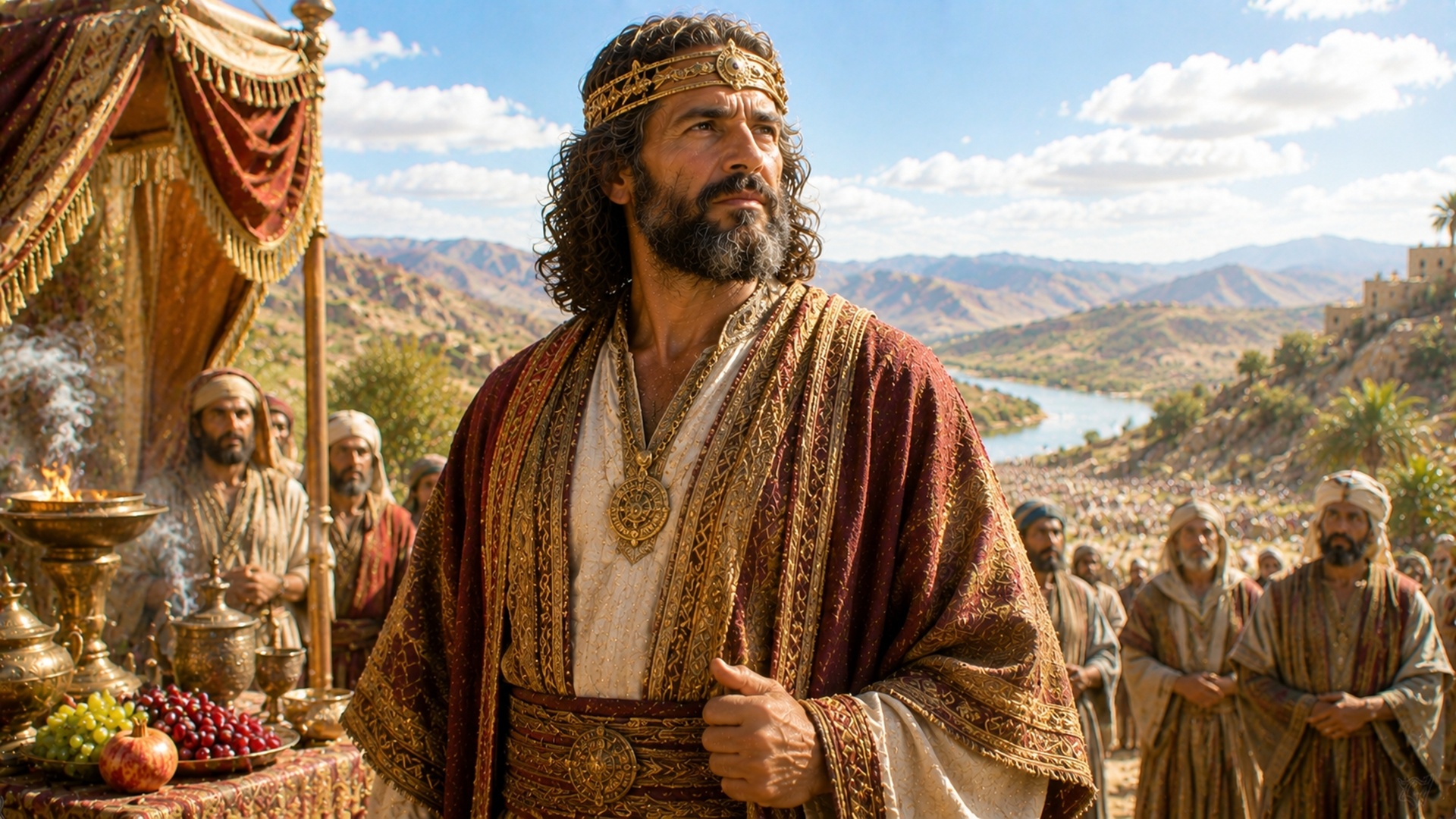
👤 The Biblical Person of the Day
👑 Balak – the king who could not stop God’s blessing
📌 Profile
- Name: Balak
- Time of birth: approx. 15th century BC
- Place of birth: probably Moab
- Time of death: unknown
- Age: unknown
- Occupation: King of Moab
📖 Short Story
Balak was the king of Moab during Israel’s wilderness journey. When he saw how numerous Israel was and what had happened to the Amorites, he became very afraid.
He realized that Israel was not simply an ordinary wandering people. Reports of God’s work among Israel had reached him, and he feared that Moab might be overwhelmed by this nation.
Instead of seeking God or choosing peace, Balak looked for help in a dangerous direction. He sent for Balaam, a man known as a seer, so that he might curse Israel.
Balak believed that a curse could weaken Israel and protect Moab. He offered Balaam honor, reward, and high position if he would fulfill his request.
But God did not allow Israel to be cursed. Again and again, Balaam was compelled to speak a blessing instead of a curse.
Balak became angry and disappointed. He changed locations, offered sacrifices, and hoped that the words would change, but God’s decision remained unchanged.
Balak’s story shows that no human plan can stop God’s blessing. Whoever fights against God’s people and God’s will ultimately sets himself against the Lord Himself.
🔥 The Decisive Moment
Balak tries to have Israel cursed through Balaam, but God turns the intended curse into a blessing.
✨ 7 Special Things About Balak
- He was king of Moab
- He was afraid of Israel’s great numbers
- He sought help from Balaam
- He wanted Israel to be cursed
- He offered Balaam honor and reward
- He had to hear Israel being blessed instead of cursed
- He shows that human plans cannot cancel God’s blessing
⚖️ Strengths & Weaknesses
✔ recognized the danger from his own perspective
✔ acted decisively as king
✔ sought a solution for his people
✔ understood that spiritual words could have power
❌ allowed himself to be guided by fear
❌ fought against God’s will and God’s blessing
❗ The Mistake That Defined Him
Balak tried to weaken God’s blessed people through a curse instead of humbly recognizing what God was doing.
➡️ His story shows that fear and the desire for power can lead a person to fight against God’s plan.
📜 Key Verse
“How shall I curse whom God has not cursed? And how shall I denounce whom the Lord has not denounced?” (Numbers 23:8)
🧠 The Life Lesson
What God blesses, no human being can truly curse. God’s faithfulness is stronger than fear, intrigue, and human schemes for power.
🎯 Application for Today
Do not let fear drive you onto wrong paths. Seek God’s will instead of trying to force security through control, pressure, or manipulation.
❓ Question for You
Where might you be trying to control something out of fear instead of trusting God?
📌 Context
Balak lived during Israel’s wilderness journey, shortly before the people were to enter the Promised Land.
🔗 Connection
Balak is connected with Balaam, the people of Moab, and Israel on its way to Canaan.
Conclusion:
Balak shows that fear can lead a person into dangerous decisions. But his story also makes one thing clear: God’s blessing remains, even when people try to fight against it.
See you tomorrow with the next biblical person! 📖
✨ The Life Story ✨
✨ The Life Story of Balak – Fear of God’s Blessed People ✨
🌄 A King in Moab
Balak was king of Moab, a people living east of the Dead Sea. As ruler, he carried responsibility for his land, his cities, and his people.
During his time, Israel approached the regions around Moab after many years of wandering in the wilderness. The people were numerous, and reports of their victories spread.
Balak did not see Israel primarily as a people under God’s guidance, but as a threat to his own security.
😨 Fear of Israel
Balak heard what Israel had done to the Amorites. This news shook him deeply. Moab became very afraid because Israel was so numerous.
Fear can make a person alert, but it can also make him blind. In Balak’s case, fear became the driving force behind his actions.
He did not ask about the God of Israel and did not seek a path of peace. Instead, he looked for a way to weaken Israel spiritually.
📩 The Message to Balaam
Balak sent messengers to Balaam. This man had a reputation that his blessings and curses had power.
Balak asked him to curse Israel. He hoped that a curse would weaken the people so that Moab could defeat them or at least keep them away.
In doing so, Balak showed that he took spiritual power seriously, but wanted to use it for his own political purposes.
💰 Honor and Reward
When Balaam did not come at first, Balak did not give up. He sent even more distinguished princes and promised him great honor and reward.
Balak thought like a king who believed that almost anything could be influenced through prestige, power, and gifts.
But God’s word cannot be bought. Even when people entice with honor and reward, God’s will remains higher than human offers.
⛰️ The First View of Israel
When Balaam finally came, Balak led him to a high place from which he could see part of Israel. There, altars were built and sacrifices were offered.
Balak now expected the curse he had hoped for. Everything was prepared, and from his perspective, Balaam only needed to say what Balak wanted to hear.
But Balaam could not say what Balak demanded. He had to speak what God gave him.
🕊️ Curse Becomes Blessing
Instead of cursing Israel, Balaam blessed the people. He declared that one cannot curse those whom God has not cursed.
For Balak, this was a bitter disappointment. He had brought Balaam to weaken Israel, but now, right before his ears, Israel’s special position was being confirmed.
This moment made one thing clear: God’s blessing does not depend on the wishes of enemies.
🔁 Repeated Attempts
Balak did not give up immediately. He brought Balaam to other places, hoping that a different perspective might also change the words.
Perhaps he thought that if Balaam saw Israel differently, he might finally be able to curse them. But God’s decision did not change with the location.
Balak tried repeatedly, and repeatedly he heard not the curse he wanted, but words confirming God’s protection and God’s plan for Israel.
🔥 Anger and Disappointment
Balak became angry. He struck his hands together and accused Balaam of failing to serve him as expected.
His anger shows that he was unwilling to accept God’s decision. He wanted an outcome that matched his own desire, not a truth that revealed God’s will.
But human anger cannot change God’s word. Balak had to experience his plans breaking against God’s blessing.
🌟 A Glimpse of the Coming King
In Balaam’s words there even appeared a reference to future hope: a star would come out of Jacob and a scepter would rise out of Israel.
For Balak, this was especially bitter. He wanted Israel to be cursed, yet in that very context a future ruler from Israel was announced.
Thus his attempt to weaken God’s people became an occasion for God’s greater plan to be revealed.
✨ The Lasting Message of His Life
Balak shows how dangerous fear can become when it does not lead a person to God, but instead toward control and manipulation. He saw a threat and tried to fight it with spiritual means for his own purposes.
His story reminds us that God’s blessing cannot be canceled by human intrigue. What God chooses to protect, no curse can destroy.
🌌 Final Thought
Balak wanted Israel to be cursed because he was afraid of God’s blessed people. He offered honor, reward, and sacrifices, but he could not change God’s decision.
In the end, he heard not the curse he expected, but the blessing God had determined.
👉 His life story shows: No human plan can stop God’s blessing, and whoever fights against God’s will out of fear ultimately faces a power greater than any king.
