




✉️ FIRST AND SECOND CORINTHIANS
✝️ Lesson 2: The Message of the Cross
🤔 2.2 Foolishness to Those Who Are Perishing
🌍 The Cross: Foolishness to the World, Salvation to Those Who Believe
📖 1. Introduction
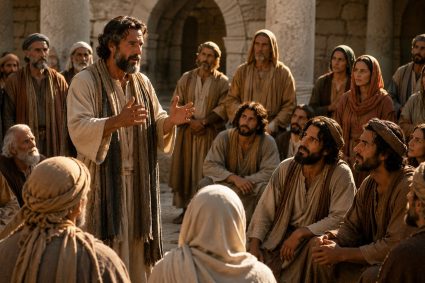
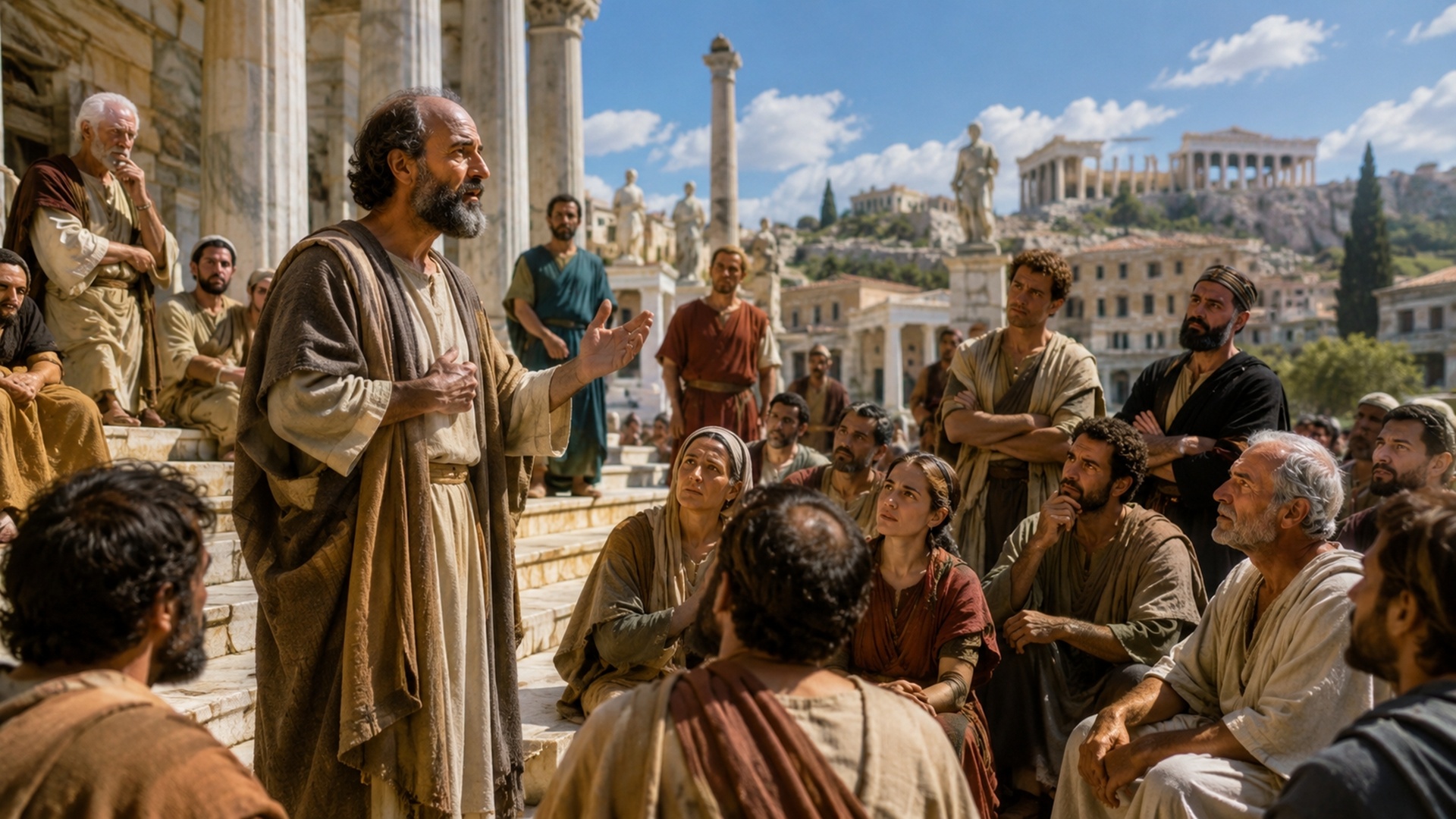
Paul describes the message of the cross as “foolishness” to those who are perishing. By this he does not mean that these people lack intelligence, but that they are unwilling to accept God’s way of salvation. To the Greeks, a crucified Savior sounded unreasonable because they sought wisdom, philosophy, and human greatness. To many Jews, a crucified Messiah was a stumbling block because they expected a powerful deliverer who would defeat their enemies. Yet precisely what human beings reject or despise, God makes the center of His redemption. The cross shows that God’s wisdom is completely different from human thinking.
📜 2. The Biblical Foundation
Paul writes:
“For the message of the cross is foolishness to those who are perishing, but to us who are being saved it is the power of God.” 1 Corinthians 1:18
He goes on to say:
“Where is the wise person? Where is the teacher of the law? Where is the philosopher of this age? Has not God made foolish the wisdom of the world?” 1 Corinthians 1:20
And he explains:
“But we preach Christ crucified: a stumbling block to Jews and foolishness to Gentiles.” 1 Corinthians 1:23
These verses show the contrast between human wisdom and God’s wisdom. What human beings consider weak or foolish is, in reality, God’s way of salvation.
🌍 3. Connection to Today
Even today, the message of the cross seems incomprehensible to many people. Our society values self-determination, success, strength, education, and personal achievement. The idea that human beings cannot save themselves but need a crucified Redeemer contradicts human pride. Some see the cross only as a religious symbol; others consider it too simple, too bloody, or too offensive. But precisely there lies the challenge of the gospel: it places not the human being, but God, at the center. Whoever rejects the cross does not merely reject a doctrine, but God’s offered salvation.
💡 4. Central Message of the Lesson
👉 The cross appears foolish to the world because it breaks human pride; but for believers it is God’s way of salvation and the revelation of His true wisdom.
✝️ 5. Theological Focus
The central idea of this section is the contrast between human wisdom and divine wisdom. Paul says that the word of the cross is foolishness to those who are perishing. This means that the natural human being judges God’s plan of salvation according to human standards and therefore reaches a false conclusion.
The cross contradicts everything people normally associate with power, success, and wisdom. In the Roman world, a crucified person was regarded as despised, weak, and defeated. Crucifixion was a shameful form of death. That precisely a Crucified One should be the Savior of the world was unimaginable to many.
For many Jews, the cross was a stumbling block. They expected a Messiah who would come with visible power, liberate Israel, and defeat their enemies. A Messiah executed by the Romans did not fit their expectations. They found it difficult to recognize that the true victory of the Messiah was not primarily political or military, but spiritual.
For the Greeks, the cross was foolishness. They sought wisdom, philosophy, beautiful speech, and intellectual depth. The message of a crucified Jew from Galilee did not seem like high wisdom to them, but like nonsense. Yet Paul shows that precisely here God’s wisdom is revealed.
The cross exposes the limits of human wisdom. Human beings can speak about God, reflect on morality, and develop great philosophical systems. But they cannot free themselves from guilt, sin, and death. Human wisdom can recognize the depth of the problem, but it cannot create redemption.
Therefore God makes the wisdom of the world foolish. This does not mean that thinking, education, or knowledge are worthless. It means that every wisdom that replaces God or rejects the cross ultimately remains empty. Where human wisdom sets itself against God’s revelation, it becomes spiritually blind.
The word “foolishness” also reveals a spiritual attitude. It is not merely about intellectual misunderstanding, but about resistance to God’s way. Many people reject the cross because it tells them: You are sinful. You need grace. You cannot save yourself. This wounds human pride.
The cross is therefore also a judgment on human self-glory. It shows that neither religious achievement, nor philosophical wisdom, nor social strength is sufficient to save the human being. Before the cross, every person stands as one in need of God’s grace.
At the same time, the cross is God’s greatest invitation. What is foolishness to the world is salvation to believers. Whoever humbly submits to God’s truth recognizes in the crucified Christ not defeat, but love. Not weakness, but power. Not foolishness, but wisdom.
Paul thereby shows that the reaction to the cross reveals the condition of the heart. Whoever wants to save himself stumbles over it. Whoever recognizes his need finds hope in it. The cross does not divide according to education, origin, or social status, but according to faith or unbelief.
🌟 6. Spiritual Deepening
This lesson calls us to honestly examine how we ourselves respond to the cross. For Christians, the cross has often become familiar. We see it in churches, on Bibles, in hymns, and in prayers. But there is a danger that we become accustomed to the cross and no longer truly grasp its depth.
The cross is not merely a beautiful symbol. It is the place where the Son of God died for our sins. It shows that sin is so serious that it required the death of Christ. At the same time, it shows that God’s love is so great that Christ was willing to take this death upon Himself.
When people reject the cross as foolishness, it is often because they do not want to see their own sin. Whoever considers himself good enough needs no Savior. Whoever thinks he can stand before God through his own achievement feels grace as an insult. But the cross says: You cannot redeem yourself, but God loved you so much that Christ died for you.
Religious people, too, can stumble over the cross. Whoever seeks security in rules, traditions, or personal piety may find it difficult to accept the message of free grace. The cross removes every possibility of boasting in ourselves. It places Christ alone at the center.
For the church this means: We must not change the gospel so that it better suits the taste of the world. Of course, we should speak clearly, respectfully, and lovingly. But we must not remove the offensive core. Without the cross there is no gospel.
The temptation is great to present Christianity as life help, a moral program, a community offer, or a cultural tradition. All of these may contain good elements, but they must not replace the center. The central message remains: Christ died for our sins and rose again so that we may be saved.
This message will not always be popular. Some will reject it, mock it, or consider it outdated. But Paul encourages us not to be ashamed. God’s power does not lie in the fact that all people immediately accept the message, but in the fact that it saves those who believe.
The cross also teaches us humility in dealing with others. If we are saved, it is not because we were wiser, better, or more worthy. We accepted God’s grace because God worked in our hearts. Therefore we should not despise people who still reject the cross, but pray for them.
Perhaps there are people who laugh at the gospel today and tomorrow will be touched by it. Perhaps the message seems foolish to them today, but God can open their eyes. Paul himself was once an opponent of Christ and later became an apostle of the cross. No one is beyond the reach of God’s grace.
For our own lives this means: We should return to the cross again and again. There pride, self-justification, and fear of people lose their power. There we learn that we are completely dependent on God’s grace. And there we receive the strength to faithfully pass on the gospel, even when it is not understood everywhere.
🔧 7. Application in Everyday Life
Practical steps:
- Hold firmly to the cross as the center of your faith.
- Do not be ashamed of the message of Jesus Christ, the Crucified One.
- Ask God for humility so that you value His wisdom above human opinion.
- Examine whether pride or self-sufficiency is influencing your heart.
- Share the gospel clearly, but also with love and respect.
- Pray for people who currently reject or mock the cross.
- Remember that God’s power often works precisely through what appears to be weakness.
- Do not be discouraged when people do not accept the gospel immediately.
❓ 8. Reflection Question
Where am I tempted to soften the message of the cross so that it sounds more pleasant or acceptable to people?
🌟 9. Closing Thought
To the world, the cross often appears as foolishness because it challenges human pride, self-confidence, and personal wisdom. Yet precisely where people see weakness, God reveals His saving power. Paul preached Christ crucified, even though this message was a stumbling block to Jews and foolishness to Greeks. He knew that only the cross can truly save people. Today, too, we should not hide or change this message, but pass it on faithfully. For what the world calls foolishness is, for believers, God’s wisdom and the way to eternal life.
“But we preach Christ crucified: a stumbling block to Jews and foolishness to Gentiles.” 1 Corinthians 1:23 ✨🤔🌍✝️