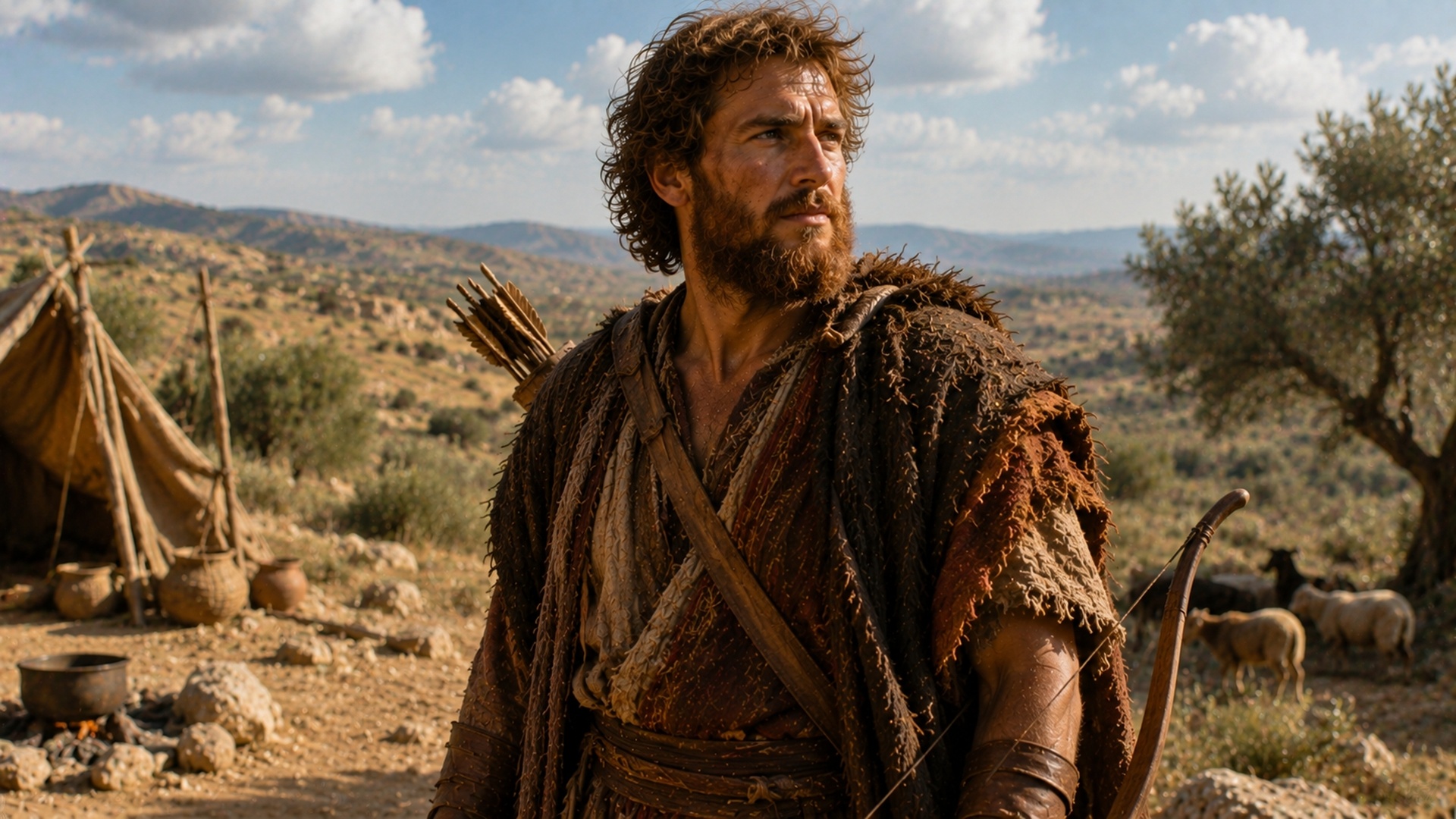
👤 The Biblical Person of the Day
🏹 Esau – the Firstborn Who Lost His Blessing
📌 Profile
- Name: Esau
- Time of birth: approx. 19th–18th century BC
- Place of birth: Canaan
- Time of death: unknown
- Age: unknown
- Occupation: Hunter, ancestor of the Edomites
📖 Short Story
Esau was the older twin brother of Jacob and the son of Isaac and Rebekah. Even at his birth, it became clear that there would be a special tension between him and Jacob.
Esau grew into a skilled hunter and spent much time outside in the field. His father Isaac especially loved him because he enjoyed eating the game Esau hunted.
As the firstborn, Esau actually held a special position in the family. This position involved inheritance, responsibility, and blessing.
But one day, Esau sold his birthright to Jacob for a dish of lentils. In a moment of physical exhaustion, he failed to value the long-term worth of his calling.
Later, Esau also lost the fatherly blessing when Jacob, with Rebekah’s help, deceived Isaac. This loss deeply wounded Esau and filled him with pain and anger.
For a long time, his relationship with Jacob was marked by hurt and bitterness. But later, he met his brother again and showed an astonishing willingness to reconcile.
His story shows how dangerous it is to give up valuable things for a brief moment. It also shows that reconciliation after deep hurt can be possible.
🔥 The Decisive Moment
Esau sold his birthright for a meal and underestimated the value of what had been entrusted to him.
✨ 7 Special Things About Esau
- He was the older twin brother of Jacob
- He was the son of Isaac and Rebekah
- He was a skilled hunter
- He was especially loved by Isaac
- He sold his birthright to Jacob
- He later also lost the fatherly blessing
- He became the ancestor of the Edomites
⚖️ Strengths & Weaknesses
✔ strong
✔ skilled
✔ direct
✔ later willing to reconcile
❌ acted impulsively
❌ valued his birthright too little
❗ The Mistake That Shaped Him
Esau sold his birthright for short-term satisfaction and underestimated its importance.
➡️ His story shows that impulsive decisions can have long-term consequences.
📜 Key Verse
“So Esau despised his birthright.” (Genesis 25:34)
🧠 The Life Lesson
What is valuable should not be given up for a brief moment of impatience.
🎯 Application for Today
Be careful not to make decisions out of hunger, tiredness, anger, or impatience that could burden your future.
❓ Question for You
What valuable responsibility should you protect more consciously today?
📌 Context
Esau lived during the time of the patriarchs and was part of the family story of Abraham, Isaac, and Jacob.
🔗 Connection
Esau was the son of Isaac, the brother of Jacob, and the ancestor of the Edomites.
Conclusion:
Esau shows that impulsive decisions can destroy precious things, but also that reconciliation after pain is possible.
See you tomorrow with the next biblical person! 📖

✨ The Life Story ✨
✨ The Life Story of Esau – One Moment with Long-Lasting Consequences ✨
🌄 The Older Twin Brother
Esau was born as the son of Isaac and Rebekah. He came into the world before his brother Jacob and was therefore the firstborn.
Even at birth, the tension between the two brothers became visible. Jacob held on to Esau’s heel, as if to show from the very beginning that their paths would be closely connected and yet full of rivalry.
As the firstborn, Esau carried a special position, but this position also required responsibility and spiritual appreciation.
🏹 A Man of the Field
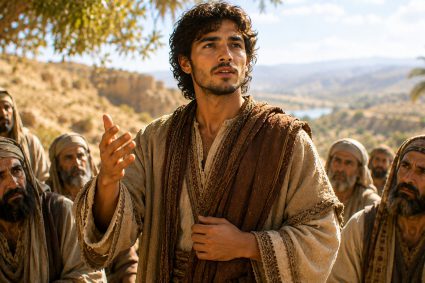
Esau grew into a man who loved the open field. He became a skilled hunter and was strongly connected to outdoor life.
His father Isaac had a special affection for him because he enjoyed eating Esau’s game. This favoritism shaped the family atmosphere and intensified the tension between the brothers.
While Esau seemed more direct, physical, and impulsive, Jacob was different and stayed more among the tents.
🍲 The Birthright for a Meal
One day, Esau returned from the field exhausted. He was hungry and asked for the red stew that Jacob had cooked.
Jacob used this moment and demanded Esau’s birthright in exchange. At that moment, Esau did not think about the future, but only about his present hunger.
So he gave away something precious for something temporary. This moment became one of the most defining mistakes of his life.
💔 The Lost Blessing
Later, Isaac wanted to bless Esau. But Rebekah helped Jacob deceive his father and receive the blessing in Esau’s place.
When Esau found out, his pain was great. He realized that something had been taken from him that he could not simply get back.
His weeping and anger show how deeply this loss affected him. His relationship with Jacob was broken for a long time.
⚠️ Pain Turns into Bitterness
Esau was not only disappointed, but inwardly wounded. He felt betrayed and thought about killing Jacob.
His pain turned into bitterness, and Jacob had to flee. In this way, the family was torn apart.
The story shows how destructive unresolved conflicts and old wounds can become.
🤝 The Meeting After Many Years
Many years later came the day when Jacob and Esau met again. Jacob was very afraid of this moment because he knew how deeply the past stood between them.
But Esau reacted differently than Jacob had expected. He ran toward him, embraced him, and wept with him.
This moment is one of the most moving scenes of reconciliation in the Old Testament. It shows that old wounds do not always have to have the final word.
🌄 Ancestor of the Edomites
Esau later became the ancestor of the Edomites. His descendants developed into their own people, who repeatedly played a role in Israel’s history.
His life remained connected to Jacob, even though their paths separated. From the personal story of two brothers came a larger story between nations.
Thus Esau’s decision, his pain, and his later reconciliation remained not only a private family story, but became part of biblical history.
✨ The Lasting Message of His Life
Esau shows that impulsive decisions can have long-term consequences. His story reminds us that people sometimes recognize what is valuable only after it has been lost.
But Esau also shows another side: despite deep hurt, reconciliation was possible. His life is therefore not only a warning, but also a reminder that hard hearts can become soft.
🌌 Final Thought
Esau was strong, direct, and passionate, but he underestimated the value of what had been entrusted to him. A brief moment of impatience changed the course of his life.
At the same time, he later showed a remarkable willingness to meet Jacob and not carry the old conflict forever.
👉 His life story shows: Whoever carelessly gives up what is valuable can lose much, yet reconciliation can open new paths even after deep pain.