📆 June 28 – July 4, 2026
📚 BELIEVE HIS PROPHETS
📖 Weekly Reading from the Spirit of Prophecy
👑 Ellen White | Prophets and Kings
⚖️ Chapter 11: Carmel
🔥 The Decision Between the Living God and the Idols
🌐 Read online here
📍 Introduction
Mount Carmel became the scene of one of the most impressive decisions in biblical history. After years of drought and spiritual decline, God placed His people before a clear choice. Elijah stood alone against hundreds of false prophets and showed that God needs neither human power nor spectacular rituals to reveal His glory. This chapter calls us to make a clear decision for God.
⋯⋯⋯⋯⋯⋯⋯⋯⋯⋯◆⋯⋯⋯⋯⋯⋯⋯⋯⋯⋯
🧵 Commentary
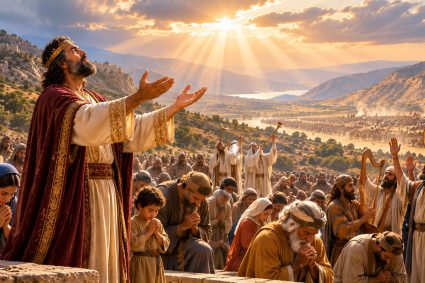
The day had come. At Elijah’s request, King Ahab gathered all the people of Israel, together with the prophets of Baal and Asherah, on Mount Carmel. People streamed in from every direction. They did not know exactly what would happen, but everyone sensed that this day could decide the future of Israel.
The once green and fertile mountain bore the marks of the long drought. Withered trees and dried-up slopes reminded them of the consequences of turning away from God. Among the altars of the idols stood also the broken altar of the Lord — a silent image of how far the people had drifted from their God.
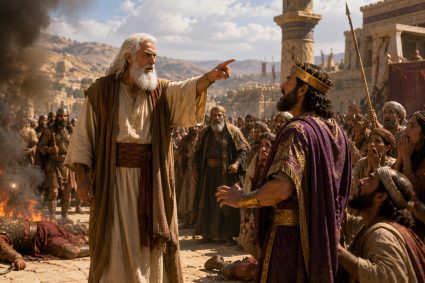
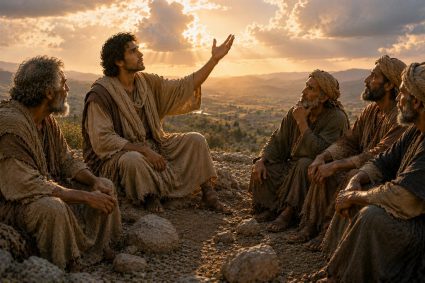
Before the eyes of the vast crowd, Elijah stepped forward. He stood alone against the hundreds of prophets of Baal. Outwardly, he seemed defenseless. But in reality, heaven stood at his side. With a calm voice, he asked the decisive question that no one could avoid: “How long will you waver between two opinions? If the Lord is God, follow Him; but if Baal is God, follow him.”
But the people remained silent. No one dared to answer. They had become accustomed to living in indecision. They wanted to enjoy the blessings of God while at the same time keeping idolatry. It was precisely this indecision that Elijah exposed.
Then the prophet proposed a simple test. Two altars were to be built. The prophets of Baal would call upon their god, and Elijah would call upon the Lord. The God who answered by fire was to be recognized as the true God.
The priests of Baal began full of confidence. They prepared their sacrifice and cried out loudly to Baal. Hour after hour passed. Their cries grew louder and louder. They danced around the altar, shouted, pleaded, and even cut themselves with knives, as their cult demanded. Blood flowed, but heaven remained silent. No fire came down. No voice answered.
Elijah calmly observed what was happening. Finally, he spoke to them with serious irony. Perhaps their god was sleeping, perhaps he had gone on a journey, or perhaps he was busy. The priests increased their efforts even more. But everything was in vain. The god in whom they had placed their trust could neither hear nor act.
As evening approached, Elijah stepped forward. First, he had the destroyed altar of the Lord rebuilt. Twelve stones were used — one for each tribe of Israel. In this way, Elijah reminded the people that God had not forgotten His covenant with Israel.
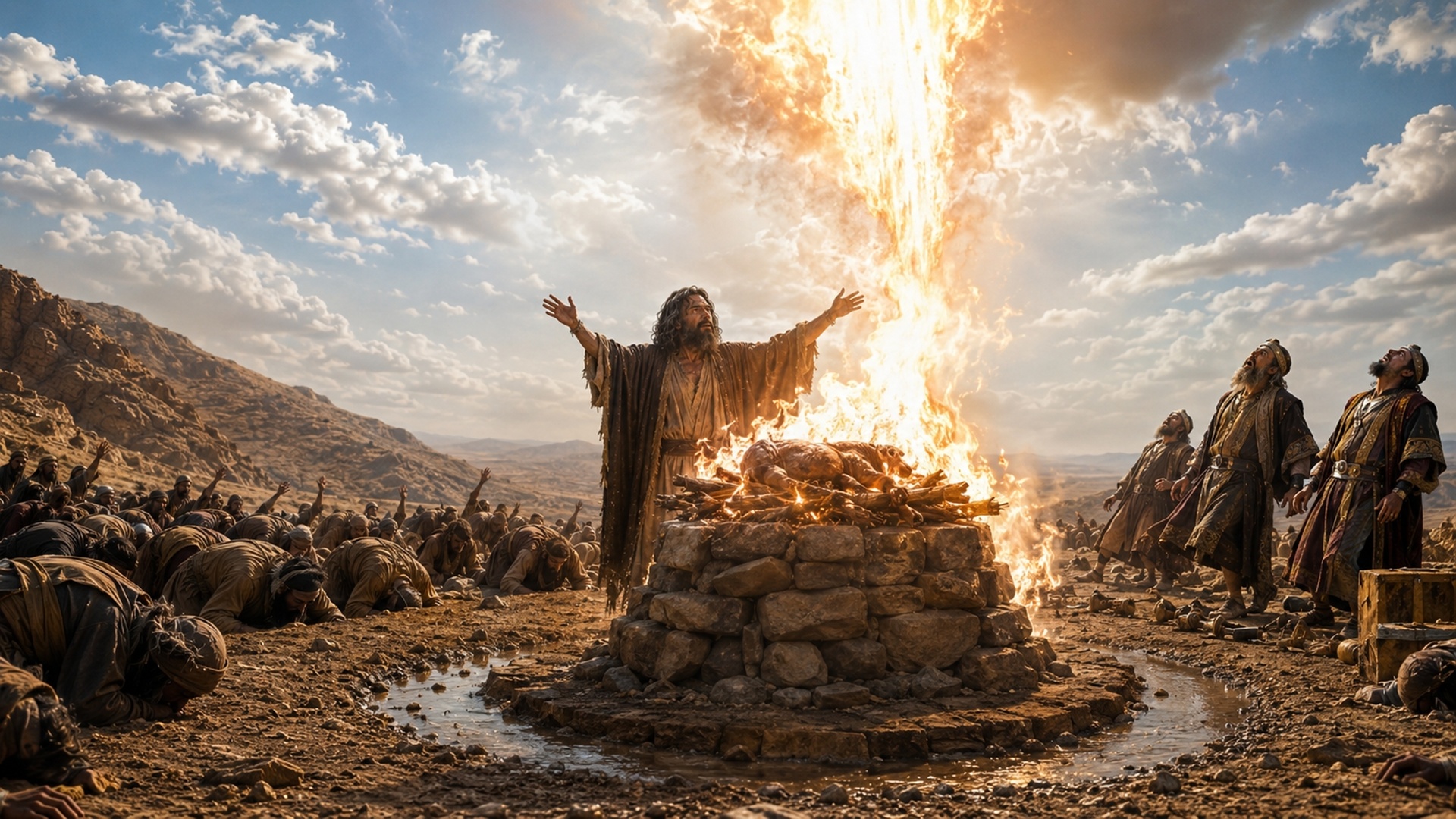
Then he placed the sacrifice on the altar and had it completely drenched with water three times. The wood was soaked, and even the trench around the altar filled with water. Everyone was to recognize that no human trick could set this sacrifice on fire.
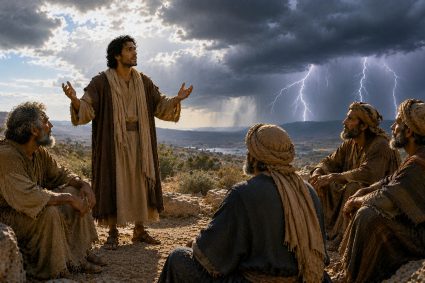
Now Elijah stood before God. His prayer was short, simple, and full of trust. He did not ask for honor for himself. His only concern was that the people would recognize who the true God is and that their hearts would return to Him.
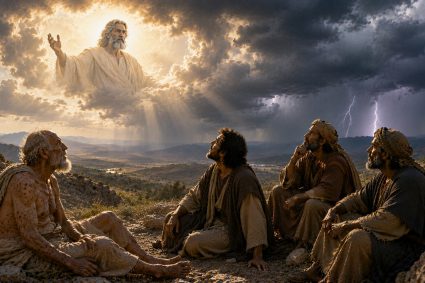
While Elijah was still praying, the unimaginable happened. Fire fell from heaven. It consumed the sacrifice, the wood, the stones, the dust, and even the water in the trench. No one could doubt that God Himself had acted.
The people fell to the ground. Deeply moved, they cried out again and again: “The Lord, He is God! The Lord, He is God!” At last the people recognized their error. The deception was over. The difference between the living God and the silent idols had become visible to all.
The priests of Baal, however, remained unrepentant despite this overwhelming miracle. They wanted to continue their deception. Therefore Elijah had them seized and executed according to God’s judgment, so that they could no longer lead the people astray. The day on Carmel thus became a turning point, where God’s truth was publicly confirmed and idolatry was exposed.
⋯⋯⋯⋯⋯⋯⋯⋯⋯⋯◆⋯⋯⋯⋯⋯⋯⋯⋯⋯⋯
🧺 Summary
On Mount Carmel, God placed Israel before a clear decision. While the prophets of Baal received no answer despite hours of effort, God answered Elijah’s simple prayer with fire from heaven. The people recognized their error, confessed the Lord as the true God, and turned away from the idols. Carmel became a symbol of God’s power and the call to wholehearted devotion.
⋯⋯⋯⋯⋯⋯⋯⋯⋯⋯◆⋯⋯⋯⋯⋯⋯⋯⋯⋯⋯
🔦 Message for Us Today
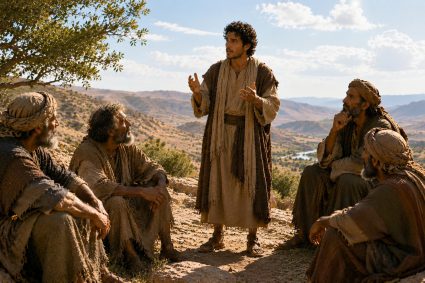
Today, God still calls people to make a clear decision. A divided heart cannot serve God. Outward religion, tradition, or human effort can never replace a living relationship with Him. God is looking for people who trust Him with all their hearts and are willing to remain faithful even when they seem to stand alone. Like Elijah, we may trust that God will reveal His power and faithfulness at the right time.
⋯⋯⋯⋯⋯⋯⋯⋯⋯⋯◆⋯⋯⋯⋯⋯⋯⋯⋯⋯⋯
📝 Reflection Thought
Am I standing on God’s side with my whole heart, or am I still trying to live between two paths? What “idols” might be claiming my attention and trust today more than God Himself?
“How long will you waver between two opinions? If the Lord is God, follow Him.” (1 Kings 18:21)