🙏 Teaser for the Book of Esther: Job – When Faith Is Tested
A righteous man.
Immense wealth.
A life full of blessing.
But suddenly, everything falls apart.
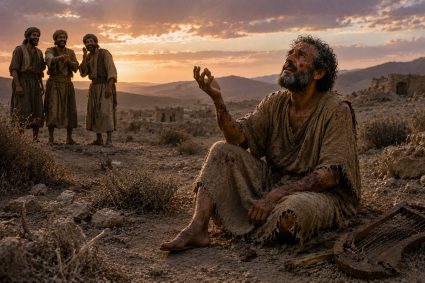
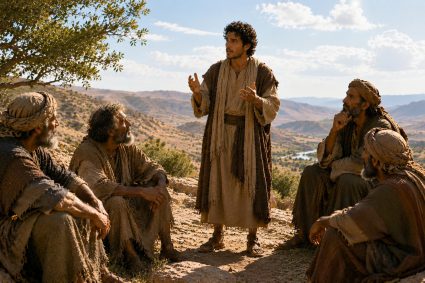
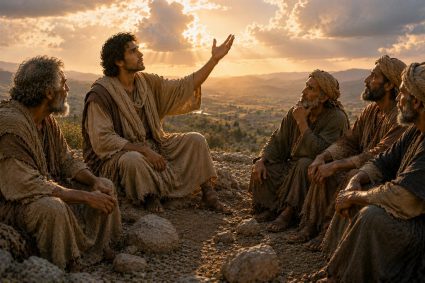
Job loses his possessions, his children, and his health. His friends search for explanations, his wife falls into despair, and even Job wrestles with the hardest questions of life.
Why does God allow suffering?
The book of Job takes us into the very heart of the struggle between pain and trust. It shows that not every suffering has a simple explanation and that God’s ways are often greater than our understanding.
Will Job still trust God when everything has been taken from him?
A moving story about suffering, hope, and a faith that can endure even in the darkest storm.
🙏 Job makes clear:
Even when we do not always understand God’s ways, we may trust that His wisdom is greater than our questions and that His faithfulness never ends.

🙏 The Message of the Book of Job
The book of Job is one of the deepest books of the Bible. It raises a question that still moves people today:
Why do righteous people also suffer?
Job shows that suffering is not always a punishment for personal guilt. It is about trust, the greatness of God, and the question of whether faith remains firm even when everything falls apart.
⋯⋯⋯⋯⋯⋯⋯⋯⋯⋯◆⋯⋯⋯⋯⋯⋯⋯⋯⋯⋯
1. What is the book of Job?
📖 Job is a wisdom book of the Old Testament.
📍 It tells the story of a God-fearing man who suddenly loses everything.
📍 Main characters: Job, his wife, Eliphaz, Bildad, Zophar, Elihu, and God
📍 Place: The land of Uz
📍 Central theme: Suffering, faith, trust, and God’s wisdom
📍 Time frame: Not exactly determinable, probably a very early period
In terms of content:
- Job lives righteously, fears God, and is wealthy
- Satan calls Job’s faithfulness to God into question
- Job loses his possessions, his children, and his health
- His wife urges him to renounce God
- Three friends visit him and try to explain his suffering
- Job wrestles with pain, questions, and lack of understanding
- The friends claim that suffering must be the result of guilt
- Despite everything, Job holds on to God
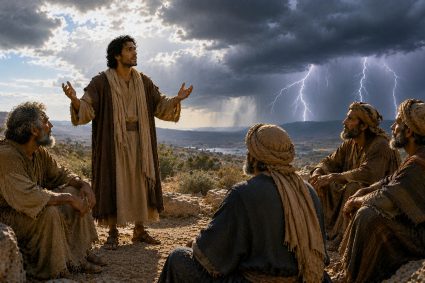
- Elihu speaks about God’s greatness and justice
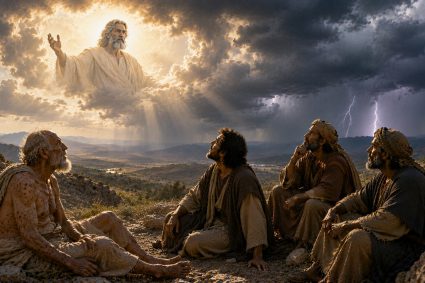
- God answers Job out of the storm
- Job recognizes God’s greatness and humbles himself
- God rebukes the friends
- Job prays for his friends
- God grants Job restoration and new blessing
⋯⋯⋯⋯⋯⋯⋯⋯⋯⋯◆⋯⋯⋯⋯⋯⋯⋯⋯⋯⋯
2. Main Themes and Core Messages
🟩 Suffering is not always a punishment
Job is explicitly described as righteous and God-fearing.
His suffering does not arise because he is secretly guilty.
The book shows: not every suffering can be explained simply.
🟩 Faith is tested in suffering
Job’s trust in God becomes visible not in days of prosperity, but in the time of loss.
The decisive question is:
Does faith remain when nothing seems secure anymore?
🟩 Quick answers can wound
Job’s friends want to explain his suffering.
But their explanations are too simple and do not do justice to Job’s pain.
The book warns against judging suffering people too quickly.
🟩 God hears honest lament
Job does not remain silent.
He asks, laments, and wrestles with God.
His words show that genuine faith also has room for pain, tears, and open questions.
🟩 God’s wisdom is greater than human understanding
When God answers, He does not explain every detail of Job’s suffering.
Instead, He shows him His greatness, power, and wisdom.
Job recognizes: God is greater than his questions.
🟩 Humility leads to a deeper knowledge of God
Job does not receive all the answers, but he encounters God in a new way.
What was once hearing about God becomes a deeper personal knowledge of God.
🟩 God can restore
Job’s story does not end with loss.
God gives him a new future, new blessing, and restoration.
⋯⋯⋯⋯⋯⋯⋯⋯⋯⋯◆⋯⋯⋯⋯⋯⋯⋯⋯⋯⋯
3. The Spiritual Message for Today
🟨 1. Not all suffering has a simple explanation
Some situations remain difficult to understand.
Job teaches us not to interpret suffering too hastily.
🟨 2. God is present even in pain
Even when Job does not understand God, God does not lose sight of him.
God’s nearness is not always felt, but it remains real.
🟨 3. Honest questions may be spoken before God
Job shows that we may come to God with pain, doubt, and lament.
Faith does not mean suppressing everything.
🟨 4. Comfort needs compassion instead of quick judgments
Job’s friends speak a lot, but they comfort little.
Sometimes quiet presence is more helpful than many explanations.
🟨 5. God’s greatness gives trust
We do not always understand God’s ways.
Yet we may trust that His wisdom reaches farther than our sight.
🟨 6. Suffering does not have the last word
Job’s story ends with restoration.
This reminds us: God can give new life even after difficult times.
⋯⋯⋯⋯⋯⋯⋯⋯⋯⋯◆⋯⋯⋯⋯⋯⋯⋯⋯⋯⋯
4. Key Verses
📖 Job 1:21 – “The LORD gave, and the LORD has taken away; blessed be the name of the LORD!”
📖 Job 2:10 – “Shall we receive good from God, and shall we not also accept evil?”
📖 Job 13:15 – Job holds on to God despite the greatest distress.
📖 Job 19:25 – “I know that my Redeemer lives.”
📖 Job 23:10 – God knows Job’s way.
📖 Job 38:4 – God asks: “Where were you when I laid the foundation of the earth?”
📖 Job 42:2 – “I know that You can do all things.”
📖 Job 42:5 – “I had heard of You by the hearing of the ear, but now my eye sees You.”
📖 Job 42:10 – God restores Job’s fortunes.
⋯⋯⋯⋯⋯⋯⋯⋯⋯⋯◆⋯⋯⋯⋯⋯⋯⋯⋯⋯⋯
✅ Conclusion
The book of Job shows powerfully:
- Suffering does not automatically mean guilt
- Faith becomes especially visible in difficult times
- Quick answers can wound
- God hears honest lament
- God’s wisdom is greater than our understanding
- Humility leads to a deeper knowledge of God
- God can restore after loss
In brief:
🙏 Job makes clear:
Even when we do not understand God’s ways, we may trust Him. His wisdom is greater than our questions, and His faithfulness remains stronger than every suffering.
══════════ ✶ ✶ ══════════
📅 June 27, 2026
📚 BELIEVE HIS PROPHETS
📖 Daily Bible Reading: 🙏 Job 1
🙏 When Everything Falls Apart
✨ Faith that remains firm even in loss
🌐 Read online here
📍 Introduction
Job chapter 1 begins with a man who is described as righteous, upright, and God-fearing. His life seems blessed and well ordered. But suddenly everything is shaken. This chapter leads us into one of the deepest questions of faith: Does trust in God remain when everything is lost?
⋯⋯⋯⋯⋯⋯⋯⋯⋯⋯◆⋯⋯⋯⋯⋯⋯⋯⋯⋯⋯
🧵 Commentary
The chapter presents Job as a man from the land of Uz. He is not described first by his wealth, but by his character. Job is upright, God-fearing, and turns away from evil. This makes clear that his later suffering must not simply be understood as punishment for hidden wrongdoing.
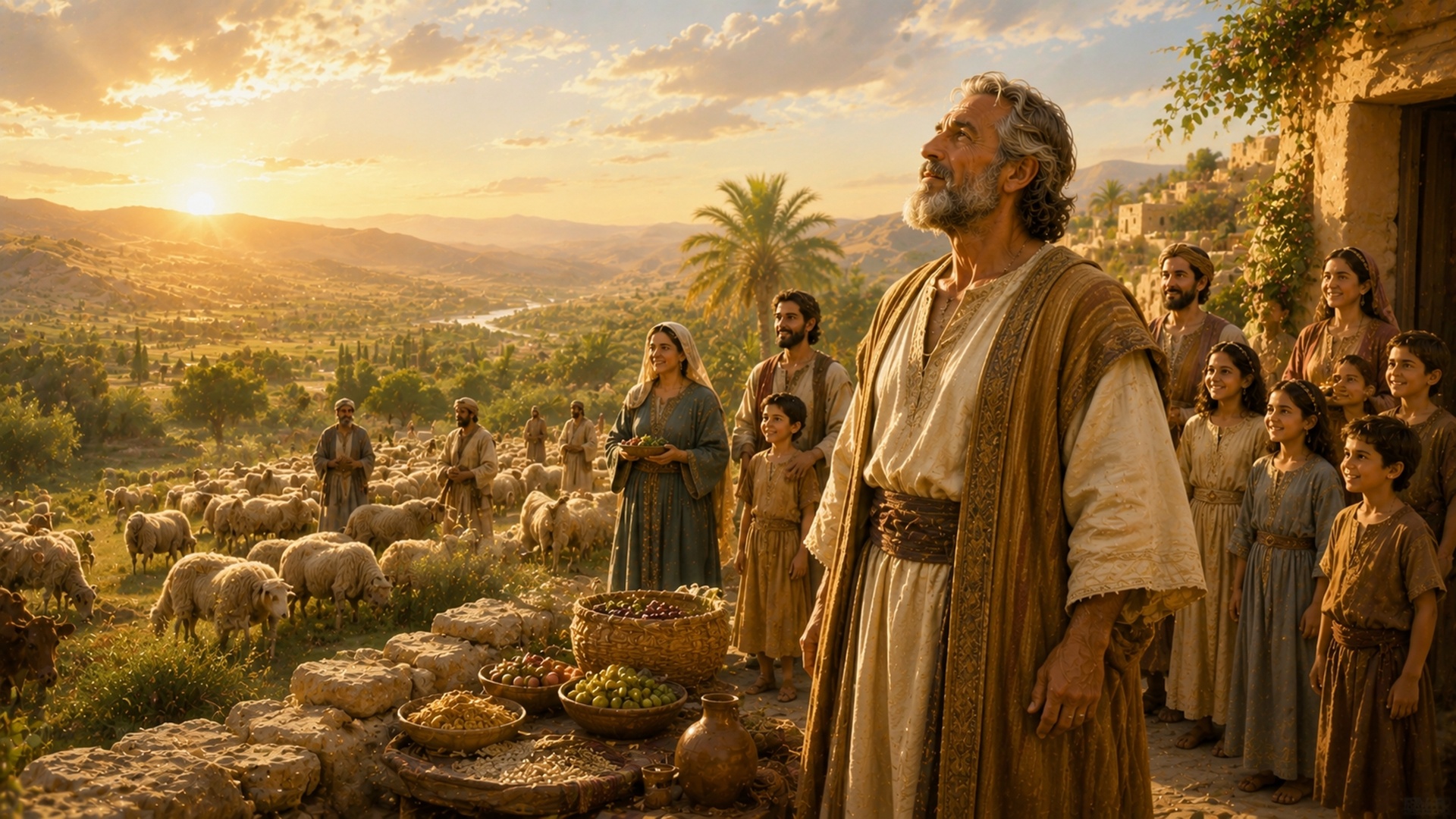
Job has great wealth, a large family, and high standing. His sons and daughters regularly celebrate together, and Job cares for them spiritually. Again and again he offers sacrifices, because he takes God seriously and also thinks about the spiritual well-being of his children.
Then the scene suddenly shifts to the heavenly realm. The sons of God come before the LORD, and Satan also appears among them. God Himself points to Job and describes him as a faithful servant. But Satan questions Job’s faithfulness. He claims that Job serves God only because God blesses and protects him.
This raises a decisive question: Does Job love God for God’s sake — or only because of the blessings?
God allows Satan to touch Job’s possessions and family, but He sets a limit. Job himself may not be touched. This makes clear: even in the test, God remains sovereign. Satan does not act independently of God’s permission.
Then disaster breaks over Job. One message follows another. First he loses his animals and servants, then further herds, and finally his children. The catastrophes come so quickly that Job hardly has time to process one message before the next arrives.
The pain is unimaginable. Job loses not only possessions, but also his children. Everything that had supported his life seems to collapse within a few moments.
Job’s reaction is deeply moving. He tears his robe, shaves his head, and falls to the ground. He does not suppress his pain. He truly mourns. Yet in the midst of mourning, he worships God.
His words are among the best known in the book: The LORD gave, and the LORD has taken away; blessed be the name of the LORD. Job recognizes that everything he possesses ultimately comes from God. Even though he does not understand the pain, he does not cling to his goods, but to God.
The chapter ends with the statement that in all this Job does not sin and does not charge God with wrongdoing. This does not mean that Job has no questions or no pain. It means that his faith does not break in the first moment of loss.
Job chapter 1 shows a faith that is not founded only on blessing. It shows trust that remains firm even when everything visible is taken away.
⋯⋯⋯⋯⋯⋯⋯⋯⋯⋯◆⋯⋯⋯⋯⋯⋯⋯⋯⋯⋯
🧺 Summary
Job 1 presents Job as a righteous and God-fearing man. Satan questions his faithfulness, and God allows a severe test. Job loses possessions, servants, and children, yet despite deepest grief he remains firm in his faith in God.
⋯⋯⋯⋯⋯⋯⋯⋯⋯⋯◆⋯⋯⋯⋯⋯⋯⋯⋯⋯⋯
🔦 Message for Us Today
Faith is shown not only in times of blessing, but especially in times of loss. Job reminds us that true trust does not depend on whether we understand everything. Even when our life is shaken, God remains worthy for us to hold on to Him.
⋯⋯⋯⋯⋯⋯⋯⋯⋯⋯◆⋯⋯⋯⋯⋯⋯⋯⋯⋯⋯
📝 Thought Prompt
What is your faith founded on: God’s gifts — or God Himself?