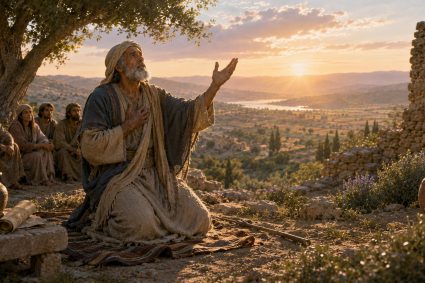
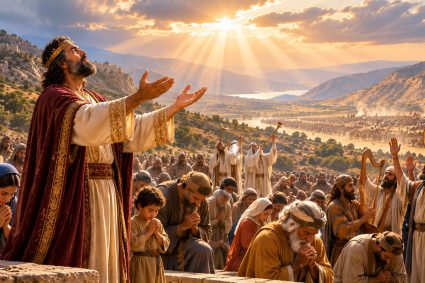
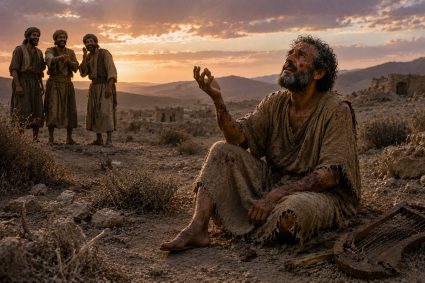
2 Samuel 3 is a chapter full of tension, transitions, and moral fractures. While David grows in strength, the house of Saul collapses from within. Political power plays, personal offenses, and old grudges shape the events. Yet in the midst of intrigue and bloodshed, David’s character stands out clearly: he does not want a kingdom built through betrayal, but one that can stand before God.
⋯⋯⋯⋯⋯⋯⋯⋯⋯⋯◆⋯⋯⋯⋯⋯⋯⋯⋯⋯⋯
🧵 Commentary
The struggle between the house of Saul and the house of David continues. But the direction is clear: David grows stronger, the house of Saul weaker. In Hebron, David becomes the father of many sons—names that will later play major roles, for good and for ill.
Abner, Saul’s powerful army commander, holds Ish-bosheth’s kingdom together. But a single accusation shakes everything: Ish-bosheth accuses Abner of taking Saul’s concubine Rizpah—a political insult. Abner explodes in anger. He knows that God has promised the kingdom to David, and now he decides to switch sides.
Abner sends messengers to David, offering to bring all Israel over to him. David agrees—but sets one condition: Michal, Saul’s daughter and David’s first wife, must be returned to him. She is taken away from her husband Paltiel, who follows her weeping. It is a quiet, painful scene that shows: decisions of power always have human costs.
Abner now works openly for David. He speaks with the elders of Israel, especially with Benjamin, Saul’s tribe. Everything seems to be moving toward unity. When Abner comes to Hebron, David receives him honorably and sends him away in peace.
But Joab, David’s army commander, returns from a campaign. He hears that Abner had been there—and had left safely. To Joab, Abner is no ally, but the murderer of his brother Asahel. Without David’s knowledge, he has Abner called back. At the gate of Hebron, a place of justice, Joab kills him secretly in revenge.
When David hears of it, he immediately distances himself. He publicly declares his innocence regarding Abner’s blood. He does not curse Joab personally, but he names the injustice clearly. David orders public mourning, follows the bier himself, and laments loudly at the grave.
His words are filled with pain:
“Should Abner die as a fool dies?”
And the people recognize: the king did not want this death.
David fasts until sunset, and Israel understands: this man does not want to rule through murder. He knows that power without justice destroys a kingdom.
⋯⋯⋯⋯⋯⋯⋯⋯⋯⋯◆⋯⋯⋯⋯⋯⋯⋯⋯⋯⋯
🧺 Summary
As David grows stronger, the house of Saul falls apart. Abner defects to David and works toward the unity of Israel. But Joab kills Abner out of revenge. David publicly declares his innocence, mourns Abner, and makes it clear that this murder was not his will.
⋯⋯⋯⋯⋯⋯⋯⋯⋯⋯◆⋯⋯⋯⋯⋯⋯⋯⋯⋯⋯
🔦 Message for Us Today
This chapter shows:
-
God fulfills His promises, even when people try to speed them up through intrigue.
-
Revenge destroys, even when it seems humanly understandable.
-
True leadership is revealed in how injustice is handled, not in how it is covered up.
David could have benefited from Abner’s death—but he did not. He chose transparency, mourning, and justice.
🟨 A spiritual leader cannot control everything—but must take responsibility.
🟨 A righteous kingdom is not built by blood, but by truth.
⋯⋯⋯⋯⋯⋯⋯⋯⋯⋯◆⋯⋯⋯⋯⋯⋯⋯⋯⋯⋯
📝 Reflection
-
Where are you tempted to take justice into your own hands instead of trusting God?
-
Can you clearly name wrongdoing, even when it comes from people in your “own camp”?
-
How do you deal with power, influence, and old wounds?
══════════ ✶ ✶ ══════════
📆 11–13 January 2026
📚 BELIEVE HIS PROPHETS
📖 Weekly Reading from the Spirit of Prophecy
📘 Ellen G. White | Patriarchs and Prophets
🔥 Chapter 56: Eli and His Sons
✨ When indulgence becomes a catastrophe – spiritual responsibility in the home and in the sanctuary
🌐 Read online here
📘 Blog 1
🤫 Silent Authority – The Failure of a Father
How Eli’s leniency ruined his sons and harmed an entire people
📍 Introduction
Sometimes it is not what is spoken that matters most, but what is not said. In the case of Eli, silence became a catastrophe. This reflection tells the story of a father who, despite great responsibility, lost his children—and with them led an entire nation to the brink.
⋯⋯⋯⋯⋯⋯⋯⋯⋯⋯◆⋯⋯⋯⋯⋯⋯⋯⋯⋯⋯
🧵 Commentary
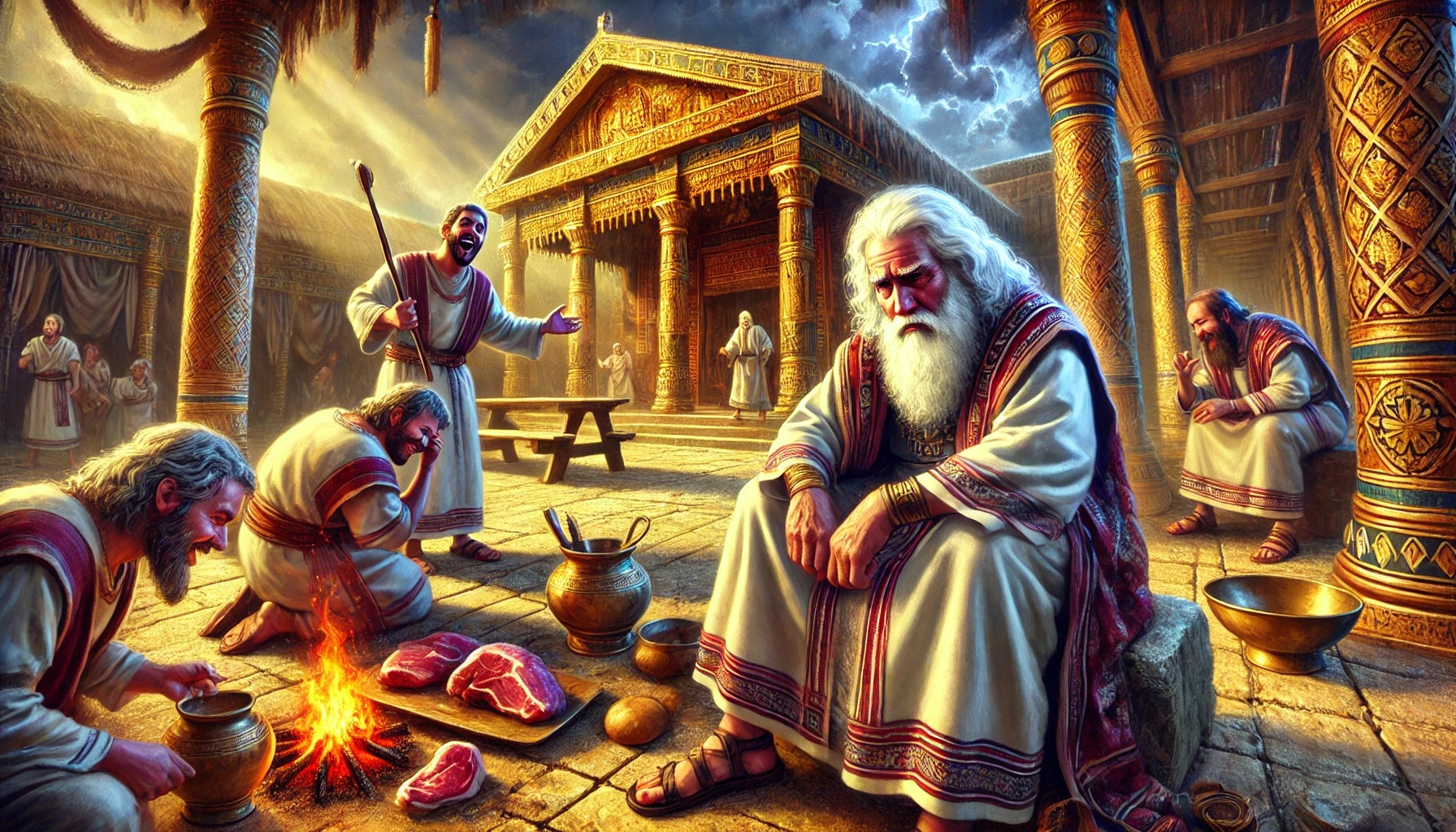
Eli was no ordinary man. He was both priest and judge—a spiritual and social role model. The people looked up to him; his decisions carried weight, and his words were considered wise. Yet in his own house, a different truth ruled: Eli was weak when it came to his sons.
Hophni and Phinehas grew up in the shadow of the sanctuary, surrounded by holy rites and songs. But their hearts remained untouched. Even as children they revealed stubbornness, pride, and disrespect. Eli saw it—but he remained silent. Not out of indifference, but out of fear of conflict. He wanted peace in his home—a peace incompatible with truth.
The years passed. Small offenses grew larger; injustice became open. And Eli allowed it to continue. He hoped time would heal, that youth would outgrow itself. But character is formed early—and what is not restrained in childhood grows wild in maturity like a thornbush.
Eli’s sons never learned obedience or responsibility. The father who should have guided them stood quietly by. The weight of his silence fell heavily—on the family, on the people, and finally on his own heart.
⋯⋯⋯⋯⋯⋯⋯⋯⋯⋯◆⋯⋯⋯⋯⋯⋯⋯⋯⋯⋯
🧺 Summary
Eli was a spiritual leader who failed in his role as a father. His silent leniency laid the foundation for the moral corruption of his sons—with catastrophic consequences for Israel.
⋯⋯⋯⋯⋯⋯⋯⋯⋯⋯◆⋯⋯⋯⋯⋯⋯⋯⋯⋯⋯
🔦 Message for Us Today
Love without clear guidance is not care, but irresponsibility. Parents and leaders are called to combine love with truth. Silence at critical moments can be more destructive than harsh words.
⋯⋯⋯⋯⋯⋯⋯⋯⋯⋯◆⋯⋯⋯⋯⋯⋯⋯⋯⋯⋯
📝 Reflection
🔹 Where do I need the courage to speak what is right—even when it is uncomfortable?
🔹 What are others learning from my silence?