⛪ Lesson 12: Precursors
📘 12.2 Worshiping the Image
✨ Golden Compromises – When Faith Faces the Fire
…………………………………………………………………
🟦 Introduction
What does it mean to truly be faithful? When is faith really tested? In Daniel 3, three young men are faced with a golden statue and a cruel decision: worship a false image or face death in the fiery furnace. Their story is not a distant legend, but a prophetic image of the end times. It challenges us with the question: What is my faith worth when there is no applause—only fire?
………………………………………………………………….
📖 Bible Study – Daniel 3: Worshiping the Image
Theme: Faith in the Furnace – When Faith Allows No Compromise
-
Background of the Chapter
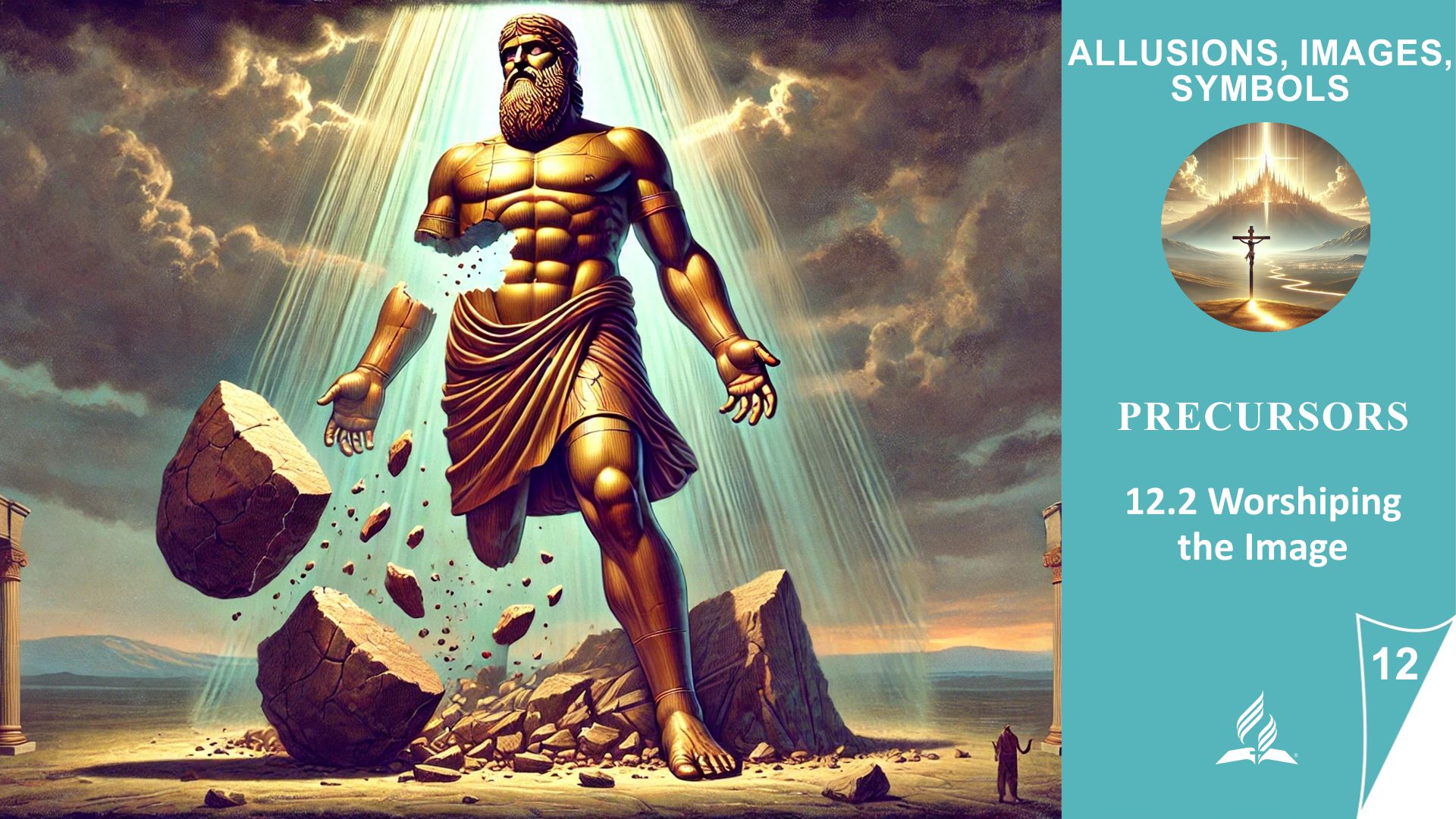
After the striking dream in Daniel 2, where God shows the king that only the divine kingdom will last forever, Nebuchadnezzar builds a massive statue in Daniel 3—made entirely of gold. This act defies God’s revelation and signals: My kingdom will not fall.
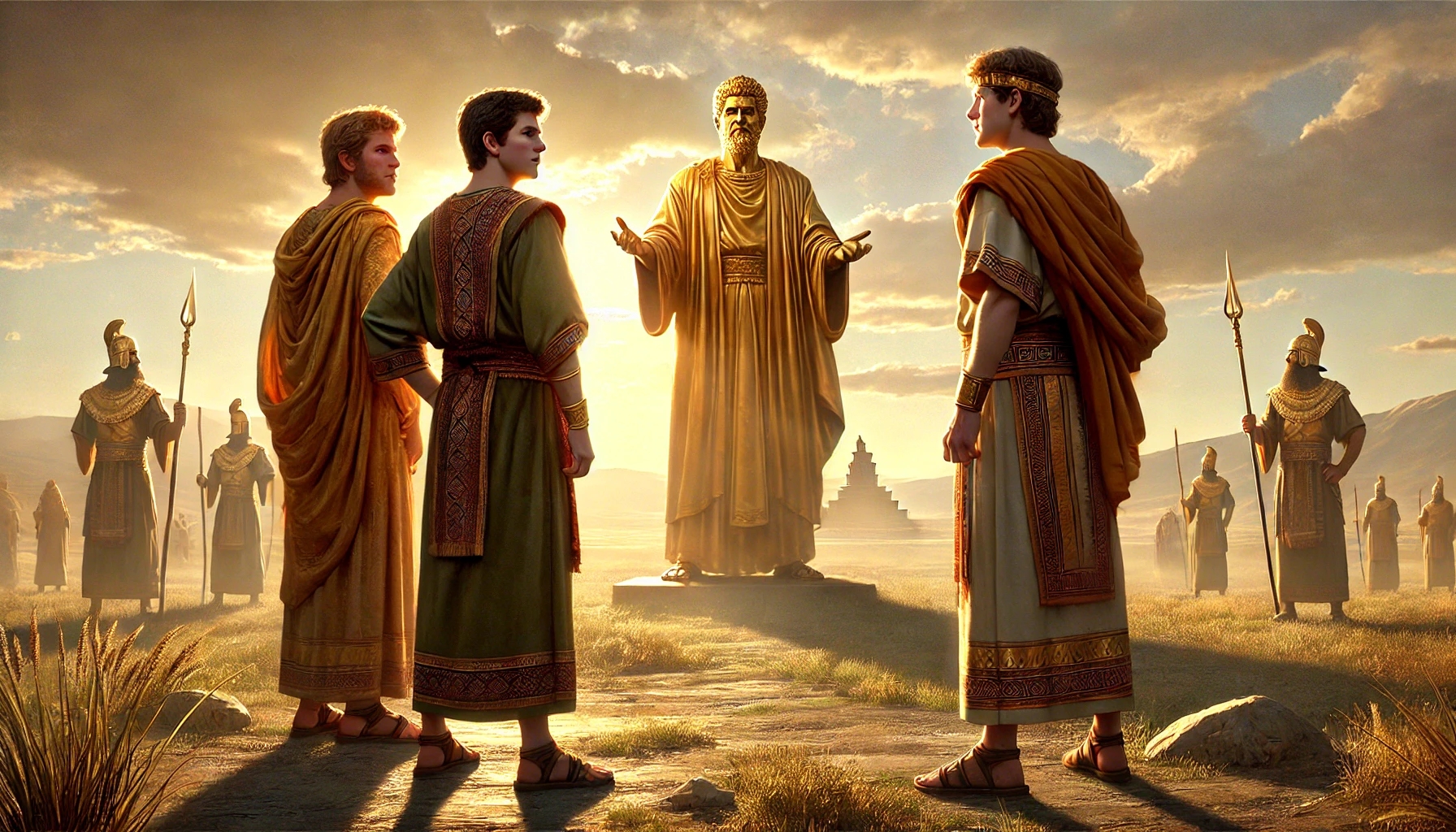
Worshiping this statue becomes mandatory. Anyone who refuses is to be thrown into the blazing furnace. At this point, three young men—Shadrach, Meshach, and Abednego—stand before a choice: bow or burn.
-
Analysis of Key Verses
-
Verses 1–7: The statue is built and the command to worship it is issued.
-
Verses 8–12: The three Hebrews are reported for refusing to bow.
-
Verses 13–15: The king threatens them—with a clear ultimatum.
-
Verses 16–18: The men’s stunning response—faith without compromise, even if God doesn’t deliver them.
-
Prophetic Significance
This story is more than an exile-era report. It is a prophetic prelude to Revelation 13, where another image (a statue) is erected for worship—under threat of death. Then, as in the future, the central question will be: To whom does my worship belong?
-
Spiritual Principles
-
God is faithful—even in the fire.
-
Faith means trust, not control over outcomes.
-
True worship tolerates no compromise with idolatry.
-
Faithfulness begins in small things—and shines in the big tests.
-
Modern Relevance
Even today, there’s societal, moral, and spiritual pressure to “bow down”:
-
To trends that contradict God’s Word
-
To career steps that require compromise
-
To fear of rejection or disadvantage
This story reminds us: God honors faithfulness—even when it leads through the fire.
………………………………………………………………….
📖 Answers to the Questions
📌 Question 1: What is the significance of the statue being made entirely of gold and the king demanding its worship? (Daniel 3:1–12)
🟦 Answer:
The statue made entirely of gold was a deliberate contradiction of God’s revelation in Daniel 2, where the statue was composed of various metals. By making it pure gold, Nebuchadnezzar declared that his kingdom would not fall—in fact, that it would last forever.
The forced worship was a political and religious tool. The king didn’t just want control over behavior—but over the hearts of his subjects.
➡️ Lesson for us:
People tend to replace God’s truth with human ideologies—often wrapped in a golden facade (strength, unity, progress). But every attempt to manipulate God’s timeline is ultimately rebellion.
📌 Question 2: What do we learn from the words of the three men in Daniel 3:17–18 about faith?
🟦 Answer:
The three men demonstrate pure, uncompromising faith. They say:
This is not arrogant defiance, but a deep expression of relationship with God. Their trust does not depend on deliverance—but on God’s worthiness.
➡️ Lesson for us:
True faith does not hinge on results. It stays loyal because God is trustworthy, even when we don’t understand His plan.
📌 Question 3: How do we avoid rationalizing compromise? What does Luke 16:10 teach us?
🟦 Answer:
Luke 16:10 teaches that faithfulness in small things is essential. Life’s big tests are usually not decided in a moment, but shaped by many small decisions beforehand.
Examples of slow compromises today:
-
Conforming to social norms at the expense of biblical values
-
Remaining silent out of fear of rejection
-
Making excuses to bypass God’s principles (“I worship inwardly” – “It’s just a symbol”)
➡️ Lesson for us:
Those who compromise in little things today will not stand tomorrow. Faithfulness is a muscle that must be trained—daily, not just in crisis.
………………………………………………………………….
✨ Spiritual Principles
-
Worship is a matter of the heart: it’s not just outward form, but inward loyalty.
-
Faith is obedient determination, not mere hope for rescue.
-
Compromise starts subtly—faithfulness is preserved in small decisions.
-
God honors loyalty, even when it brings suffering.
………………………………………………………………….
🧩 Application for Daily Life
We may not live in ancient Babylon, but our time poses similar questions: Whom do you obey when everyone else bows? Are you willing to endure professional, social, or material loss in order to keep God’s command? Today’s “golden pressure” may appear as fear of rejection, loss, or loneliness.
………………………………………………………………….
✅ Conclusion
The three friends in the fire teach us: God is worth more than security. He can save, but our faith remains firm even if He doesn’t. For true worship doesn’t bow to the pressure of the crowd—but stays loyal to the Eternal One.
………………………………………………………………….
💭 Thought of the Day
“Faith doesn’t mean we are always saved—it means we are never alone, not even in the fire.”
………………………………………………………………….
✍️ Illustration – “When Everyone Bows”
It was shortly after midnight when Elias made his decision. He sat at the desk in his small student apartment in Berlin. Tomorrow was the big day: the opening of an international IT conference where he was to present his company’s recognition system. He had worked on it for weeks—sleepless nights, countless lines of code, and caffeine.
But something felt wrong. The system he helped develop wouldn’t just recognize faces—it would soon, with a new update, evaluate and flag religious behavior. A so-called “ethical screening.” That meant: people who kept specific rest days could be flagged—not prosecuted, but marked. “For security optimization only,” they said.
Elias had decided weeks ago to say nothing. It hadn’t been his part of the programming. But his conscience grew louder with each day. That night, he read Daniel 3. And then he knew: he could no longer be silent. He could not help build an “image” that would force others to kneel.
The next morning, he stood before the board. “I can no longer be part of this project,” he said calmly. “It violates my convictions.”
They looked at him like he had lost his mind. He lost his job. His career was in ruins. But his heart was free. In the silence of his apartment, he smiled. Like the three friends before Nebuchadnezzar, he had not bowed.
Because those who stand in the heat will find: the Fourth in the fire is always with us.