
👤 The Biblical Person of the Day
🔥 Phinehas – the Man of Holy Zeal
📌 Profile
- Name: Phinehas
- Time of birth: approximately the 15th century BC
- Place of birth: probably during the wilderness journey
- Time of death: unknown
- Age: unknown
- Occupation: priest, son of Eleazar and grandson of Aaron
📖 Short Story
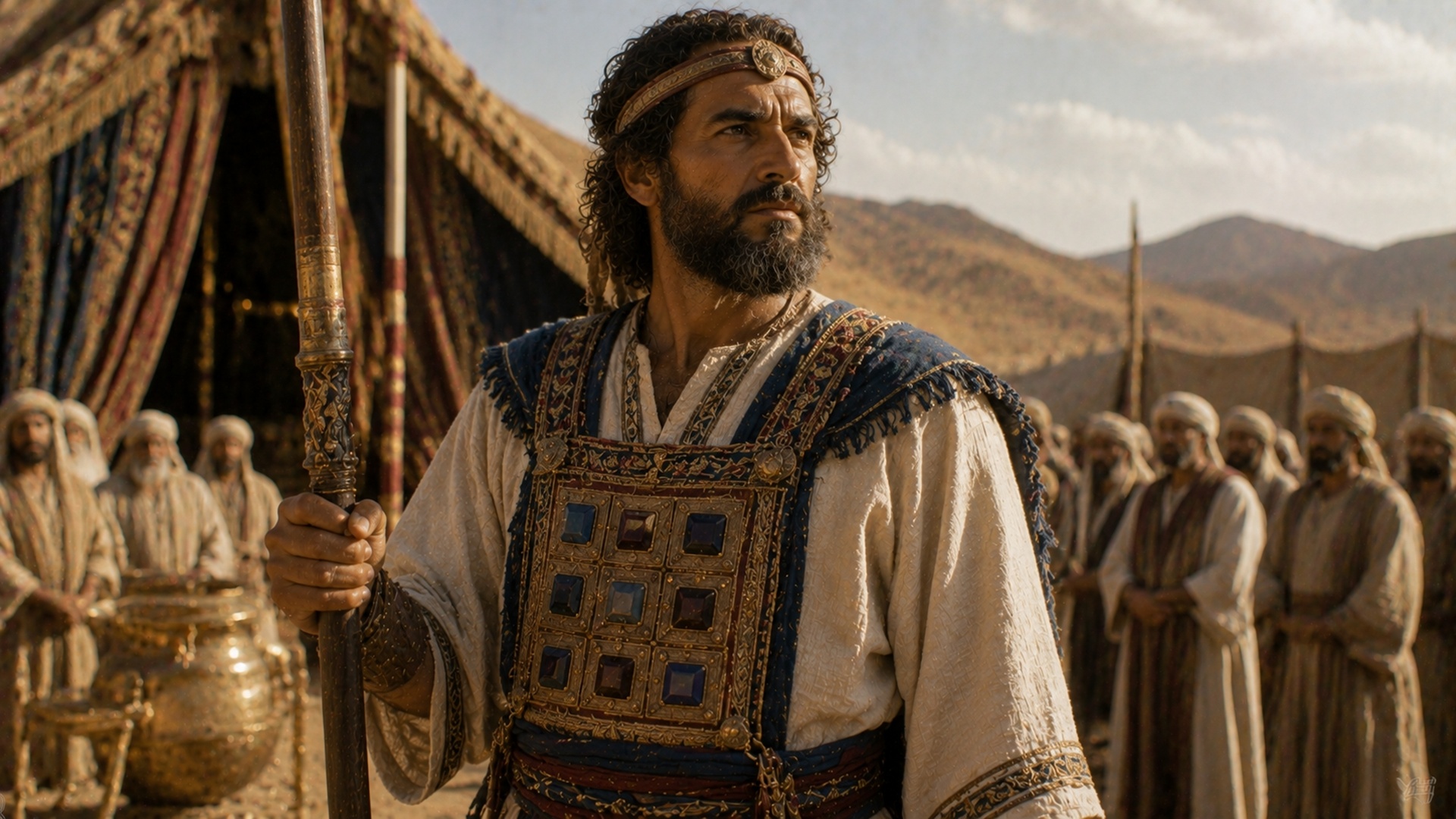
Phinehas was the son of Eleazar and the grandson of Aaron. He belonged to Israel’s priestly family and lived during a time when God was leading His people through the wilderness.
His name became especially well known because of a serious situation. Israel fell into grave sin when many people turned away from God and became involved in foreign worship.
While the people were suffering the consequences of this unfaithfulness, Phinehas acted decisively. He saw that disobedience and indifference were endangering the entire nation.
His action was severe and difficult for modern readers to understand, yet within the biblical context it was described as zeal for God’s holiness.
Phinehas refused to stand by while the people moved farther and farther away from God. He acted in a situation in which spiritual clarity and determination were urgently needed.
God affirmed his zeal and gave him a special promise of peace and an enduring priestly ministry.
His story shows that faithfulness to God cannot remain indifferent toward sin. It also reminds us that zeal must always be connected with reverence, responsibility, and God’s standard.
🔥 The Decisive Moment
Phinehas acts decisively during a severe crisis in Israel and demonstrates zeal for God’s holiness.
✨ 7 Special Facts About Phinehas
- He was the son of Eleazar
- He was the grandson of Aaron
- He belonged to Israel’s priestly line
- He lived during the wilderness journey
- He acted decisively during a serious spiritual crisis
- He received a covenant of peace from God
- He became an example of zeal and priestly responsibility
⚖️ Strengths & Weaknesses
✔ decisive
✔ zealous
✔ responsible
✔ faithful to God’s calling
❌ his action appears very severe to modern readers
❌ he had to act during an extremely difficult crisis
❗ The Mistake That Shaped Him
The Bible does not report any specific personal failure of Phinehas.
➡️ His life was shaped primarily by his zeal for God’s holiness and his priestly responsibility.
📜 Key Verse
“He was as zealous as I am among them.” (Numbers 25:11)
🧠 The Life Lesson
True faith does not remain indifferent when the heart turns away from God.
🎯 Application for Today
Examine whether your zeal comes from love for God, responsibility, and reverence—and not from pride or harshness.
❓ Question for You
Where do you need spiritual clarity today without becoming unloving or proud?
📌 Context
Phinehas lived during Israel’s wilderness journey and belonged to the priestly family of Aaron.
🔗 Connection
Phinehas was the son of Eleazar, the grandson of Aaron, and part of Israel’s priestly line.
Conclusion:
Phinehas shows that spiritual responsibility sometimes requires clear determination, but it must always be connected with reverence for God.
See you tomorrow with the next biblical person! 📖
✨ The Story of His Life ✨
✨ The Life Story of Phinehas – Zeal in a Time of Crisis ✨
🌄 A Priest from Aaron’s Family
Phinehas was born into a family that carried a special spiritual responsibility. His grandfather Aaron was Israel’s first high priest, and his father Eleazar later took over that ministry.
Therefore, Phinehas grew up near the sanctuary and the priestly duties. He learned that worship was not merely an outward act, but had to be connected with reverence, order, and responsibility.
From the beginning, his life was connected with the question of how a person can remain faithful in a sacred calling.
🏜️ Life During the Wilderness Journey
Phinehas lived among a generation that had witnessed many signs from God. Israel had been delivered from Egypt and had experienced God’s provision, yet the people repeatedly faced the danger of turning away from Him.
The wilderness was a place of testing. There it became clear whether the people truly sought God’s presence or allowed themselves to be guided by fear, desire, and foreign influences.
Phinehas did not observe these tensions from a distance. He lived among a people whose decisions had consequences for everyone.
⚠️ A Serious Crisis Among the People
On the plains of Moab, Israel fell into a severe spiritual crisis. Many people allowed themselves to be drawn into foreign worship and moral failure.
This unfaithfulness was not merely the private problem of a few individuals. It threatened the spiritual identity of the entire nation and brought serious consequences.
In this situation, it became clear that indifference was not a neutral attitude. Looking the other way would have allowed the damage to continue spreading.
🔥 The Zeal of Phinehas
Phinehas acted decisively. His action was severe and belongs to the difficult passages of the Bible that must be read carefully and seriously.
Within the context of the account, however, his intervention is described as an expression of zeal that took God’s holiness seriously and stopped the further spread of sin.
Phinehas did not act out of personal vanity, but from the conviction that the community of Israel was accountable before God.
🕊️ A Covenant of Peace
God affirmed Phinehas and granted him a covenant of peace. This promise is remarkable because it shows that his zeal was not meant to end in unrest, but in the restoration of order before God.
The covenant was also connected with the priestly ministry. Phinehas and his descendants would remain connected with this responsibility throughout Israel’s history.
In this way, Phinehas became an important figure within the priestly line.
⚖️ Zeal and Responsibility
The story of Phinehas is not simple. It challenges us to reflect on zeal, holiness, and responsibility.
Zeal can become dangerous when it is controlled by pride, anger, or personal harshness. Yet spiritual indifference is also dangerous when it allows wrongdoing and unfaithfulness to continue unchecked.
Phinehas reminds us that true zeal must not arise from self-righteousness, but from reverence for God.
🌅 A Name Whose Influence Continued
Phinehas continued to be associated with priestly responsibility later in his life. His name remained known in Israel because his decision during a crucial crisis was not forgotten.
He represented the question of whether God’s people were willing to take holiness seriously and refuse to minimize sin.
His life shows that individual people can have a great influence on the spiritual direction of a community during critical moments.
✨ The Lasting Message of His Life
Phinehas shows that faithfulness to God is incompatible with indifference. His story makes it clear that spiritual responsibility sometimes requires the courage to act with clarity.
It also reminds us that zeal must always be examined. It must not arise from human harshness, but from reverence, responsibility, and the desire for God’s people to return to the right path.
🌌 Closing Thought
Phinehas lived during a serious time in which the unfaithfulness of the people had severe consequences. He chose not to look the other way, but to accept responsibility.
His story remains challenging because it shows how seriously God’s holiness must be taken and how dangerous indifference can be.
👉 His life story shows: True faithfulness requires the courage to act with clarity, but also a heart shaped by reverence and responsibility before God.