
📅 July 10, 2026
📚 BELIEVE HIS PROPHETS
📖 Daily Bible Reading: 🙏 Job 14
🌱 Hope Beyond What Is Temporary
✨ When a Spark of Hope Remains Even in Suffering
🌐 Read online here
📍 Introduction
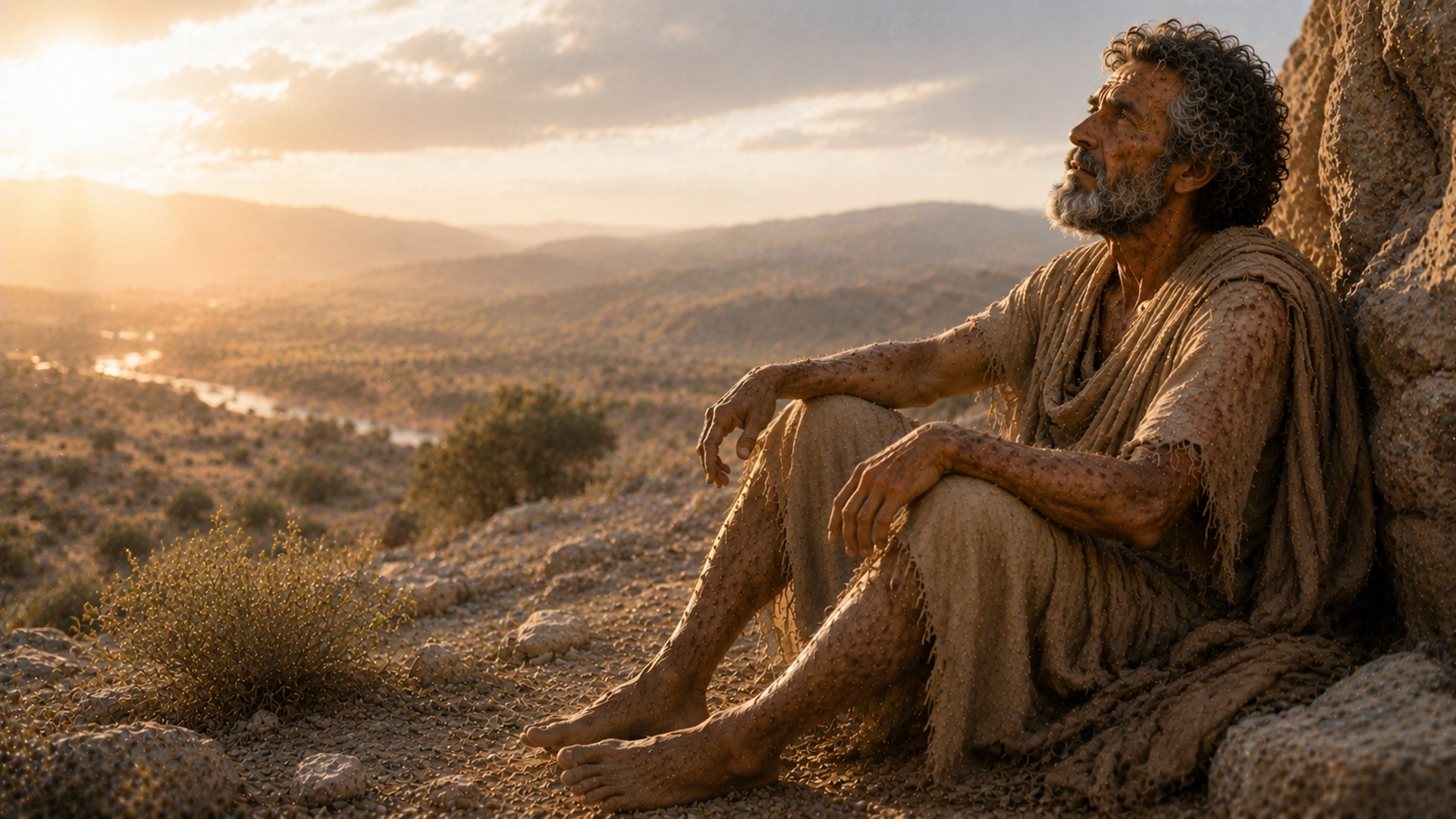
Job reflects on the transience of human life. He sees how short and fragile life is and wonders whether there can still be hope after death. Job chapter 14 combines deep sorrow with a quiet hope that God’s work does not end with death.
⋯⋯⋯⋯⋯⋯⋯⋯⋯⋯◆⋯⋯⋯⋯⋯⋯⋯⋯⋯⋯
🧵 Commentary
Job begins by stating that human life is short and full of trouble. He compares a person to a flower that quickly withers and to a shadow that soon disappears. These images clearly show how temporary human life is.
He asks God why He watches such a weak and mortal human being so closely and brings him to judgment. No one can become completely pure by their own strength. Job recognizes human limitations and dependence on God.
Then Job uses the image of a felled tree. Even when a tree is cut down, new life can spring from its roots. For human beings, however, it seems to be different. When a person dies, the question remains whether there is still any hope.
Yet in the middle of his reflections, Job expresses a remarkable desire. He longs for God to hide him in the realm of the dead until His anger has passed and then remember him again. These words reveal a hope that points beyond death.
Job asks, “If a man dies, will he live again?” He does not yet know the answer, but this question alone shows that his gaze reaches beyond his present suffering. He hopes that God will not forget him forever.
At the same time, Job describes the transience of creation. Mountains crumble, rocks are worn away, and water erodes even hard stones. In the same way, human beings experience their limitations and death.
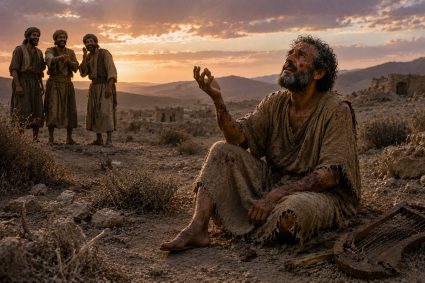
In the end, Job remains in his sorrow. He sees the pain of human life and death as realities. Yet among his laments, a faint glimmer of hope appears: perhaps one day God will call the human being again.
For Christians, this hope finds its fulfillment in the resurrection of Jesus Christ. What Job could only sense becomes a certainty in the New Testament: death does not have the final word.
⋯⋯⋯⋯⋯⋯⋯⋯⋯⋯◆⋯⋯⋯⋯⋯⋯⋯⋯⋯⋯
🧺 Summary
Job 14 describes the transience of human life and the hope that God does not forget human beings forever. In the middle of his lament, Job raises the question of life beyond death.
⋯⋯⋯⋯⋯⋯⋯⋯⋯⋯◆⋯⋯⋯⋯⋯⋯⋯⋯⋯⋯
🔦 Message for Us Today
Our life is temporary, but our hope does not end at the grave. God knows our days and holds our lives in His hand. Through Jesus Christ, we can be certain that He does not forget us and that the resurrection is stronger than death.
⋯⋯⋯⋯⋯⋯⋯⋯⋯⋯◆⋯⋯⋯⋯⋯⋯⋯⋯⋯⋯
📝 Thought for Reflection
What is your hope founded on—only this life, or the promise that God holds you in His hand even beyond death?