
📅 August 30, 2026
📚 BELIEVE HIS PROPHETS
📖 Daily Bible Reading: 🎵 Psalm 23
🐑 The LORD Is My Shepherd
✨ Safely Led – Even Through the Darkest Valley
🌐 Read online here
🌅 Introduction
Psalm 23 is one of the best-known and most beloved passages in the Bible. David describes God through the familiar image of a shepherd who knows, leads, provides for, protects, and never abandons his sheep. The psalm does not promise a life without dark valleys, enemies, or uncertainty. Its power lies precisely in the fact that God’s presence remains with us even there. From the green pastures through the darkest valley to the prepared table, one certainty runs through the entire psalm: The Lord is there. Those who belong to Him are never left on their own.
⋯⋯⋯⋯⋯⋯⋯⋯⋯⋯◆⋯⋯⋯⋯⋯⋯⋯⋯⋯⋯
🔍 Commentary
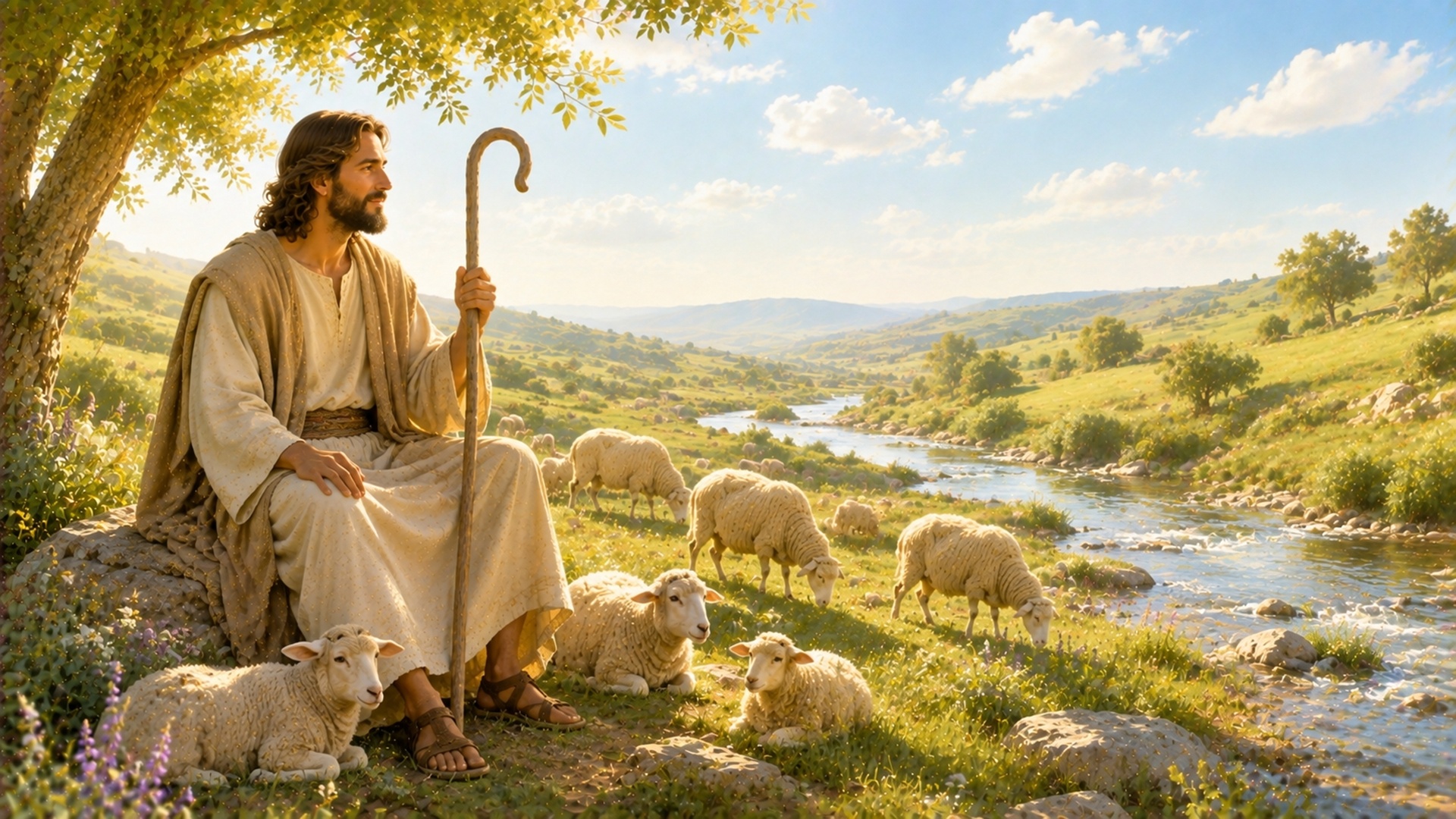
David begins with a deeply personal confession: “The LORD is my shepherd.” He does not merely say that God is a shepherd or the Shepherd of Israel. He calls Him “my” shepherd. The great God is described as the One who personally cares for each individual.
David knew the life of a shepherd from his own experience. He understood that sheep need guidance. They do not automatically find the best path, they often recognize danger too late, and they need protection and provision. This is precisely why the image so aptly describes the relationship between God and humanity.
From this trust comes the familiar statement: “I shall not want.” This does not mean that David would never experience desires, pain, or loss. His own life proves otherwise. Rather, it means that under God’s guidance, he will ultimately lack nothing he truly needs to walk with God.
The Shepherd makes him lie down in green pastures and leads him beside still waters. Both images speak of provision, rest, and renewal. Sheep lie down peacefully only where they feel safe. God’s presence creates a place where the soul can find rest.
Then David says: “He restores my soul.” God cares not only for outward needs. He restores the inner life. Where fear causes exhaustion, guilt becomes a burden, or suffering drains our strength, the Lord can give renewed strength.
The Shepherd leads him “in the paths of righteousness for His name’s sake.” God’s guidance is rooted in His own character. He does not lead arbitrarily. His ways correspond to His faithfulness, righteousness, and love.
But immediately afterward, the landscape changes: “Even though I walk through the darkest valley.” The path with the Good Shepherd does not lead exclusively through green meadows. There are also valleys in which the light is barely visible.
It is significant that David does not say: If I trust God, I will never enter a dark valley. Instead, he says that even when he walks through such a place, he does not need to be overcome by fear.
The reason is not David’s courage, but God’s nearness: “For You are with me.” At this very point, even the language of the psalm changes. Until now, David has spoken about God: “He makes me lie down; He leads me.” In the dark valley, he speaks directly to God: “You are with me.” In the darkness, the relationship becomes even more personal.
The Shepherd’s rod and staff comfort David. A shepherd’s staff could be used to guide, bring back, and protect the sheep. God’s comfort is therefore not merely a pleasant feeling. It consists of His active presence, which guides and preserves.
The image then changes. God now appears not only as a Shepherd, but also as a Host. He prepares a table for David in the presence of his enemies. The adversaries are still there, but they cannot prevent God from providing for him.
This is a powerful image: God does not always wait until all our enemies have disappeared before giving us His peace. He can prepare a table in the midst of a difficult situation.
David continues by saying that his head is anointed with oil and his cup overflows. Oil was a sign of hospitality, joy, and honor. The overflowing cup describes an experience of goodness that goes beyond mere survival.
David then looks toward the future: “Surely goodness and mercy shall follow me all the days of my life.” We usually think of dangers or enemies pursuing someone. David now uses this powerful image for God’s goodness and mercy: They remain close behind him wherever he goes.
The psalm finally ends in the house of the Lord. David’s journey does not lead into uncertainty. Its destination is lasting fellowship with God.
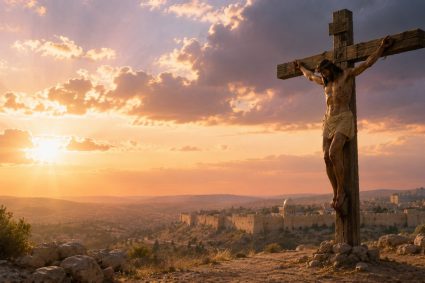
From a Christian perspective, Psalm 23 takes on an even deeper meaning in Jesus Christ. In John 10, Jesus identifies Himself as the Good Shepherd. He knows His sheep, calls them by name, and lays down His life for them.
The statement “The LORD is my shepherd” thus gains a specific Christological depth. Jesus does not accompany us from a safe distance. The Good Shepherd Himself went through suffering and death to save His sheep.
Because of this, even the darkest valley loses its ultimate terror. Christ has risen. Those who belong to Him may know that not even death lies beyond the Shepherd’s power.
Psalm 23 is therefore not a romantic picture of a trouble-free life. It is a confession for people traveling along a real path—a path with resting places and valleys, provision and dangers, enemies and hope. Through it all, the same certainty remains: The Shepherd never abandons His sheep.
⋯⋯⋯⋯⋯⋯⋯⋯⋯⋯◆⋯⋯⋯⋯⋯⋯⋯⋯⋯⋯
📌 Summary
Psalm 23 describes God as a personal Shepherd who provides, guides, renews, and protects. The path with Him leads not only through green pastures, but also through dark valleys. Yet it is precisely there that the decisive truth becomes visible: “You are with me.” The psalm ends with the assurance that God’s goodness accompanies the believer and that the journey leads to lasting fellowship with the Lord.
⋯⋯⋯⋯⋯⋯⋯⋯⋯⋯◆⋯⋯⋯⋯⋯⋯⋯⋯⋯⋯
💡 Message for Us Today
We cannot determine through which landscapes the path of our lives will lead. There are seasons of rest and seasons when we must walk through a dark valley. Psalm 23 does not promise us the absence of such valleys, but something greater: the presence of the Shepherd. Jesus Christ knows the path of every person who trusts Him. He guides, corrects, carries, and remains near even where we cannot yet see the way out. Our security therefore does not lie in always understanding the path, but in knowing the Shepherd.
⋯⋯⋯⋯⋯⋯⋯⋯⋯⋯◆⋯⋯⋯⋯⋯⋯⋯⋯⋯⋯
💭 Thought for Reflection
Can I consciously say today, “The LORD is my shepherd,” and entrust to Him even the part of my journey that I do not currently understand?
