

Series EXODUS with Pastor Mark Finley
Lesson 11.Apostasy and Intercession
When Faith Falters – and Grace Appears
Lesson 11 leads us into one of the darkest yet most instructive episodes of Israel’s wilderness journey. While Moses was on Mount Sinai receiving God’s law, the people below lost their faith and turned to false gods. This dramatic fall shows how quickly humanity can slip into unbelief and sin without steadfast faith. Yet amid judgment shines a radiant example of divine grace: Moses’ intercession for an unfaithful people. His love, patience, and willingness to sacrifice reflect God’s heart, who does not desire the death of the sinner but his repentance. This lesson calls us to remain faithful to God and to stand for one another in prayer.
Content:
11.1 Failed Leadership
Weak Leadership in Times of Trial
Aaron’s failure shows the danger when spiritual leaders yield to the pressure of the majority instead of trusting God. In a moment of fear and uncertainty, Aaron lost spiritual clarity and was carried away by the people’s emotions. Instead of admonishing them and reminding them of God’s commands, he sought peace at the cost of truth. This example reminds us that true leadership requires courage, especially when obedience to God is unpopular. Aaron’s compromise led the people into sin, while genuine faith demands steadfastness, especially in times of crisis.
11.2 Idolatry and Evil
From Apostasy to Moral Decline
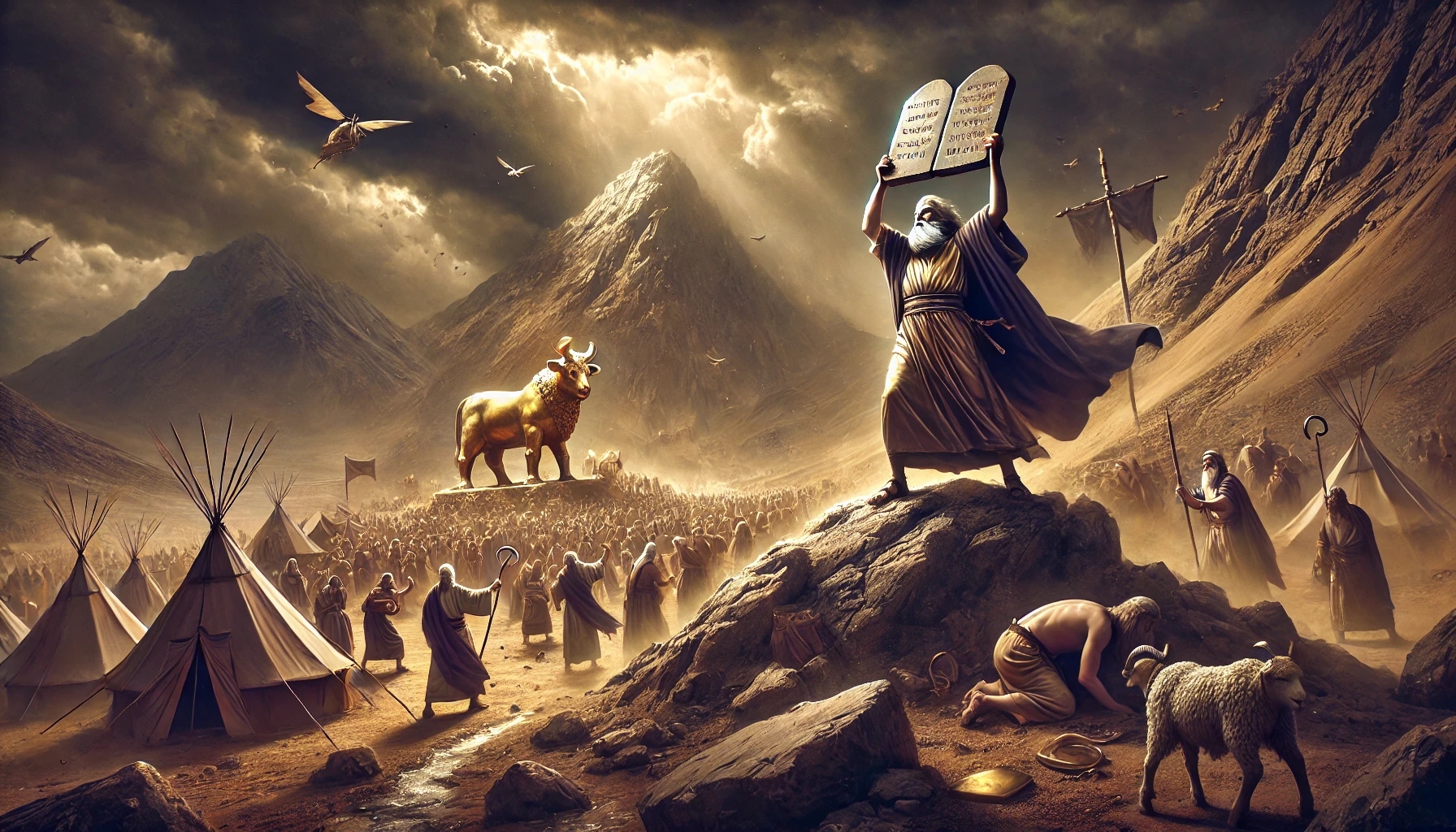
Israel’s idolatry quickly led them into moral and spiritual corruption. Once they turned from God, their worship lost all holiness and became a feast of self-glorification. By worshiping an image of an animal, they degraded not only God but also themselves. Idolatry distorts the understanding of creation and Creator—humans exalt their own works and replace the living God. This story shows that every false “god”—whether of gold, power, pleasure, or selfishness—ultimately separates us from God. This pattern repeats today whenever people value created things above the Creator Himself.
11.3 Corrupting Themselves
When the Heart Turns from the Creator
Israel’s “shameful acts” were not merely disobedience but a conscious betrayal of God’s love and guidance. By attributing their deliverance to a lifeless image, they denied the living God who had redeemed them with power. This distortion of truth led to spiritual blindness and moral decay. Idolatry often begins subtly—with things that may not be bad in themselves but take God’s place in our hearts. When God is not at the center, something else inevitably takes that place. Thus this story calls us to examine our hearts and keep our living relationship with God above all else.
11.4 God’s Righteous Wrath
God’s Wrath and Moses’ Intercession
God’s righteous anger against Israel’s idolatry shows that sin has serious consequences and cannot be trivialized. Yet this event also reveals the depth of God’s grace, for Moses bravely stood as intercessor for the people. Instead of seeking his own gain, Moses reminded God of His promises and pleaded for mercy—a moving example of selfless prayer. His actions show that true faith expresses itself in compassion, even for the misguided. God’s wrath is never arbitrary but an expression of His holiness and His desire to destroy evil, not humanity. This story reminds us how powerful prayer can be when it flows from love and trust in God’s character.
11.5 Intercession
Love That Gives Itself
Moses’ intercession reveals one of the deepest expressions of selfless love in Scripture. He was willing to give up his own life if God would forgive His people—a foreshadowing of Christ’s sacrificial love. His prayer shows that true intercession is more than words; it is bearing the burdens of others in one’s heart. Moses understood that only God Himself could bear the guilt of the people—a thought fulfilled in Jesus’ sacrifice on the cross. This scene shows that forgiveness always has a cost, one that God Himself was willing to pay. It calls us to live compassion, sacrifice, and prayer for others as the true expression of discipleship.
11.6 Summary
From Apostasy to Intercession: Lessons from the Golden Calf
Lesson 11 reveals Israel’s tragic apostasy when, during Moses’ absence, they worshiped the golden calf. Their impatience and distrust of God quickly led to idolatry, moral decay, and open rebellion. Aaron failed as a leader by yielding to the people’s pressure instead of standing firm for God’s honor. Yet in the midst of this chaos, Moses stood as a faithful intercessor, praying for the sinful people and even willing to sacrifice his life for them. This story reveals both the gravity of sin and the greatness of divine mercy. It reminds us that true spiritual leadership requires humility, courage, and selfless love—qualities that find their perfect image in Christ.

Visited 70 times, 1 visit(s) today