

✉️ FIRST AND SECOND CORINTHIANS
⚔️ Lesson 12: Dealing with False Teachers
📌 12.6 Summary
🚨 Faithfulness to the Gospel in the struggle against error and spiritual deception
📖 1. Introduction
Lesson 12 shows how seriously Paul takes the protection of the church from false teaching. His concern is not for his personal honor, but for the Corinthians’ faithfulness to Christ. False teachers had tried to call his authority into question, boast about themselves, and open the church to another message. Paul responds with spiritual clarity, courage, and the gentleness of Christ. He exposes error, but he does so not out of pride or harshness, but out of love for the church. In the end, he calls believers to self-examination and the unrepentant to repentance so that Christ may renew and build up the church.
📜 2. The Biblical Foundation
Paul describes the spiritual struggle:
“For though we walk in the flesh, we do not war after the flesh.”
2 Corinthians 10:3
Then he shows the goal of this struggle:
“Casting down imaginations, and every high thing that exalteth itself against the knowledge of God, and bringing into captivity every thought to the obedience of Christ.”
2 Corinthians 10:5
Concerning proper boasting, he writes:
“But he that glorieth, let him glory in the Lord.”
2 Corinthians 10:17
Paul gives a serious warning against false teaching:
“But I fear, lest … your minds should be corrupted from the simplicity that is in Christ.”
2 Corinthians 11:3
He exposes false teachers:
“For such are false apostles, deceitful workers, transforming themselves into the apostles of Christ.”
2 Corinthians 11:13
And in the end he calls for self-examination:
“Examine yourselves, whether ye be in the faith; prove your own selves!”
2 Corinthians 13:5
Together, these passages show that the church must test error, remain faithful to Christ, avoid false self-glorification, and repeatedly examine its life honestly before God.
🌍 3. Connection to Our Time
Today as well, the church needs spiritual vigilance. False teaching does not always appear openly godless, but may seem pious, convincing, and attractive. Some messages speak about Jesus but alter the biblical Christ; others speak of spirituality but do not lead to obedience, truth, and holiness. Therefore, it is not enough to judge a teaching by feeling, popularity, or outward success. The church must test everything by the Word of God and ask whether Christ truly stands at the center. At the same time, this struggle must not be carried out with harshness, pride, or a contentious spirit, but with gentleness, love, and faithfulness to the Gospel.
💡 4. Central Message of the Lesson
👉 Faithfulness to the Gospel requires spiritual clarity: error must be recognized and rejected, while the church remains firmly with Christ in gentleness, humility, and obedience.
✝️ 5. Theological Focus
The theological focus of this lesson lies in faithfulness to Christ and to the true Gospel. Paul does not view the confrontation with false teachers as a personal dispute, but as a spiritual struggle. The issue is not that Paul wants to defend his reputation, but that the church must not be led away from Christ. False teaching is therefore dangerous because it does not merely change ideas, but binds hearts and damages the relationship with Christ.
Paul makes it clear that the weapons of this struggle are not fleshly. God’s cause must not be defended with the methods of the world. Manipulation, intimidation, pride, mockery, and human power politics do not belong to the Gospel. The struggle is carried out through truth, prayer, the Word of God, spiritual discernment, and the authority of Christ.
This authority is given for edification, not destruction. That is an important safeguard. Whoever fights error must not fall into a wrong spirit himself. Truth must be clear, but it must be carried in the character of Christ. Paul combines courage and gentleness, clarity and love, firmness and humility.
Another focus is proper boasting. The false teachers boasted about themselves, compared themselves with one another, and sought recognition according to human standards. Paul, by contrast, boasts in the Lord. For him, man is not the center; Christ is. Every genuine fruit in ministry comes from God, and therefore all glory belongs to Him alone.
Paul also shows that false teachers are often not easy to recognize. They disguise themselves as apostles of Christ, just as Satan can disguise himself as an angel of light. This means that not everything that sounds religious comes from God. Not everyone who speaks of Jesus proclaims the biblical Jesus. Not every spiritual experience comes from the Holy Spirit. Not every gospel that sounds pleasant is the Gospel of Christ.
Therefore Paul names three decisive tests: Jesus, Spirit, and Gospel. Is the biblical Christ proclaimed—the crucified, risen, and returning Lord? Does the spirit being emphasized lead to Christ, to the truth of God’s Word, and to holiness? Does the Gospel remain grace through Christ, connected with repentance, faith, and obedience? Wherever these foundations are shifted, the church is in danger.
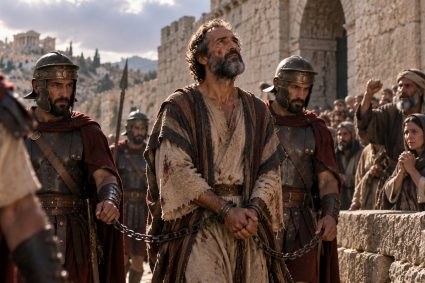
Paul’s own sufferings reveal the difference between true and false ministry. The false teachers sought influence and recognition, but Paul endured dangers, beatings, deprivation, and concern for the churches. His ministry is not self-serving, but sacrificial. His very weakness shows that God’s power sustains him.
Finally, Paul calls for self-examination. The church must not only evaluate false teachers, but also examine its own life before Christ. Are we standing in the faith? Does Christ live in us? Is there sin that we tolerate? Are there areas in which we refuse repentance? These questions belong to spiritual vigilance.
The theological core is this: Christ must remain the center of the church. His truth protects from error, His grace sustains in suffering, His authority builds up, and His presence calls to repentance. A church that remains faithful to Christ will not tolerate error carelessly, but neither will it fight with loveless harshness.
🌟 6. Spiritual Deepening
This lesson is especially important because spiritual deception often takes place subtly. Many errors do not begin with an open rejection of God, but with small shifts. A little less cross. A little less repentance. A little less obedience. A little more human praise. A little more self-confidence. In this way the church can slowly be drawn away from simple faithfulness to Christ.
That is precisely what Paul fears. He wants the Corinthians to belong to Christ as a bride belongs to her bridegroom. This image shows how deep faithfulness is. Faith is not merely agreement with doctrines, but a relationship with Christ. False teaching is therefore not merely a wrong idea, but spiritual unfaithfulness when it draws the heart away from Jesus.
Therefore the church needs an alert conscience trained by Scripture. Not every beautiful speech is truth. Not every strong personality is a servant of Christ. Not every great effect is a sign of divine approval. Not every new emphasis is healthy. We must learn to measure everything by whether it exalts Christ and agrees with God’s Word.
At the same time, Paul calls us to humility. Whoever recognizes error must not become proud. It is possible to defend correct doctrine and still act in the wrong spirit. When truth is spoken without love, it can become harsh and wounding. When love is practiced without truth, it can become blind and permissive. Paul shows that both belong together.
The spiritual struggle also begins in our own thinking. Paul speaks of taking thoughts captive to the obedience of Christ. This means that not only false teachers must be tested, but also our own convictions, reactions, and motives. Which thoughts rise up within me against God’s truth? Where do I justify what God wants to correct? Where do I seek my own glory instead of the honor of Christ?
This self-examination protects against hypocrisy. It is easy to warn others and become spiritually careless ourselves. At the end, Paul calls the Corinthians to examine themselves to see whether they are in the faith. This is not an invitation to constant fear, but to honest repentance. Whoever belongs to Christ may allow himself to be examined, because God’s grace is available.
The lesson also shows that genuine ministry does not have to be comfortable. Paul suffers for the sake of the Gospel. He bears physical pain, outward dangers, and inward concern for the churches. Precisely in this, his faithfulness becomes visible. He does not seek personal advantage, but the salvation of people and the honor of Christ.
This is an important standard for spiritual ministry. False teachers often seek influence, admiration, or gain. True servants of Christ are willing to bear burdens even when they are not seen or praised. They do not serve in order to appear great, but because the love of Christ compels them.
Paul reminds us that God’s power becomes visible in weakness. This protects us from a false idea of spiritual greatness. Genuine authority is not shown in self-promotion, but in dependence on Christ. Genuine strength is not shown by appearing invulnerable, but by remaining faithful despite weakness. Genuine maturity is not shown by never being corrected, but by responding to God’s call to repentance.
The appeal to the unrepentant also belongs to love. Some people confuse love with silence. Paul shows that love sometimes has to speak very clearly. When sin destroys life and endangers the church, silence would not be mercy. Love calls to repentance so that Christ may heal.
The church urgently needs this attitude today. On the one hand, it must not tolerate everything that calls itself Christian. On the other hand, it must not fall into suspicion, harshness, or spiritual pride. The way of Christ is both clear and humble. It protects the truth and seeks the salvation of the person.
The summary of this lesson therefore brings us to a serious but hopeful question: Are we remaining faithful to Christ? Not merely outwardly, not merely traditionally, not merely in words, but in heart, thought, doctrine, ministry, and conduct. Christ does not want to be one part of our faith, but its center.
When Christ remains at the center, false teaching loses its power. When His Word shapes our thinking, false arguments are exposed. When His grace humbles our hearts, we do not become proud. When His love fills us, we do not fight without love. When His power sustains us, we can remain faithful even in weakness.
In the end Paul shows that the church can be preserved and renewed. Error is dangerous, but Christ is stronger. Sin destroys, but repentance opens the way to healing. False teachers can deceive, but God’s truth gives clarity. Weak servants may suffer, but God’s grace is sufficient. Whoever remains with Christ stands on secure ground.
🔧 7. Application in Daily Life
Practical steps:
- Test every teaching by whether it proclaims the biblical Christ and the true Gospel.
- Take false teaching seriously without falling into fear or a contentious spirit.
- Do not boast in your knowledge, your ministry, or your strength, but in the Lord.
- Contend for truth with gentleness, humility, and spiritual clarity.
- Do not be deceived by appearance, success, or pious language.
- Bring your own thoughts under the obedience of Christ.
- Be willing to endure disadvantages or suffering for the sake of the Gospel.
- Examine yourself honestly before God and do not postpone repentance.
❓ 8. Reflection Question
Am I so faithful to Christ that I recognize false messages, while at the same time remaining humble enough to allow Him to examine and correct my own heart?
🌟 9. Closing Thought
Lesson 12 calls the church to faithfulness, vigilance, and spiritual clarity. Paul shows that the struggle against error must not be carried out with human harshness, but with God’s truth and the gentleness of Christ. True proclamation does not seek self-praise, but boasts in the Lord and places Christ at the center. False teachers must be tested because they can lead people away from Christ through another Jesus, another spirit, or another gospel. At the same time, Paul reminds us that genuine ministry often involves suffering, weakness, and dependence on God’s grace. Whoever examines himself, accepts repentance, and remains faithful to the Gospel will be preserved, renewed, and built up by Christ.
“But he that glorieth, let him glory in the Lord.”
2 Corinthians 10:17 📌🚨✝️🛡️
