


✉️ FIRST AND SECOND CORINTHIANS
🌍 Lesson 11: Stewardship and Mission
❤️ 11.2 Motivation
🙏 Generosity grows out of grace, gratitude, and genuine love
📖 1. Introduction
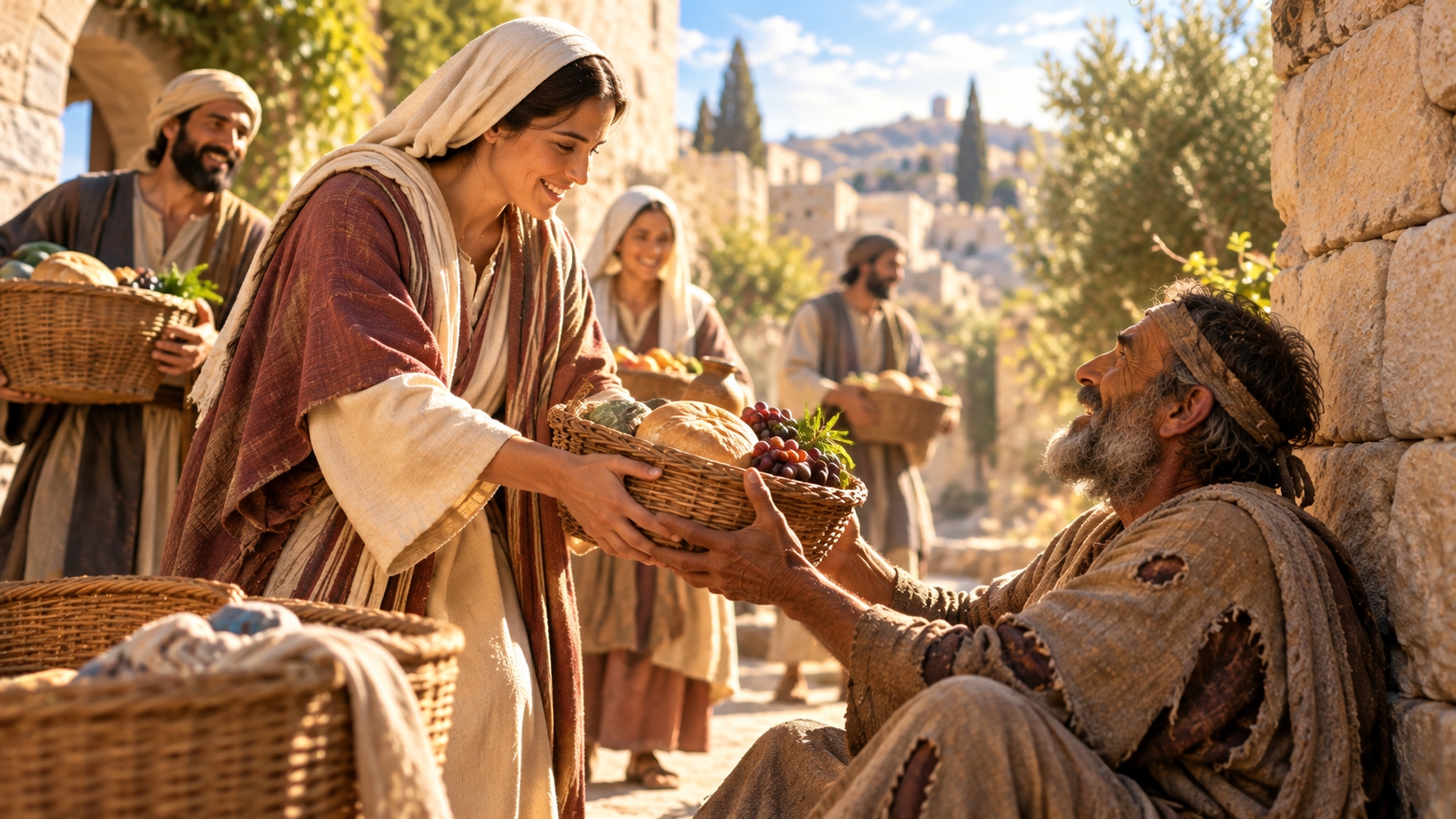
In 2 Corinthians 8 and 9, Paul does not speak only about the fact that Christians should give, but above all about why they give. For him, motivation is decisive. Genuine generosity does not arise from pressure, guilt, pride, or the desire to be noticed. It grows out of the grace of God that we ourselves have first received. Because God has given us His indescribable gift in Christ, our hearts become grateful, free, and ready to share. Christian giving is therefore a visible expression of the love that God’s Spirit produces within us.
📜 2. The Biblical Foundation
Paul begins with God’s grace:
“Moreover, brethren, we do you to wit of the grace of God bestowed on the churches of Macedonia.”
2 Corinthians 8:1
Then he describes the attitude of the Macedonians:
“They first gave their own selves to the Lord, and unto us by the will of God.”
2 Corinthians 8:5
Regarding the inner decision involved in giving, Paul writes:
“Every man according as he purposeth in his heart, so let him give; not grudgingly, or of necessity: for God loveth a cheerful giver.”
2 Corinthians 9:7
And at the end he exclaims:
“Thanks be unto God for his unspeakable gift.”
2 Corinthians 9:15
These passages show that Christian generosity grows out of God’s grace, devotion to the Lord, inner freedom, and grateful love.
🌍 3. Connection to Our Time
Today as well, giving can arise from very different motives. Some give because they feel obligated, others because they seek recognition, and still others because they want to ease a guilty conscience. Paul shows, however, that God does not look only at the gift but also at the heart of the giver. A cheerful giver does not give reluctantly or under compulsion, but out of gratitude for God’s goodness. Especially in a time when possessions, security, and consumption are often considered extremely important, the gospel calls us to a different attitude. We give because God first gave, and we share because His love sets us free.
💡 4. Central Message of the Lesson
👉 The deepest motivation for Christian generosity is God’s grace in Christ: Whoever has received God’s indescribable gift gives in return with gratitude, willingly, lovingly, and joyfully.
✝️ 5. Theological Emphasis
The theological emphasis of this lesson is that Christian giving is rooted in the grace of God. Paul does not begin with human achievement but with God’s action. He speaks of the “grace of God” that was given to the churches in Macedonia. This means that their generosity was not primarily evidence of human strength, but the effect of divine grace within the heart.
For Paul, grace is not merely forgiveness of the past, but a transforming power for life in the present. Whoever truly receives God’s grace does not remain unchanged. This grace frees the heart from selfishness, fear, and greed. It opens our eyes to the needs of others and to God’s mission. Generosity therefore becomes a fruit of grace.
Paul also shows that giving begins with surrender. The Macedonians first gave themselves to the Lord. This is a decisive statement. Before they gave money, they gave their hearts. Before they let go of anything they possessed, they had entrusted themselves to Christ. The conclusion is clear: Christian stewardship does not begin with an amount of money, but with belonging to God.
When a person gives himself to the Lord, the way he deals with everything he possesses also changes. Possessions are then no longer viewed as absolute personal property, but as entrusted gifts. Time, strength, income, abilities, and influence ultimately belong to God and are to be used according to His purposes. In this way, the whole of life becomes stewardship.
Another central emphasis is gratitude. Paul concludes with the exclamation: “Thanks be unto God for his unspeakable gift.” This gift is Christ Himself. God has not merely given us something; He has given us His Son. In Him He gives forgiveness, reconciliation, new life, hope, and an eternal future. All Christian giving is a response to this immeasurable gift.
Christian giving is therefore never an attempt to purchase God’s love. We do not give so that God will become gracious toward us. We give because God is gracious. We do not give in order to earn salvation. We give because Christ has redeemed us. This order protects giving from legalism and makes it an expression of the gospel.
Paul also emphasizes freedom in giving. Each person should give according to what he has decided in his heart, not reluctantly and not under compulsion. God does not desire forced generosity that appears pious outwardly while remaining unwilling inwardly. He seeks a heart that gives out of love. The cheerful giver is not cheerful because giving is always easy, but because he knows to whom he belongs and for what purpose he gives.
This freedom does not mean indifference. Paul very seriously calls the Corinthians to fulfill their promise. Yet he does not want a gift that results from pressure or mere outward conformity. He wants their gift to be a genuine fruit of their faith. God loves the cheerful giver because something of God’s own character becomes visible in that joy.
Finally, generosity is evidence of genuine love. Paul speaks about testing the sincerity of love. Love does not remain merely a word. It becomes visible in practical help, willingness to sacrifice, and support. Especially when the needs of others cost us something, it becomes clear whether our love is merely spoken or truly lived.
The theological core is this: Generosity is not a peripheral matter of faith, but a practical fruit of grace. God gives first; the human being responds. Christ gives Himself; the believer gives himself to the Lord. The Holy Spirit frees the heart, and from that freedom grows willing, cheerful, and loving giving for the glory of God.
🌟 6. Spiritual Deepening
This lesson leads us deeply into our own hearts because the way we give reveals much about our inner relationship with God. Money and possessions are not merely practical matters. They touch trust, security, fear, control, gratitude, and love. This is why the Bible speaks so seriously about the way we handle them. What we hold on to and what we are willing to let go often reveals what we truly trust.
Paul makes clear that the right motivation does not arise through external pressure. People can be pressured into giving, but that does not produce spiritual generosity. Appeals can be made, numbers can be presented, and needs can be explained, but none of these things by themselves transform the heart. Genuine generosity grows where people see the grace of God and surrender themselves anew to Christ.
The Macedonians are a powerful example of this. They were not wealthy but poor. Their circumstances would have given them enough reasons not to give. They could have said, “We ourselves have too little. Others should help. When our situation improves, then we will give.” Yet Paul says that despite their poverty, they overflowed in rich generosity. Their joy was greater than their limitations.
This shows that generosity is not primarily a question of one’s bank balance. Of course, every person has different possibilities, and Paul does not require the same amount from everyone. But a generous heart can give even when it has little, while a selfish heart can remain narrow even when it possesses much. The question is not only, “How much do I have?” The deeper question is, “To whom does my heart belong?”
Giving reveals trust. Whoever gives is saying through that act: God is my provider. I do not have to control everything anxiously. I can share because God is faithful. This does not mean acting unwisely or irresponsibly. It does mean, however, that fear must not have the final word. Faith learns to value God’s provision more highly than personal insecurity.
At the same time, giving is an expression of gratitude. An ungrateful heart always sees first what is lacking. A grateful heart sees first what God has already given. Paul directs our attention toward God’s indescribable gift. If Christ Himself is God’s gift to us, then we do not live out of scarcity but out of fullness already received. Even when our outward resources are limited, we are rich in Christ.
This gratitude also changes the way we view mission. Donations are not simply payments to an organization. They can be participation in God’s work. Through gifts, people are supported, churches are strengthened, those in need are cared for, and the gospel is carried forward. Whoever gives participates in making God’s love visible in practical ways.
Love remains decisive in all of this. Paul does not want cold fulfillment of duty. He wants the Corinthians to act out of genuine love. Love does not look indifferently at the needs of others. It does not ask only, “What will this cost me?” but, “How can I help? How can Christ become visible through me?” Where love dwells in the heart, giving becomes a ministry.
This love begins with surrender to God. The Macedonians first gave themselves to the Lord. This sentence should also examine our own lives. Perhaps giving is difficult for us because certain areas of our lives have not truly been surrendered to God. Perhaps our money belongs to Him theoretically, while in practice we hold on to it tightly. Perhaps we say that Christ is Lord, while we still seek our primary security in possessions.
God invites us to place this area as well under His lordship. He does this not because He needs our money, but because He wants our hearts. Giving is a spiritual discipline through which our trust grows. Through planned, cheerful, and loving generosity, we learn to be less controlled by possessions and to live more fully from confidence in God’s faithfulness.
Paul’s words also protect us from false pride. Whoever gives generously must not use this as a reason for spiritual superiority. Everything we give was first given to us. Every ability, every income, every opportunity, and every resource ultimately comes from God’s hand. Genuine giving therefore does not lead to self-exaltation but to gratitude.
At the same time, this lesson protects us from excuses. We can easily find reasons why we should not give or why others should bear greater responsibility. But Paul places us before Christ and before the grace of God. The question is not whether I can compare myself with others, but whether my response to God’s grace is sincere. Each person should examine before God how he or she is able to give.
A cheerful giver is not someone who never makes a sacrifice. Joy and sacrifice are not opposites. The Macedonians gave in affliction and poverty, yet with joy. Their joy did not come from comfort, but from their experience of grace. Sometimes the deepest joy arises precisely when we realize that our lives do not revolve only around ourselves.
This attitude is also essential for the church. A church that gives out of gratitude becomes alive in mission. It does not think only about its own needs, its own building, or its own programs, but about God’s greater work. It rejoices when others are blessed through its gifts. In this way, generosity becomes a sign of spiritual maturity.
At the end, this lesson asks each of us personally: Why do I give? Do I give in order to be seen? Do I give because I feel guilty? Do I give only when pressure arises? Or do I give because Christ has loved me, saved me, and made me rich? This question leads us back to the gospel.
When the love of Christ fills our hearts, generosity becomes not merely an action but an attitude. Then we give not reluctantly, but gratefully; not under compulsion, but freely; not for self-display, but for the glory of God. We give not only from our possessions, but first of all ourselves. In this way, our giving becomes a living testimony to grace.
🔧 7. Application in Daily Life
Practical Steps:
- Regularly reflect on God’s indescribable gift in Christ.
- Examine which motives shape your giving: gratitude, love, pressure, fear, or recognition.
- Give yourself first to the Lord before deciding about individual gifts.
- Plan your generosity so that it does not happen only accidentally or occasionally.
- Give willingly and without inner reluctance, as God gives you understanding and opportunity.
- Trust that God will provide as you support His work.
- See your gifts as participation in mission, comfort, help, and the proclamation of the gospel.
- Ask God for a cheerful, free, and loving heart.
❓ 8. Reflection Question
What is my deepest motivation when I give: duty, pressure, habit, or gratitude for God’s indescribable gift in Jesus Christ?
🌟 9. Concluding Thought
Paul shows that Christian generosity grows out of the grace of God. The Macedonians did not give primarily because they had much, but because they had first given themselves to the Lord. Their joy, willingness, and love made their gift a spiritual testimony. We too do not give in order to earn God’s acceptance, but in response to Christ, God’s indescribable gift. Where gratitude fills the heart, possessions do not become an idol but a tool for mission. A cheerful giver demonstrates through his life that God’s grace has set him free.
“Thanks be unto God for his unspeakable gift.”
2 Corinthians 9:15 ❤️🙏🎁✨
