




🟦 Introduction
Lesson 12 deals with the serious challenge of false teachers who were placing the church in Corinth in spiritual danger. Paul shows that false teaching is not harmless, because it can lead people away from simple and faithful devotion to Christ. He does not act out of personal hurt, but out of love for the church and faithfulness to the gospel. His struggle is not carried out with human harshness, but with spiritual weapons, with truth, courage, and the gentleness of Christ. At the same time, Paul exposes false boasting, false apostles, and another gospel that obscures Christ. This lesson calls us to examine error clearly, to boast only in the Lord, and to examine our lives honestly before Christ again and again.
✉️ FIRST AND SECOND CORINTHIANS
⚔️ Lesson 12: Dealing with False Teachers
🥊 12.1 Spiritual Warfare
✝️ Fighting with the Gentleness of Christ and the Power of Truth
📖 1. Introduction
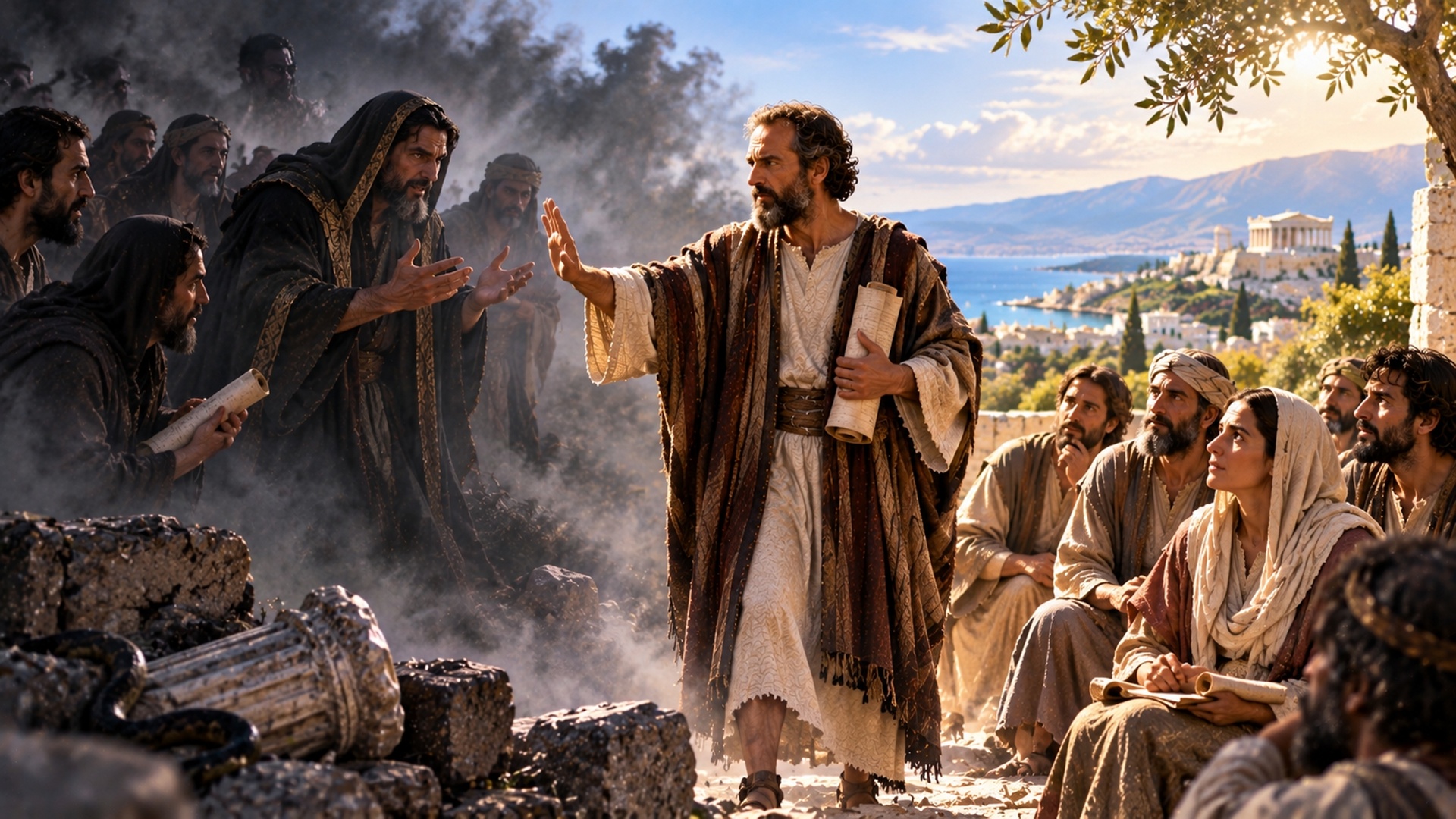
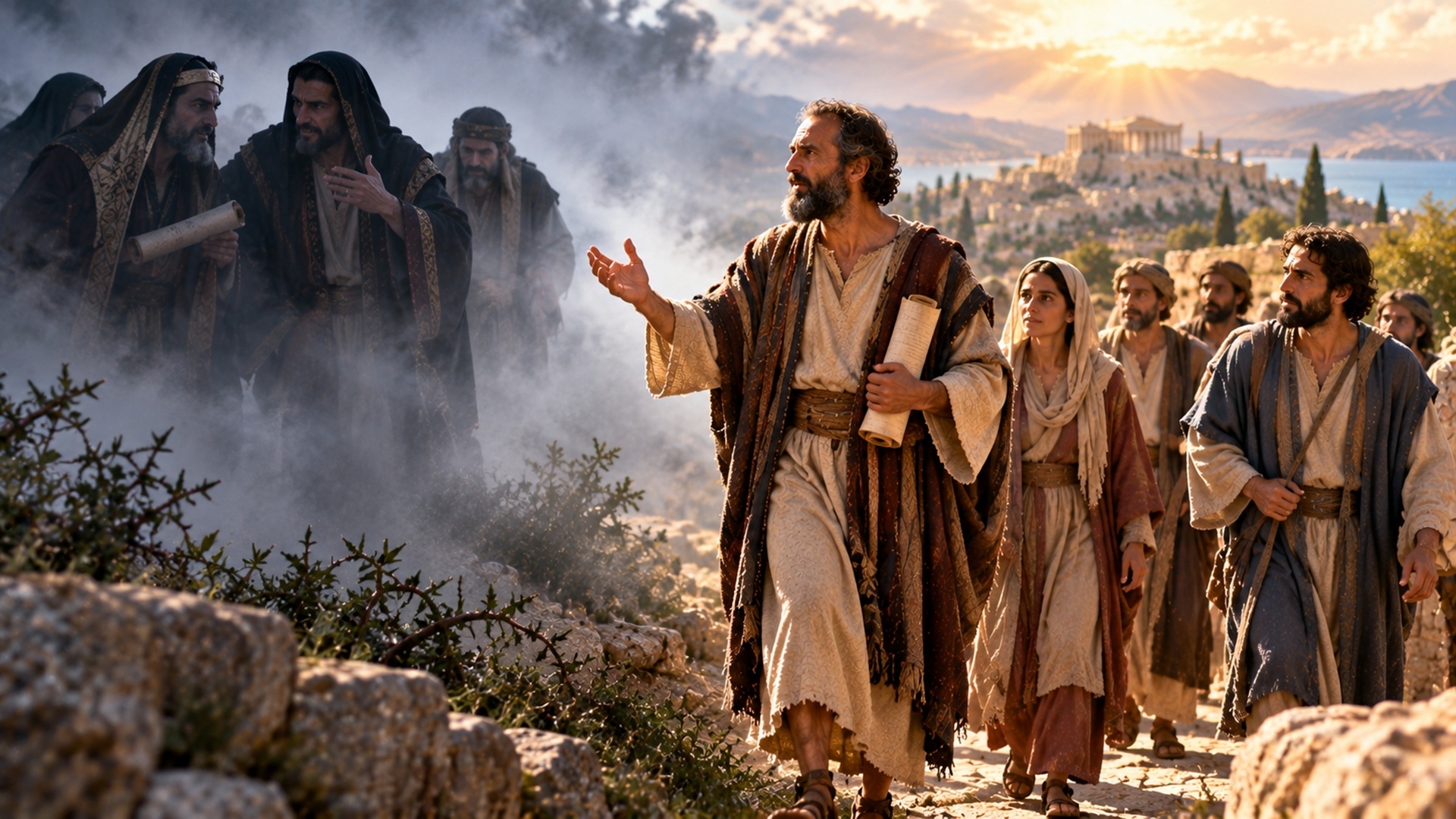
Paul begins this section with a serious concern for the church in Corinth. Some had misunderstood his gentleness as weakness and thought that he was strong only in his letters but unimpressive in person. Yet Paul shows that Christian gentleness does not mean cowardice. He is prepared to confront error, pride, and false arguments decisively, but not with human harshness; rather, with the mind of Christ. For Paul, the conflict surrounding the church is not an ordinary dispute between people, but a spiritual battle for thoughts, hearts, and faithfulness to Christ. Therefore, this battle requires both courage and humility.
📜 2. The Biblical Foundation
Paul writes:
“Now I, Paul, myself appeal to you by the meekness and gentleness of Christ.”
2 Corinthians 10:1
Then he explains:
“For though we walk in the flesh, we do not wage war according to the flesh.”
2 Corinthians 10:3
He continues:
“For the weapons of our warfare are not of the flesh but have divine power to destroy strongholds.”
2 Corinthians 10:4
And he describes the goal of this battle:
“We destroy arguments and every lofty thing raised up against the knowledge of God, and take every thought captive to obey Christ.”
2 Corinthians 10:5
At the same time, Paul makes clear that his authority has a spiritual purpose:
“Which the Lord gave us for building you up and not for destroying you.”
2 Corinthians 10:8
These verses show that spiritual warfare is not carried out with human power, but with truth, divine strength, and the gentleness of Christ.
🌍 3. Connection to Our Time
Even today, gentleness is often confused with weakness. Anyone who is not loud, aggressive, or dominant is quickly regarded as insecure or powerless. Paul, however, shows that true spiritual strength looks different. It does not need to hurt, intimidate, or control people, but stands firmly in the truth while remaining shaped by Christ. Especially when dealing with false teaching, confusion, and spiritual manipulation, the church needs clear discernment. We must not tolerate error, but neither should we fight people with human harshness. Instead, we are called to respond with truth, love, and spiritual authority.
💡 4. Central Message of the Lesson
👉 Spiritual warfare is not carried out with human harshness, but with the gentleness of Christ, the power of truth, and the goal of bringing thoughts into obedience to Christ.
✝️ 5. Theological Focus
The theological focus of this lesson lies in the way spiritual authority is exercised. Paul possesses authority, but he does not use it for self-exaltation. He understands it as a commission from Christ for the protection and edification of the church. This is crucial, because spiritual authority becomes dangerous when it is separated from the character of Christ.
Paul first appeals to the meekness and gentleness of Christ. In doing so, he places his entire approach to the church under the character of Jesus. Christ was meek and humble in heart, but His gentleness never meant indifference toward sin or error. Jesus could receive sinners with compassion and at the same time clearly expose hypocrisy, abuse of the temple, and false religion. In Him we see the perfect union of love and truth.
Paul follows this pattern. He does not want to react out of wounded pride, but out of spiritual responsibility. His opponents had attacked his personality and interpreted his gentleness as weakness. Yet Paul makes it clear that the real battle goes deeper. It is not about his honor, but about the church’s faithfulness to Christ.
That is why Paul speaks of weapons, warfare, and strongholds. His language is military, but his battle is not fleshly. This means that he does not fight with the methods of the world. He uses no manipulation, intimidation, self-promotion, violence, or human power politics. His weapons are spiritual because the enemy works on a spiritual level.
The “strongholds” Paul speaks of are thoughts, arguments, and attitudes that rise up against the knowledge of God. False teaching does not always begin with open resistance to Christ. It often begins with seemingly intelligent ideas, human pride, distorted truth, or a message that sounds biblical but pushes Christ out of the center. That is why spiritual warfare must be fought especially on the level of thought.
Paul wants to take every thought captive into obedience to Christ. This is a strong expression. It does not mean mindless submission to people, but rather bringing our thinking under the lordship of Jesus. Christ is not only Lord over our behavior, but also over our convictions, motives, interpretations, and priorities. True discipleship involves the whole person, including the mind.
This point is very important for the church. False teaching does not merely corrupt opinions; it can draw hearts away from Christ. When people follow another gospel, they lose the foundation of their hope. This is why Paul is so decisive. He knows that spiritual deception is not a minor issue. Life, truth, and faithfulness are at stake.
At the same time, Paul emphasizes that his authority was given for building up, not for tearing down. This protects against spiritual abuse. Those who defend truth must not act destructively. Those who refute error must not humiliate people in order to elevate themselves. The goal is not victory for one’s own argument, but the salvation, clarification, and edification of the church.
The theological core is this: the church is engaged in a spiritual battle, but this battle must be fought in the spirit of Christ. God’s truth destroys false strongholds, while God’s love seeks to win people. Gentleness without truth becomes weak, and truth without gentleness becomes harsh. In Christ, both belong together.
🌟 6. Spiritual Deepening
This lesson challenges us to examine our understanding of strength. In the world, the person who pushes through, speaks loudly, dominates others, or always has the last word is often considered strong. Paul shows us a different kind of strength. He can be gentle without being cowardly. He can be humble without becoming passive. He can love and still resist clearly.
This is a spiritual maturity that we urgently need. Many conflicts in churches arise because truth and love are separated from one another. Some people want only peace and avoid any clear confrontation with error. Others fight for truth, but in a way that obscures the character of Christ. Paul shows the narrow but necessary path: courageous in truth and gentle in spirit.
Gentleness is not weakness. Gentleness means strength under God’s control. A gentle person does not need to react out of pride. He does not have to strike back immediately at every word. He does not have to defend his own honor as though God’s work depended on his reputation. But when Christ, the gospel, and the church are endangered, he does not remain silent.
Paul’s battle is directed against thoughts, arguments, and spiritual strongholds. This is highly relevant today. Many people are not deceived through open rejection of God, but through ideas that gradually shape their thinking. Some messages place human autonomy above God’s Word. Others make Christ smaller and humanity greater. Still others mix the gospel with self-improvement, success, religious pride, or cultural conformity.
Therefore, the church needs spiritual discernment. Not everything that sounds religious is biblical. Not everyone who mentions Jesus proclaims the biblical Christ. Not every teaching that is attractive, modern, or emotionally powerful leads to obedience to Christ. Paul calls us to test thoughts and place them under Christ.
This begins personally. Before we recognize error in others, we must bring our own thinking before Christ. What thoughts govern me? What ideas about God have I adopted that do not come from His Word? Where does my pride rise up against God’s truth? Where am I justifying something that Christ wants to reveal to me? Spiritual warfare often begins in our own hearts.
The weapons of this warfare are not fleshly. This means that we must not defend God’s cause with unspiritual methods. Bitterness, mockery, arrogance, manipulation, an aggressive tone, and power struggles do not belong in the service of Christ. A person may outwardly fight for truth and yet inwardly act in the wrong spirit. In that case, even correct teaching is obscured by wrong behavior.
At the same time, we must not think that love means leaving error untouched. Paul would have been unloving if he had simply allowed the false teachers to continue their work. Love protects. Love warns. Love discerns. Love is willing to say uncomfortable things when people can thereby be preserved. A church without spiritual clarity easily becomes prey to false influences.
Especially important is the goal: to bring thoughts into obedience to Christ. Christian faith is not merely comfort for the emotions, but truth for the mind and the lordship of Christ over the whole life. Jesus does not want merely to be called our Savior; He wants to be Lord over our convictions. Our theology, ethics, decisions, media use, relationships, and priorities are to stand under His Word.
This is liberating. When thoughts obey Christ, we do not become narrower, but clearer. We are freed from lies, pride, self-deception, and spiritual confusion. God’s truth destroys strongholds not to leave us empty, but to create room for freedom, faith, and obedience.
Paul’s reference to edification is therefore very important. Spiritual correction must always ask: Does my behavior build up? Does it serve salvation? Does it lead closer to Christ? Or do I merely want to win, prove that I am right, and make the other person small? Anyone who acts with spiritual authority must pay special attention to the condition of the heart.
Leaders, too, must take this lesson seriously. It is easy to appeal to authority. But Paul reminds us that authority is given by Christ and must correspond to His character. It does not serve control, self-promotion, or personal power, but the building up of the church. Where authority destroys instead of builds up, it has departed from the spirit of Christ.
The same applies to church members: gentleness and courage belong together. We should not quarrel carelessly, but neither should we remain silent when the truth of the gospel is endangered. We should love people, but test false teaching. We should remain kind, but not naive. We should seek peace, but not at the expense of faithfulness to Christ.
Only the Holy Spirit can give us this balance. In our own strength, we often tend toward one extreme or the other: either harshness or excessive leniency. Christ, however, forms in us a heart that is both humble and firm. He teaches us when to remain silent, when to speak, when to warn, and how to reflect His character in the process.
In the end, this lesson leads us to Jesus Himself. He is the King who is gentle. He is the Lord who judges with truth. He is the Savior who loves sinners and exposes lies. Whoever fights in His spirit does not seek personal victory, but the glory of God and the salvation of people. This is spiritual warfare in the sense of the gospel.
🔧 7. Application in Everyday Life
Practical Steps:
- Test teachings, thoughts, and spiritual influences by the Word of God.
- Do not confuse gentleness with weakness or clarity with harshness.
- Ask Christ for a heart that remains humble while courageously standing for truth.
- Do not fight with mockery, pride, manipulation, or human power.
- With every correction, ask whether it serves edification and salvation.
- Bring your own thoughts into obedience to Christ as well.
- Protect the church from error without treating people in an unloving way.
- Trust that God’s truth is stronger than human arguments.
❓ 8. Reflection Question
Where do I need to learn to become both gentler in dealing with people and more resolute in faithfulness to the truth of Christ?
🌟 9. Closing Thought
Paul shows that the struggle against error is a spiritual battle. It is not fought with human harshness, pride, or instruments of power, but with the gentleness of Christ and the power of truth. False thoughts, proud arguments, and spiritual strongholds must be tested by the Word of God and brought into obedience to Christ. At the same time, spiritual authority must never become destructive, because Christ gives it for the edification of the church. True love does not remain silent when people are in danger, but it fights in the spirit of Jesus. In this way, we learn to stand courageously for the gospel while remaining humble, compassionate, and Christlike.
“We destroy arguments and every lofty thing raised up against the knowledge of God, and take every thought captive to obey Christ.”
2 Corinthians 10:5 🥊✝️🛡️✨
