Lesson 11.Ruth and Esther | 11.4 Haman and Satan | ALLUSIONS, IMAGES, SYMBOLS | LIVING FAITH

⛪ Lesson 11: Ruth and Esther
📘 11.4 Haman and Satan
✨ The Power-Hungry One and His Eternal Adversary
………………………………………………………………….
🟦 Introduction
The story of Esther is more than a historical account of a Jewish girl who becomes queen and saves her people. It’s a dramatic allegory of the great battle between good and evil, between self-exaltation and divine humility. Haman, who sets himself above all the princes in the Persian Empire, mirrors Satan’s behavior as depicted in Ezekiel, Isaiah, and Revelation. The hatred against God’s people, the pride that demands worship, and the will to destroy are not only ancient themes—they live on today.
………………………………………………………………….
📖 Bible Study – Haman and Satan: The Eternal Conflict of Pride vs. Faithfulness
-
Introduction: The Shadow of Satan in Haman’s Story
The Bible is more than a history book—it’s a spiritual panorama. In the events surrounding Esther and Haman, we see not just a power struggle in Persia, but a reflection of the cosmic battle between Christ and Satan. Haman symbolizes an enemy who targets not only people but God’s honor and purposes. His lust for worship, his intolerance of loyalty to God, and his attempt to annihilate God’s people directly parallel Satan’s tactics—then, now, and in the future. -
Esther 3:1–14: The Crisis Unfolds
-
v. 1: Haman is exalted above all officers. Like Satan in Ezekiel 28—“anointed as a guardian cherub”—Haman takes his high office by ambition, not humility.
-
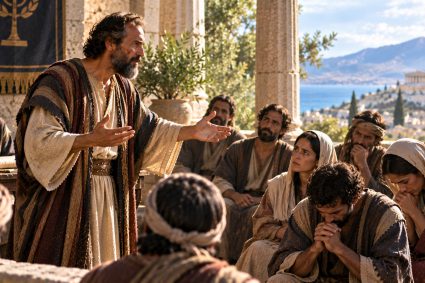
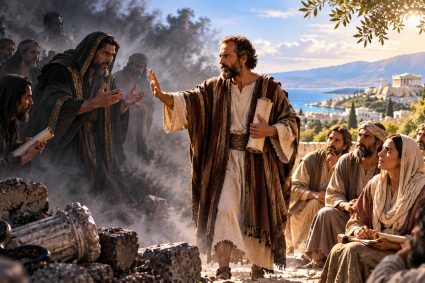
v. 2: Everyone bows to Haman—except Mordecai. Mordecai represents the faithful remnant who bow only to God (cf. Daniel 3).
-
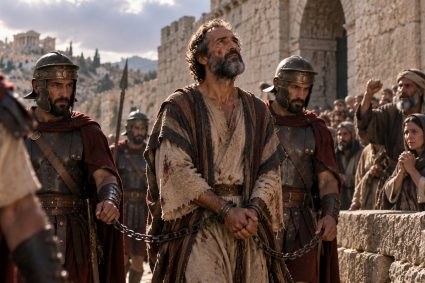
vv. 5–6: Haman is filled with fury and vows to destroy Mordecai and his entire people. Here we see pride’s brutal outcome: no tolerance for dissent. Satan’s rage against God’s faithful (Rev 12:17) plays out in human history.
-
v. 8: Haman claims, “Their laws are different from every other people’s.” God’s distinct commands have always provoked opposition. From the earliest church, believers were persecuted for “not following the crowd” (1 Pet 4:4).
-
vv. 9–14: The decree of annihilation is prepared and sealed with the king’s signet. A state-sponsored genocide against God’s people—a prophetic echo of Revelation 13, where the beast’s image kills all who refuse worship.
-
-
Revelation 12:14–17 and 13:15: End-Times Parallels
-
Rev 12:14–17:
-
Woman = God’s people
-
Dragon = Satan
The woman is persecuted but divinely protected. The dragon rages against the remnant “who keep God’s commandments and hold fast to the testimony of Jesus.” Mordecai’s steadfastness anticipates the remnant’s endurance under cosmic persecution.
-
-
Rev 13:15:
An image of the beast is set up, and those who refuse to worship it are killed. Haman demanded honor and unleashed death upon refusal—just as the end-time system executes those who refuse allegiance.
-
-
Parallels in Ezekiel 28, Isaiah 14, and Matthew 4
-
Ezek 28:12–17: Lucifer, full of wisdom and beauty, is ruined by pride.
-
Isa 14:12–15: “I will ascend above the stars of God…” Satan doesn’t just seek power, but worship—just like Haman, who demands to be the center of loyalty.
-
Matt 4:8–10: Satan offers Jesus all the kingdoms in exchange for worship. Jesus resists; the contrast between humility and coercive pride is stark.
-
-
Recurring Pattern in the Great Conflict
Spiritual Conflict Historical Foil End-Time Parallel Faithfulness to God Mordecai refuses to bow The remnant keeps God’s commands Pride demands worship Haman demands homage The beast demands worship Persecution Haman plots genocide Death-threat under Rev 13 Divine deliverance Esther intercedes Christ intercedes for His people Judgment reversed Haman is executed God judges Babylon -
Connecting Theology: The True Redeemer vs. the False Accuser
-
Boaz redeems Ruth—out of love, in righteousness.
-
Jesus redeems us—by grace, through sacrifice.
-
Haman claims the right to kill God’s people—without mercy.
-
Satan claims dominion over the world—without justice.
Only the One who pays the price (Christ) has the right to rule.
-
-
The Spiritual Climate of Our Day
We live in a world where loyalty to God once again “stands out”—Sabbath-keeping, biblical values, and resistance to moral compromise. The great test doesn’t begin when the pressure peaks; it starts now:-
How do I handle pressure at school, among friends, or at work?
-
What feeds my mind—truth or conformity?
-
………………………………………………………………….
📖 Answers to the Questions
📌 Question: What parallels do you see between Esther 3 and Revelation 12–13?
-
Claim to power: Haman demands honor and submission—just like Satan in Revelation. Both react violently when worship is refused.
-
Target: Mordecai and God’s people—a minority refusing worldly bowing. In Revelation, the remnant refuses the beast.
-
Decree: In both cases, an official death sentence is issued against God’s faithful.
-
Motive: Pride, self-deification, and lust for power drive both adversaries.
📌 Question: How does the description of the remnant in Revelation resemble God’s people in Esther’s time?
-
Few in number but great in faith: The remnant is small yet steadfast, like the Jews in Persia.
-
Persecution as proof of faithfulness: Refusal to conform endangers them—but reveals their loyalty.
-
Divine intervention: Just as Esther intercedes, God protects His people despite overwhelming odds.
📌 Question: What do small tests reveal about your faith?
If I compromise on honesty, Sabbath-keeping, patience, or forgiveness in everyday matters, will I stand firm when my very life is at stake? Character is formed in small tests, not only in grand choices—it’s there that true growth shows.
………………………………………………………………….
✨ Spiritual Principles
-
God’s people will always be a minority—but never powerless.
-
Pride and worship are central themes in the cosmic battle.
-
True faithfulness shows itself in hidden, everyday obedience.
-
God works through ordinary people who honor Him above any earthly power.
-
The conflict begins in the heart before it erupts into crisis.
………………………………………………………………….
🧩 Application for Daily Life
-
Vigilance in the small things: How do I react when honesty costs me? When I must explain my faith? When I face rejection?
-
Courage to stand apart: Mordecai stood tall, even isolated. Am I ready to stand for my convictions, even if it’s unpopular?
-
Faithfulness in secret: Only those who prove faithful in daily, hidden obedience will endure the great trials—in family, work, and friendships.
-
Keep Jesus at the center: He is our “Boaz”—the Redeemer who frees us and sustains us through every test.
………………………………………………………………….
✅ Conclusion
Haman is not merely a historical foe of Israel—he reflects Satan’s stance in the last days. The mechanisms remain the same: deception, pride, demand for worship, destruction for refusal. Yet Mordecai stands as a model for all who put God above everything else. Revelation 13 is not merely a dark future vision, but a wake-up call: now is the time to be faithful in the small things. Only those who stand firm today will endure tomorrow’s trials.
………………………………………………………………….
💭 Thought of the Day
“Character is formed in times of grace, not only in times of crisis.”
Remain faithful to God when no one is watching, and you will recognize Him when everyone turns away.
………………………………………………………………….
✍️ Illustration – The Quiet Resistance
On the edge of a small European town lived 22-year-old Ruben, a business-informatics student—quiet, resolute. What set him apart was nearly invisible until you looked closer: he never spoke ill of others, refused to cheat on exams, and always helped classmates—yet declined weekend activities that clashed with his convictions. And he kept the Sabbath.
In a society demanding conformity—in digital life, politics, or consumption—Ruben seemed out of step. His university introduced a mandatory ethics module to teach “new-order values,” ostensibly about diversity and progress. Unofficially, anyone not aligning was subtly ostracized.
Ruben felt it. Class exercises increasingly required scenarios that violated his conscience. When he presented on genuine unity rooted in truth and conscience, the room fell silent. Professor Arnstein, sharp and poised, observed him closely.
Days later, Ruben was summoned for a “counseling session”—polite but perilous. Arnstein asked strategic questions: “Would you forsake certain religious rituals for the common good?” “What if your faith was deemed divisive?” Ruben answered honestly. He sensed it wasn’t just about a grade—it was a test of loyalty.
Afterward, classmates ignored him. Anonymously, a tutor gave him a poor evaluation. Friends drifted away. Ruben realized a larger battle was at play—not only at the university but in society. Standing for convictions that transcend trends and polls made life uncomfortable.
Then came exam week. The ethics exam was scheduled on Saturday. Ruben politely requested an alternative date—he had done so before without issue. This time, they refused: “The module is uniformly mandatory.” He insisted on honoring the Sabbath and was barred.
An op-ed appeared on the campus portal: “Fanatics Among Us?” Though anonymous, it was clearly about Ruben. He “threatened the common good” and was “unwilling to integrate,” believing in “commands above social consensus.” A few quietly supported him, but they were few and silent.
That night, Ruben read Mordecai’s story and Revelation 13: “…so that all who refused to worship the beast’s image would be killed.” He felt no anger—only a deep peace.
In the weeks that followed, Ruben lived unchanged: volunteering, helping peers, and standing firm. Some noticed the serenity in his eyes. His former friend Lukas, ambitious and loud, approached him one evening: “How can you be so calm when everything’s against you?”
Ruben smiled: “Because I belong to a King who reigns over every kingdom—even if it doesn’t look that way now.”
Lukas fell silent—and returned the next day, and then regularly. Six months later, Lukas stood with Ruben in a small church outside town. He wanted to see if this Jesus was really alive. Ruben had won no awards or public praise, but he had kept something no one could take: faithfulness. In that faithfulness, the light shone ever brighter—quietly, clearly, irresistibly.
At the edge of the world, amid a system that claimed to be everything, one young man believed in something greater than success, power, or applause. And his story was just beginning.

More Stories