





🌿 Traces of Creation – Discoveries from Nature
🦋 Series 2: Transformation and Order – What Insects Teach Us
👁️ Episode 6 – Seeing, Smelling, Feeling
🧠 Senses Beyond Our Imagination
🌐 Introduction: Perception Is Not the Same for Everyone
We perceive the world through our senses and often take this perception for granted.
Seeing, hearing, smelling, feeling — these seem sufficient for orientation and survival.
Yet insects show that perception can go far beyond our experience.
They detect stimuli that we cannot see, cannot smell, and cannot even imagine.
And they use this information with a precision
that can determine life or death.
What does it mean to experience a world
larger than our senses?
👁️ 1. Seeing Without Eyes as We Know Them
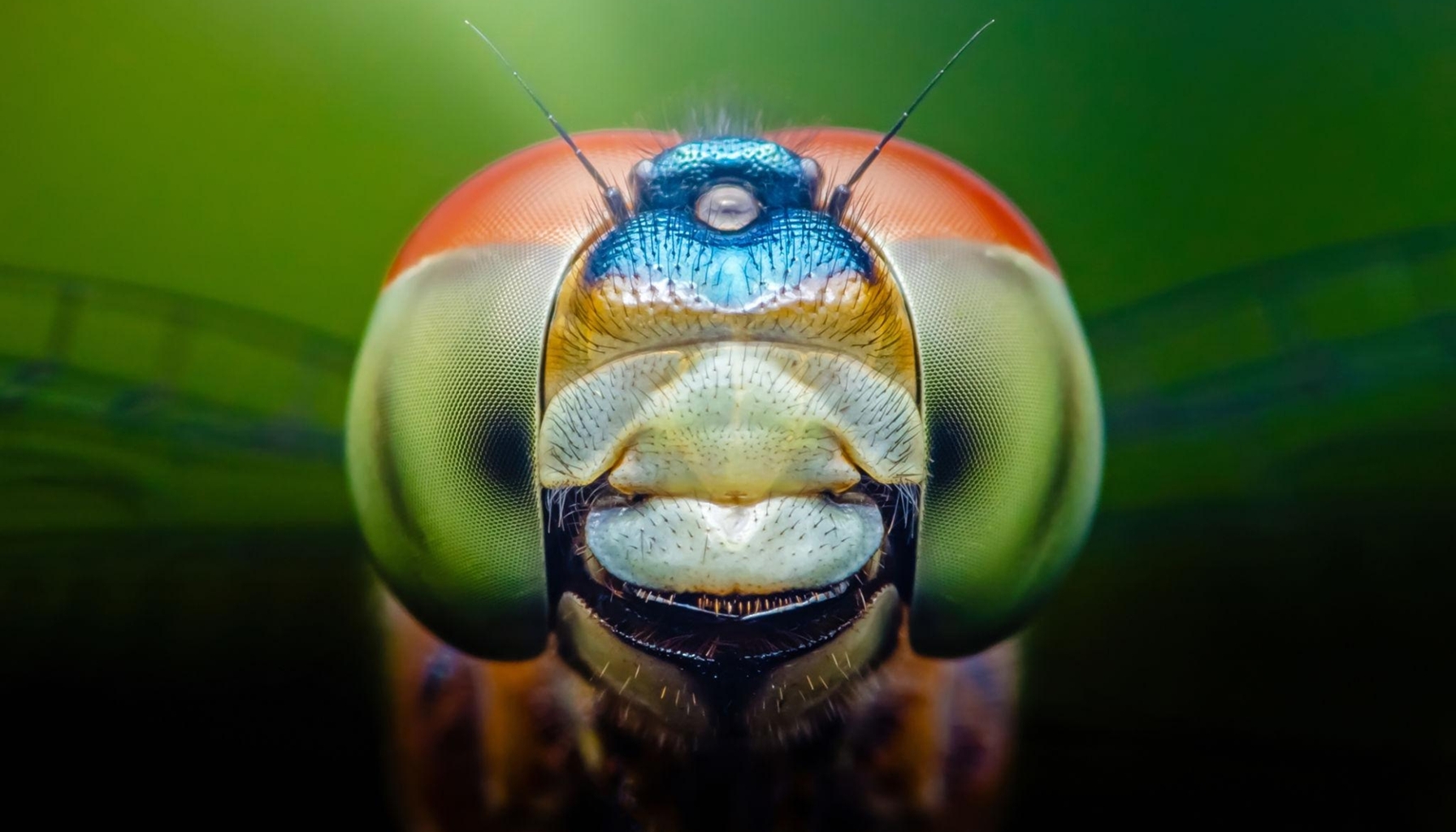
Many insects possess compound eyes,
made up of hundreds or thousands of tiny individual eyes.
These eyes do not provide a sharp image like human vision.
Instead, they detect:
🔹 tiny movements
🔹 changes in light
🔹 directions and patterns
For an insect, movement is often more important than detail.
An approaching enemy is recognized immediately —
long before we would notice it.
This kind of vision is not inferior,
but differently designed.
🌈 2. Colors and Light We Cannot See
Many insects can see ultraviolet light.
Flowers that appear to us as a single color
display clear patterns in the UV spectrum.
These patterns:
🔹 guide insects to nectar
🔹 facilitate pollination
🔹 save energy
The plant sends a signal
perfectly matched to the receiver.
Without this interaction,
many ecological processes would fail.
👃 3. Smelling with the Whole Body
The sense of smell in insects is extremely refined.
They detect chemical substances in the tiniest amounts.
Ants recognize:
🔹 nestmates
🔹 enemies
🔹 pathways
through scent signatures.
Male moths can detect female pheromones
from kilometers away —
at concentrations impossible for us to measure.
Here, smell is not an extra feature,
but a central navigation system.
📡 4. Feeling Without Touching
Insects often “feel” their environment
without directly touching it.
Tiny sensory hairs respond to:
🔹 air movements
🔹 vibrations
🔹 minimal tremors
A spider — strictly speaking not an insect, but comparable —
perceives through its web information
that gives it a precise picture of prey or danger.
Insects also use vibrations
to combine communication and orientation.
🔄 5. Perception as an Integrated System
No sense works in isolation.
Sight, smell, and touch
are integrated within the nervous system
and immediately translated into action.
An insect:
🔹 does not analyze
🔹 does not hesitate
🔹 does not delay
It reacts instantly —
and usually correctly.
This speed is not accidental,
but the result of precise coordination.
⚡ 6. Reliable from the Very Beginning
As with all the systems previously considered,
the same question arises here:
When is this learned?
The answer is once again clear:
👉 It is not learned.
A newly hatched insect:
🔹 recognizes relevant stimuli
🔹 reacts appropriately
🔹 avoids danger
Mistakes would be fatal.
Therefore, perception must function from the very beginning.
📏 7. Why Our Senses Are Not the Measure of Everything
We tend to regard our perception
as the standard for reality.
But the world is greater than our horizon of experience.
Insects live in a reality
that we can only understand indirectly.
This insight calls for humility:
Not everything that is real
is immediately accessible to our senses.
📊 8. A Rational View of Perception
In technical systems, one principle applies:
Sensors must fit their task.
Too much information overwhelms.
Too little information endangers.
The senses of insects are neither maximal
nor minimal —
they are optimal.
This precise suitability points to order,
not random equipment.
✝️ 9. The Christian Perspective: Measure and Purpose
The Christian view of creation
emphasizes purpose and proportion.
Insects do not perceive everything,
but rather
what they need for life.
This purposeful design
points to an order
in which nothing is unnecessary
and nothing is insufficient.
Not as proof,
but as an interpretation
of what we observe.
💡 10. What the Senses of Insects Teach Us
They teach us that:
🔹 reality is greater than our perception
🔹 function determines design
🔹 limits are part of order
Perhaps they also remind us
that understanding begins
when we question our own standards.
🌌 Final Thought
An insect moves safely through a world
that is largely invisible to us.
Not by chance.
Not through trial and error.
But through a perception
perfectly matched to its task.
Whoever takes this different reality seriously
can discover, even in the senses of insects,
traces of creation.
