

📅 May 12, 2025
📖 DAILY BIBLE READING
✨ Genesis 26 – God’s Promise, Protection, and Blessing for Isaac Amid Distress
══════════════════════════════════════════════
📜 Bible Text – Genesis 26 (KJV)
1 And there was a famine in the land, beside the first famine that was in the days of Abraham. And Isaac went unto Abimelech king of the Philistines unto Gerar.
2 And the Lord appeared unto him, and said, Go not down into Egypt; dwell in the land which I shall tell thee of:
3 Sojourn in this land, and I will be with thee, and will bless thee; for unto thee, and unto thy seed, I will give all these countries, and I will perform the oath which I sware unto Abraham thy father;
4 And I will make thy seed to multiply as the stars of heaven, and will give unto thy seed all these countries; and in thy seed shall all the nations of the earth be blessed;
5 Because that Abraham obeyed my voice, and kept my charge, my commandments, my statutes, and my laws.
6 And Isaac dwelt in Gerar:
7 And the men of the place asked him of his wife; and he said, She is my sister: for he feared to say, She is my wife; lest, said he, the men of the place should kill me for Rebekah; because she was fair to look upon.
8 And it came to pass, when he had been there a long time, that Abimelech king of the Philistines looked out at a window, and saw, and, behold, Isaac was sporting with Rebekah his wife.
9 And Abimelech called Isaac, and said, Behold, of a surety she is thy wife; and how saidst thou, She is my sister? And Isaac said unto him, Because I said, Lest I die for her.
10 And Abimelech said, What is this thou hast done unto us? one of the people might lightly have lien with thy wife, and thou shouldest have brought guiltiness upon us.
11 And Abimelech charged all his people, saying, He that toucheth this man or his wife shall surely be put to death.
12 Then Isaac sowed in that land, and received in the same year an hundredfold: and the Lord blessed him.
13 And the man waxed great, and went forward, and grew until he became very great:
14 For he had possession of flocks, and possession of herds, and great store of servants: and the Philistines envied him.
15 For all the wells which his father’s servants had digged in the days of Abraham his father, the Philistines had stopped them, and filled them with earth.
16 And Abimelech said unto Isaac, Go from us; for thou art much mightier than we.
17 And Isaac departed thence, and pitched his tent in the valley of Gerar, and dwelt there.
18 And Isaac digged again the wells of water, which they had digged in the days of Abraham his father; for the Philistines had stopped them after the death of Abraham: and he called their names after the names by which his father had called them.
19 And Isaac’s servants digged in the valley, and found there a well of springing water.
20 And the herdmen of Gerar did strive with Isaac’s herdmen, saying, The water is ours: and he called the name of the well Esek; because they strove with him.
21 And they digged another well, and strove for that also: and he called the name of it Sitnah.
22 And he removed from thence, and digged another well; and for that they strove not: and he called the name of it Rehoboth; and he said, For now the Lord hath made room for us, and we shall be fruitful in the land.
23 And he went up from thence to Beersheba.
24 And the Lord appeared unto him the same night, and said, I am the God of Abraham thy father: fear not, for I am with thee, and will bless thee, and multiply thy seed for my servant Abraham’s sake.
25 And he builded an altar there, and called upon the name of the Lord, and pitched his tent there: and there Isaac’s servants digged a well.
26 Then Abimelech went to him from Gerar, and Ahuzzath one of his friends, and Phichol the chief captain of his army.
27 And Isaac said unto them, Wherefore come ye to me, seeing ye hate me, and have sent me away from you?
28 And they said, We saw certainly that the Lord was with thee: and we said, Let there be now an oath betwixt us, even betwixt us and thee, and let us make a covenant with thee;
29 That thou wilt do us no hurt, as we have not touched thee, and as we have done unto thee nothing but good, and have sent thee away in peace: thou art now the blessed of the Lord.
30 And he made them a feast, and they did eat and drink.
31 And they rose up betimes in the morning, and sware one to another: and Isaac sent them away, and they departed from him in peace.
32 And it came to pass the same day, that Isaac’s servants came, and told him concerning the well which they had digged, and said unto him, We have found water.
33 And he called it Shebah: therefore the name of the city is Beersheba unto this day.
34 And Esau was forty years old when he took to wife Judith the daughter of Beeri the Hittite, and Bashemath the daughter of Elon the Hittite:
35 Which were a grief of mind unto Isaac and to Rebekah.
══════════════════════════════════════════════
🟦 Introduction
Chapter 26 of the Book of Genesis is the only chapter that fully focuses on the patriarch Isaac. Here we meet Isaac during a time of economic hardship, political tension, and spiritual testing. Despite famine, conflict with the Philistines, and personal fears, God reveals Himself as faithful, blessing, and present. Isaac’s journey shows us a life lived between divine calling and earthly challenges. This chapter stands as a testimony to God’s faithfulness to His covenant — across generations.
══════════════════════════════════════════════
🟨 Commentary
1. God’s Promise to Isaac (vv. 1–5)
The famine puts Isaac in a state of great uncertainty. But instead of fleeing to Egypt (as Abraham once did), God commands him to remain in the land. Isaac receives the same promise as Abraham: land, descendants, and a blessing for all nations. This is not merely a repetition, but a confirmation that God’s covenant is not bound to individuals but to His promises. Notably, the blessing upon Isaac comes because of Abraham’s obedience (v. 5), showing how the faithfulness of one generation bears fruit in the next.
2. Isaac’s Fear and Half-Truth (vv. 6–11)
In Gerar, Isaac resorts to a familiar tactic: claiming Rebekah is his sister out of fear for his life. This mirrors Abraham’s actions in Egypt and with Abimelech. The father’s failure repeats in the son. Yet Abimelech discerns the truth and confronts Isaac. Strikingly, the pagan king appears more morally upright than the man of faith. Still, God protects Isaac and even uses the pagan ruler to safeguard him.
3. God’s Blessing Despite Opposition (vv. 12–16)
Isaac stays in the land and receives extraordinary material blessings: a hundredfold harvest and great wealth. Yet this visible blessing provokes envy—a recurring pattern. The Philistines begin to sabotage him by filling in the wells. Blessing and opposition often coexist—this principle remains true even today. Abimelech, recognizing Isaac’s growing power, asks him to leave.
4. Wells, Conflict, and God’s Expansion (vv. 17–22)
Isaac moves to the valley of Gerar and reopens his father’s wells—an act of honoring both spiritual and material inheritance. But conflicts arise with the local herdsmen. Isaac relinquishes disputed wells and moves on. Peace comes only at the third well, Rehoboth: “Now the Lord has made room for us.” This section teaches humility, patience, and peace-making. Isaac doesn’t fight for territory but trusts that God will provide space.
5. God’s Renewed Appearance and Isaac’s Worship (vv. 23–25)
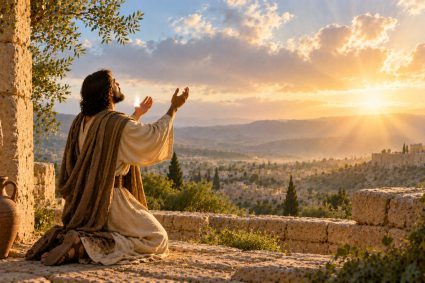
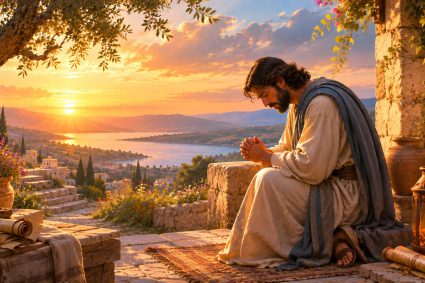
In Beersheba, God appears to Isaac again, reaffirming His promise and giving courage: “Fear not!” Isaac responds with worship—he builds an altar, calls on God’s name, settles there, and his servants dig a well. The order is spiritually significant: worship comes first, then dwelling and working. Isaac’s spiritual life forms the core of his daily living.
6. Peace Treaty with Abimelech (vv. 26–33)
Abimelech seeks a treaty with Isaac, recognizing: “The Lord is with you.” Isaac’s faith and God’s blessing have become visible. Former tensions are resolved with a meal and an oath. Isaac becomes a peacemaker. Once again, spiritual maturity leads to material blessing: a new well with living water is found.
7. Family Disappointment (vv. 34–35)
The chapter ends on a somber note: Esau’s choice of wives brings “grief of mind” to Isaac and Rebekah. Despite all the outward blessings, family tension remains—a foreshadowing of the future division between Esau and Jacob. This reflects a reality of life: God’s blessing does not erase human failures or challenges.
══════════════════════════════════════════════
🟩 Summary
In Genesis 26, we see Isaac as a patriarch standing in God’s promises yet also facing fear, envy, and conflict. God renews the covenant made with Abraham, and Isaac experiences both spiritual and material blessings. Still, he must endure opposition and claim his space with patience. The episodes with the wells symbolize the struggle for space and for spiritual sustenance. Ultimately, God leads him to peace, worship, and growth.
══════════════════════════════════════════════
🟥 Message for Today
-
God’s promises continue — even across generations. What God begins, He will also bring to fulfillment — even through difficult times.
-
Fear can lead to wrong decisions, but God’s grace endures. Isaac isn’t always exemplary, yet God’s protection remains over his life.
-
Blessing often invites envy and resistance. But those who, like Isaac, walk patiently will see God open new paths.
-
Peace begins with faith and humility. Isaac’s willingness to avoid strife leads to space, growth, and peace.
-
A life in God’s presence leads to worship and influence. People notice when God’s hand is on our lives — and that can open doors for reconciliation and testimony.
~~~~~ 📚 ~~~~~
📆 May 11–17, 2025
📆 WEEKLY SPIRIT OF PROPHECY READING
📖 Ellen G. White │ Patriarchs and Prophets – Chapter 5
✨ Cain and Abel Tested
📖 Read online here
══════════════════════════════════════════════
🟦 Introduction
The story of Cain and Abel is more than an account of the first murder. It’s a portrait of two fundamentally different attitudes toward God—faith versus self-righteousness, obedience to one’s own works. In their contrast we see the two great camps that will persist throughout salvation history: those who accept God’s way of redemption through the blood of Jesus—and those who think they can come to God without sacrifice, humility, or a Savior. The tragic escalation between the brothers reveals the consequences of a religion without heart, without grace, and without genuine repentance.
══════════════════════════════════════════════
🟨 Commentary
- Two Brothers, Two Hearts – Cain’s Pride, Abel’s Faith
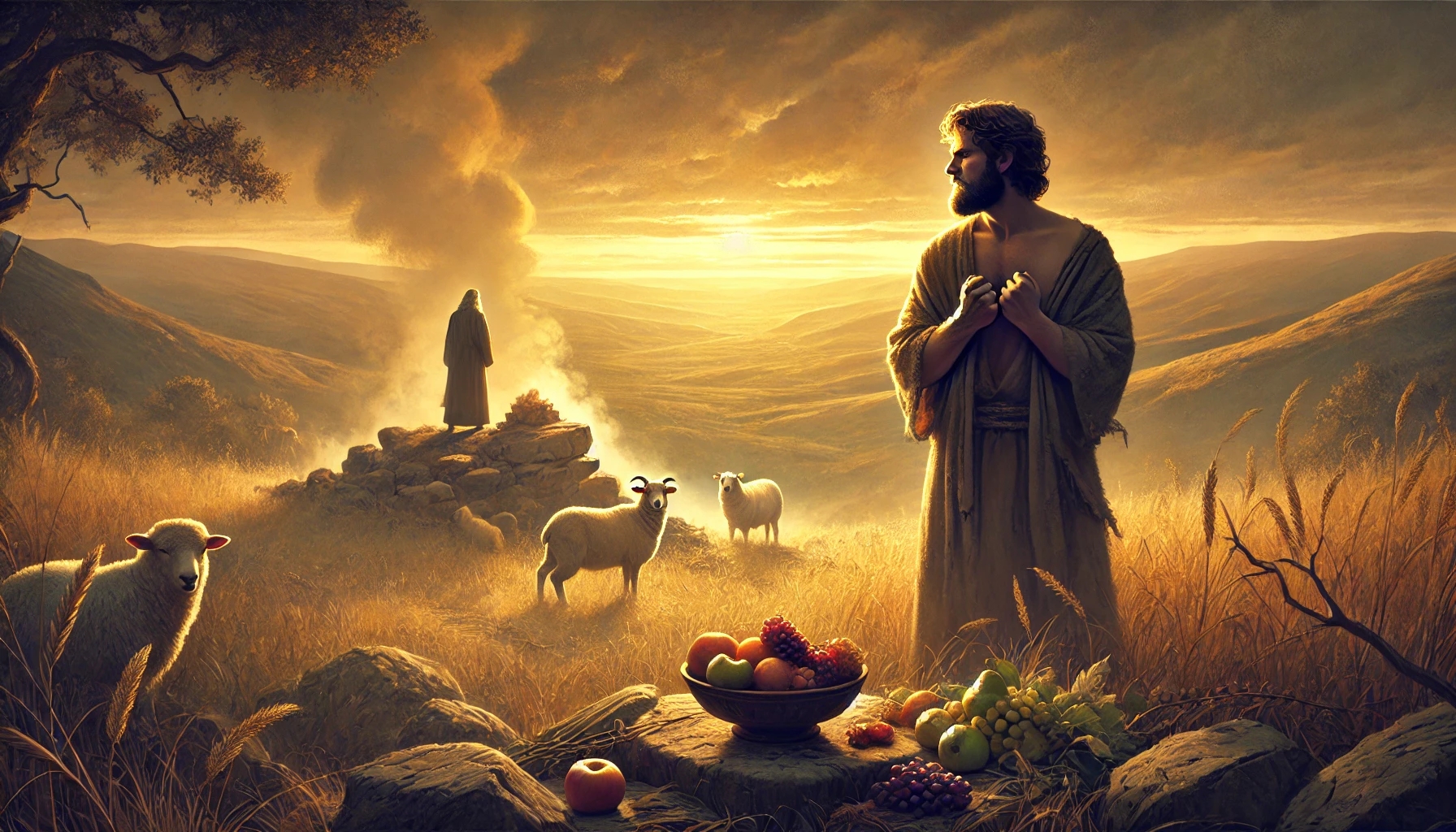
Abel saw God’s law as grace and order, offering an animal sacrifice in faith for redemption. Cain treated sacrifice as mere duty, refused the blood offering, and sought approval through his own works. - The Difference in the Offering—and in the Attitude
Both built altars and offered gifts. But God looked at the heart: Abel’s offering was accepted—through faith (Heb. 11:4); Cain’s was rejected—for unbelief and rebellion. Cain rejected God’s way and tried to justify himself by performance. - Faith Shows Itself in Obedience
Cain’s offering was externally correct but internally empty. True worship requires obedience born of faith, subordinating us to God’s will. Abel recognized his sin and need for atonement—Cain did not. - God’s Warning and Cain’s Rejection
God speaks kindly to Cain, warning him of sin (Gen. 4:6–7). Cain refuses to submit and allows jealousy and anger to grow. The brother who shames him by obedience becomes his enemy. - The Murder of Abel—and the Spiritual Line
Cain kills Abel—not in self-defense, but out of hatred for his righteousness. This is the first act of spiritual persecution: the righteous pursued by the unrighteous—a pattern repeated through history. Abel dies as a witness of faith—his testimony still speaks (Heb. 11:4). - God’s Judgment and Mercy
Cain is held accountable: he lies and shows no remorse. God’s judgment follows—cursed ground, restless wandering, exile. Yet God does not destroy him; He gives him a chance to repent, which Cain never takes. - Cain as Father of Rebellion
Unrepentant, Cain becomes the progenitor of a godless culture. His example shapes generations—up to the Flood. God’s decision not to slay the first murderer at once shows the full scope of human defiance. - The Great Conflict—Until the End of Time
Cain and Abel exemplify two spiritual camps: those who trust in Christ’s blood and those who think they can save themselves. This chapter foreshadows the cosmic struggle between light and darkness, truth and error, grace and lawlessness. The story repeats in new forms until Christ returns.
══════════════════════════════════════════════
🟩 Summary
Cain and Abel are two brothers of the same origin but with completely different paths. Abel brings the sacrifice God demands and is counted righteous by faith; Cain rejects God’s instructions and, in envy, kills his brother. Their story mirrors humanity: two modes of worship, two attitudes toward God’s Word—and two very different outcomes. Abel’s blood calls for justice; Cain’s rebellion brings God’s judgment. Yet throughout, God’s patience and mercy remain visible—even toward the murderer.
══════════════════════════════════════════════
🟥 Message for Us Today
- True faith produces obedience. Faith without obedience is dead. Abel obeyed and was justified—this remains true.
- We cannot impress God by our works. Those who come without Christ’s blood are rejected like Cain—not for lack of effort, but out of pride.
- God’s way is non-negotiable. He has ordained the path of redemption through Jesus’ blood. Any attempt to bypass it leads to ruin.
- God’s warnings are an expression of love. Cain was warned. Today God still calls sinners to repentance before judgment falls.
- Faith is a choice. Abel and Cain faced the same truth—only one embraced it. Faith is not accidental but obedience in trust.
- The conflict between light and darkness endures. Followers of Christ will face rejection, resistance, even hatred. But like Abel, we can know: God sees, God remembers, and God will bring justice.