

🟦 Introduction
In Lesson 13, Paul leads us to the solemn conclusion of 2 Corinthians. With the words about the grace of Jesus Christ, the love of God, and the fellowship of the Holy Spirit, he directs our attention to the united work of the triune God. This lesson shows that our salvation does not arise from human achievement but from God’s grace, love, and presence. The Father loves us, the Son redeems us, and the Holy Spirit leads us into living fellowship with God and with one another. In this way, the church is invited to make God’s character visible through unity, peace, and mutual love. Thus, the letter ends not merely with a blessing, but with a profound invitation to live each day out of the fullness of God.
✉️ FIRST AND SECOND CORINTHIANS
🙏 Lesson 13: Grace, Love, and Fellowship
💎 13.1 The Grace of Jesus
✝️ The grace of Jesus makes poor sinners rich in God’s love
📖 1. Introduction
At the end of 2 Corinthians, Paul once again leads the church back to the center of the gospel: the grace of Jesus Christ. This is remarkable because this letter has dealt with many serious themes: suffering, misunderstandings, false teachers, problems within the church, repentance, ministry, and spiritual authority. Yet Paul does not end the letter with human achievement, moral pressure, or merely an appeal for improvement, but with grace. In doing so, he shows that the church can truly be renewed only when it continually returns to Christ. The grace of Jesus is not only the beginning of the Christian life, but also its daily strength, its hope, and its completion. Whoever understands this grace recognizes that Christ gave everything so that lost human beings might become rich in forgiveness, life, and eternal fellowship with God.
📜 2. The Biblical Foundation
Paul begins 2 Corinthians with the greeting of blessing:
“Grace to you and peace from God our Father and the Lord Jesus Christ!”
2 Corinthians 1:2
At the end he writes:
“The grace of the Lord Jesus Christ and the love of God and the fellowship of the Holy Spirit be with you all!”
2 Corinthians 13:13
Earlier, Paul had already described the grace of Jesus in particularly profound terms:
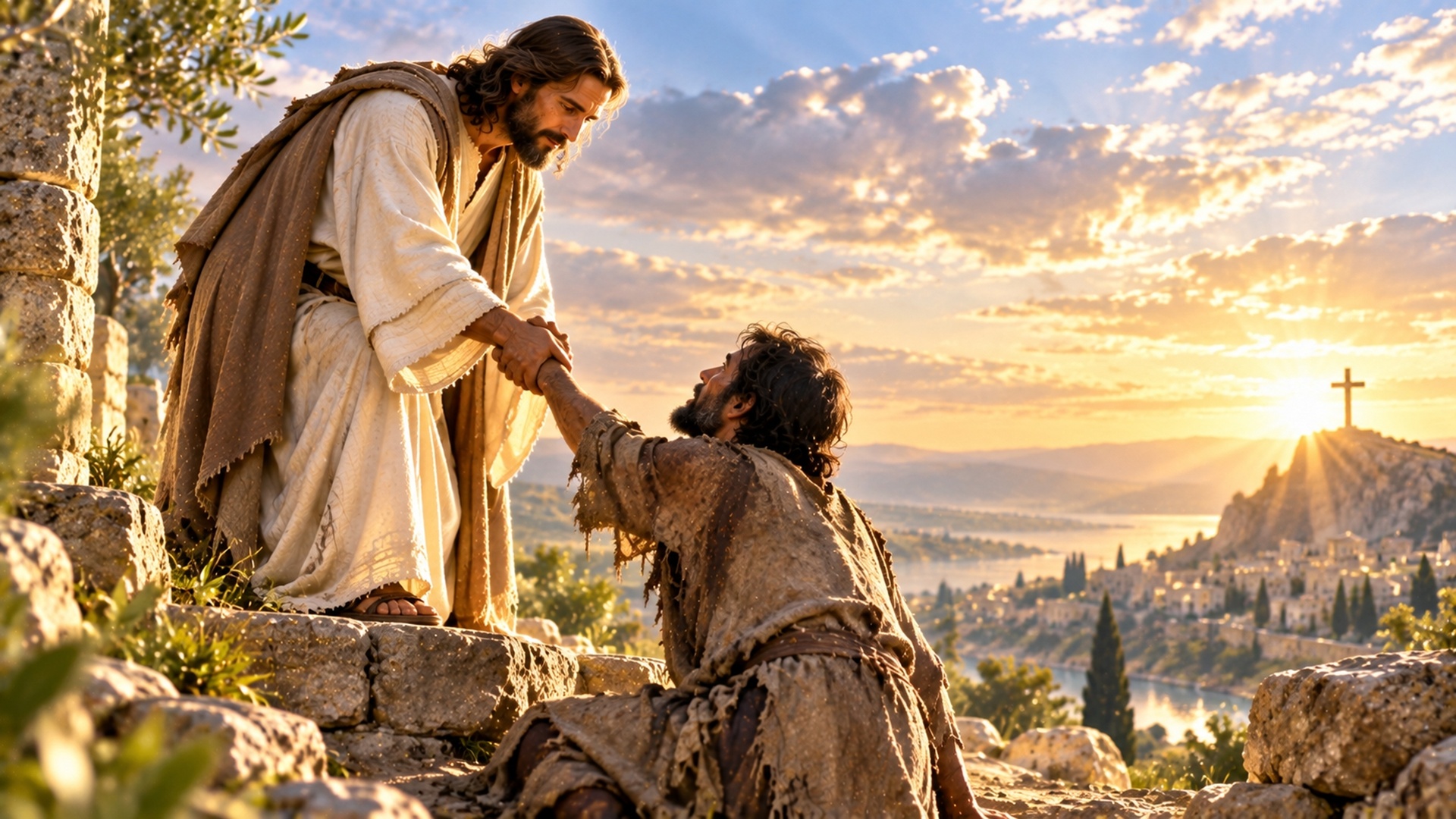
“For you know the grace of our Lord Jesus Christ, that though He was rich, yet for your sakes He became poor, so that you through His poverty might become rich.”
2 Corinthians 8:9
Philippians 2 also reveals this voluntary humiliation of Christ:
“He humbled Himself and became obedient to the point of death, even the death of the cross.”
Philippians 2:8
These texts show that the grace of Jesus is not superficial kindness, but the saving self-giving of the Son of God, who left His heavenly glory, became human, suffered, and died so that through Him we might receive life.
🌍 3. Connection to Our Time
People today also need more than religious information, moral exhortation, or outward improvement. We need grace because we cannot stand before God on the basis of our own merits. Many carry guilt, failure, inner poverty, shame, or the feeling that they are spiritually inadequate. The grace of Jesus speaks directly into this reality: Christ does not give us what we would have deserved, but what He has obtained for us out of love. It gives forgiveness instead of condemnation, hope instead of despair, and new life instead of mere self-improvement. Therefore, the grace of Jesus remains today the only foundation upon which a person can truly find peace with God.
💡 4. Central Message of the Lesson
👉 The grace of Jesus means that Christ left His heavenly glory, became poor, and gave Himself so that guilty and spiritually poor human beings might become rich through Him in forgiveness, hope, and eternal life.
✝️ 5. Theological Focus
The theological focus of this lesson lies in Christ’s voluntary self-humiliation. Paul says that Jesus was rich and became poor for our sake. This statement leads us deeply into the mystery of the incarnation and redemption. Christ was not poor because He lacked anything. He was rich in divine glory, in eternal fellowship with the Father, and in the perfect purity of heaven. Yet He chose to leave that glory and enter our fallen world.
The poverty of Jesus therefore means far more than material need. It includes His incarnation, His lowliness, His rejection, His suffering, and His death on the cross. The eternal Son of God took on our human nature, lived under the conditions of a world marked by sin, and ultimately bore the guilt of humanity. He became poor so that we might become rich. This is the exchange of grace.
This exchange stands at the heart of the gospel. We were poor, not only socially or outwardly, but spiritually. We had no righteousness of our own, no power to save ourselves, and no claim to eternal life. Christ, however, was rich in glory, purity, life, and divine fullness. In His grace, He took our poverty upon Himself so that we might share in His riches.
Yet we must not misunderstand grace as cheap indulgence. Grace does not mean that sin is unimportant. The cross itself reveals how serious sin is. If forgiveness were easy and without consequence, Christ would not have needed to die. The grace of Jesus is costly because it cost Him everything. For us it is a gift, but for Christ it meant humiliation, pain, the cross, and death.
Paul emphasizes this grace not only as a doctrine but as a power for the life of the church. The Corinthians needed this grace because they were caught in conflict, pride, impurity, false standards, and spiritual confusion. Paul knew that only the grace of Christ can truly change such a heart. Legalistic harshness alone cannot renew people, and human enthusiasm cannot carry us through guilt and weakness. But the grace of Jesus produces forgiveness, humility, and renewed devotion.
This grace is also closely connected with love. Jesus was not forced to become poor. He gave Himself voluntarily. His grace is an expression of His love. When Paul mentions at the end of the letter the grace of Jesus, the love of God, and the fellowship of the Holy Spirit, he shows that salvation comes from the heart of the triune God. The grace of Jesus reveals the love of God and leads us through the Holy Spirit into living fellowship.
Therefore, the grace of Jesus is not merely a gift that we receive once at the beginning. It remains the atmosphere of the entire Christian life. We live by grace, grow by grace, serve by grace, and are preserved by grace. When Paul repeatedly begins and ends with grace, he reminds the church that it never outgrows Christ. The most mature Christian remains a person who depends daily upon the grace of Jesus.
The theological core is this: Jesus Christ, the rich Lord of glory, became poor for our sake so that through His poverty we might become rich. This richness consists first of all not in earthly possessions, but in reconciliation with God, forgiveness of sins, acceptance as children of God, the hope of resurrection, and eternal fellowship with Christ. This is the grace of Jesus.
🌟 6. Spiritual Deepening
This lesson invites us to reflect more slowly and reverently on the depth of the grace of Jesus. Christians often speak so frequently about grace that the word becomes familiar and no longer sounds overwhelming. Paul, however, wants us to marvel. Christ was rich and became poor. The Lord of heaven entered the lowliness of earth. The Pure One entered a world of sin. The Creator allowed Himself to be despised by His creatures. The Prince of Life entered death.
When we ask what we would have deserved, the answer leads us to the truth about our condition. Before God, we cannot save ourselves through good intentions, religious habits, or individual good deeds. Our words, thoughts, decisions, and failures to act reveal that we need grace. Even the best within us is not pure enough to become the foundation of our salvation before God’s holiness. Therefore, the question of what we deserve is not a pleasant one, but it is a necessary question.
Yet the grace of Jesus does not stop with this diagnosis. It shows us not only what we would have deserved, but what God offers us instead. He offers forgiveness. He offers reconciliation. He offers a new heart. He offers the righteousness of Christ. He offers the hope of eternal life. Grace means that God does not deal with us according to the measure of our guilt, but according to the measure of His Son’s self-giving.
This changes the way we think about God. Some people imagine God primarily as strict, distant, or reluctant to show grace. But Paul shows us Jesus, who became poor so that we might become rich. In Christ, we do not see a God who forgives only because He is forced to do so, but a God who Himself opens the way of salvation. The grace of Jesus is proof that God does not have to be persuaded to save us, but that God Himself acts on our behalf.
This grace makes us humble. Whoever has truly understood that he lives through Christ can no longer boast before God. Everything we possess spiritually is a gift. Our forgiveness is a gift. Our hope is a gift. Our power to change is a gift. Our calling to serve is a gift. Even our love for Christ is a response to His prior love.
At the same time, grace does not make us passive. It is not an invitation to remain in sin. On the contrary, whoever recognizes what Christ has given for him no longer wants to treat sin carelessly. Costly grace awakens gratitude, love, and obedience. It changes the heart not through fear of punishment, but through the power of a love that overwhelms us. Christ gave Himself for us; therefore, we want to belong to Him.
For the Corinthians, this was particularly important. They had many problems, but Paul does not lead them at the end into self-contempt; he leads them to the grace of Jesus. This is profoundly pastoral. People who need correction require not only clear truth, but also a view of Christ. Without grace, correction can crush. With grace, correction can lead to repentance and renewal.
The grace of Jesus also comforts us in weakness. Paul himself had heard: “My grace is sufficient for you.” This means that grace not only covers past guilt, but also carries us through present weakness. When we do not know how to continue, when we fail, when we feel our limitations, Christ’s grace remains sufficient. It does not always remove us immediately from every difficulty, but it holds us fast and leads us onward.
This grace also makes us generous. The context of 2 Corinthians 8 shows that Paul points to the grace of Jesus as the foundation of Christian generosity. Because Christ became poor for us, we too should learn not to live selfishly. Whoever has been made rich by grace does not cling anxiously to God’s gifts, but asks how his life can become a blessing to others. Grace flows onward.
Therefore, the grace of Jesus is also a power for fellowship. Pride separates; grace unites. Whoever lives by personal achievement compares himself with others, judges them, and constantly defends himself. Whoever lives by grace becomes more merciful because he knows how much mercy he himself needs. A church shaped by the grace of Jesus will not become careless about sin, but it will become patient, healing, and ready for reconciliation.
The grace of Jesus also directs our eyes toward the future. Paul says that through Christ’s poverty we become rich. This richness begins already now, but it will become fully visible only in God’s kingdom. Even now we have forgiveness, peace with God, and the presence of the Holy Spirit. Yet we still await the completion: the resurrection, the new earth, and eternal fellowship with Christ. The grace that carries us now will lead us all the way there.
That is why the letter ends with a blessing. Paul knows that the church cannot stand in its own strength. It needs the grace of Jesus every day. It needs it for repentance, unity, service, suffering, discernment, and hope. What was true for Corinth is also true for us. Without grace, we remain spiritually poor even if we are religiously active. With Christ, however, we become rich even when we are outwardly weak.
This lesson therefore leads us to a personal question: Am I truly living from the grace of Jesus, or am I trying to justify myself before God, before others, and before myself through performance? Grace removes the mask. We may be honest about our guilt and poverty because Christ does not reject us. He became poor in order to make us rich. That is why we may have hope.
🔧 7. Application in Daily Life
Practical Steps:
- Remember every day that your salvation rests not on your performance, but on Christ’s grace.
- Do not bring your guilt before God in self-justification, but in trust in Jesus’ forgiveness.
- Do not allow grace to lead you into carelessness, but into gratitude and obedience.
- Compare yourself less with others and remember that all spiritual life is a gift.
- Treat others with greater mercy because you too stand only by grace.
- Ask Christ to make His grace effective in your heart not merely as a doctrine, but as a transforming power.
- Share God’s gifts generously because Christ gave Himself for you.
- In weakness, hold firmly to the truth that the grace of Jesus is sufficient.
❓ 8. Reflection Question
Where am I still trying to prove my worth before God through my own performance instead of gratefully living from the grace of Jesus?
🌟 9. Concluding Thought
The grace of Jesus is the heart of the gospel and the foundation of every Christian hope. Christ was rich in heavenly glory, yet He became poor for our sake so that through His poverty we might become rich. This richness consists in forgiveness, reconciliation, new life, hope, and eternal fellowship with God. Paul begins and ends 2 Corinthians with grace because the church can stand, grow, and be renewed only through this grace. It does not give us what we would have deserved, but what Christ has obtained for us. Whoever recognizes this grace becomes humble, grateful, loving, and ready to entrust his entire life to Christ.
“For you know the grace of our Lord Jesus Christ, that though He was rich, yet for your sakes He became poor, so that you through His poverty might become rich.”
2 Corinthians 8:9 💎✝️✨
