




✉️ FIRST AND SECOND CORINTHIANS
⚔️ Lesson 12: Dealing with False Teachers
🙌 12.2 Boasting in the Lord
👑 True Proclamation Seeks Not Self-Praise but the Honor of Christ
📖 1. Introduction
In this section, Paul addresses an atmosphere of comparison, boasting, and rivalry. The false teachers in Corinth wanted to commend themselves and appear great by human standards. Paul does not respond by allowing himself to be drawn into the same spirit, but by directing attention to the Lord. If he boasts, it is not in his own greatness, but in what God has done through Christ. For Paul, genuine ministry is not self-promotion, but the proclamation of the gospel. Whoever truly serves Christ does not seek personal glory, but the honor of the Lord.
📜 2. The Biblical Foundation
Paul writes:
“We, however, will not boast beyond measure, but according to the measure of the sphere of activity that God has assigned to us.”
2 Corinthians 10:13
Then he says:
“For we are not overextending ourselves, as though we had not reached you; for we did come as far as you with the gospel of Christ.”
2 Corinthians 10:14
He continues:
“We do not boast beyond measure in the work of others.”
2 Corinthians 10:15
And finally, Paul summarizes the decisive principle:
“But the one who boasts, let him boast in the Lord.”
2 Corinthians 10:17
He adds:
“For it is not the one who commends himself who is approved, but the one whom the Lord commends.”
2 Corinthians 10:18
These verses show that true ministry is not validated by self-praise, but by God’s calling, God’s work, and faithfulness to the gospel of Christ.
🌍 3. Connection to Our Time
Even today, spiritual ministry can easily become burdened by comparison, competition, and self-promotion. People compare churches, preachers, projects, numbers, reach, influence, and recognition. The danger is that Christ moves out of the center and the human being becomes more important than the gospel. Paul reminds us that God’s work must not be evaluated according to human boasting. What matters is not who appears greater, but whether Christ is faithfully proclaimed and whether God is honored through the ministry. A healthy church does not seek the glory of individual people, but rejoices in everything the Lord accomplishes.
💡 4. Central Message of the Lesson
👉 True proclamation does not boast in human beings, but in the Lord, because every genuine fruit of ministry comes from God’s calling, grace, and work.
✝️ 5. Theological Focus
The theological focus of this lesson lies in the question of who receives the glory in ministry. Paul is confronted with false teachers who exalt themselves and judge by human standards. They compare themselves with one another, commend themselves, and seek recognition. Paul calls such an attitude foolish because it directs attention away from God and toward human beings.
Paul does not reject every joy over fruit in ministry. He knows that God has worked through him. He also knows that he was called by Christ and that the gospel reached Corinth through his ministry. But he does not use this fruit as a reason to elevate himself. His boasting remains bound to God.
When Paul says, “The one who boasts, let him boast in the Lord,” he takes up an important Old Testament idea. A person is not to boast in wisdom, strength, or wealth, but in knowing the Lord. True boasting, therefore, is not self-glorification, but praise of God. It means magnifying God’s character, God’s grace, and God’s work.
This makes one thing clear: Christ is the center of ministry. Paul came to Corinth with the gospel of Christ. He did not want to build his own movement, bind people to his personality, or impress them with human rhetoric. His goal was to proclaim Christ as the crucified and risen Lord.
The false teachers, by contrast, worked with human standards. They evaluated ministry according to appearance, influence, recommendations, impressions, and comparisons. Paul shows that such standards are dangerous. They can lead people to appear outwardly impressive while Christ is no longer at the center inwardly. Not every impression of success is evidence of divine calling.
Therefore Paul says: it is not the one who commends himself who is approved, but the one whom the Lord commends. This statement is fundamental. People can present themselves, emphasize their achievements, and exaggerate their impact. But before God, self-promotion does not count; faithfulness does. The Lord knows the motives, the sacrifices, the truth, and the fruit of a ministry.
Paul also speaks of the sphere of activity that God assigned to him. This shows that ministry has a God-given boundary and responsibility. Not every servant must do everything, work everywhere, or compare himself with everyone. God gives tasks, places, gifts, and responsibilities. Faithfulness means fulfilling the assignment God has given, not using the work of others for one’s own glory.
This thought protects against spiritual ambition. When a person derives identity from comparison, he will become either proud or discouraged: proud when he feels greater than others, discouraged when others appear greater. But whoever boasts in the Lord finds peace. He does not have to be greater than others, only faithful in what God has entrusted to him.
The theological core is this: in the kingdom of God, all glory belongs to the Lord. The human being is a servant, not the center. Christ is the content of the proclamation, the source of the fruit, and the standard of genuine approval. Therefore, boasting is right only when it magnifies God and not the human being.
🌟 6. Spiritual Deepening
This lesson speaks directly into a temptation that also affects spiritual people: comparison. We compare gifts, successes, influence, knowledge, recognition, reach, churches, and ministries. Often it begins harmlessly, but it can quickly poison the heart. Gratitude turns into competition, ministry into a stage, and calling into self-assertion.
Paul shows how dangerous this is. The false teachers measured themselves against one another and boasted about themselves. This created an atmosphere in which Christ was no longer at the center, but human beings were. That is precisely what harms the proclamation of the gospel. The gospel says: Christ is everything, and the human being lives by grace. Self-praise says instead: Look at me.
Competitive thinking destroys unity. When servants of God see one another as rivals, the church becomes confused. People begin to form factions, admire personalities, and set ministries against one another. Paul had already addressed this problem in the First Epistle to the Corinthians: some said they belonged to Paul, others to Apollos, and others to Cephas. But Christ is not divided.
Spiritual work can suffer from the same danger today. One church compares itself with another. One preacher compares himself with another. One project measures itself by reach and visibility. One worker feels worthless because his task remains hidden. Another becomes proud because his ministry is publicly recognized. In this way, the heart is distracted from the calling.
Paul brings us back to the right questions: Is Christ being honored? Is the gospel being faithfully proclaimed? Are people being led to God? Is the church being built up? These questions are more important than human recognition. A quiet and faithful ministry can be more valuable before God than a visible ministry driven by the desire for glory.
This does not mean that fruit is unimportant. Paul rejoices in fruit. He even wants the gospel to be carried beyond Corinth. But he sees fruit as God’s work. When God blesses, gratitude should return to God. The servant may rejoice, but he must not draw the glory to himself.
To boast in the Lord means consciously saying: whatever is good comes from God. If people are touched, it is God’s grace. If a sermon helps, it is God’s Spirit. If a church grows, it is God’s work. If a project bears fruit, it is God’s faithfulness. This attitude protects the heart from pride.
But it also protects against discouragement. Whoever constantly measures himself against others easily loses joy. There will always be someone who can do more, sees more, accomplishes more, or receives more recognition. But God does not ask whether we fulfilled someone else’s calling. He asks whether we were faithful in what He gave us.
Paul speaks of the measure of the sphere of activity that God assigned. This is very liberating. God gives everyone a particular place. Some serve visibly, others in hidden ways. Some reach many, others accompany only a few. Some sow, others reap. Some teach, others pray, help, carry burdens, or encourage. When Christ is at the center, no faithful ministry is despised.
This perspective also makes us cautious about self-promotion. In a time when much is publicly displayed and evaluated, the temptation is great to stage spiritual ministry. One wants to prove how successful, important, or blessed one is. But Paul reminds us: self-commendation does not count; what matters is the commendation of the Lord.
This tests our motives. Why do I speak about my ministry? Why do I tell others about successes? Is it for encouragement and God’s glory, or am I seeking admiration? Do I rejoice when others bear fruit, or do I feel threatened? Can I serve in hidden ways without demanding recognition? Such questions lead us deeper.
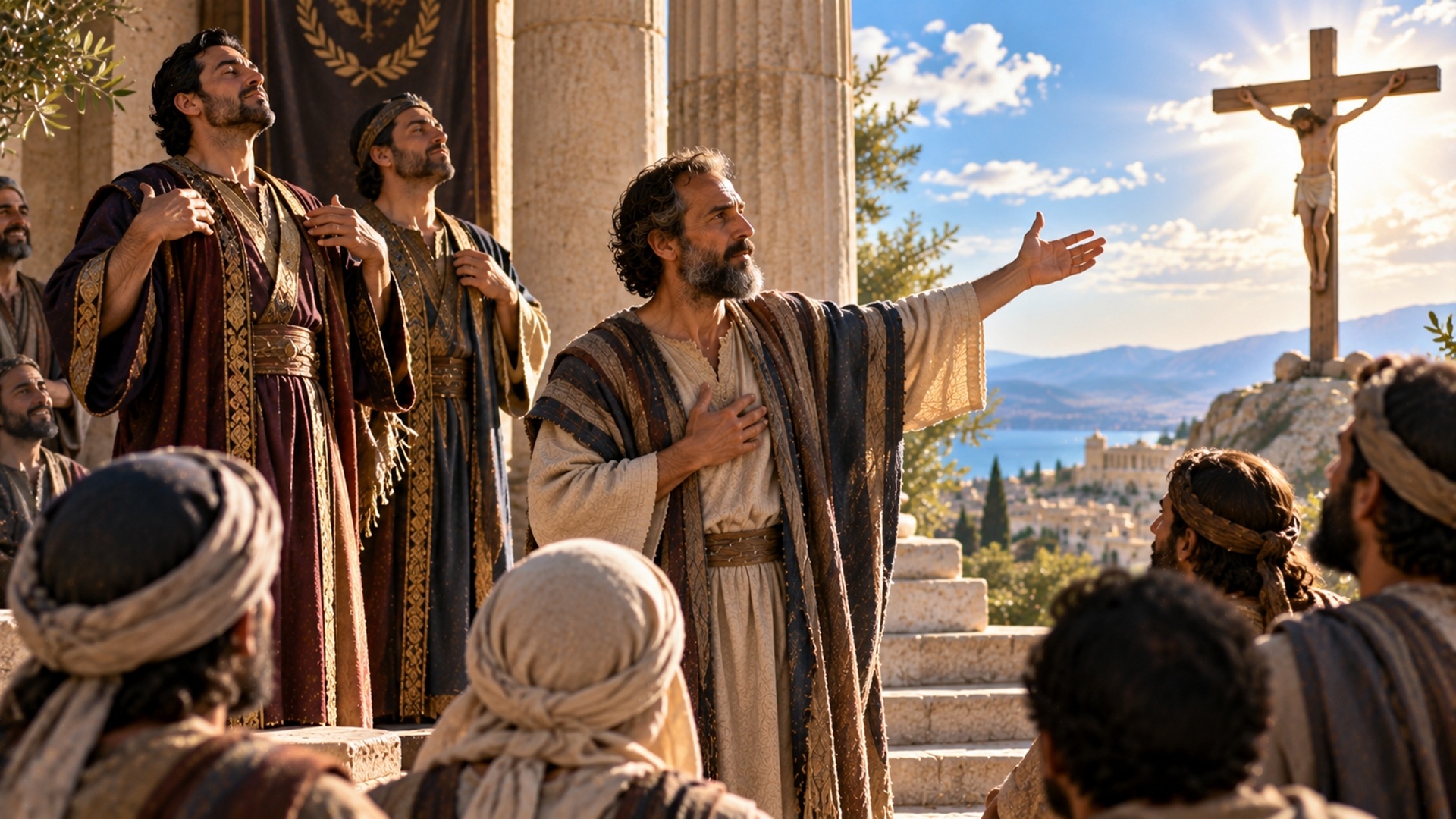
Looking to Christ heals these motives. At the cross, we see the Lord who did not glorify Himself, but humbled Himself. Jesus did not seek human glory, but the will of the Father. He served, healed, taught, and gave His life. Whoever follows Him cannot permanently live in a spirit of self-exaltation.
To boast in the Lord also means magnifying God’s character. Jeremiah speaks of knowing the Lord who practices steadfast love, justice, and righteousness. Paul therefore connects his boasting with God’s nature. Genuine proclamation does not merely display religious performance, but reveals God’s love, justice, faithfulness, and grace in Christ.
This is especially important when dealing with false teachers. False teachers often draw attention to themselves, their special knowledge, their authority, or their superiority. Paul, by contrast, directs attention to Christ. This is a test. A proclamation that makes the human being greater than Christ is dangerous. A proclamation that exalts Christ and leads people into humble dependence on God is healthy.
This lesson therefore invites us to redirect our joy. We may rejoice when God works. We may speak gratefully about fruit. We may give testimony. But our boasting should always lead back to the Lord. The sentence “God did it” is not a pious formula, but a spiritual truth.
In the end, this creates a different atmosphere in the church: less competition, more gratitude; less comparison, more cooperation; less self-praise, more praise of Christ; less rivalry, more shared mission. A church that boasts in the Lord becomes free to work together for the gospel.
🔧 7. Application in Everyday Life
Practical Steps:
- Examine whether you compare yourself with others in ministry or simply want to serve Christ faithfully.
- Speak about fruit in such a way that God receives the glory.
- Rejoice sincerely in the ministry of others instead of seeing it as competition.
- Do not seek self-commendation, but God’s approval.
- Remain faithful within the sphere of activity God has entrusted to you.
- Avoid spiritual self-promotion and hidden boasting.
- In every proclamation, ask whether Christ or the human being is at the center.
- Consciously thank God for every gift, every opportunity, and every fruit.
❓ 8. Reflection Question
Do I seek the recognition of people in ministry, or is it enough for me that the Lord is honored and Christ remains at the center?
🌟 9. Closing Thought
Paul shows that true proclamation does not live by the spirit of competition. The false teachers boasted about themselves and compared themselves with one another, but Paul wanted to boast only in the Lord. His ministry was not directed toward self-praise, but toward the proclamation of Christ and the spread of the gospel. Every genuine fruit comes from God and should therefore lead back to His glory. Whoever boasts in the Lord becomes free from competitive thinking, self-promotion, and spiritual pride. In this way, a ministry emerges that does not magnify human beings, but Christ alone.
“But the one who boasts, let him boast in the Lord.”
2 Corinthians 10:17 🙌👑✝️✨
