
🌍 WHEN THE WORLD APPROACHES ITS END
🕯️ Hope, Watchfulness, and Faithfulness in Matthew 24–25
🏛️ Part I – When Certainties Collapse
❓ Sermon 2: Tell Us, When Will These Things Happen?
🧭 Jerusalem, the End of the World, and the Double Perspective of Prophecy
📜 Main Text
“Now as He sat on the Mount of Olives, the disciples came to Him privately, saying, ‘Tell us, when will these things be? And what will be the sign of Your coming, and of the end of the age?’”
Matthew 24:3
🔦 Key Verse
“Surely the Lord God does nothing, unless He reveals His secret to His servants the prophets.”
Amos 3:7
🧭 Sermon Thought
Jesus does not answer His disciples’ question about “when” by giving them a date or a complete prophetic timetable. He connects the approaching destruction of Jerusalem with events that extend all the way to the completion of world history and His second coming. In doing so, He shows that prophecy was not given so that human beings could control the future, but so that God’s people might be warned in time, learn spiritual discernment, remain steadfast in faith, and fix their hope firmly upon Christ.
🌅 Welcome and Introduction
Dear congregation,
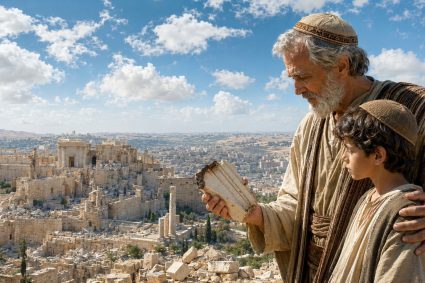
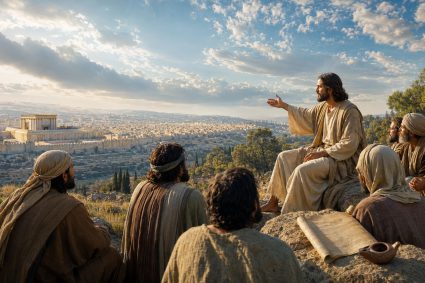
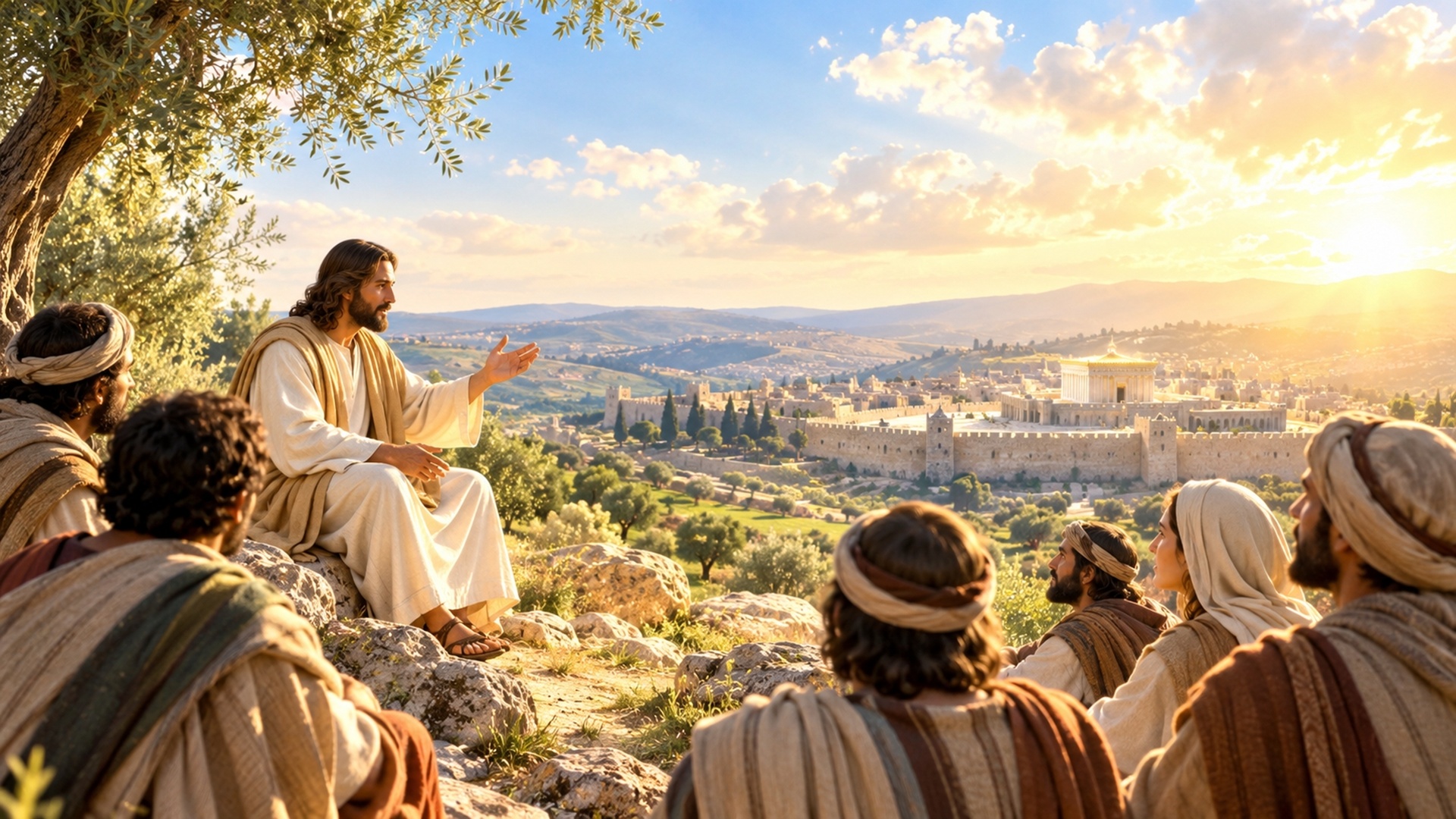
After Jesus had announced that not one stone of the temple would be left upon another, the disciples could not simply forget His words. The temple was far more to them than an impressive building. It stood at the center of their religious life, was deeply connected with the history of Israel, and for many represented the visible assurance that God would not abandon His people. If this sanctuary was truly going to be destroyed, then, in their understanding, something of immense significance must be about to happen. Therefore, they waited until they were alone with Jesus and, on the Mount of Olives, asked Him the question that opens the entire prophetic discourse that follows: “Tell us, when will these things be? And what will be the sign of Your coming and of the end of the age?”
This question is deeply human. As soon as we become aware that great changes are approaching, we want to know when they will happen, how they will begin, and how we will recognize that a decisive turning point is drawing near. Even today, prophetic subjects are often first connected with the question of when certain events will take place. Jesus does not simply dismiss this interest. He explains to His disciples in detail what lies ahead, but He answers their question in a way that challenges their faith more deeply than a mere date ever could. He gives them enough guidance to be prepared, while at the same time leaving enough unrevealed so that their security will rest not on calculations, but on His person and His Word.
This is precisely one of the keys to understanding Matthew 24. Jesus does not want to produce sensation-seeking observers or fearful calculators. He wants to form people who understand the signs without being controlled by them, who take prophetic developments seriously without falling into speculation, and who view the course of history in the light of Christ’s second coming. Prophecy is not intended to feed our curiosity, but to deepen our faith.
📜 Narrative Illustration: Two Mountains in the Evening Light
The following story is a narrative illustration intended to help us understand the double prophetic perspective of Matthew 24.
A father was hiking with his son through a broad valley. It was late afternoon, and the sun was already low over the mountains. Before them rose two mighty mountain ranges. The first appeared dark and rugged, while the second lay farther away in the warm light of evening. From where they stood, both seemed to rise almost directly one behind the other.
The boy stopped and looked at the peaks. Finally, he asked his father whether the two mountains stood directly beside each other. His father explained that from down here it certainly looked that way, but that a great valley lay between them, one that could hardly be seen from their present perspective. The boy was surprised because the distance seemed much smaller than it actually was.
The next day they climbed higher. When they reached a lookout point, the picture changed. Now the boy could clearly see that a vast landscape stretched between the two mountain ranges. Rivers wound through the valley, small villages lay among fields and forests, and only far in the distance did the second range rise.
The boy remembered the impression he had had the day before and said that he had believed the two mountains almost belonged together. His father explained that distant landscapes often appear that way. From a certain viewpoint, two peaks that are far apart can seem to form a single line. Only when one comes closer or changes perspective does the distance between them become visible.
After a while, the boy asked whether prophecy sometimes worked in a similar way. Perhaps, he reasoned, a prophet sees several events before him that are connected in meaning even though many years, or even centuries, may lie between them. His father confirmed this thought and explained that in the Bible a near historical event sometimes points at the same time toward a later and greater event.
Many years later, the son remembered that hike while reading Matthew 24. The disciples stood with Jesus on the Mount of Olives and looked toward Jerusalem. In their minds, the destruction of the temple, the second coming of Jesus, and the completion of world history lay close together. Jesus answered their question in such a way that the near horizon of Jerusalem and the distant horizon of the end of the world remained connected, without making them simply the same event.
This picture helps us understand why Matthew 24 must be read carefully. Those who apply every statement only to Jerusalem restrict the scope of the prophecy. Those who apply everything exclusively to the final generation overlook its concrete historical significance for the first disciples. Jesus brings both horizons together and thus reveals a prophetic perspective in which a near judgment becomes a pattern of a later and final event.
1. ❓ The Disciples’ Question Is Greater Than They Themselves Understand
Matthew 24:3 contains several questions within a single sentence. The disciples first want to know when the destruction announced by Jesus will take place. At the same time, they ask about the sign of His coming and the completion of the age. In their minds, these events apparently belong directly together. If the temple falls, they seem to reason, the end of the existing order cannot be far away.
Jesus does not correct this idea with a short theoretical explanation. Instead, He leads His disciples step by step through a future that is far longer and more complex than they expect. Here a fundamental principle becomes visible: people may ask the right question and still not fully understand all the connections hidden within that question. The disciples want to know when something will happen; Jesus first explains what spiritual dangers will arise, how they should respond, and where they should place their hope.
The Greek word Matthew uses for Christ’s “coming” is parousia. In the New Testament, it especially refers to the future return of Jesus in glory. At this point, the disciples do not yet possess a complete understanding of every detail, but their question already reaches beyond Jerusalem. Jesus takes up this larger horizon and connects it with the immediately approaching history of the city.
It therefore becomes clear that prophecy does more than communicate information about events. It educates faith. God does not tell His people everything that human curiosity would like to know, but He tells them everything necessary for faithfulness, watchfulness, and preparation.
2. 🏙️ Jerusalem Forms the First Prophetic Horizon
The immediate background of the Olivet Discourse is the coming destruction of Jerusalem. Already in the preceding chapter, Jesus had lamented over the city and declared that its house would be left desolate. His words were not an expression of harshness, but the final solemn warning of a Savior who desired to gather His people and had repeatedly been rejected.
Luke records particularly clearly how Jesus prepared His disciples for what was coming:
“But when you see Jerusalem surrounded by armies, then know that its desolation is near. Then let those who are in Judea flee to the mountains.”
Luke 21:20–21
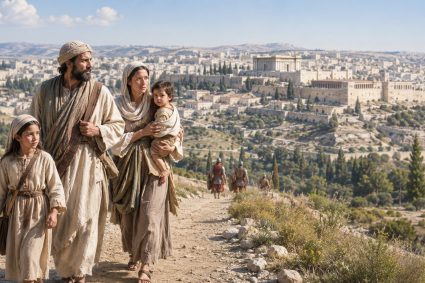
This warning had a practical purpose. The disciples were not merely to know that a catastrophe was approaching. They were to recognize a sign and act at the right moment. When Jerusalem was threatened by Roman armies during the First Jewish War and, before the final siege, a temporary opportunity for escape arose, Christians could take the words of Jesus seriously and leave the city. A few years later, in A.D. 70, Jerusalem was destroyed.
The prophetic warning was therefore not abstract information, but an instrument of divine preservation. Those who heard Jesus’ words were expected to trust them and act accordingly. Here we see a fundamental difference between biblical prophecy and mere speculation about the future. Prophecy calls for a response. It summons people to bring their attitudes, decisions, and, when necessary, even the course of their lives into harmony with the Word of God.
3. 🌍 Jesus’ Answer Reaches Far Beyond Jerusalem
Despite its immediate relevance to Jerusalem, Matthew 24 cannot be limited to the year A.D. 70. In His discourse, Jesus speaks of developments that clearly reach beyond the local destruction of the city. He announces that the gospel of the kingdom will be preached to all nations before the end comes. He describes the visible coming of the Son of Man like lightning flashing from east to west, and He speaks of cosmic signs as well as the gathering of the elect from every direction of the earth.
This broader horizon becomes especially clear in Matthew 24:30:
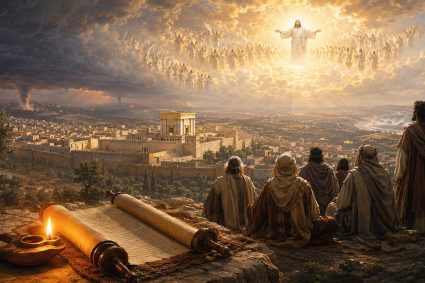
“Then the sign of the Son of Man will appear in heaven, and then all the tribes of the earth will mourn, and they will see the Son of Man coming on the clouds of heaven with power and great glory.”
Such a description cannot reasonably be reduced to the Roman destruction of Jerusalem. Jesus directs the attention of His disciples from a historical judgment toward the final conclusion of world history. Jerusalem thus becomes a first horizon that at the same time points toward a later and far more comprehensive horizon.
The two levels are connected, but they must not be confused. The destruction of Jerusalem was real, local, and historically limited. The second coming of Christ, by contrast, will be global, visible, and final. Nevertheless, spiritual parallels exist. In both situations God gives warnings, calls for watchfulness, and confronts people with decisions. In both cases there is a danger that religious security, social normality, or human expectations may drown out the voice of God.
4. 🏔️ The Double Prophetic Perspective
The double perspective is not foreign to the Bible. Already in the Old Testament, the prophets often connect a near historical event with a more far-reaching fulfillment. A judgment upon a specific city may at the same time use language pointing toward the final day of the Lord. A promise concerning the restoration of Israel may reach beyond an immediate return and point toward God’s ultimate salvation. Daniel sees historical empires arising one after another, yet his visions ultimately lead to the eternal kingdom of God.
In Matthew 24 as well, two horizons stand within one coherent prophetic picture. The disciples see only the first peak clearly: the temple and Jerusalem. Jesus also shows them the second: His return and the completion of history. Between the two lies a long period during which the gospel will be proclaimed, the church will experience trials, deceptions will arise, and faith will repeatedly be tested.
This perspective protects us from two opposite errors. The first is to restrict Matthew 24 almost entirely to the first century, thereby weakening its clear statements concerning the second coming. The second is to move every statement exclusively into the future, thereby losing the concrete historical meaning of Jesus’ words for His first disciples. A careful understanding takes both seriously.
5. 🧭 Prophecy Gives Orientation, but Not Total Control
People often desire a form of prophecy that functions like a completely developed calendar. We want to know which event comes first, how long a certain phase will last, and at what point the next stage begins. Jesus could have told His disciples many such details. He knew the entire course of future history. Yet He did not give them a detailed timetable.
Instead, throughout Matthew 24 we repeatedly encounter commands such as: “Take heed that no one deceives you,” “Do not be troubled,” “He who endures to the end shall be saved,” and “Therefore watch.” These statements reveal where Jesus places the emphasis. Prophecy should not merely explain what happens; it should prepare people to respond spiritually in the right way.
For this reason, a large amount of prophetic information without a living relationship with Christ can even become dangerous. A person may speak very precisely about possible end-time scenarios while at the same time living unreconciled, proud, unloving, or spiritually superficial. In that case, he possesses knowledge but lacks the preparation Jesus calls for in Matthew 24 and 25.
The revelation of the future therefore remains deliberately connected with trust. God gives enough light for orientation, but not so much that human beings imagine they can control what is coming. Faith must continue to learn to follow the Lord even where every detail is not yet visible.
6. ⏱️ Why Jesus Gives No Date
The disciples explicitly ask about the time, yet later Jesus leads them to this statement:
“But of that day and hour no one knows, not even the angels of heaven, but My Father only.”
Matthew 24:36
This boundary is essential. The Bible contains prophetic time periods, and we may study what God has actually revealed. Jesus, however, does not permit calculation of the day of His second coming. The history of Christianity demonstrates how often people have crossed this boundary. Again and again, years, months, and even specific days have been set, and when expectations failed, disappointment, confusion, and often spiritual harm followed.
Jesus protects His church precisely by not naming a date. Readiness should not be a reaction to a calculated deadline, but a constant way of life. A person who believes he knows the exact date might be tempted to postpone spiritual preparation. But the one who knows that the Lord will come at the time appointed by God, while also recognizing that the exact moment has not been revealed to him, is called to live faithfully today.
Therefore, Jesus immediately connects the unknown timing with this command:
“Therefore you also be ready, for the Son of Man is coming at an hour you do not expect.”
Matthew 24:44
Readiness is therefore not the result of successful calculation, but the fruit of a living relationship with Christ.
7. 🔍 Signs Are Signposts, Not a Prophetic Clock
Matthew 24 mentions wars, famines, earthquakes, persecution, religious deception, increasing lawlessness, and the worldwide proclamation of the gospel. These signs are important, but Jesus Himself prevents us from turning them into a simplistic end-time clock. Concerning several of these developments He explicitly says, “All these are the beginning of sorrows,” and concerning wars He explains, “These things must come to pass, but the end is not yet.”
The image of birth pains helps us understand the function of the signs. Labor pains indicate that a birth is approaching, but they do not determine the precise moment of birth with mathematical accuracy. In the same way, the signs demonstrate that history is moving toward a destination. They make clear that this world will not continue forever in its present condition, and they remind the church to remain watchful. But they do not justify a superficial equation in which one isolated event automatically means that only a few days or months remain.
This distinction is especially important in times of severe crisis. Wars, natural disasters, and political upheavals can understandably trouble people. Yet Jesus calls us neither to indifference nor to panic. He wants us to take the signs seriously without turning every new event immediately into final proof. Watchfulness is sober-minded. Sensationalism is not.
8. 🧠 Why Human Beings Still Want So Strongly to Know the Time
Behind the question “When?” there often lies a deeper desire for control. If we knew when something would happen, we could design our own timetable. We could decide when to prepare more seriously, when to rearrange our priorities, and when certain spiritual decisions could no longer be postponed.
Jesus removes precisely this kind of control from our hands. In the parable of the faithful and evil servant, He shows how dangerous a false attitude toward the waiting period can become. The evil servant says in his heart, “My master is delaying his coming,” and this inward attitude exposes his character. He begins to abuse his responsibility and lives as though he will no longer have to give an account to his master.
The waiting period is therefore not an empty space between prophecy and fulfillment. It is itself part of the spiritual process. During it, it becomes visible whether our faith depends only on immediate expectation or whether we remain faithful to Christ even when His return takes longer than one generation had hoped.
God is not looking for people who make the right decision only shortly before the end. He is forming people whose daily lives already demonstrate that they belong to His kingdom.
9. 📖 Jerusalem Teaches Us to Take Divine Warnings Seriously in Time
The history of Jerusalem shows especially clearly that prophetic knowledge always has a practical dimension. The disciples were not merely to understand that judgment was approaching; they were to respond to the words of Jesus. The timing of their escape required trust precisely because the visible circumstances did not necessarily make it appear that they had to leave the city immediately.
Here we encounter a pattern that runs throughout the entire Bible. Noah began building the ark before rain fell. Abraham left his homeland without seeing the entire journey ahead. Israel prepared for the Exodus before the sea was divided. In every case, faith did not mean acting irrationally, but valuing God’s clear word more highly than the immediate appearance of circumstances.
The same principle applies to us. We will not understand every development of the last days completely before it occurs. But we can learn to take the Word of God seriously today. Those who habitually postpone clear biblical convictions in small matters will not automatically act with greater determination in a larger crisis. Prophetic preparation therefore begins in everyday life.
10. 🌐 The Final Generation Needs the Same Obedient Faith
The final generation will not know every detail of coming events in advance either. Scripture reveals the great lines: the gospel will be proclaimed throughout the world, religious deception will increase, God’s authority will be challenged, His people will come under pressure, and finally Christ will visibly return. These broad outlines are clear enough for us to live spiritually prepared, even if some details will only become fully understandable through their fulfillment.
This should not trouble us. The first Christians did not need to know every military movement of Rome. They needed to know the voice of Jesus. That is also where our deepest preparation lies. Whoever knows the Word of God thoroughly, lives in prayer, gives room to the Holy Spirit, and has learned to obey Christ in daily life is better prepared than someone who knows numerous future scenarios but possesses no solid spiritual foundation.
Jesus describes His followers with these words:
“My sheep hear My voice, and I know them, and they follow Me.”
John 10:27
The decisive question, therefore, is not whether we can classify every coming event with complete precision in advance. What matters is whether we know the Shepherd’s voice so well that we follow Him when the path becomes difficult to understand.
11. 🕊️ Prophecy Should Produce Peace, Not Panic
Many people associate end-time prophecy with fear, yet in the middle of His discourse about wars and upheavals Jesus says, “See that you are not troubled.” This command can only be understood when we remember who is speaking. Christ already knows the course of history. No war surprises Him, no crisis escapes His knowledge, and no political development places His sovereignty in question.
Prophecy therefore should not give us the impression that God is losing control. The exact opposite is true. Because Jesus describes these developments in advance, His disciples can recognize that even difficult periods of history do not lie outside His knowledge.
Matthew 24 can therefore be compared to a map. A good map shows not only pleasant roads but also difficult stretches of terrain. When a traveler reaches a steep section, he does not need to assume that he has necessarily lost his way. He can recognize that this section was already marked on the map and that the road continues beyond it.
This is how Jesus speaks about the coming course of history. He does not hide the difficult sections, but He makes clear that they are not the destination.
12. 👑 The Goal of Prophecy Is the Returning King
If Matthew 24 is read only in terms of wars, disasters, deception, and persecution, the chapter loses its true climax. Jesus does not lead His discourse into ever-deepening chaos, but toward the visible return of the Son of Man.
He says:
“Then the sign of the Son of Man will appear in heaven; and then all the tribes of the earth will mourn, and they will see the Son of Man coming on the clouds of heaven with power and great glory.”
Matthew 24:30
This is followed by the gathering of the elect by the angels. That is where prophetic history is heading. The destruction of Jerusalem was not the end. The coming crises are not the end. Even the great tribulation is not the goal. The goal is Christ, returning in power and glory and gathering His people to Himself.
Christian expectation of the end therefore has a completely different character from mere expectation of catastrophe. We do not observe the signs because we delight in collapse, but because we are waiting for the Lord who will bring that collapse to an ultimate end. Our hope does not rest on our ability to calculate every event correctly, but on the certainty that Jesus will fulfill His promise.
13. 🌿 We Live Between Fulfilled and Yet-Unfulfilled Prophecy
For us, the double perspective of Matthew 24 has special significance because, unlike the first disciples, we can already look back on part of the fulfillment. Jerusalem has fallen. Jesus’ words concerning the temple have been fulfilled. The church has experienced centuries of persecution, mission, spiritual revival, and spiritual crisis. The gospel has reached nations and continents that were completely unknown to the disciples at that time.
At the same time, the second coming still lies ahead. We therefore live between a fulfilled and a still-future horizon. The fulfillment of past prophecy strengthens our confidence in what still remains. If Jesus spoke reliably concerning Jerusalem, we may also trust His promises concerning His return.
Peter describes the prophetic word as a lamp shining in a dark place. This image is fitting because a lamp does not necessarily illuminate the entire landscape all the way to the horizon. Yet it gives enough light for the next step to be taken safely. This is often how God leads His people. He does not always show the entire road, but He never leaves them without the light necessary for faithfulness.
14. 🙏 How to Study Prophecy in a Healthy Way
A healthy study of prophecy begins with humility. We must distinguish between what Scripture clearly says and what we infer from individual indications. Where the Word of God is clear, we may speak clearly. Where questions of interpretation remain open, we should proceed carefully and avoid confusing human conclusions with divine revelation.
Context is equally important. Matthew 24 must not be separated from Matthew 23 and 25. The warnings concerning Jerusalem, the signs of the times, the call to watchfulness, and the parables of the ten virgins, the talents, and the judgment form one connected discourse. Jesus does not merely explain what will happen; He also explains how His followers should live while they wait.
Finally, every study of prophecy must lead to Christ. If, after extended study of end-time themes, we find ourselves speaking increasingly about political systems, crises, and threats while praying less, loving less, and trusting Jesus less, then we have missed the goal. Biblical prophecy should deepen our obedience, hope, and sense of responsibility.
John summarizes this principle in Revelation 1:3: blessed are not only those who read and hear, but those who keep what is written. The blessing therefore lies in knowledge that transforms life.
🌄 Conclusion: Between Two Horizons
The disciples sat on the Mount of Olives and looked toward Jerusalem. Before them stood a temple whose destruction they could scarcely imagine. At the same time, their hearts were asking about the end of history and the return of their Lord. In their minds, these events stood close together, like two mountains that from a distance appear to form a single line.
Jesus showed them both horizons. The first was near: Jerusalem would fall. The second lay farther away: the Son of Man would return in power and glory. Between these two events, the church was to live, proclaim the gospel, endure trials, recognize deception, and remain faithful in the hope of Christ.
Today we stand much farther along this road than the disciples did. We can look back on fulfilled prophecy and see that the words of Jesus were trustworthy. At the same time, we are still waiting for the great second horizon. We do not know the day of His return, nor do we need to know it. What matters is that we know the One who is coming again and that our lives today are directed toward Him.
The question, “When will these things happen?” remains understandable. Yet Jesus leads us to an even more important question: How should I live while I wait? Whoever answers this second question rightly will be prepared even without knowing the exact time.
📣 Appeal
Dear congregation,
Perhaps we too carry many questions about the future. We see political tensions, wars, social changes, natural disasters, and religious developments, and we want to know how close we truly are to the end. Jesus does not forbid us to observe attentively. But He calls us not to make our spiritual lives dependent upon speculation.
Therefore, we should first ask ourselves today whether we trust Christ even where we do not fully understand the timetable of His guidance. The disciples wanted a “when,” but Jesus gave them above all guidance for their faith. We too must learn that God’s leading remains reliable even when we do not know the calendar of His providence.
We should also ask ourselves whether our study of prophecy is actually changing us. If it makes us more humble, faithful, watchful, and loving, then it is accomplishing its purpose. But if it primarily produces fear, arrogance, or constant speculation, then we need to redirect our attention toward Christ.
Ultimately, it is about being willing to follow Him today. None of us knows how long the waiting period will continue. But every one of us can live today in prayer, obedience, Sabbath faithfulness, love, and loyalty to the Word of God. This is a form of preparation that does not depend on a date.
If you want to say, “Lord Jesus, I do not understand every detail of the future, but I want to trust You completely,” then bring that decision to Him now. Ask Him to remove your fear of what is coming, to free you from the desire to control the future, and to give you enough light for the next step.
🙏 Closing Prayer
Lord Jesus Christ,
We thank You that You did not leave Your disciples in ignorance concerning the future. You foretold the destruction of Jerusalem, warned them against deception and persecution, and at the same time directed their eyes toward the day when You will return in great power and glory. In Your words we recognize that history is not moving aimlessly, but under Your rule toward a goal appointed by God.
Forgive us when we have used Your prophetic Word to satisfy our curiosity instead of allowing it to transform our lives. Forgive us when we have asked about dates and events while neglecting the more important questions of faithfulness, obedience, love, and spiritual watchfulness. Protect us from seeking in human calculations a security that can be found only in You.
Teach us to study Holy Scripture carefully and humbly. Help us to understand the immediate meaning of Your words for Jerusalem while also recognizing their greater horizon extending to Your second coming. Give us wisdom to connect what You have connected and to distinguish what must be separated historically and chronologically.
We thank You for every prophecy already fulfilled, which shows us that Your Word is trustworthy. You warned Jerusalem before judgment came, and You showed Your followers a way of preservation. Let this fulfilled history strengthen our confidence that every promise still awaiting fulfillment will also come to pass.
Give us a sober mind as we observe the signs of our time. Protect us both from indifference and from panic. Let us be attentive without becoming sensation-seeking, watchful without living in fear, and firm in the truth without becoming proud.
We especially pray for those who are afraid of the future because of the developments taking place in this world. Strengthen their trust that no war, no crisis, and no political change takes You by surprise. You already know the road before we walk upon it, and You will not abandon Your people.
Shape our character during the waiting time. Do not let us think that this period is meaningless. Teach us patience, endurance, and faithfulness. Help us in our families, in our church, in our work, and in our daily decisions to live in such a way that we are ready to meet You at any time.
If we do not know the time, let us know all the better the One who is coming again. If we cannot see the whole road, give us trust for the next step. When our surroundings appear dark, let Your prophetic Word shine like a lamp before our feet.
Direct our eyes not toward the crisis as the final destination, but toward You. You are the center of prophecy, the hope of Your church, and the coming King. We wait for the day when You will appear on the clouds of heaven, raise the dead in Christ, and gather Your redeemed from every part of the earth.
Until then, keep us in Your Word, preserve our love, strengthen our faith, and keep our hope clear. Let us live watchfully and at the same time in peace, because we know that our future is not in the hands of chance, but in Your hands.
In Your holy name we pray.
Amen.
