

👑 From Babylon to the Eternal Kingdom
📜 Historical, Spiritual, and Prophetic Poems from the Book of Daniel
🔥 Chapter 1 – Miniseries 4 – Introduction
📖 The Prophetic Preparation
✨ How God Shaped His Servants for Greater Tasks
The first years in Babylon had passed.
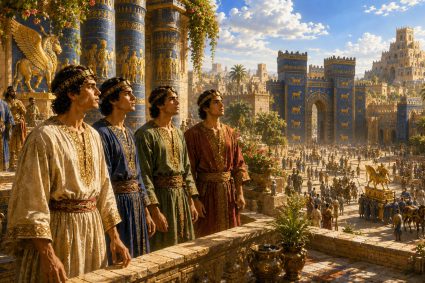
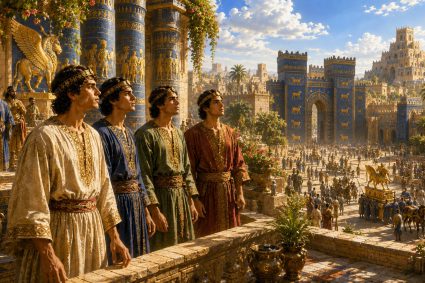
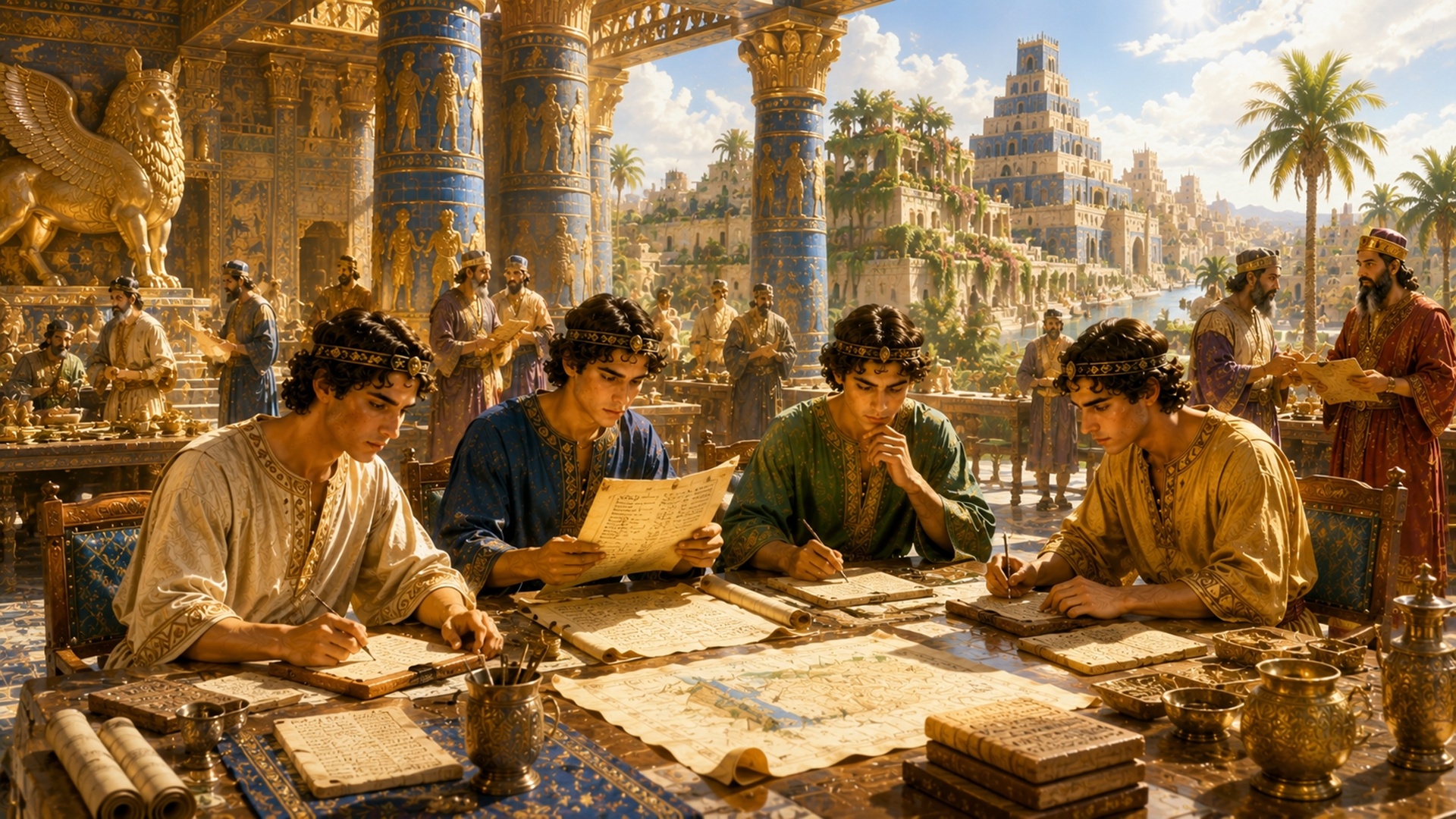
Daniel and his friends had lost their homeland, but not their faith. They had seen the splendor of Babylon, yet their hearts still belonged to the God of heaven.
The Lord had preserved them.
He had blessed their faithfulness at the king’s table. He had granted them wisdom and understanding. He had given them a place at the court of the most powerful ruler of their age.
Yet Chapter 1 tells far more than the story of a few faithful young men.
It is the preparation for everything that was still to come.
Nebuchadnezzar did not yet know that God would soon speak to him through dreams.
Babylon did not yet know that its wise men would soon face a mystery no human being could solve.
No one yet imagined that Daniel would one day stand before kings and reveal the future of the world empires.
But heaven was already preparing everything.
God often works in this way.
Before He gives a task, He shapes the character.
Before He entrusts responsibility, He tests faithfulness.
Before He opens great doors, He teaches obedience in small things.
Daniel’s experiences were therefore no accident.
Captivity became a school.
The trials became lessons.
The decisions of daily life became preparation.
Every challenge shaped his faith.
Every step strengthened his trust.
Every faithful decision made him ready for what was to come.
Heaven does not first seek great ability.
It seeks faithful hearts.
For God can grant wisdom to a person.
He can give understanding.
He can open doors that no one can shut.
But character must grow.
Faithfulness must be tested.
Trust must be learned.
Thus Babylon became one of God’s schools.
Not only for Daniel.
It was also a school for Hananiah, Mishael, and Azariah.
In the midst of a pagan world, the Lord was shaping men who would belong entirely to Him.
And the same truth remains valid today.
God often prepares His children for a long time before they understand why they must walk along certain paths.
Some trials appear insignificant.
Some seasons of waiting seem unnecessary.
Some difficulties seem almost impossible to understand.
Yet later it often becomes clear that the Lord was already working toward something greater.
Thus the fourth part of Chapter 1 begins.
Not with a new trial.
Not with a new danger.
But with a look at God’s preparation.
For Daniel’s story is not yet finished.
It has only just begun.
And soon the God of heaven will reveal before Babylon that His wisdom stands higher than all human wisdom.
🌟 Theological Reflection
🔥 God prepares His servants before He uses them. This principle runs like a scarlet thread through all of Holy Scripture. Moses spent many years as a shepherd in the wilderness before God called him to lead Israel out of Egypt. David learned to trust God as a shepherd boy long before he ascended the throne. Elijah was prepared beside the brook Cherith and in solitude before he stood on Mount Carmel before the entire nation. John the Baptist grew in the stillness of the wilderness before he proclaimed the coming of the Messiah. The disciples of Jesus likewise spent years beside their Master before carrying the gospel into the world. God’s greatest works usually begin not upon a public stage, but in secret.
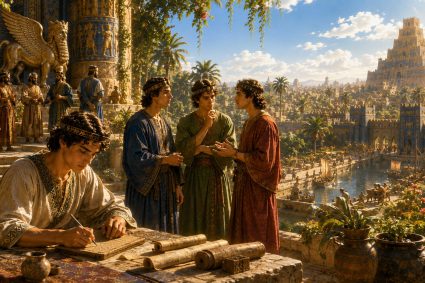
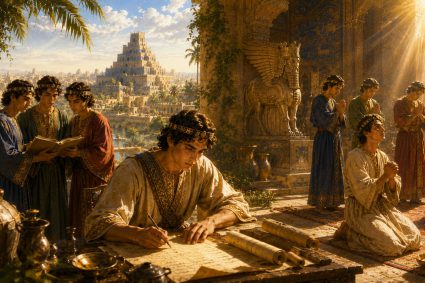
🙏 Daniel therefore was not shaped only at the moment of great revelations. His character was formed through many small decisions of faith. Every day in Babylon formed part of God’s school. His faithfulness in choosing his food, his discipline in study, his respectful conduct toward those in authority, his regular life of prayer, and his unwavering trust in God’s Word were not insignificant details. These daily steps made him into a man to whom God could later entrust the deepest prophetic mysteries of world history.
🌱 The Lord never bypasses the process of character formation. He gives His gifts by grace, but character grows through fellowship with Him. God therefore often leads His children not along the shortest path, but along the best one. He permits experiences that teach patience. He allows trials that purify faith. He gives responsibility so that faithfulness may grow. Everything serves the purpose of making human beings more like Christ.
⏳ Heaven works with a long perspective. While people often expect immediate results, God sees a far greater picture. He sees not only the present day, but the whole life of a person and even that person’s place within His plan of redemption. Seasons of waiting may therefore appear to be periods of inactivity from a human perspective, even while God is accomplishing His deepest work. What grows in secret often bears the richest fruit later.
🛤️ Trials therefore possess an educational value in the hand of God. They are not primarily obstacles, but opportunities to learn trust. Difficulties do not merely reveal character—they also shape it. Through them, a person learns to depend less upon personal strength and more upon God’s guidance. In this way, the Lord transforms even painful experiences into instruments of His grace.
📖 Chapter 1 of the Book of Daniel is therefore far more than a historical introduction. It lays the spiritual foundation for everything that follows. Nebuchadnezzar’s dreams, the fiery trial in the blazing furnace, the lions’ den, and the great visions of Chapters 7 through 12 can only be properly understood when we recognize that they were preceded by a life of faithfulness. Prophetic understanding was not given to Daniel independently of his character, but upon the foundation of a deep relationship with God.
👑 This reveals an important theological principle: God does not reveal His mysteries merely to satisfy curiosity. In the Bible, prophecy is never an end in itself. It is entrusted to people who are willing to trust God, obey Him, and esteem His will above their own interests. True understanding is inseparably connected with a humble heart.
✨ From a Seventh-day Adventist perspective, this principle carries special significance. The end-time messages of Scripture cannot be understood through historical knowledge or academic study alone. They become clear to those who allow themselves to be taught by the Holy Spirit and who are willing to do God’s will. Prophetic understanding grows where reverence for God, love for His Word, and practical discipleship come together. For this reason, the Bible repeatedly connects understanding with sanctification and obedience.
🌍 God still often prepares His children for a long time before entrusting them with greater responsibilities. Many desire extraordinary experiences or special ministries. Yet the Lord first asks for faithfulness in everyday life. He observes how we handle small responsibilities, how we act in hidden struggles, how we pray, serve, forgive, and obey His Word. The unnoticed decisions of today may become the foundation for tomorrow’s ministry.
🕊️ No one should therefore despise the season of preparation. Years of learning, waiting, or apparently ordinary service are never wasted in God’s sight. It is precisely there that the Lord lays the foundation upon which a stable life of faith can later be built. What people often overlook, God sees with joy. He shapes characters that will remain faithful to Him when trials, responsibility, or great tasks arrive.
💛 Daniel reminds us that God first shapes the person and then gives the assignment. He first builds the foundation and only afterward raises the visible structure. Those who willingly allow themselves to be guided through this school of God will discover that no experience was in vain. Everything the Lord permits ultimately serves to prepare His children for the day when they may glorify Him through their lives.
“The meek will He guide in judgment: and the meek will He teach His way.” (Psalm 25:9)
