





📅 July 3, 2026
📚 BELIEVE HIS PROPHETS
📖 Daily Bible Reading: 🙏 Job 7
🌒 Questions in the Darkness
✨ When the Soul Searches for Hope
🌐 Read online here
📍 Introduction
Job continues his response and now directs his words straight to God. He speaks openly about his exhaustion, his sleepless nights, and his despair. Job chapter 7 shows that God can bear even our most honest and difficult prayers.
⋯⋯⋯⋯⋯⋯⋯⋯⋯⋯◆⋯⋯⋯⋯⋯⋯⋯⋯⋯⋯
🧵 Commentary
Job describes human life as exhausting labor. Just as a hired worker waits for the end of the day, he longs for an end to his suffering. His nights are filled with restlessness, and every new morning brings further pain.
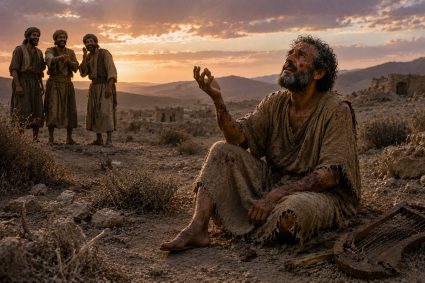
He describes his physical condition vividly. His body is covered with sores, his skin breaks open, and he suffers constant pain. At the same time, he experiences life as fleeting and temporary. To him, every hope seems to be fading away.
Yet Job does not merely speak about his suffering—he brings his lament directly before God. He asks why God directs so much attention toward him. Why does God seem to test him without ceasing? Why does He not give him even a moment of rest?
These questions do not reveal a lack of faith, but a deep relationship with God. Job does not turn away from God in his pain; instead, he turns directly toward Him. He wrestles with God because he takes Him seriously.
At the same time, Job recognizes the limitations of human life. He knows that human beings are mortal and that their days pass quickly. Therefore, he asks why God treats him so severely when life is already so brief.
At the end of the chapter, Job even asks God for forgiveness in case he has sinned. At the same time, he asks why God does not simply leave him in peace. His words reveal the inner struggle between trust and despair.
The reader already knows that Job is not suffering because of some hidden guilt. Job himself, however, does not know the background of his trial. His questions initially remain unanswered. Yet it is precisely this honesty that makes his prayers so extraordinary.
Job chapter 7 reminds us that God does not expect perfect prayers. He invites us to bring even our deepest questions and darkest thoughts before Him. Genuine trust does not mean having no questions, but entrusting those questions to God.
⋯⋯⋯⋯⋯⋯⋯⋯⋯⋯◆⋯⋯⋯⋯⋯⋯⋯⋯⋯⋯
🧺 Summary
Job 7 describes Job’s physical and emotional suffering. He pours out his distress before God, speaks about the brevity of life, and wrestles with the question of why God is testing him so severely. Despite all his despair, he remains in conversation with God.
⋯⋯⋯⋯⋯⋯⋯⋯⋯⋯◆⋯⋯⋯⋯⋯⋯⋯⋯⋯⋯
🔦 Message for Us Today
God can handle our questions. We do not need to hide our feelings or pretend that everything is fine. Job shows that honest prayers may also contain lament, pain, and confusion. God hears not only our praise, but also our tears.
⋯⋯⋯⋯⋯⋯⋯⋯⋯⋯◆⋯⋯⋯⋯⋯⋯⋯⋯⋯⋯
📝 Reflection
Do you dare to entrust God with the questions for which you have not yet found an answer?