

👤 The Biblical Person of the Day
🪔 Aaron – Israel’s First High Priest
📌 Profile
- Name: Aaron
- Time of Birth: approximately 16th–15th century BC
- Place of Birth: Egypt
- Time of Death: during the wilderness journey, on Mount Hor
- Age: 123 years
- Occupation: High priest, spokesman for Moses
📖 Short Story
Aaron was the older brother of Moses and played an important role in the history of Israel. When God called Moses to lead the people out of Egypt, Aaron was appointed to stand beside him as his spokesman.
Together, Moses and Aaron appeared before Pharaoh and demanded the release of the Israelites. Aaron witnessed the plagues, the Exodus from Egypt, and the deliverance at the Red Sea.
Later, Aaron was appointed as Israel’s first high priest. In this way, he received a special responsibility in the worship of the people.
He was to offer sacrifices, represent the people before God, and serve in the sanctuary. This calling made him one of Israel’s central spiritual leaders.
Yet Aaron was not without faults. He failed seriously in the incident of the golden calf when he gave in to the pressure of the people.
Despite this failure, God did not abandon His calling for Aaron. Aaron learned that spiritual responsibility requires courage, faithfulness, and steadfastness.
His story shows that God can use people with weaknesses, but also that leaders must be especially watchful.
🔥 The Decisive Moment
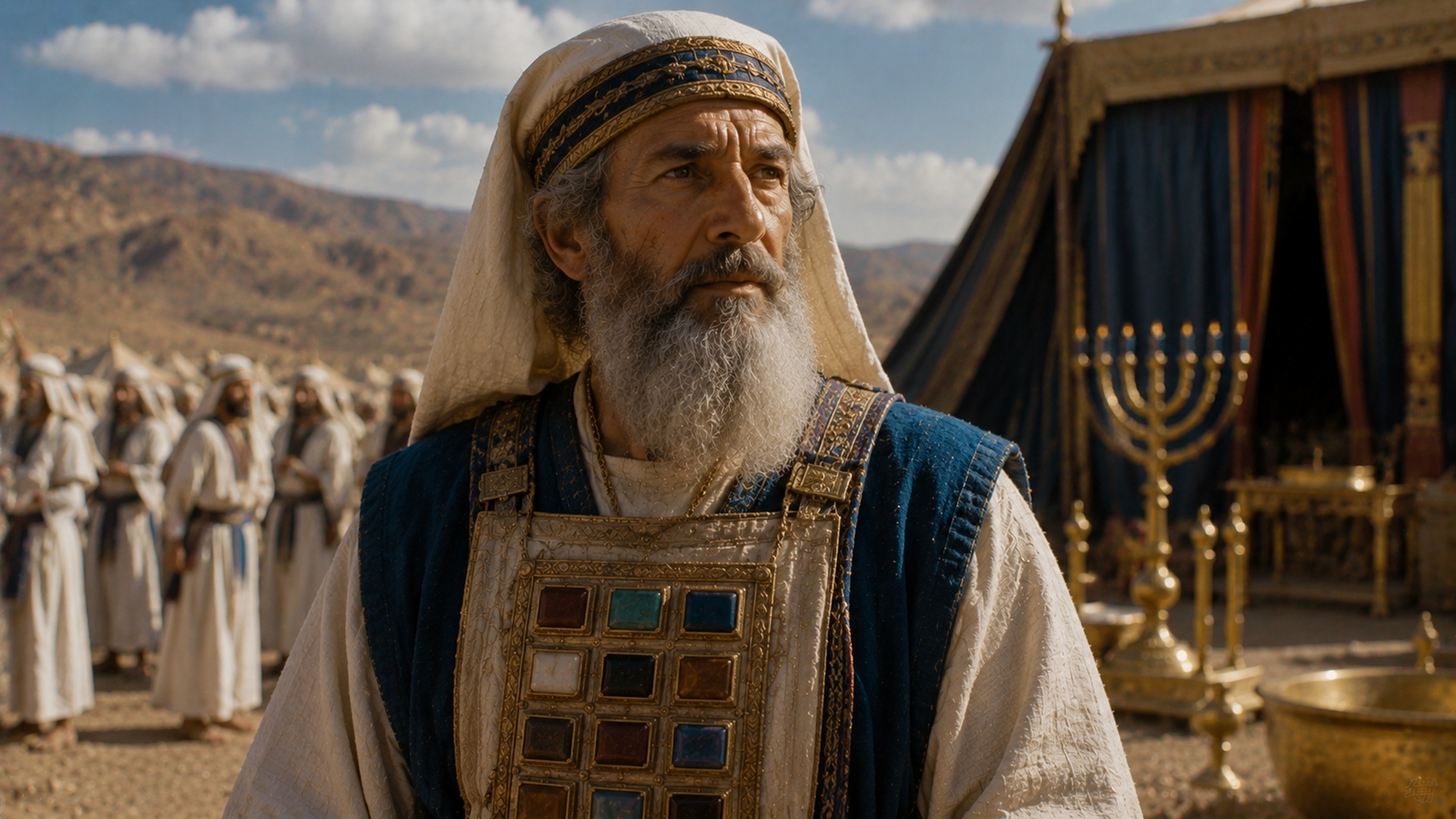
Aaron is appointed as Israel’s first high priest and receives the responsibility of representing the people before God in worship.
✨ 7 Remarkable Facts About Aaron
- He was the older brother of Moses
- He was the brother of Miriam
- He served as Moses’ spokesman before Pharaoh
- He witnessed the Exodus from Egypt
- He became Israel’s first high priest
- His descendants formed the priestly line
- He died during the wilderness journey on Mount Hor
⚖️ Strengths & Weaknesses
✔ called by God
✔ willing to serve
✔ responsible
✔ spiritually significant
❌ gave in to the pressure of the people in the incident of the golden calf
❌ did not always show clear steadfastness
❗ The Mistake That Shaped Him
Aaron allowed himself to be influenced by the pressure of the people in the incident of the golden calf and acted wrongly.
➡️ His story shows that spiritual responsibility requires courage, especially when many people are moving in the wrong direction.
📜 Key Verse
“Aaron shall bear the names of the sons of Israel on the breastplate of judgment over his heart.” (Exodus 28:29)
🧠 The Life Lesson
A calling is a gift, but it requires steadfastness, responsibility, and faithfulness.
🎯 Application for Today
When responsibility has been entrusted to you, do not allow the pressure of others to determine your actions, but remain faithful to the right path.
❓ A Question for You
Where do you need courage today not to give in to the pressure of the majority?
📌 Context
Aaron lived during the Exodus from Egypt and Israel’s journey through the wilderness.
🔗 Connection
Aaron was the brother of Moses and Miriam and became the ancestor of Israel’s priestly line.
Conclusion:
Aaron shows that God can use people with weaknesses, but also that responsibility without steadfastness can become dangerous.
Until tomorrow, with the next biblical person! 📖

✨ The Life Story ✨
✨ The Life Story of Aaron – Calling, Responsibility, and Weakness ✨
🌄 A Life in Egypt
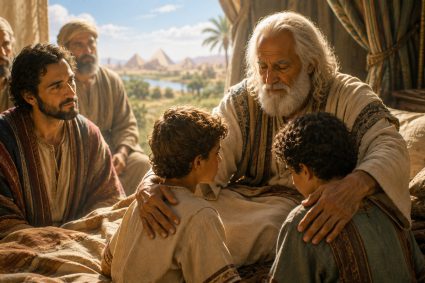
Aaron was born in Egypt at a time when the Israelites were living under severe oppression. He belonged to a family that would later play a decisive role in the deliverance of the people.
As the older brother of Moses and Miriam, Aaron grew up amid the suffering of his people. He knew the burden of slavery and the longing for freedom.
He had no idea that God would one day place him in a role whose significance would reach far beyond his own life.
🗣️ Moses’ Spokesman
When God called Moses to go to Pharaoh, Moses felt insecure because of his speech. In this situation, Aaron was appointed to stand beside him as his spokesman.
Aaron appeared with Moses before the most powerful ruler of Egypt. He spoke, made demands, issued warnings, and stood beside Moses while God led the people step by step out of bondage.
In this way, Aaron became an important helper in one of the greatest deliverance stories in the Bible.
🌊 The Exodus and the Wilderness
Aaron witnessed the plagues in Egypt, the night of the Exodus, and the deliverance at the Red Sea. He saw God open a way where, from a human perspective, no escape was visible.
Yet after deliverance came a new challenge. The wilderness became a place of testing, patience, and trust.
Aaron had to learn that freedom does not automatically produce mature hearts. The people complained, doubted, and repeatedly sought security in visible things.
🪔 The Calling to Become High Priest
God chose Aaron to become Israel’s first high priest. This responsibility was of great significance because Aaron was to represent the people before God in worship.
He wore special priestly garments, offered sacrifices, and carried responsibility for the service of the sanctuary. His role was not merely outward, but deeply spiritual.
As high priest, Aaron stood between the people and God and reminded them that they needed forgiveness, cleansing, and nearness to God.
⚠️ The Golden Calf
Yet Aaron also experienced a serious moment of failure. While Moses was on Mount Sinai and did not return for a long time, the people became restless.
They demanded a visible god, and Aaron gave in to their pressure. He had the golden calf made, which became a great act of sin for the people.
This moment revealed how dangerous it is when a leader fails to remain steadfast. Aaron had been called to lead the people, but in this situation, he allowed the people to lead him.
💔 Learning Through Responsibility
Aaron’s failure was not concealed. The Bible presents him as a man with a calling, but also with weaknesses.
This is what makes his story so honest. Aaron was not perfect, yet God still used him in an important role.
His life reminds us that responsibility does not mean being without faults, but that mistakes must be taken seriously and lessons must be learned from them.
⛰️ The End on Mount Hor
At the end of his life, Aaron was not permitted to enter the Promised Land. On Mount Hor, his priestly office was passed on to his son Eleazar.
Aaron died there at the age of 123. His death marked the end of a long life filled with calling, service, challenges, and serious lessons.
Yet his influence continued because his descendants carried on the priestly ministry.
✨ The Enduring Message of His Life
Aaron shows that calling and weakness can sometimes exist in the same person. His story makes it clear that God can use people even when they are not perfect.
At the same time, his life reminds us that spiritual responsibility requires steadfastness. Those who are called to lead others must not allow themselves to be easily controlled by the pressure of the crowd.
🌌 Closing Thought
Aaron was a spokesman, brother, high priest, and leader. He stood beside Moses, served in the sanctuary, and shaped the history of Israel.
Yet his story does not conceal his weakness. Precisely because of this, it becomes both a serious and a hopeful lesson.
👉 His life story shows: God can call weak people, but responsibility requires courage, faithfulness, and a steadfast heart.
