




🤩 Bible Stories to Marvel At
Where God’s wonders become great—for hearts young and old
🌧️ Job Chapter 30 – Job Experiences Mockery and Deep Humiliation
💔 When Honor Turns into Mockery
🌅 Introduction
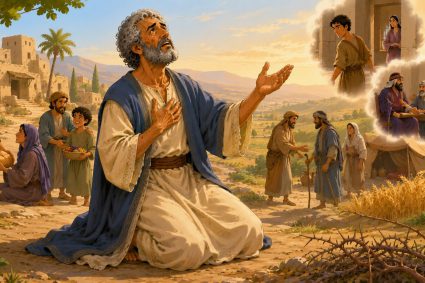
In the previous chapter, Job had looked back on earlier days. He remembered how God’s light shone upon his path, how his children were around him, and how people respected him. At that time, he sat at the city gate, was honored by the elders, and his words were like refreshing rain to many.
He also remembered how he had helped the poor, orphans, widows, and the weak. He had been eyes to the blind, feet to the lame, and a father to the needy. His life had not only been rich in possessions, but also in responsibility, compassion, and justice.
But now Job no longer looks back upon the warm light of earlier days. Now he looks at his present situation. And that sight is painful. Everything has changed. The man who was once honored is now mocked. The helper of the weak has himself become weak. The man whose words once carried weight is now laughed at.
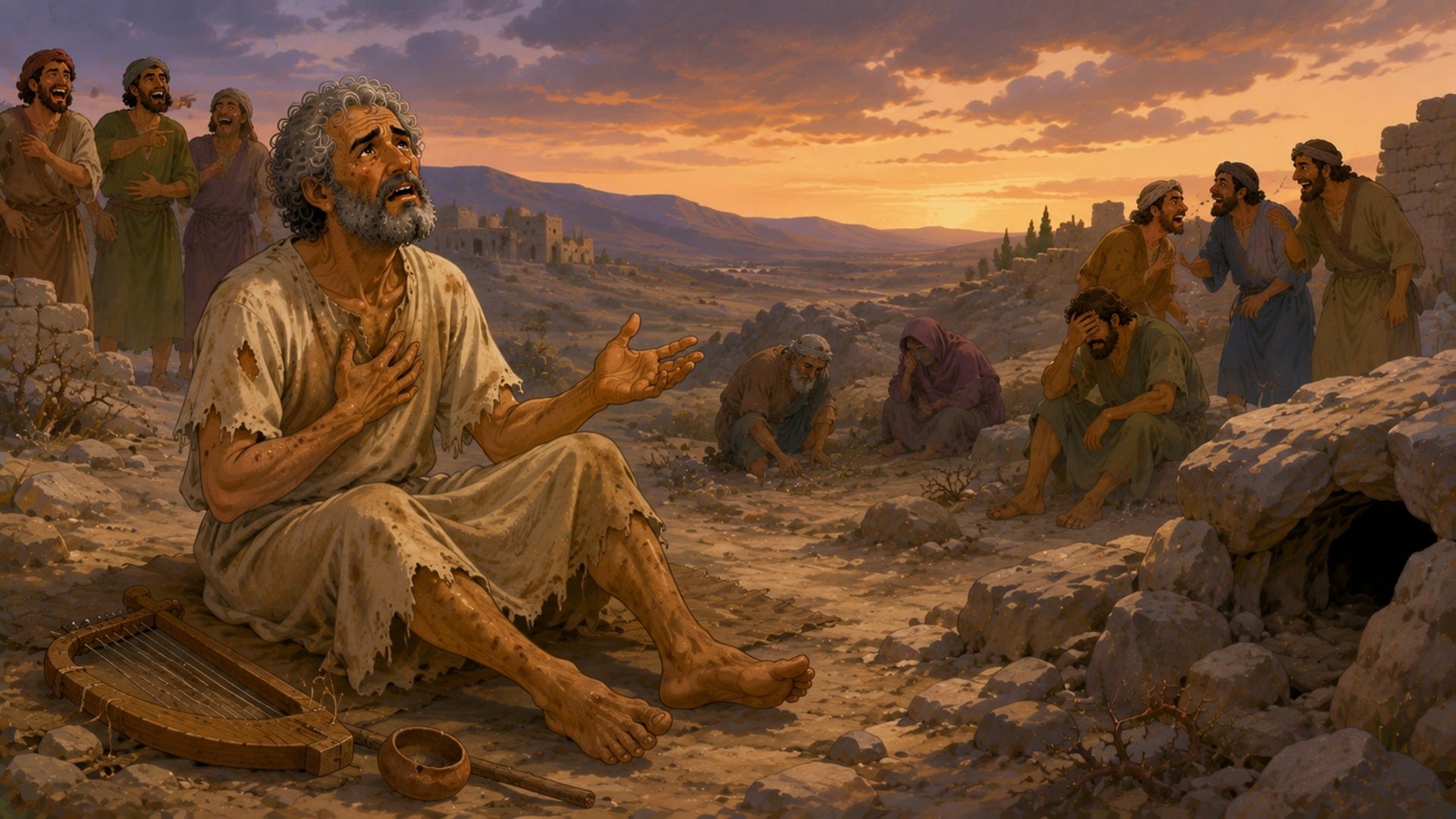
Job experiences not only sickness and loss. He also experiences humiliation. People who once would never have dared to despise him now make fun of him. They keep their distance, spit in front of him, and treat him as though he were worth nothing.
This chapter tells us how deeply mockery can wound. It shows how quickly people may treat someone differently once that person has become weak. And it reveals Job’s great sorrow: He once waited for good, but evil came. He once hoped for light, but darkness arrived.
📖 The Biblical Story
😢 Job Is Mocked by Younger Men
Job begins with a painful contrast. In the past, young men respectfully stepped aside when he came. Now younger people laugh at him. They mock him even though they hardly understand who he once was and all that he had done.
This was very bitter for Job. He had not been a man who lived carelessly. He had carried responsibility, helped people, and upheld justice. But now some people see only his sickness and weakness.
These young mockers pay no attention to Job’s story. They do not see his faithfulness, his former deeds, or his pain. They see only a suffering man and make fun of him.
This shows how unjust mockery can be. A person who mocks often sees only the surface. He does not see the heart, the past, the tears, or the difficult path another person has walked.
🏜️ Job Describes People on the Margins of Society
Job describes the people who now mock him with very harsh images. They belong to those who live on the margins, without honor, without a secure place, and without a good reputation. They search for food in the wilderness and live in miserable conditions.
His words show how deeply humiliating this is for him. In the past, he was respected by prominent people. Now even people who themselves have little standing make fun of him.
Job does not mean that poor people are worth less. He himself had helped the poor and had been a father to the needy. But here he is describing a group of mockers who behave crudely and contemptuously.
It is painful for Job that people who may once have needed help themselves now look down on him. Suffering not only makes him ill, but also places him at the very bottom in the eyes of others.
🌵 A Life in the Wilderness
Job speaks of people who live in ravines, caves, and among the rocks. They eat whatever they can find in the wilderness and live far away from ordered society. Their surroundings are harsh, dry, and unfriendly.
These images paint a rough world. There is no warm home, no table full of bread, no safe place. It is a world of dust, stones, thorns, and hunger.
Job describes these people to show how far he has fallen. Not even such people respect him anymore. Instead of showing compassion, they become mockers.
This must have hurt Job especially deeply. In the past, he had not despised people in need. He had helped them. Now he himself is in need, but instead of help he receives contempt.
🎭 Job Becomes a Song of Mockery
Job says that he has now become their song. This means that they make mocking songs about him. They use his name to make fun of him. They turn his suffering into entertainment.
This is deeply hurtful. When someone is in pain, people should not laugh. When someone has fallen, they should not add even more shame. Yet this is exactly what Job experiences.
For children, we can imagine it like this: A child is sad because he has fallen down or experienced something difficult. Instead of helping him, others sing a mean song about him. That hurts not only the body, but deep within the heart.
Job feels that his dignity is being trampled underfoot. In the past, his words were important. Now others use words against him. Respect has turned into mockery.
🚫 People Keep Their Distance and Despise Him
Job says that people detest him and keep away from him. They do not hesitate to spit in front of him. This is a sign of great contempt and deep humiliation.
Job therefore experiences more than silent rejection. He faces open scorn. Through their behavior, people tell him: You are worth nothing to us. We do not want to come near you.
This is especially sad because Job is already lonely. He has lost his children, his health, and much of his former honor. Now he also loses the respect of the people around him.
This chapter clearly shows that mockery can become a burden that makes suffering even heavier. Whoever despises a suffering person increases that person’s darkness.
🪢 Job Feels Defenseless
Job describes how God has loosened his bowstring and humbled him. This image shows how powerless and defenseless Job feels. In the past, he had strength and dignity. Now he is like someone whose tension and power have been taken away.
When a bow is no longer strung, it cannot shoot an arrow. That is how Job feels. His strength is gone. His former security has been shattered. He can hardly defend himself anymore.
Because he has become so weak, others lose all restraint. People who once would have respected him now come near to harass and mock him.
Job experiences something very painful here: Some people become bold in mockery when another person can no longer defend himself. That is not strength, but cruelty.
🌪️ Distress Comes Like a Storm
Job describes his attackers like an agitated crowd. They come against him, push him aside, and prepare paths of destruction against him. To Job, everything feels like an attack.
His life has already been shaken. But now mockery, rejection, and fear are added to it. It is as though a storm were sweeping over a house that is already broken.
This image is easy for hearts young and old to understand. When someone is already sad, a single harsh word can be like wind that knocks him down even further. When many harsh words come, it feels like a storm.
Job feels not only sad, but also oppressed. He feels that his paths are being destroyed and that no one is helping him.
🌊 His Honor Is Blown Away by the Wind
Job says that his honor is carried away like the wind. His deliverance has vanished like a cloud. These are very sorrowful images.
A cloud may appear in the sky and then suddenly drift away until it can hardly be seen. That is how Job feels about his former dignity and hope. What was once visible now seems to have been swept away.
In the past, Job was respected. People listened to him. He was like a strong tree. Now he feels like something the wind can simply carry away.
These images show how greatly Job’s life has changed. Much has been lost outwardly, but inwardly too he feels empty, shaken, and without a firm foundation.
💧 Job’s Soul Melts Away in Pain
Then Job speaks about his soul. He says that it is poured out within him. Days of affliction have taken hold of him. This means that his innermost being is full of pain and that he can hardly gather himself together.
Sometimes sadness feels as though something inside is dissolving. A person cannot simply stand tall and remain strong. He feels weak, tired, and wounded.
Job also describes pain in his bones. The night pierces him, and his torment does not rest. This shows that his suffering does not even pause at night. While others sleep, Job remains awake in pain.
This chapter allows us to feel how complete Job’s distress is. His body, soul, memories, honor, and hope are all affected. Job is not suffering in only one area. His whole life is wounded.
👕 His Suffering Clings to Him Like a Tight Garment
Job says that his sickness or suffering seizes him like clothing. It fits tightly around him like the collar of a garment. He cannot simply take it off.
Normally, a person can remove a garment when it is dirty or uncomfortable. But Job’s suffering is not like that. It clings to him. It follows him day and night.
For children, we might say: Imagine wearing a heavy, wet jacket that you cannot take off. It makes every step difficult. That is how Job feels with his pain.
Then Job says that God has thrown him into the mud and that he has become like dust and ashes. This is an image of deep humiliation. Job no longer feels secure and dignified, but trampled down and unclean.
📣 Job Cries Out to God but Hears No Answer
Now Job turns directly to God. He says: I cry out to You, but You do not answer me. I stand before You, but You do not notice me. These words are among the hardest in this chapter.
Job has not stopped speaking to God. He calls out. He waits. He stands before God. Yet to him it feels as though heaven remains silent.
This is a deep trial of faith. It is difficult enough to suffer. It is even harder when a person prays but does not feel an answer. Job experiences exactly this silence.
Yet because he continues to cry out to God, we see that Job has not let go of Him. Even though he hears no answer, he still directs his words to God. His lament is still a prayer.
⚡ Job Experiences God’s Hand as Harsh
Job says that God acts cruelly toward him and fights against him with a strong hand. These are very difficult words. They show how deep Job’s pain has become and how dark God’s actions appear to him.
Job feels as though he is lifted up by the wind and tossed back and forth in a storm. He has no firm ground beneath his feet. Everything is uncertain, wild, and frightening.
For children, we can imagine a leaf in a powerful wind. The leaf cannot decide where it will fly. It is blown around. That is how Job feels in his suffering.
From the whole story, we know that Job does not see everything happening behind his suffering. But Job speaks honestly about how it feels to him. God allows these honest words to remain in the Bible.
⚰️ Job Thinks About Death
Job says that God will bring him back to death, to the house appointed for all the living. He feels as though his path is almost over. Death no longer seems far away.
These thoughts are dark. Job can hardly see a future. His body is weak, his pain is great, and his soul is tired.
Yet even here, Job continues to speak. He does not remain silent in his despair. He expresses his fear. This is important because unspoken fear can become even heavier in the heart.
Job shows us that even when a person has very dark thoughts, he may bring them before God. God already knows the heart, and He also hears words that arise from deep distress.
🤲 Job Remembers His Compassion for Others
Then Job remembers how he once showed compassion to people who were suffering. He wept for those who experienced difficult days, and his soul grieved for the poor.
This is very important. Job was not cold toward the suffering of others. When he saw distress, his heart did not remain hard. He was able to weep with them and share their pain.
That is why his present situation is even more painful. He had shown compassion, but now he receives little compassion. He had helped others, but now he is mocked and misunderstood.
Job feels the contrast: I mourned for others, but who truly mourns with me now? I saw the poor, but who sees me in my poverty and weakness?
🌑 Job Expected Light, but Darkness Came
Job says: I waited for good, but evil came. I hoped for light, but darkness came. This sentence strongly summarizes his disappointment.
Job may have believed that after all the good he had done, his life would continue in peace. He had hoped that God’s blessing would remain visible. Yet instead of light, a time of suffering came.
For children, we can imagine it like this: You wait for a beautiful morning, but everything outside remains gray and stormy. You hope for an open door, but it stays closed. That is how Job feels.
These words show that Job suffers not only because of what has happened, but also because of shattered expectations. He expected something different, and that is precisely why the darkness feels so heavy.
🎻 Joy Turns into Mourning
At the end, Job describes how his inner being remains restless. His skin has grown dark, his bones burn with heat, and his strength is exhausted. Everything about him bears the marks of suffering.
Then he says that his harp has turned to mourning and his flute to the voice of those who weep. Music that may once have expressed joy now sounds like lamentation.
This is a deeply moving image. A harp can play beautiful, bright tones. A flute can sound joyful. But in Job’s life, the music has become sad.
The melody of his life has changed. Honor has turned into mockery. Light has become darkness. Hope has turned into lament. And yet Job continues to speak before God.
🌟 Job’s Pain Is Not Overlooked
This chapter ends heavily. Job stands in deep humiliation. He is mocked, feels defenseless, suffers physically, and cries out to God without hearing an answer.
But as readers, we see something important: Job’s pain is not cut out of the Bible. God allows these words to remain. This means that God does not ignore such laments.
Job’s friends do not understand him correctly. The mockers do not respect him. But his words are preserved. His suffering is heard. His lament becomes part of sacred history.
This is a quiet comfort in a dark chapter: Even when people overlook or mock someone who is suffering, God sees more deeply. No honest cry is ever lost before Him.
🌅 What This Chapter Shows
This chapter shows how far Job has fallen. In the past, he was respected and his words were valued. Now he is mocked, despised, and avoided by people who do not truly understand him.
This chapter also shows how difficult it is when suffering affects not only the body, but also the soul. Job experiences sickness, loneliness, mockery, God’s silence, and shattered hope. Yet he continues to bring his lament before God.
🟣 Summary
In chapter 30, Job describes the painful contrast with his former days. In the past, he was honored, but now younger people laugh at him and make him the subject of mocking songs. People despise him, keep their distance, and treat him without respect. Job feels defenseless, as though his honor has been blown away by the wind. His body suffers severely, his soul is filled with pain, and even at night he finds no rest. He cries out to God, but he hears no answer. Job remembers that he himself had shown compassion to the suffering and the poor, yet now he receives hardly any compassion. He waited for light, but darkness came, and his joy turned into mourning.
💚 Message for Children Today
Job shows us how deeply mockery can hurt. When someone is weak, sick, sad, or different, we must not laugh at or despise that person. Especially then, a person needs kindness, respect, and compassion.
We also learn that when we experience difficult times and God seems silent, we may still cry out to Him honestly. God hears complaints, tears, and questions that come from a tired heart.
💭 Reflection
🔸 Why was the mockery so painful for Job?
🔸 What does it mean to treat someone with dignity even in weakness?
🔸 Why may we continue to call out to God even when we have not yet heard His answer?
🧒 👧 👦
💌 Invitation to Job Chapter 31
📜 Job Examines His Life Before God
Job has described how far he has fallen. In the past, he was honored, but now he is mocked. His voice once brought comfort to others, but now his own harp has turned to mourning.
Now Job will speak very seriously about his life. He will examine his heart and list before God how he sought to live: honestly, purely, justly, and compassionately.
What does a person say when he lays his life open before God?
Come along and discover the next chapter!
🔔 Teaser for Job Chapter 31
⚖️ When a Heart Lies Open Before God
Job looks back on his life and speaks about faithfulness, honesty, justice, and compassion. He wants to show that his friends have accused him falsely.
👉 How did Job seek to live a pure and honest life?
👉 Why does he speak about the poor, widows, orphans, and strangers?
👉 And what does it mean to allow one’s heart to be examined by God?
✨ In the next chapter, we will hear Job’s final great defense—a serious chapter about conscience, truth, and responsibility before God.