

👤 The Biblical Person of the Day
🌈 Jephthah – The Outcast with a Costly Vow
📌 Profile
- Name: Jephthah
- Time of Birth: Period of the Judges
- Place of Birth: Gilead
- Time of Death: unknown
- Age: unknown
- Occupation: Judge, military leader
📖 Short Story
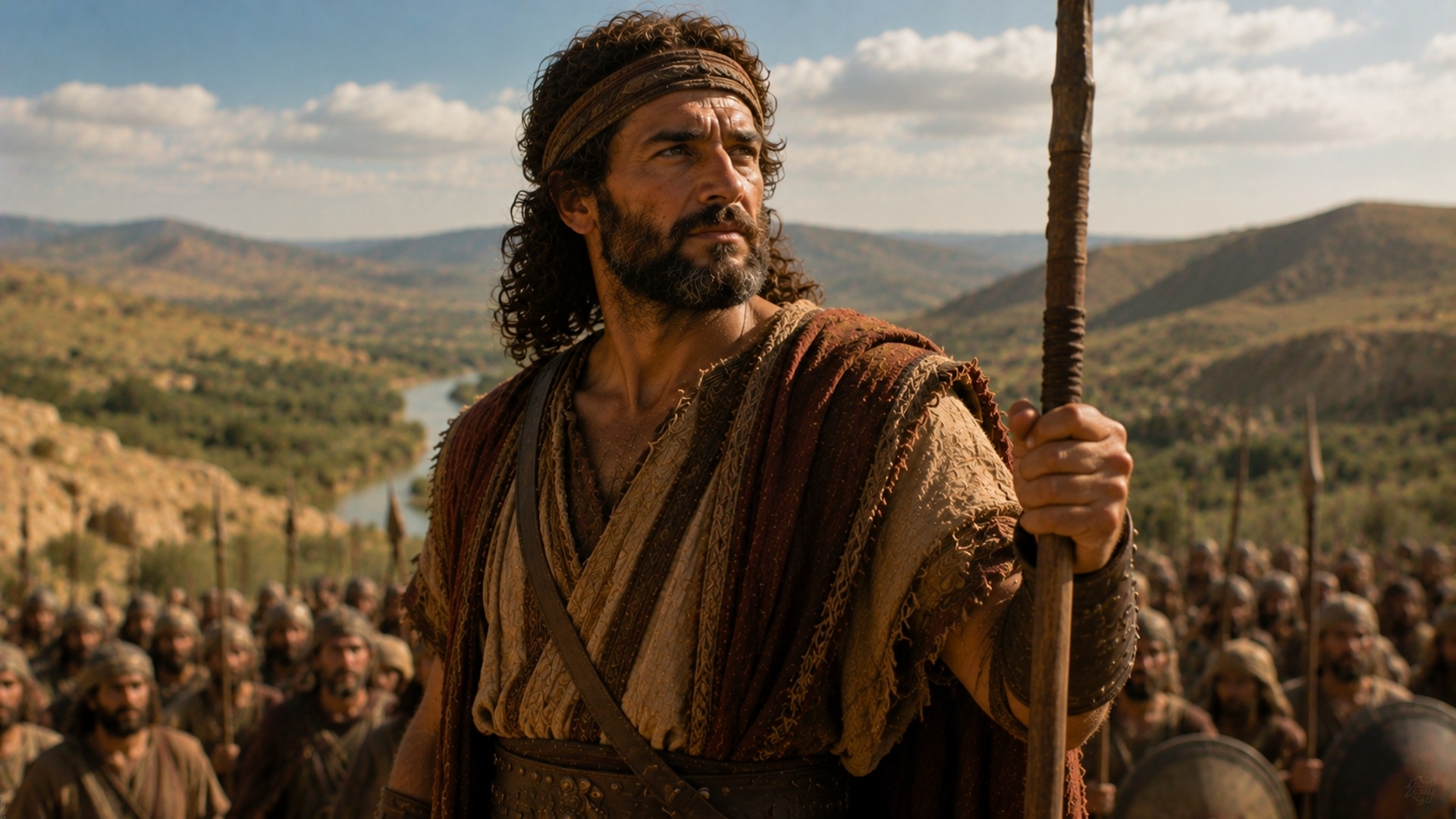
Jephthah was a man from Gilead whose life was marked by rejection, conflict, and a tragic decision. Although he was courageous and capable, his brothers cast him out because of his background.
He was forced to leave his homeland and lived for a time far from his family. There, men gathered around him, and Jephthah became an experienced warrior.
When the Ammonites threatened Israel, the elders of Gilead suddenly remembered him. The man they had once rejected was now the one they wanted to become their leader.
Jephthah accepted the responsibility and led Israel into battle. Beforehand, he even tried to resolve the conflict through dialogue, but the Ammonites would not listen to him.
Then Jephthah made a vow that would bring a heavy burden upon his life and family. Under intense pressure, he promised something that he would later bitterly regret.
God gave Israel victory, but when Jephthah returned home, the tragedy of his vow became visible. His daughter was the first to come out to meet him.
Jephthah’s story shows that people with painful pasts can still be used by God. At the same time, it warns against speaking careless words and making rash promises under pressure.
🔥 The Decisive Moment
Before the battle, Jephthah makes a rash vow that has serious consequences for his family after the victory.
✨ 7 Remarkable Facts About Jephthah
- He came from Gilead
- He was cast out by his brothers
- He lived away from his homeland for a time
- He was later called back to become a leader
- He first tried to resolve the conflict with the Ammonites peacefully
- He led Israel to victory
- His life was tragically marked by a costly vow
⚖️ Strengths & Weaknesses
✔ courageous
✔ strong leadership abilities
✔ persevering
✔ willing to take responsibility
❌ made a rash vow
❌ made a serious decision under pressure
❗ The Mistake That Shaped Him
Before the battle, Jephthah made a hasty vow without considering its possible consequences.
➡️ His story shows how important it is to choose our words with wisdom, calmness, and responsibility.
📜 Key Verse
“And Jephthah made a vow to the Lord.” (Judges 11:30)
🧠 The Life Lesson
Careless words can have serious consequences, especially when spoken in fear or under pressure.
🎯 Application for Today
Do not make important decisions in panic, but with calmness, prayer, and clear thought.
❓ A Question for You
Where should you speak or decide more slowly today so that your words do not cause more harm than good?
📌 Context
Jephthah lived during the period of the Judges, a troubled time in Israel’s history when the nation was repeatedly threatened by enemies.
🔗 Connection
Jephthah was one of Israel’s judges and is later mentioned in the New Testament among the heroes of faith.
Conclusion:
Jephthah shows that God can use even people with difficult pasts, but also that careless words can have profound consequences.
Until tomorrow, with the next biblical person! 📖

✨ The Life Story ✨
✨ The Life Story of Jephthah – Rejection, Victory, and a Serious Warning ✨
🌄 A Life with a Difficult Beginning
Jephthah was born in Gilead, but his background brought him rejection. His brothers did not want to recognize him as an equal member of the family and excluded him.
For Jephthah, this meant not only the loss of home and inheritance, but also the painful experience of being rejected by his own relatives.
He had to learn to live with a past that had deeply shaped him.
🏜️ Years Away from Home
After Jephthah was cast out, he moved to another region. There, men gathered around him, and over time he became an experienced warrior.
The rejected man became someone who developed strength, courage, and leadership.
His difficult past did not destroy him completely, but shaped him into a man who could endure hard situations.
⚔️ The Call to Return
When the Ammonites threatened Israel, the elders of Gilead found themselves in great distress. Suddenly, they remembered Jephthah, the man they had previously rejected.
They asked him to return and lead their army. For Jephthah, this was a remarkable reversal: the people who had once sent him away now needed his help.
He accepted the responsibility, but he did not do so thoughtlessly. He made clear what responsibility and position should accompany this mission.
📣 The Attempt to Find Peace
Before Jephthah went into battle, he tried to resolve the conflict with the Ammonites through dialogue. He reviewed Israel’s history and explained why their claim to the land was not justified.
This shows that Jephthah was not simply a violent man. He first sought a solution through explanation and negotiation.
But the Ammonites would not listen to him, and the conflict could not be avoided.
💔 The Rash Vow
Before the battle, Jephthah made a vow. Under the pressure of the situation, he promised to give something to the Lord if he returned victorious.
Yet this promise was careless and dangerous. Jephthah could not know who would be the first to come out to meet him after his return.
His vow shows how dangerous it is to speak words in moments of intense fear or pressure when we cannot foresee their consequences.
🏠 Victory and Sorrow
God gave Israel victory over the Ammonites. But when Jephthah returned home, his daughter came out to meet him.
The moment that should have been filled with joy became a scene of profound shock. Jephthah realized the weight of his vow and the consequences of his words.
His daughter faced the situation with remarkable dignity, yet the story remains one of the most tragic accounts from the period of the Judges.
⚖️ A Life Between Strength and Tragedy
Jephthah was a courageous leader who accepted responsibility despite rejection and rescued Israel during a difficult time.
Yet his life also shows that strength alone is not enough. Those who carry responsibility need wisdom, self-control, and respect for the power of their own words.
His victory therefore remains inseparably connected with the tragedy of his vow.
✨ The Enduring Message of His Life
Jephthah shows that a difficult background does not automatically disqualify a person. Even those who have been rejected can take responsibility and be used by God.
At the same time, his story reminds us that careless words can have serious consequences. It warns us not to make promises lightly and to act with wisdom, especially under pressure.
🌌 Closing Thought
Jephthah began as an outcast and later became the deliverer of his people. His story contains courage, strength, and a remarkable reversal.
Yet it also carries a serious warning: not every promise is wise, and not every decision that sounds religious is right.
👉 His life story shows: God can use rejected people, but words and decisions require wisdom so that strength does not end in tragedy.
